OF THE
TIMES
"While some studies suggest that SARS-CoV-2 infects brain cells directly, others found no evidence of the virus in the brain. Identifying how COVID-19 and neurological problems are linked will be critical for developing effective preventive and therapeutic strategies to address the surge in neurocognitive impairments that we expect to see in the near future."In the study, the researchers harnessed artificial intelligence using existing datasets of patients with Alzheimer's and COVID-19. They measured the proximity between SARS-CoV-2 host genes/proteins and those associated with several neurological diseases where closer proximity suggests related or shared disease pathways. The researchers also analyzed the genetic factors that enabled SARS-COV-2 to infect brain tissues and cells.


The planet's red-dwarf star, though small, is quite bright in the infrared part of the light spectrum, or light beyond the red end of the spectrum that can't be seen with the naked eye. It is, however, ideal for investigation by Hubble and Webb. Also helpful: From our perspective on Earth, TOI-1231 b crosses the face of its star, which allowed its detection in the first place by NASA's Transiting Exoplanet Survey Satellite (TESS). And that crossing, called a "transit," takes nearly 3 ½ hours - plenty of time to capture and analyze starlight shining through the planet's atmosphere.
Fun facts: We might see evidence of clouds (perhaps even made of water) in this planet's atmosphere. And because this star-and-planet system is moving at a high velocity away from Earth, hydrogen atoms escaping from the planet's atmosphere might be readily detected. In other words, the planet could turn out to have a tail.
In general, such atoms are almost impossible to detect even when using space-based facilities; their presence is masked both by the outer wisps of Earth's atmosphere and by interstellar gas. But the TOI-1231 system is moving so quickly that escaping hydrogen atoms are shifted out of phase with the blocking material, where they could be detected by telescopes like Hubble.
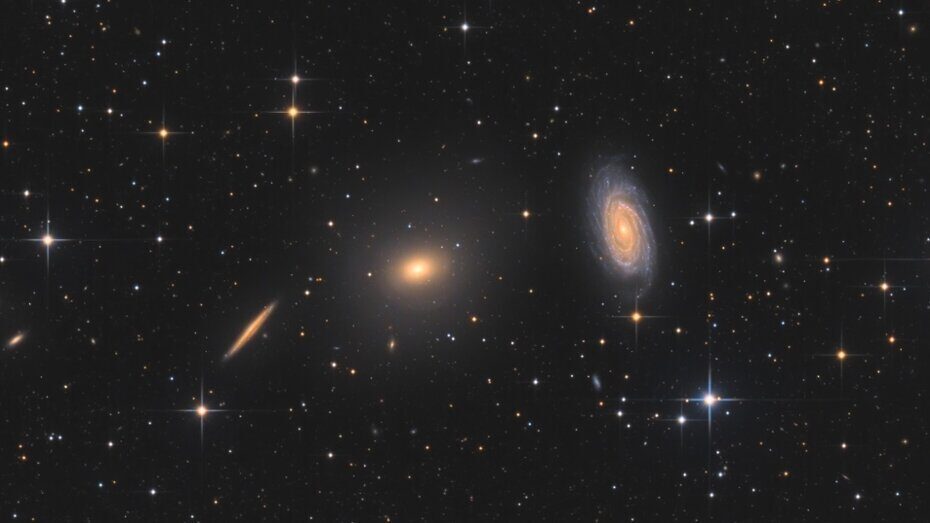
Comment: A recent study revealed that galaxies throughout our universe are surprisingly similar, and this may be because the same forces involved in their formation are, rather than working in isolation, in some way connected:
- Why the sun's atmosphere is hundreds of times hotter than its surface
- Milky Way not unusual, surprising astronomers
- Magnetic fields may be secret to planetary formation, supercomputer model reveals
And check out SOTT radio's: