
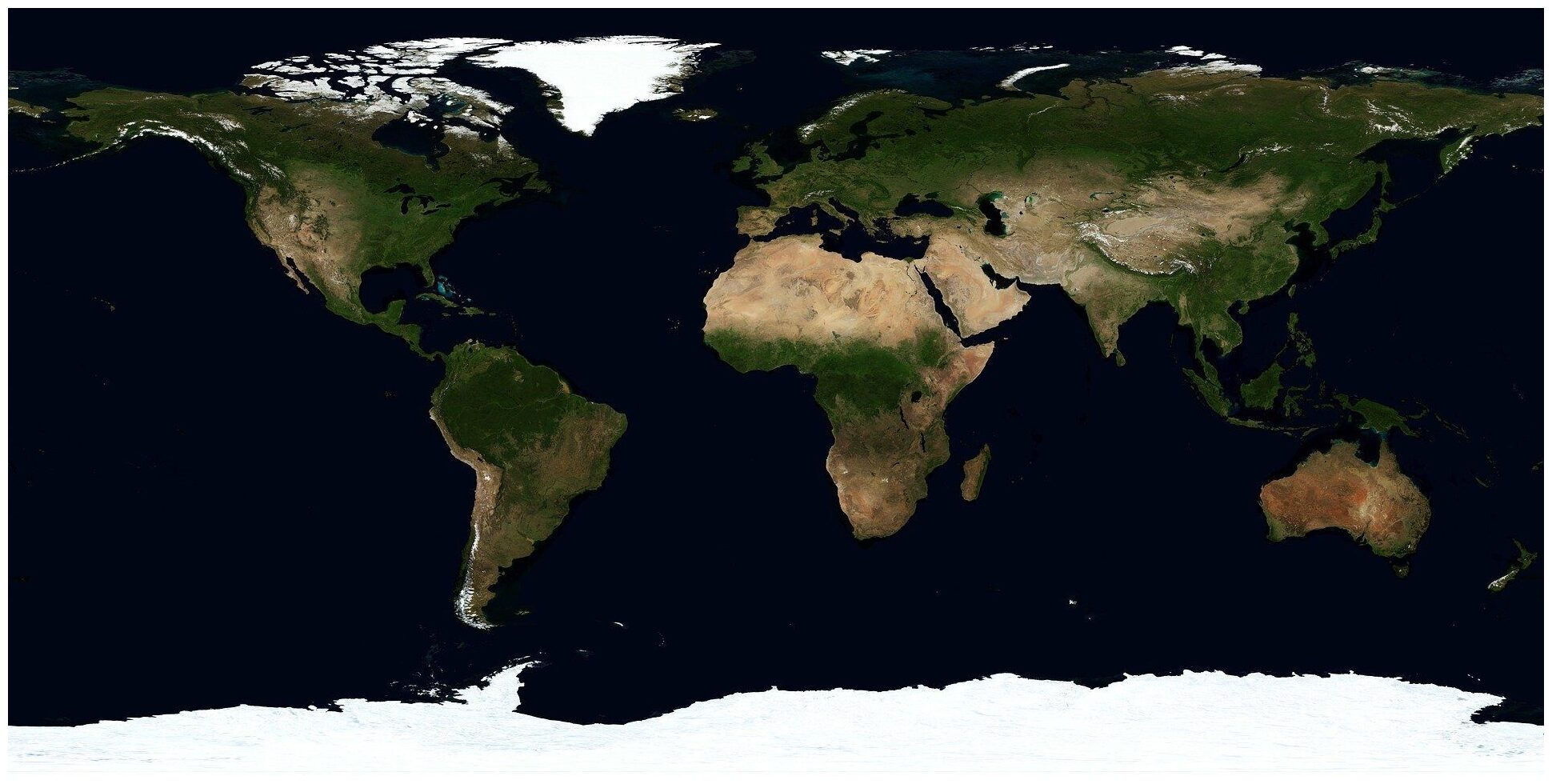
© Pixabay/CC0 Public Domain
An international team of geologists, led by Gillian Foulger, Emeritus Professor of Geophysics in the Department of Earth Sciences at Durham University (UK), believe the sunken continent could stretch from Greenland all the way to Europe.
It is believed to cover an area of ~ 600,000 km2 but when adjoining areas west of Britain are included in a "Greater Icelandia" the entire area could be ~1,000,000 km2 in size.
If proven, it means that the giant supercontinent of Pangaea, which is thought to have broken up over 50 million years ago, has in fact not fully broken up.
This new theory challenges long-held scientific ideas around the extent of oceanic and continental crust in the North Atlantic region, and how volcanic islands, like Iceland, formed.
The presence of continental, rather than oceanic, crust could also spark discussions about a new source of minerals and hydrocarbons, both of which are contained in continental crust.
The revolutionary new theory was born from an innovative series of expert meetings held in Durham (UK) and is included in a dedicated chapter of In the Footsteps of Warren B. Hamilton: New Ideas in Earth Science published today (29 June 2021), by the Geological Society of America, which Professor Foulger has co-written with Dr Laurent Gernigon of the Geological Survey of Norway and Professor Laurent Geoffroy of the Ocean Geosciences Laboratory, University of Brest (France).










Comment: See also: A warning from history: The Carrington event was not unique