Science & TechnologyS


Chalkboard

The mathematics of the amazing sandpile

mathematics sandpile domino theory self organization natue
To understand self-organization in nature, behold the sandpile.

Remember domino theory? One country going Communist was supposed to topple the next, and then the next, and the next. The metaphor drove much of United States foreign policy in the middle of the 20th century. But it had the wrong name. From a physical point of view, it should have been called the "sandpile theory."

Real-world political phase transitions tend to happen not in neat sequences, but in sudden coordinated fits, like the Arab Spring, or the collapse of the Eastern Bloc. These reflect quiet periods punctuated by crises — like a sandpile. You can add grains of sand to the top of a sandpile for a while, to no apparent effect. Then, all at once, an avalanche sweeps sand down from the top in an irregular pattern, possibly setting off little sub-avalanches as it goes.

Beaker

Drug to calm cytokine storm: Life-saving Russian discovery could be key to stopping body's 'suicide attack' in severe Covid cases

hospital crew
© Sputnik/Ilya PitalevRussian intensive care unit at work
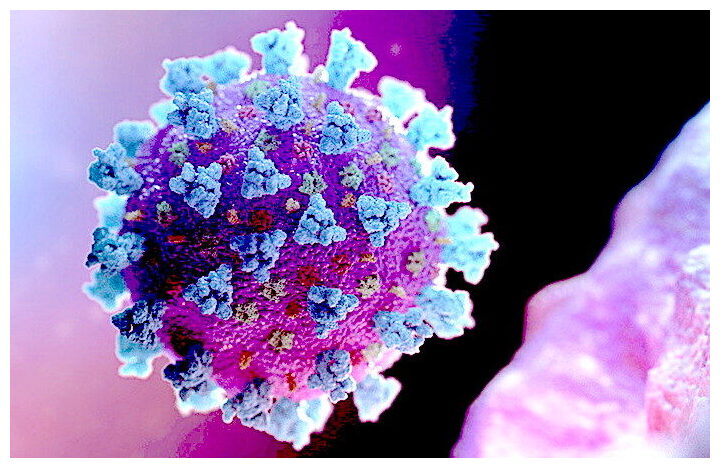
A group of Russian scientists have created a drug that may potentially revolutionize the treatment of Covid-19 by defusing the most catastrophic reaction the disease causes in patients, while not destroying their immune response.

The drug, called Leitragin, was developed by the Biomedical Technology Research Center of the Russian Federal Medical and Biology Agency (FMBA), and is currently undergoing clinical trials in Russia. Although its base substance was previously known and used in ulcer treatment medicine by Soviet and Russian doctors, it was the FMBA team that discovered how to apply it for the treatment of severe cases of Covid-19 and, potentially, other deadly diseases that cause life-threatening lung inflammation.

The Russian scientists had tasked themselves with finding a substance that would act as an 'off switch' for the chain reaction that, after being triggered by the invading SARS-CoV-2 virus, actually causes potential organ failure and death. This reaction of the immune system, dubbed the "cytokine storm," has been variously described as our body's overreaction to the virus or a "suicide attack" against the invading pathogen, and even as an evolutionary mechanism to stop the spread of deadly infections with the death of the host.

Trying to stop this uncontrolled immune response while still preserving the body's ability to fight the virus without causing more damage is what scientists and medics in intensive care units across the world have been wrestling with during the Covid-19 pandemic. In that regard, Leitragin is being touted as a game-changer, since its novel mechanism acts in a targeted way, and is said to be completely safe for one's health.

RT interviewed the head of the Russian team of scientists behind Leitragin, and talked to an independent researcher studying cytokine storms, to learn more about the potential of the novel drug.

Snowflake Cold

Scientists 'create' world's coldest temperature inside lab

snowflake cold
© Flickr / Alexey Kljatov
Researchers came closer than ever before to achieving absolute zero

Scientists just broke the record for the coldest temperature ever measured in a lab: They achieved the bone-chilling temperature of 38 trillionths of a degree above -273.15 Celsius by dropping magnetized gas 393 feet (120 meters) down a tower.

The team of German researchers was investigating the quantum properties of a so-called fifth state of matter: Bose-Einstein condensate (BEC), a derivative of gas that exists only under ultra-cold conditions. While in the BEC phase, matter itself begins to behave like one large atom, making it an especially appealing subject for quantum physicists who are interested in the mechanics of subatomic particles.

Comet 2

The mega-comet Bernardinelli-Bernstein will get as close as Saturn in 2031

Comet Comparison
© Will Gater. Used by permission.A graphic comparing the size of Comet 2014 UN271 (Bernardinelli-Bernstein) to other solar system objects.
A mega-comet - potentially the largest ever discovered - is heading from the Oort Cloud towards our direction. Estimated to be 100-200 kilometers across, the unusual celestial wanderer will make its closest approach to the Sun in 2031. However, the closest it will come to Earth is to the orbit of Saturn.

Astronomers say Comet Bernardinelli-Bernstein (C/2014 UN271) could be the largest member of the Oort Cloud ever detected, and it is the first comet on an incoming path to be detected so far away.

The graphic above, by astronomer Will Gater compares the size of the comet to other Solar System objects.

The comet was discovered Pedro Bernardinelli and Gary Bernstein, from the University of Pennsylvania earlier this year. They were scouring through data from the 570-megapixel Dark Energy Camera (DECam) on the Víctor M. Blanco 4-meter Telescope in Chile. They found data of this object that was originally collected from 2014-2018, which did not show a typical comet tail, and the object was therefore thought to be a dwarf planet.

But within a day of the announcement of its discovery via the Minor Planet Center, astronomers using the Las Cumbres Observatory network took new images which revealed that it has grown a coma in the past 3 years, and that it was rapidly moving rapidly through the Oort Cloud. The object was then officially classified as a comet.

Cell Phone

Android phones send device, user 'identifier' data to manufacturers & Big Tech firms offering 'pre-installed' apps, new study says

android google
© Reuters / Dado RuvicAndroid mascot pictured in front of Google logo. July 9, 2017
Android OS devices transmit sensitive user data like handset serial numbers and app usage info to manufacturers like Samsung and third parties like Google, Microsoft and Facebook - even after consumers opt out, a new study shows.

According to the study, proprietary variants of Google's Android system developed by popular vendors like Samsung, Xiaomi, Huawei and Realme send "substantial amounts" of information to these manufacturers as well as third party firms whose apps come pre-installed in these devices.

In the study, which was published on Monday, researchers from Trinity College Dublin and the University of Edinburgh found that the data silently collected by these companies was linked to "long-lived identifiers" like the device's IMEI code (the unique number linked to a device's SIM card slot) and other hardware serial numbers. In some cases, the MAC address generated by the user's WiFi network was also transmitted.

Comment: Just because it was not "unexpected" doesn't make it OK! See also:


Cassiopaea

Strange radio waves emerge from the direction of the galactic center

ASKAP radio signal
© Sebastian Zentilomo/University of SydneyArtist's impression of radio signal ASKAP J173608.2-321635 arriving at Earth.
Astronomers have discovered unusual signals coming from the direction of the Milky Way's center. The radio waves fit no currently understood pattern of variable radio source and could suggest a new class of stellar object.

"The strangest property of this new signal is that it is has a very high polarization. This means its light oscillates in only one direction, but that direction rotates with time," said Ziteng Wang, lead author of the new study and a Ph.D. student in the School of Physics at the University of Sydney.

"The brightness of the object also varies dramatically, by a factor of 100, and the signal switches on and off apparently at random. We've never seen anything like it."

Comment: It's starting to look like the number of 'mysterious' events being discovered in space cannot simply be explained by increased technological ability; this is particularly notable because on our own planet unusual phenomena also seems to be on the rise:


Info

No beginning - Universe has always existed

No Beginning
© Shutterstock
In the beginning, there was ... well, maybe there was no beginning. Perhaps our universe has always existed — and a new theory of quantum gravity reveals how that could work.

"Reality has so many things that most people would associate with sci-fi or even fantasy," said Bruno Bento, a physicist who studies the nature of time at the University of Liverpool in the U.K.

In his work, he employed a new theory of quantum gravity, called causal set theory, in which space and time are broken down into discrete chunks of space-time. At some level, there's a fundamental unit of space-time, according to this theory.

Bento and his collaborators used this causal-set approach to explore the beginning of the universe. They found that it's possible that the universe had no beginning — that it has always existed into the infinite past and only recently evolved into what we call the Big Bang.

Fireball 2

Best of the Web: Smoking Gun: 'Giant Comet' theory by Napier, Clube et al. vindicated in new paper

Taurid meteor stream complete orbit
© Western UniversityIllustration of the entire Taurid swarm.
Taurid Meteor Stream pummels planet in human history; remains menace; Nobel Prize?

A comprehensive study of the Taurid meteor stream confirms a central understanding of astronomer Dr. Bill Napier and the Comet Research Group, one which was incorporated into the YDI hypothesis from the start.

From Discover Magazine this week:
The longest-studied comets in our solar system have inspired ancient myths, religious fervor and modern scientific controversies. Now, the discovery of 88 asteroids and meteoroids orbitally aligned with one of them, Comet Encke, suggests that they all formed from the relatively recent breakup of an even bigger, icy comet. The findings are welcomed by those who believe Comet Encke and the other products of this astronomical event are responsible for many of Earth's most violent and consequential impacts over the last 20,000 years.....

.....Such a dynamic, unpredictable and well-populated complex capable of frequently getting close to Earth stoked academic imaginations; astronomers began to rewind the clock and look for evidence of Earth's interactions with the Taurids in the archaeological record and beyond. Scientist Richard Firestone, now at the Lawrence Berkeley National Laboratory, in 2007 invoked the Taurid complex to explain global climate cooling at the start of a near-glacial period called the Younger Dryas and the sudden demise of the Clovis culture, a prehistoric people thought to be the ancestors of most indigenous peoples in the Americas. And last year, a team including Napier claimed to have found their own evidence of impact during the Younger Dryas: meltglass and scorched earth deposits that appeared to mark the demise of an early hunter-gatherer community in modern-day Syria.

Comment: It good to see Bill Napier and Victor Clube getting the recognition they deserve. They've been voices in the wilderness for far too long.


Satellite

New Horizons telescope spots Kuiper Belt "twins"

new horizons telescope artist rendition
© NASA / JHAPL / SwRIAn artist's conception of New Horizons in the distant solar system.
New Horizons has spotted two asteroid pairs in the outer solar system. Their existence sheds light on how planets formed.

NASA's New Horizons is still showing us how bizarre the outer solar system really is. A recent announcement out of the 53rd American Astronomical Society Meeting of the Division of Planetary Sciences demonstrates that two Kuiper Belt objects that the spacecraft's camera homed in on are actually each close binary pairs.

Comet 2

NASA will attempt to nudge asteroid Didymoon off trajectory that poses threat to Earth

asteroid strike
© Tobias Roetsch/Future Publishing via Getty Images
The U.S. space agency plans to conduct a mission next month to deflect a pair of asteroids far out in deep space to keep them from threatening Earth.

Dubbed the DART Mission, or the Double Asteroid Redirection Test, the National Aeronautics and Space Administration (NASA) will send spacecraft to a pair of asteroids — the Didymos binary — on November 24 aboard a SpaceX Falcon 9 rocket launched from Vandenberg Space Force Base in California.

If all goes as planned, DART will smash into one of the two asteroids, known as Didymoon, at roughly 13,500 mph nearly a full year later, on October 2, 2022.

Comment: Throughout history cosmic catastrophes appear to have coincided with times of societal and environmental upheaval, and one could say that's a rather fitting description of our current era. Unsurprisingly the establishment has suppressed this information, and its scientists have, for the most part, dismissed it. And so, ultimately, this exercise may be futile; because it is capable of so little and it may just be too late. However, considering the current state of the world and the incredible and increasing suffering caused by the tyranny of governments, it may be that intervention of this kind is, at least on some level, welcome: