Science & TechnologyS


Cassiopaea

Best of the Web: 'Shooting stars' of plasma seen raining down on the sun for the first time ever

sun shooting stars
© ESA/Solar Orbiter EUI/HRI/Patrick AntolinThe European Space Agency’s Solar Orbiter sees a partial section of the sun with spectacular meteor-like displays.
Astronomers have spotted never-before-seen meteor-like streaks seemingly rain on the surface of the sun, but you should think twice before attempting to catch these falling stars.

"If humans were alien beings capable of living on the sun's surface, we would constantly be rewarded with amazing views of shooting stars, but we would need to watch out for our heads!" Patrick Antolin, a solar physicist at Northumbria University in London and lead author of the discovery, said in a statement.

These solar shooting stars are quite different from shooting stars that appear over Earth, which are fragments of space dust, rock, or small asteroids that enter the atmosphere at high speeds and burn up, creating streaks of light. The solar shooting stars are giant clumps of plasma dropping to the star's surface at incredible speeds.

Comment: See also: Solar maximum could hit us harder and sooner than we thought


Cloud Lightning

Stunning lightning footage unveiled by European weather agency

mmmmm
© Footage grab Photograph:(Twitter)
The European weather agency has recently unveiled breathtaking footage of lightning spreading across the globe. These awe-inspiring movies were captured by the Lightning Imager onboard Meteosat Third Generation, Imager 1, Europe's most advanced meteorological satellite.

The satellite has been activated and is delivering impressive results, said the European Organisation for the Exploitation of Meteorological Satellites (Eumetsat). The compilation animation, created using two cameras from the Lightning Imager, showcases various meteorological features, including storms in Europe and the development of storms in the Sahel region of Africa.

The instrument consists of four cameras that continuously monitor lightning activity over Europe, Africa, the Middle East, and parts of South America.

Rose

'Mind-boggling' palm that flowers and fruits underground thrills scientists

rare palm tree flower fruit underground indonesia
© Royal Botanical Gardens, KewThe exposed roots and fruits of Pinanga subterranea.
New species named Pinanga subterranea as Kew botanists admit they have no idea how its flowers are pollinated

A new-to-science palm species has been discovered in Borneo with the remarkable ability to flower and fruit underground. How the rare palm - named Pinanga subterranea - has survived is a mystery, as most plants have evolved to develop their flowers and fruit above ground to facilitate pollination and the dispersal of seeds.

"Pinanga subterranea is the only known species of palm to flower and fruit below ground," said Dr Benedikt Kuhnhäuser, a future leader fellow at Royal Botanic Gardens, Kew, who was part of the research team that collected specimens and ascertained that it was a new species. "Flowering and fruiting below ground is mind-boggling and seemingly paradoxical because they appear to prevent pollination and dispersal. We now know bearded pigs eat and disperse Pinanga subterranea's fruits, but we've yet to find out how and by whom the flowers are pollinated."

Better Earth

Century-old mystery of Antartica's 'Blood Falls' glacier finally solved, and the implications for planetary exploration

blood fall glacier
What makes this glacier waterfall in Antartica run red? Johns Hopkins research scientist Ken Livi believes he has the answer
During the infamous Terra Nova Expedition to Antarctica in 1911, British geologist Thomas Griffith Taylor made a mysterious discovery at the rocky base of the glacier that now bears his name: a waterfall of what appeared to be blood.

Discharged from beneath the ice at the glacier's tongue, the water emerges clear but then quickly turns crimson. For more than a century, this phenomenon that Taylor dubbed "Blood Falls" has captured people's imaginations and remained a scientific mystery — until now.

Using powerful transmission electron microscopes at Johns Hopkins' Materials Characterization and Processing facility, Ken Livi, a research scientist in the Whiting School's Department of Materials Science and Engineering, examined solids in samples of Blood Falls' water and found an abundance of tiny, iron-rich nanospheres that oxidize, turning the water seemingly gory. (Nanospheres are tiny round objects — 100th the size of the average human red blood cell — with unique physical and chemical characteristics.)

Comment: See also: 15,000-year-old unknown viruses found in Tibetan glacier


Blue Planet

Impact of volcanoes on climate underestimated by ALL computer models, Cambridge study reveals

volcano
© CBS News and NASAFigure 1: Volcanic eruption sends ash into the atmosphere.
In a stunning turn of events, a study by the University of Cambridge released on June 13, 2023, has concluded that all current climate models need to be significantly updated because they do not include the effects that volcanic activity has on climate.

The researchers state that the effect that volcanism has on our climate is four times greater than previously estimated.

The conclusions of this study are confirmation that the building principles of the Plate Climatology Theory, which was released to the public on October 7, 2014, are correct.

The conclusion of the Cambridge study stated:

Comment: Which begs the question, just what's driving volcanic activity? Volcanoes, Earthquakes And The 3,600 Year Comet Cycle

See also: 'Unheard of' marine heatwave off UK and Irish coasts poses serious threat


Nebula

Mysterious spiral-shaped signals detected in the human brain

brain spiral
© Xu et al., Nature Human Behaviour, 2023Spirals of brain activity.
There are many layers to the human brain. From its wrinkled exterior to its darkest depths, scientists are trying to understand them all. But in honing in on the brain's intricate neural circuitry, they appear to have overlooked patterns of activity swirling on the surface.

A team of fluid physicists from the Universty of Sydney in Australia and Fudan University in China discovered brain signals rippling across the brain's outermost layer of neural tissue, the cerebral cortex, on scans of 100 young adults' brains. Signals naturally arranged as spirals, like vortices in a draining bathtub or whirlwinds of turbulent air.

"Gaining insights into how the spirals are related to cognitive processing could significantly enhance our understanding of the dynamics and functions of the brain," says senior author Pulin Gong, a physicist at the University of Sydney.

Comment: See also:


Nebula

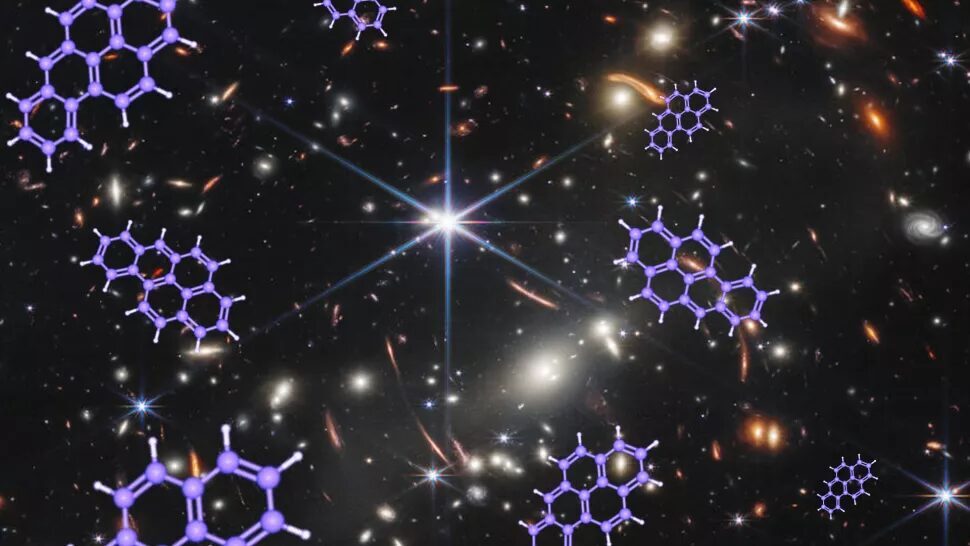
Universe has a background 'hum', groundbreaking discovery reveals

universe
Astronomers have made a discovery that confirms the existence of gravitational waves, which sound like the hum at a large gathering. These ripples in space-time were proposed by Albert Einstein over a century ago.
An international group of scientists has made a groundbreaking discovery that confirms the existence of gravitational waves first envisioned by Albert Einstein.

The report, published on Thursday, says that astrophysicists were able to "hear" low-frequency gravitational waves — changes in the fabric of the universe that are created by huge objects moving around and colliding in space.

"It's really the first time that we have evidence of just this large-scale motion of everything in the universe," said Maura McLaughlin, co-director of NANOGrav, the research collaboration that published the results in The Astrophysical Journal Letters.

Comment: See also:


Microscope 2

Major research lost after custodian flips switch on lab freezer to stop 'annoying alarms,' lawsuit claims

Rensselaer Polytechnic Institute
© Hang Yu / Getty ImagesRensselaer Polytechnic Institute
Rensselaer Polytechnic Institute alleges it lost decades of scientific work because worker sought to stop "annoying alarms" coming from lab that contained super-cold freezer.

Rensselaer Polytechnic Institute filed a million-dollar lawsuit against a cleaning company after a custodian, seeking to stop an "annoying" beep, allegedly turned off a lab freezer and killed decades of "groundbreaking" research.

The school in Troy, New York, had contracted with Daigle Cleaning Systems Inc. to clean the Cogswell Building lab between Aug. 17, 2000, and Nov. 27, 2020, according to a civil complaint filed this month in Rensselaer County.

Galaxy

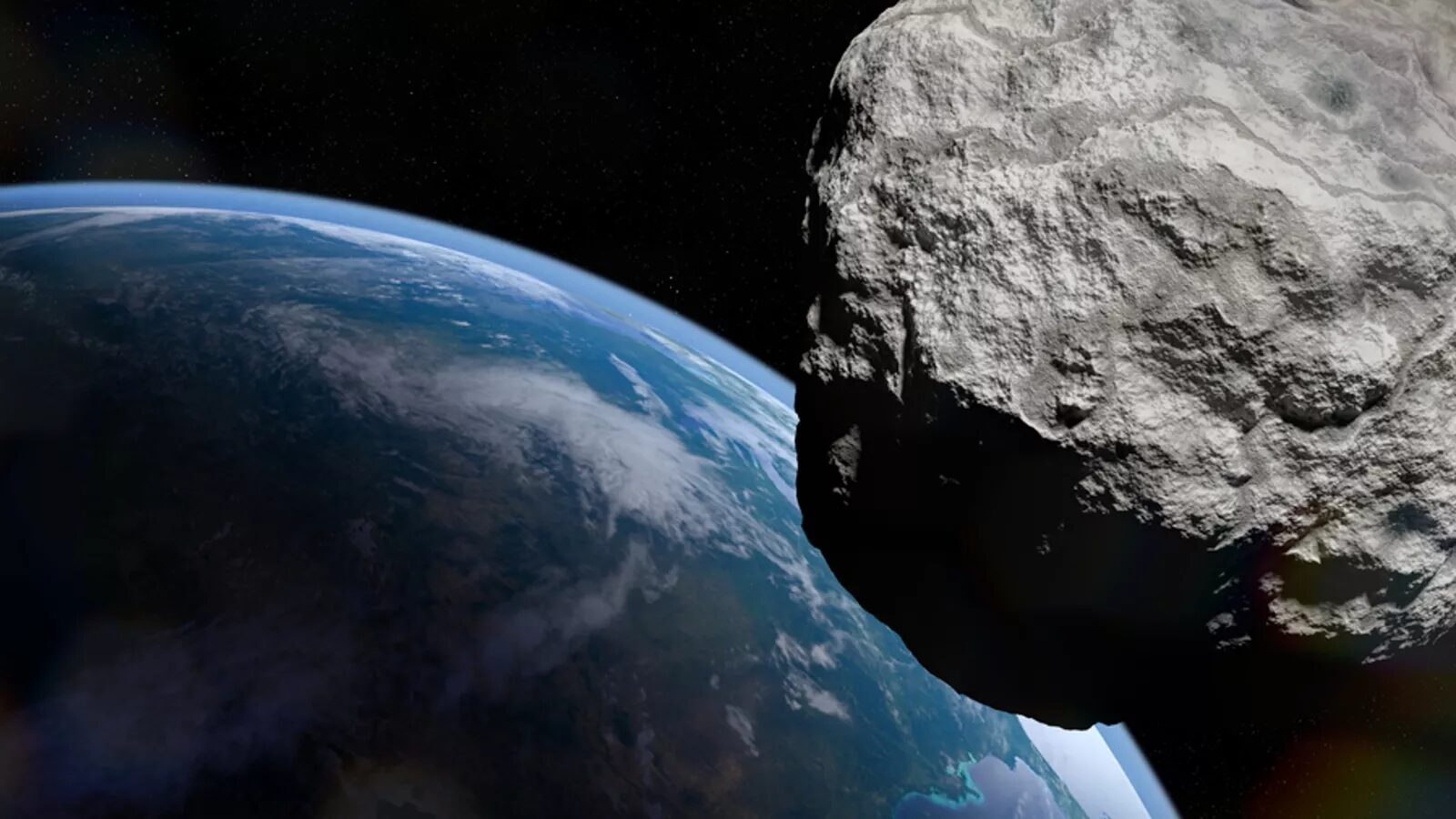
A 'captured' alien planet may be hiding at the edge of our solar system, and it's not 'Planet X', new research suggests

planet x comet meteor asteroid
© GettyA large, icy world from an alien star system could lurk in the mysterious Oort cloud, new research suggests.
In 1906, astronomer and businessman Percival Lowell launched a search for "Planet X," a hypothetical giant planet orbiting the sun beyond Neptune. Lowell was convinced that Planet X existed based on some supposed irregularities he had observed in the orbits of Neptune and Uranus. His belief eventually led to the discovery of Pluto in 1930, though scientists later determined that the dwarf planet was too small to have a gravitational impact on Neptune's orbit (let alone Uranus').

Today, the Planet X hypothesis is largely considered to be discredited. However, that hasn't stopped astronomers from looking for planets in the far reaches of the solar system. And according to a new study, they might be out there — only much farther away than Lowell could have predicted.

Comment: Other researches have demonstrated that, rather than a planet, it's likely that these observed perturbations are due instead to our Sun's twin, also known as Nemesis:


Arrow Down

New evidence from Nord Stream underwater expedition refutes official claims

gas leak
© UnknownGas leak from pipeline sabotage
Observers have drawn a number of conclusions based on a recent series of visits to the site of the Nord Stream pipeline rupture via drone. There's just one problem: all of them seemed to have missed the location of the explosions. After a recent underwater expedition, The Grayzone can now reveal where they went wrong, and what the real blast sites tell us about the worst act of eco-terrorism in history.

On September 26, 2022 and 3 minutes past midnight UTC, a magnitude 1.8 seismic wave struck the Baltic Sea. Finnish and Norwegian researchers placed the epicenter just southeast of the Danish island of Bornholm. 17 hours later, another 2.3 magnitude event occurred. The Swiss-based operator of the Nord Stream pipelines, which once fed huge quantities of Russian natural gas to Germany, reported a sudden drop in pressure from 105 to 7 bar in one of Nord Stream 2's two offshore lines.

Overhead, aircraft filmed as an estimated 75,000 - 230,000 tons of methane bubbled up from the Baltic. Earthquake researchers said the force of the man-made blast was equivalent to 700 kg of TNT.

But what if the seismic readings they observed were not a result of the explosion itself, but rather, the subsequent force of the pipeline rapidly depressurizing?