Science & TechnologyS


Cassiopaea

Mercury discovered to have aurora, surprising scientists

Mercury
© Griffith ObservatoryAn illustration of the surface of Mercury.
A probe sent to study the sadly neglected innermost planet of the Solar System has finally revealed auroral processes that take place in spite of a practically nonexistent atmosphere.

In October 2021, the BepiColombo probe took measurements of electrons and ions at Mercury, finding evidence of their acceleration. Analysis showed that this was the result of auroral processes involving Mercury's magnetic field, ultimately producing a faint X-ray emission.

This means aurorae have now been seen on every single planet, suggesting that a mechanism for aurora production might be universal throughout the Solar System, in spite of the vast differences between the planets.

Comment: This comes on the heels of a discovery that Mercury has a magnificent comet-like tail.

The similarities between asteroids, comets, and even planets, are certainly curious; as Pierre Lescaudron writes in Earth Changes and the Human-Cosmic Connection:
Traces of this movement can be found in the late 19th century,when Scientific American published an article stating that Professor Zollner of Leipzig ascribed the 'self-luminosity' of comets to 'electrical excitement.' Zollner proposed that:
...the nuclei of comets, as masses, are subject to gravitation, while the vapors developed from them, which consist of very small particles, yield to the action of the free electricity of the sun
Then, regarding comet tails, the August 11th 1882 issue of English Mechanic and World of Science included the following:
There seems to be a rapidly growing feeling amongst physicists that both the self-light of comets and the phenomena of their tails belong to the order of electrical phenomena.
In 1896, Nature published an article stating:
It has long been imagined that the phenomenon of comet's tails are in some way due to a solar electrical repulsion, and additional light is thrown on this subject by recent physical researches.
[...]

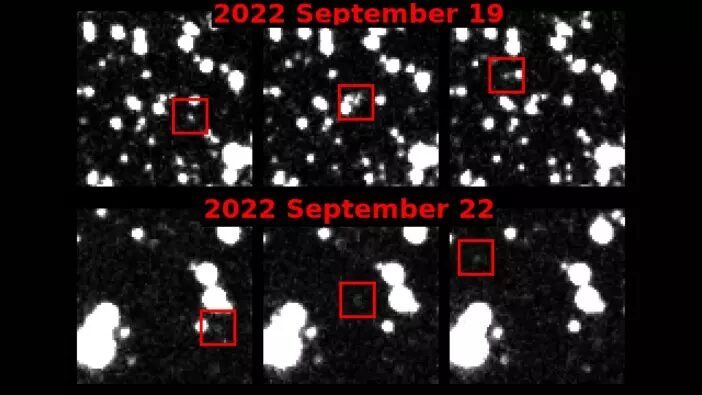
So, comets don't seem to be dirty snowballs after all. From the data presented above, they are glowing chunks of rock. On the other side, asteroids don't seem to be the non-glowing chunks of rocks posited by mainstream science. For example asteroids P/2013 P5 recently puzzled the whole scientific community when it started exhibiting a million miles long glowing tail. To rationalize this oddity official science claimed the asteroid was spinning so fast that it was ejecting tons of dust, while acknowledging that finally the difference between 'comets' and 'asteroids' might not be so clear-cut.1

The fundamental difference between asteroids and comets is not their chemical composition, i.e. dirty, fluffy icy comets vs. rocky asteroids. Rather, as has long been put forward by plasma theorists, what differentiates 'comets' from 'asteroids' is their electric activity.

When the electric potential difference between an asteroid and the surrounding plasma is not too high, the asteroid exhibits a dark discharge mode2 or no discharge at all. But when the potential difference is high enough, the asteroid switches to a glowing discharge mode.3 At this point the asteroid is a comet. From this perspective, a comet is simply a glowing asteroid and an asteroid is a non-glowing comet. Thus the very same body can, successively, be a comet, then an asteroid, then a comet, etc., depending on variation in the ambient electric field it is subjected to.4

Note that a comet can also exhibit the third plasma discharge mode, namely lightning or 'arc discharge mode', which is probably what happened when Comet Shoemaker-Levy entered the vicinity of Jupiter in July 1994:
The following article from Mr Lescaudron sheds more light on the topic: The Seven Destructive Earth Passes of Comet Venus

And check out SOTT radio's:


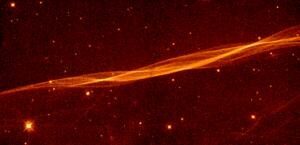
Nebula

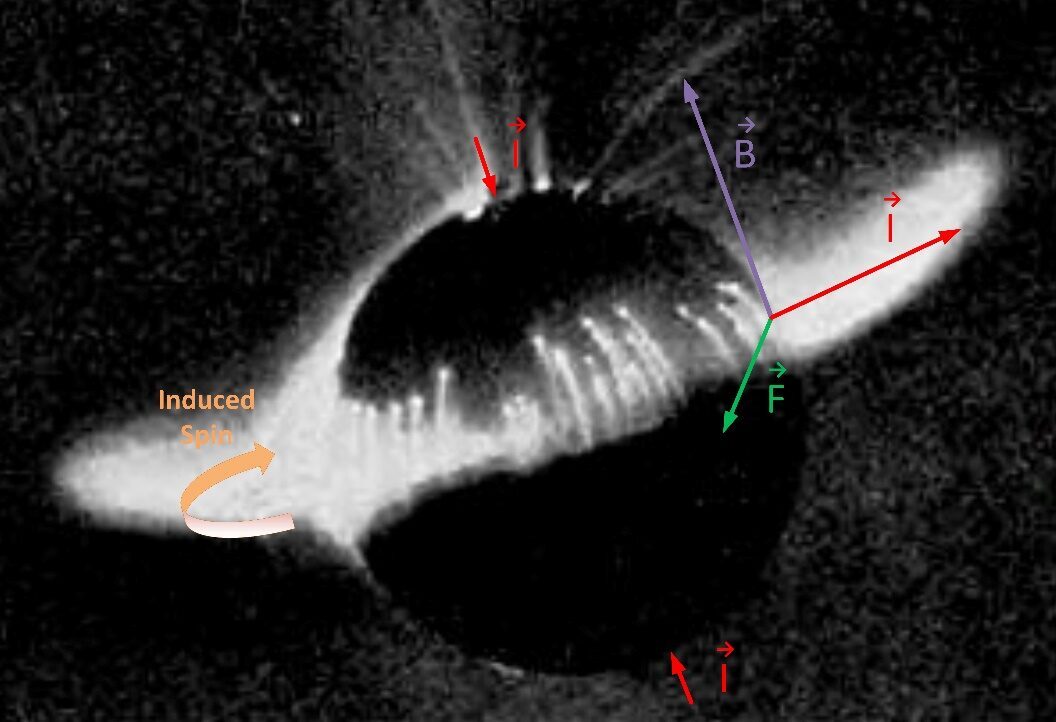
Giant swirling waves at the edge of Jupiter's magnetosphere discovered

jupiter waves
© UCAR/Zhang, et.al.An SwRI-led team identified intermittent evidence of Kelvin-Helmholtz instabilities, giant swirling waves, at the boundary between Jupiter's magnetosphere and the solar wind that fills interplanetary space, modeled here by University Corporation for Atmospheric Research scientists in a 2017 GRL paper.
A team led by Southwest Research Institute (SwRI) and The University of Texas at San Antonio (UTSA) has found that NASA's Juno spacecraft orbiting Jupiter frequently encounters giant swirling waves at the boundary between the solar wind and Jupiter's magnetosphere. The waves are an important process for transferring energy and mass from the solar wind, a stream of charged particles emitted by the sun, to planetary space environments.

Jake Montgomery, a doctoral student in the joint space physics program between UTSA and SwRI, noted that these phenomena occur when a large difference in velocity forms across the boundary between two regions in space. This can create a swirling wave, or vortex, at the interface that separates a planet's magnetic field and the solar wind, known as the magnetopause. These Kelvin-Helmholtz waves are not visible to the naked eye but can be detected through instrument observations of plasma and magnetic fields in space. Plasma — a fundamental state of matter made up of charged particles, ions and electrons — is ubiquitous across the universe.

Comment: More recent discoveries regarding plasma: Also check out SOTT radio's:


Galaxy

New research puts age of universe at 26.7 billion years, nearly twice as old as previously believed

space dust clouds
Our universe could be twice as old as current estimates, according to a new study that challenges the dominant cosmological model and sheds new light on the so-called "impossible early galaxy problem."

The work is published in the journal Monthly Notices of the Royal Astronomical Society.

"Our newly-devised model stretches the galaxy formation time by a several billion years, making the universe 26.7 billion years old, and not 13.7 as previously estimated," says author Rajendra Gupta, adjunct professor of physics in the Faculty of Science at the University of Ottawa.

For years, astronomers and physicists have calculated the age of our universe by measuring the time elapsed since the Big Bang and by studying the oldest stars based on the redshift of light coming from distant galaxies. In 2021, thanks to new techniques and advances in technology, the age of our universe was thus estimated at 13.797 billion years using the Lambda-CDM concordance model.

Blue Planet

Turning the tables: Researchers find birds using 'anti-bird' spikes to build their nests

bird nest in anti bird spikes
© Coyau / Wikimedia CommonsWhile deterring perching, bird spikes may not shift birds able to build large nests, and in fact can help them by providing a support to build the nest on.
'A brilliant comeback'

Some urban crows and magpies in Europe are building their nests using metal strips from buildings' anti-bird devices.

After finding bird nests built primarily out of anti-bird spikes and devices, researchers from the Natural History Museum in Rotterdam and the Naturalis Biodiversity Center in Leiden searched online for more cases of this phenomenon and found several examples, The Guardian reported.

"I really thought I'd seen it all," Kees Moeliker, director of the Natural History Museum Rotterdam, said, per the outlet.

"These anti-bird spikes are meant to deter birds, they are supposed to scare them off, but on the contrary, the birds just utilize them," the expert added.

Better Earth

Massive lava outburst may have caused 'Snowball Earth' 717 million years ago

snowball earth ice age
© CLAUS LUNAU/SCIENCE SOURCESome 717 million years ago, glaciers covered the globe. Earlier eruptions may have triggered the event.
About 717 million years ago, a climate catastrophe struck the planet, as temperatures plunged and glaciers enveloped the globe. The cause of this "Snowball Earth" episode has been mysterious, but it took place around the same time as a massive outburst of volcanism. Many researchers thought there might be a connection. But the timing was uncertain.

Now, more precise dates, reported last month in Earth and Planetary Science Letters (EPSL) and in November 2022 in Science Advances, show the eruptions preceded the Snowball Earth event by 1 million to 2 million years. The lag points to a particular way the fire could have triggered the ice: through a chemical alteration of the fresh volcanic rocks known as weathering, which sucks carbon dioxide (CO2) from the atmosphere, turning down the planetary thermostat. The studies highlight the power of weathering as a key driver behind shifts in Earth's climate, and how components of the planet as disparate as rocks and the atmosphere are inextricably linked, says EPSL study co-author Galen Halverson, a sedimentary geologist at McGill University. "Nothing can be understood in isolation."

Headphones

Experiment shows humans really can hear silence after all

silence shhhhh finger over mouth
© Kristina Flour/Unsplash
Since the days of Aristotle, scientists and philosophers have debated whether silence is ever 'heard'. A new series of experiments by researchers from Johns Hopkins University in the US may just have settled the issue.

The research made clever use of a well-known trick called the one-is-more illusion, which fools the brains of listeners into thinking two discrete sounds are shorter than one single sound, even though in reality the total time is the same.

Replacing sounds with silence, the team found that the illusion still worked. You can try it out for yourself. A single continuous silence is perceived as being longer than two separate silences, despite them actually being the same duration overall.

"Silence, whatever it is, is not a sound - it's the absence of sound," says Rui Zhe Goh, a graduate student in philosophy and psychology from Johns Hopkins University. "Surprisingly, what our work suggests is that nothing is also something you can hear."

Rocket

Chandrayaan-3: India launches historic mission to Moon

Chandrayaan-3
© AP Photo/Aijaz RahiIndian spacecraft Chandrayaan-3
India's space agency has successfully launched a rocket that aims to land a rover at the Moon's south pole, signalling its arrival as a space power.

The Indian space research organisation's (ISRO) Chandrayaan-3 mission, carrying a lander and rover, blasted off at 2.35pm local time aboard the LVM3 rocket from India's main spaceport, Sriharikota, in the southern state of Andhra Pradesh.

"14 July 2023 will always be etched in golden letters as far as India's space sector is concerned... This remarkable mission will carry the hopes and dreams of our nation," Indian prime minister Narendra Modi tweeted on Friday, ahead of the launch.

ISRO confirmed that the spacecraft successfully entered its planned orbit around Earth, adding that with a set of carefully planned manoeuvres in the coming days the vehicle is expected to land near the Moon's south pole around 23 August.

Galaxy

Metallic clouds turn scorching hot exoplanet into the universe's largest mirror

exoplanet LTT9779b metal clouds reflective
© Ricardo Ramírez Reyes (Universidad de Chile)An illustration of the exoplanet LTT9779b as it orbits its star
"It's a planet that shouldn't exist."

Astronomers have discovered the most reflective planet outside the solar system ever seen. The ultra-hot extrasolar planet, or exoplanet, acts like a cosmic mirror because it is covered by reflective clouds of metal.

The planet, designated LTT9779 b, is located around 264 light-years from Earth and reflects around 80% of the light that shines on it from its parent star. As a comparison to LTT9779 b, Earth reflects just 30% of the light that falls on it from the sun. The ultra-hot LTT9779 b is so reflective that it is the first exoplanet found that gives the solar system's shiniest planet, Venus, a run for its money; Venus has a thick layer of clouds that reflect around 75% of incident sunlight.

Satellite

James Webb Space Telescope marks 1st year of science with marvelous new image

Rho Ophiuchi cloud complex stellar nursery JWST
© NASA, ESA, CSA, STScI, Klaus Pontoppidan (STScI)The Rho Ophiuchi cloud complex: Jets bursting from young stars crisscross the image, impacting the surrounding interstellar gas and lighting up molecular hydrogen, shown in red. Some stars display the telltale shadow of a circumstellar disk, the makings of future planetary systems
NASA is celebrating the first year of the international James Webb Space Telescope's scientific operations with the release of a beautiful new image.

The agency released the $10 billion-dollar observatory's snapshot of a small star-forming region in the Rho Ophiuchi cloud complex. It is the nearest star-forming region to Earth, and its proximity at 390 light-years allows for a detailed shot.

There are no foreground stars in the intervening space. The region contains approximately 50 young stars, all of which are similar in mass to our sun - or smaller.

Comment: More from the Daily Mail:
All of the young stars appear to be no bigger than our sun. Scientists said the breathtaking shot provides the best clarity yet of this brief phase of a star´s life.

"It´s like a glimpse of what our own system would have looked like billions of years ago when it was forming," NASA program scientist Eric Smith told The Associated Press.

Smith pointed out that the starlight visible in the image actually left there 390 years ago. On Earth in 1633, Italian astronomer Galileo Galilei went on trial in Rome for saying that the Earth revolved around the sun. The Vatican in 1992 acknowledged Galileo was wronged.

This cloud complex, known as Rho Ophiuchi, is the closest star-forming region to Earth and is found in the sky near the border of the constellations Ophiuchus and Scorpius, the serpent-bearer and scorpion. With no stars in the foreground of the photo, NASA noted, the details stand out all the more. Some of the stars display shadows indicating possible planets in the making, according to NASA.

It "presents star birth as an impressionistic masterpiece," NASA Administrator Bill Nelson said in a tweet.

Webb - the largest and most powerful astronomical observatory ever launched into space - has been churning out cosmic beauty shots for the past year. The first pictures from the $10 billion infrared telescope were unveiled last July, six months after its liftoff from French Guiana.

It´s considered the successor to the Hubble Space Telescope, orbiting Earth for 33 years. A joint NASA-European Space Agency effort, Webb scans the universe from a more distant perch, 1 million miles (1.6 million kilometers) away.


Archaeology

Researchers say evidence from tiny Canadian lake proves dawn of new geological epoch Anthropocene

crawford lake canada anthropocene evidence
© AFP via Getty ImagesAn aerial view of Crawford Lake near Milton, Ontario, Canada. The International Commission on Stratigraphy’s Anthropocene Working Group on July 11, 2023, named the lake as the embodiment of the proposed Anthropocene epoch
For the past 20 years, scientists have argued that Earth has left behind the Holocene - a relatively stable period in the planet's 4.5 billion-year history that lasted for 11,7000 years since the end of the last major Ice Age

Scientists say that they have pinpointed evidence of the dawn of the Anthropocene - a new geological epoch caused by humanity's irreversible impact on Earth.

This so-called "Golden Spike" - a single location that marks the geological break - was removed from a tiny, relatively unknown lake in Canada, the Anthropocene Working Group (AWG) announced on Tuesday.

"This marks a significant step towards the scientific, and thereby also political and social recognition of the scale and severity of planetary transformation processes unleashed by industrialized humanity," the team said.

Comment: Interesting information, but the Independent just had to put the climate change twist in there. All they have found is markers of the presence of an industrial civilization, as we define it. There is no justification for extending it further than that.