Best of the Web:


Light Sabers

Best of the Web: Iran is high-hanging fruit, which is why US is unlikely to attack

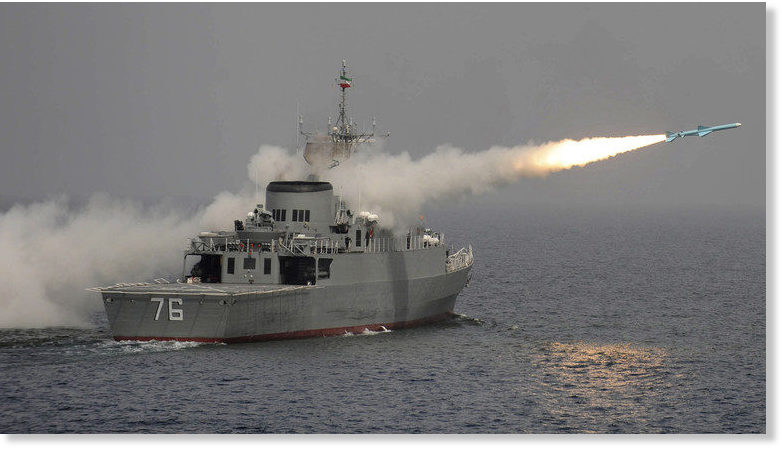
Nour missile is test fired
© REUTERS/Ebrahim Noroozi/IIPAA Nour missile is test fired off Iran's first domestically made destroyer, Jamaran
There's been lots of talk about an imminent war with Iran. The US is engaging in a military build-up in the Persian Gulf and the rhetoric from Washington is increasingly bellicose.

However, a full-scale conflict is still unlikely, because Iran, unlike other countries the US has attacked, is no soft target.

The US already deployed the USS Abraham Lincoln carrier strike group and a bomber task force to the Middle East earlier in the month. The Pentagon also announced that a battery of Patriot missiles and transport ship, the USS Arlington, were on their way to the Gulf.

Taken together with the fiercely anti-Iranian rhetoric of foaming-at-the-mouth neo-con figures in the Trump administration, such as National Security Advisor John Bolton, and unsubstantiated claims that Iran had sabotaged four tankers in the Persian Gulf, does this mean we are heading for a conflict?

While we shouldn't dismiss the risks of something very big kicking off soon, as a betting man, my money is on the US NOT attacking the Islamic Republic.

Red Flag

Best of the Web: Chris Hedges on America's cultural schizophrenia: 'Media shift to feelings over facts is tearing US apart'

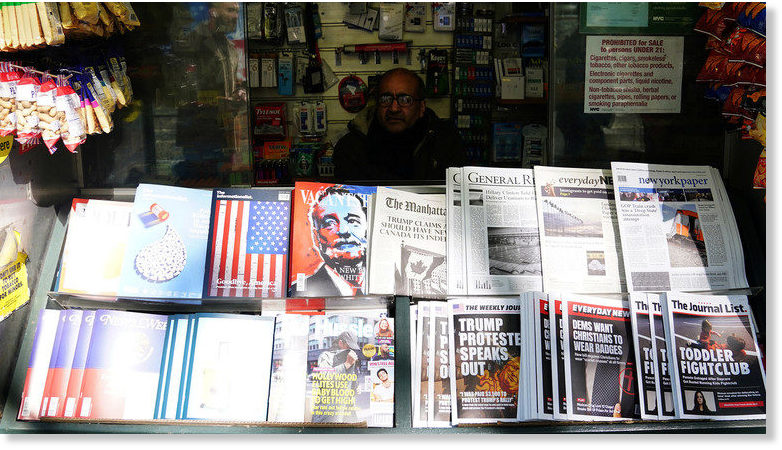
magazine stand
© Reuters / Carlo Allegri
Over the past several decades, US news media have shifted towards advocacy and emotional appeals, according to a RAND Corporation study. This is sowing discord in American society, award-winning journalist Chris Hedges tells RT.

The study, released by RAND earlier this week, cautiously argues that between 1987 and 2017, news content has shifted from event- and context-based reporting to coverage that is "more subjective, relies more heavily on argumentation and advocacy, and includes more emotional appeals."


While prime-time cable news shows and online journalism lead the way in this shift, it has been noticed in print journalism as well, the government-funded think tank concluded. This is contributing to what RAND termed "Truth Decay," described as a shift away from facts and analysis in public discourse.

"Cable news networks - CNN, MSNBC, Fox - have given up on journalism," Hedges told RT, commenting on the RAND report. "They replaced it with reality-show news programs centered around [US President] Donald Trump and his tweets and the Russiagate. There has been a complete walking away from journalism."

Target

Best of the Web: Inside look at the secret plot to turn senior Venezuelan officials against Maduro

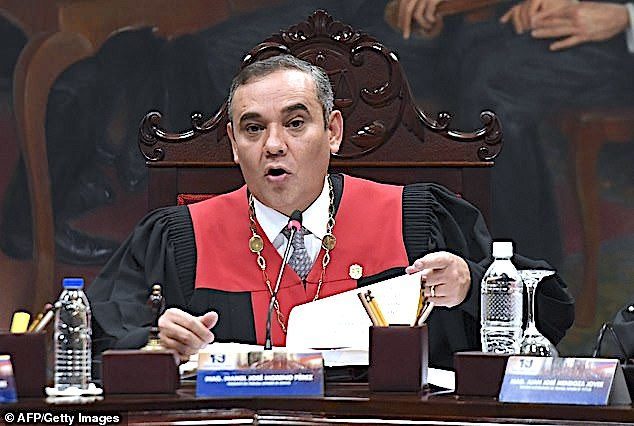
Maikel Moreno
© AFP/Getty ImagesMaikel Moreno, Chief Justice of the Supreme Court of Venezuela
Late one night in April, a week before Venezuela's opposition launched its abortive uprising, four men sat on the terrace of the hillside compound in Caracas belonging to the chief justice of the country's Supreme Court. The dim lights of the capital twinkling below them, they sipped Fiji bottled water as they plotted the ouster of President Nicolás Maduro.

Maduro's spy chief, Gen. Christopher Figuera, and Cesar Omaña, a 39-year-old Venezuelan businessman based in Miami, were trying to seal a deal hashed out over weeks with Maikel Moreno, the chief justice, according to one of the participants in the meeting. Figuera and Omaña were part of the plan to force Maduro out, but they needed Moreno's help.

Moreno, sitting before an ashtray laden with the stubs of Cuban cigars, appeared to be having doubts. The 53-year-old jurist voiced concerns about Juan Guaidó, the U.S.-backed opposition leader who would become the nation's interim president if the plot succeeded.

Then, according to the participant, Moreno offered another candidate to "temporarily" lead the broken country - himself.

"In the end, he was trying to safeguard his own power play," one senior opposition figure said.
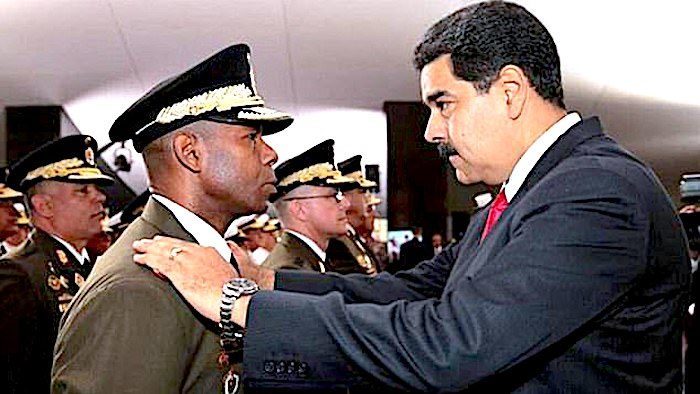
Christopher Figurea, Maduro
© whatsnew2day.comSpy Chief Christopher Figuera • President Nicolas Maduro

Comment: See also:


War Whore

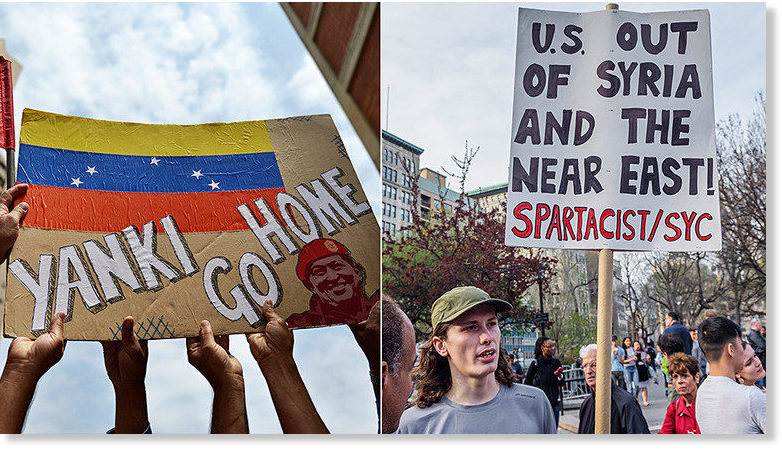
Best of the Web: Venezuela isn't Syria... but America's war tactics are the same

protests
© Getty Images/Anadolu Agency/Carlos Becerra; Global Look Press/ZUMAPRESS.com/Erik Mcgregor
Since Juan Guaido declared himself Venezuela's interim president, rhetoric emanating from Washington has grown increasingly familiar.

It echoes the bombastic & hollow humanitarian-crisis type of war propaganda which has been used repeatedly in resource-rich nations, from Afghanistan to Iraq to Libya to Syria. And now we're seeing it in Venezuela.

The regime-change recipe is straightforward: demonize the leadership and those who defend the country; support an opposition that is inevitably violent and whitewash their crimes; sanction the country & attack the infrastructure to create unbearable conditions; create fake news about humanitarian issues; possibly wage false flag incidents to incriminate the government; control the narrative; and insist that intervention is necessary for the well-being of the people.

Bad Guys

Best of the Web: Iran squeezed between imperial psychos and European cowards

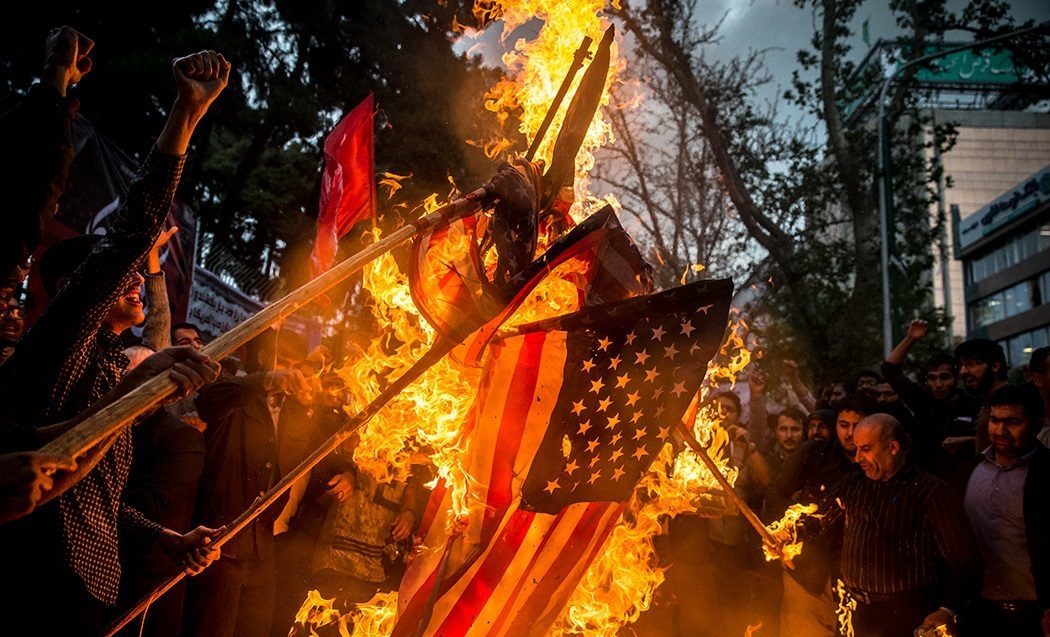
iran protest us
© Hossein Mersadi via Wikimedia CommonsProtests in front of former U.S. embassy in Tehran after U.S. decision to withdraw from JCPOA, May 8, 2018.
The Trump administration unilaterally cheated on the 2015 multinational, UN-endorsed JCPOA, or Iran nuclear deal. It has imposed an illegal, worldwide financial and energy blockade on all forms of trade with Iran - from oil and gas to exports of iron, steel, aluminum and copper. For all practical purposes, and in any geopolitical scenario, this is a declaration of war.

Successive U.S. governments have ripped international law to shreds; ditching the Joint Comprehensive Plan of Action is only the latest instance. It doesn't matter that Tehran has fulfilled all its commitments to the deal - according to UN inspectors. Once the leadership in Tehran concluded that the U.S. sanctions tsunami is fiercer than ever, it decided to begin partially withdrawing from the deal.

President Hassan Rouhani was adamant: Iran has not left the JCPOA - yet. Tehran's measures are legal under the framework of articles 26 and 36 of the JCPOA - and European officials were informed in advance. But it's clear the EU3 (Germany, France, Britain), who have always insisted on their vocal support for the JCPOA, must work seriously to alleviate the U.S.-provoked economic disaster to Iran if Tehran has any incentive to continue to abide by the agreement.

Comment: See also:


Light Sabers

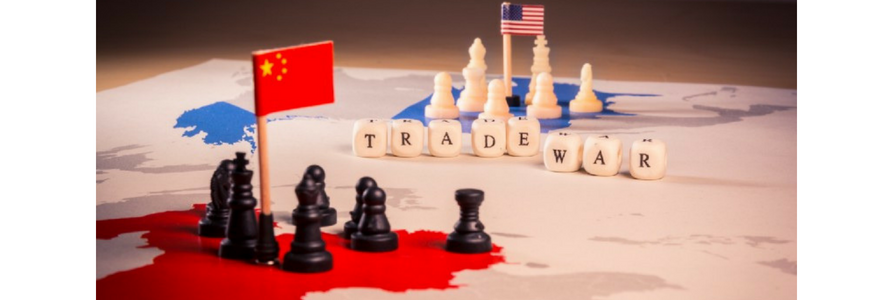
Best of the Web: China-US trade war: Hiatus or busted deal?

us china trade war
This past week the US and China failed to reach agreement on a new trade deal, despite high level China representative Lie He meeting in Washington on Thursday-Friday, May 9-10.

In the wake of the meeting, Trump and his administration mouthpieces attempt to put a positive spin on the collapsed talks, while placing blame on China for the break up. The 'spin' at first was that China had reneged on a prior agreement and changed its terms when they arrived in Washington. China had caused the breakdown, not the US. The stock markets swooned. Trump quickly jumped in and said he got a nice letter from China president, Xi, and that it wasn't all that bad.

But make no mistake, a trade negotiations 'rubicon' has been reached. The real trade war may be starting. Or, it may all be theater to make it look like both sides are acting tough and that an agreement will be reached this summer. But that scenario may now be fading. Trade wars-like hot wars-have their own dynamic. Once launched, they drive their adversaries in directions they may not have initially sought.

So who's actually responsible for last week's trade breakdown?

To listen to Trump and his neocons running the US foreign (and trade) policy show now, it was the Chinese. They changed the agreement at the last minute. But who really did the changes? Who set off the process? And how?

Comment: See also:


Heart

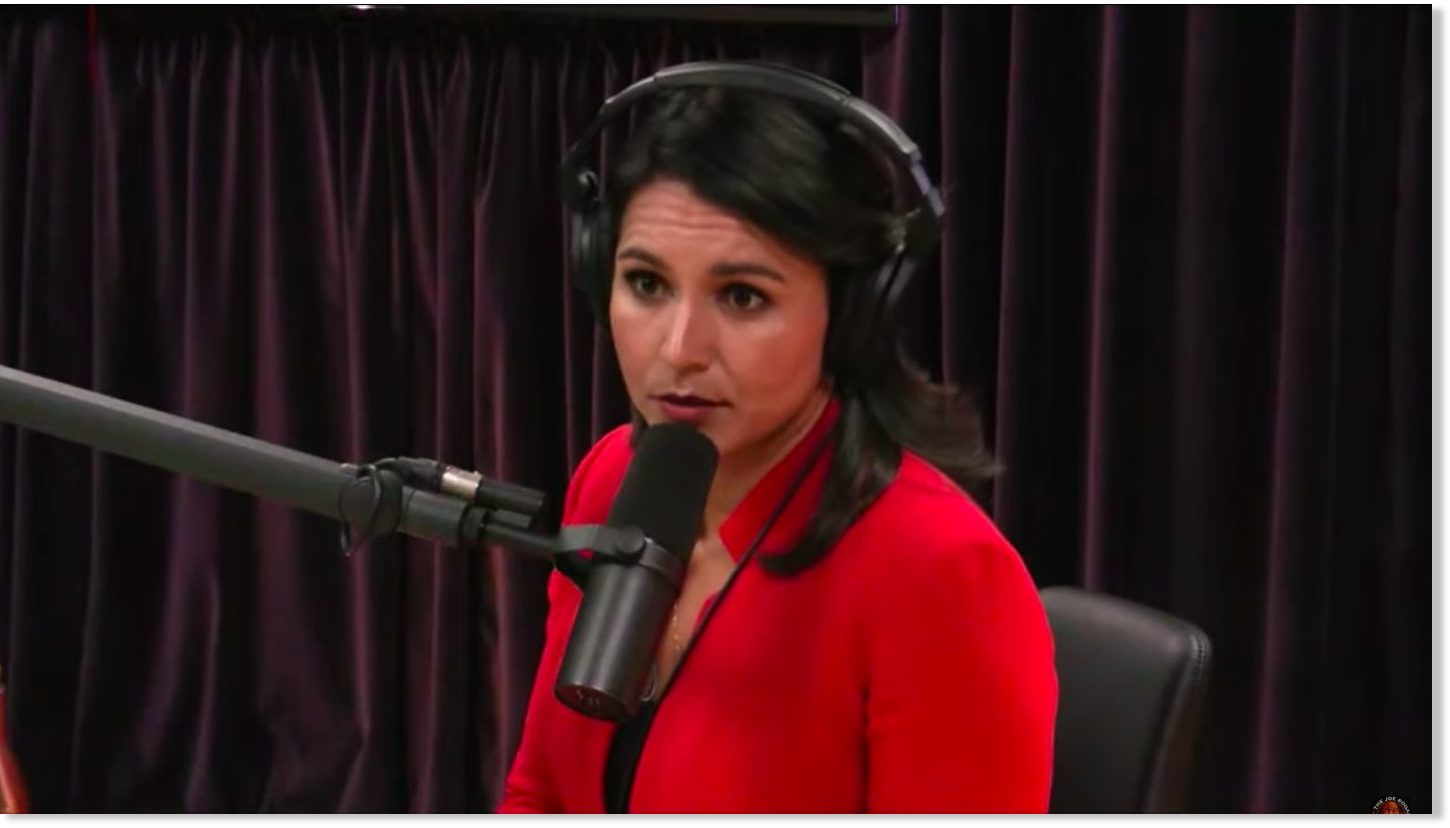
Best of the Web: Tulsi Gabbard on Joe Rogan podcast: I'd drop all charges against Assange and Snowden

tulsi on joe rogan
In midst of an interesting and wide-ranging discussion on the Joe Rogan Experience, Democratic congresswoman and presidential candidate Tulsi Gabbard said that if elected president she would drop all charges against NSA whistleblower Edward Snowden and WikiLeaks founder Julian Assange.

"What would you do about Julian Assange? What would you do about Edward Snowden?" Rogan asked in the latter part of the episode.

"As far as dropping the charges?" Gabbard asked.

"If you're president of the world right now, what do you do?"

"Yeah, dropping the charges," Gabbard replied.

Comment: Watch the full interview with Tulsi Gabbard below:


Sherlock

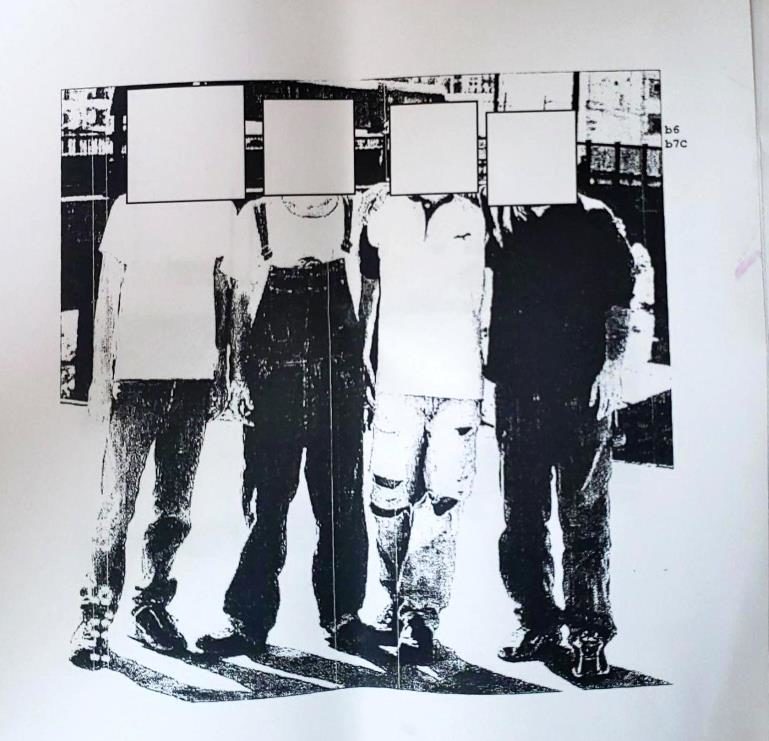
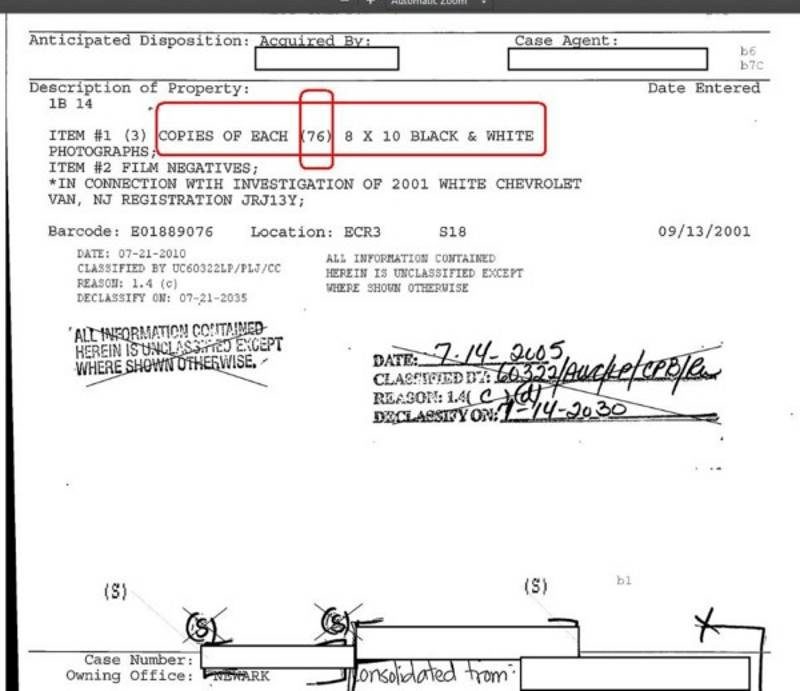
Best of the Web: FBI's redacted 9/11 'Dancing Israelis' photos analyzed

redacted dancing israeli photos

Comment: 9/11 researcher Ryan Dawson gives an interview regarding his analysis of redacted photos released by the FBI.


There are still 66 more missing pictures.
dancing israelis release form

Comment: A previous analysis by The Corbett Report:

Dancing Israelis on 9/11 points to the real criminals of that day: 'Our purpose was to document the event'


Attention

Best of the Web: British establishment's nightmare scenario: Polls show Farage's Brexit Party winning landslide victory in EU election, and possible victory in UK election

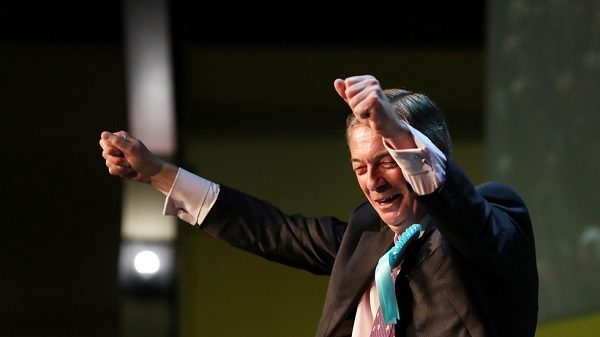
Nigel Farage
© REUTERS/Scott Heppell
Nigel Farage's Brexit Party has jumped to a double-digit lead over its closest rival, Labour, in the upcoming European election, and has three times the support of the Conservatives, who continue to lose ground, a poll has found.

With the EU Parliament election, set for May 23, inching closer, Farage's anti-EU party has taken pole position, leading with 34 percent thanks to a six-point increase in voter support from two weeks ago, a new Opinium poll commissioned by the Observer has revealed.

While the Brexit Party and Labour shared first place with 28 percent in the last poll, Jeremy Corbyn's party has since lost seven points, while Farage's newest political creation pulled ahead and is now separated from its closest rival by a 13-percent gap.

Comment: The BBC let Farage on for an interview today, in which it tried (and failed, epicly) to paint Farage as a crazy person...

And that's not all...
Poll surge for Farage sparks panic among Tories and Labour

The Opinium survey for the Observer places the Brexit party on 34%, when people were asked how they intended to vote on 23 May, with Labour slipping to 21% and the Conservatives collapsing to just 11%. Ominously for Theresa May, support for the Tories at the European elections is now less than a third of that for Farage's party, and below that for the Liberal Democrats, who are on 12%. [...]

A ComRes poll for the Sunday Telegraph showed that if a Westminster general election were called, Labour would reap the largest share of the vote with 27%; the Brexit party would garner 20% ahead of the Conservatives on 19%. The Liberal Democrats would win 14%, followed by ChangeUK (7%) and the Greens (5%) with Ukip trailing on 2%.


Cassiopaea

Best of the Web: The Answer is Yes, Intelligent Design is Detectable by Science

DNA sculpture

Editor's note
: The online journal Sapientia recently posed a good question to several participants in a forum: "Is Intelligent Design Detectable by Science?" This is one key issue on which proponents of ID and of theistic evolution differ. Stephen Meyer, philosopher of science and director of Discovery Institute's Center for Science & Culture, gave the following reply.

Biologists have long recognized that many organized structures in living organisms - the elegant form and protective covering of the coiled nautilus; the interdependent parts of the vertebrate eye; the interlocking bones, muscles, and feathers of a bird wing - "give the appearance of having been designed for a purpose."1

Before Darwin, biologists attributed the beauty, integrated complexity, and adaptation of organisms to their environments to a powerful designing intelligence. Consequently, they also thought the study of life rendered the activity of a designing intelligence detectable in the natural world.

Yet Darwin argued that this appearance of design could be more simply explained as the product of a purely undirected mechanism, namely, natural selection and random variation. Modern neo-Darwinists have similarly asserted that the undirected process of natural selection and random mutation produced the intricate designed-like structures in living systems. They affirm that natural selection can mimic the powers of a designing intelligence without itself being guided by an intelligent agent. Thus, living organisms may look designed, but on this view, that appearance is illusory and, consequently, the study of life does not render the activity of a designing intelligence detectable in the natural world. As Darwin himself insisted, "There seems to be no more design in the variability of organic beings and in the action of natural selection, than in the course in which the wind blows."2 Or as the eminent evolutionary biologist Francisco Ayala has argued, Darwin accounted for "design without a designer" and showed "that the directive organization of living beings can be explained as the result of a natural process, natural selection, without any need to resort to a Creator or other external agent."3

Comment: Profound in its implications, the validity of intelligent design as good science's answer to neo-Darwinism - is fast becoming understood and embraced by those left dissatified with the limited, antiquated and materialist way of understanding 'evolution,' and the meaning of life itself.

See also: