Animals
S


Butterfly

Bird that went extinct 136,000 years ago comes 'back from the dead' after evolving again

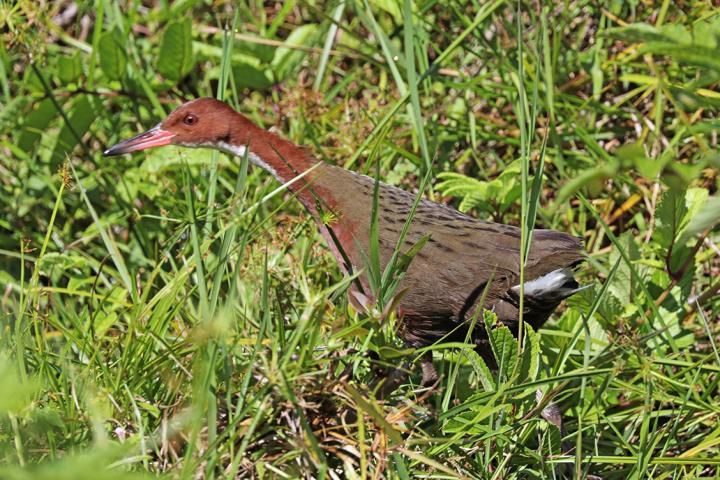
White-throated rail.
© Charles J Sharp via CC BY-SA 4.0White-throated rail. There is no other evidence of the phenomenon that has ever been so clear, scientists say
A bird that previously went extinct rose from the dead after it evolved all over again, scientists have found.

The last surviving flightless species of bird in the Indian Ocean, a type of rail, has actually been around before, the research found. It came back through a process called "iterative evolution", which saw it emerge twice over, the researchers found.

It means that on two separate occasions - tens of thousands of years apart - a species of rail was able to colonise an atoll called Aldabra. In both cases it eventually became flightless, and those birds from the latter time can still be found on the island now.

Iterative evolution happens when the same or similar structures evolve out of the same common ancestor, but at different times - meaning that the animal actually comes about twice over, completely separately.

Comment: It would appear that there are a great many exceptions and anomalies to the mainstream theory of evolution: And check out SOTT radio's:


Info

What ancient humans live on in our DNA?

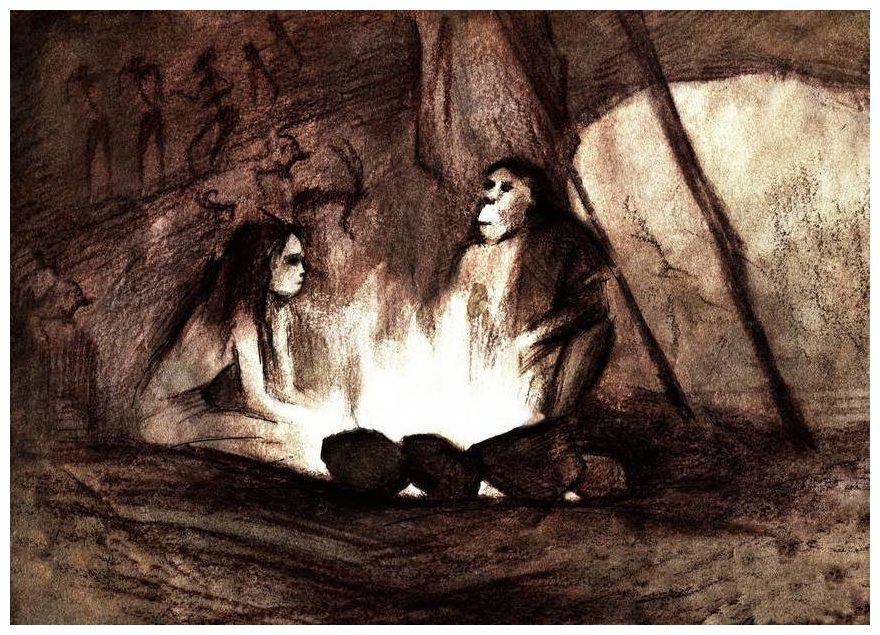
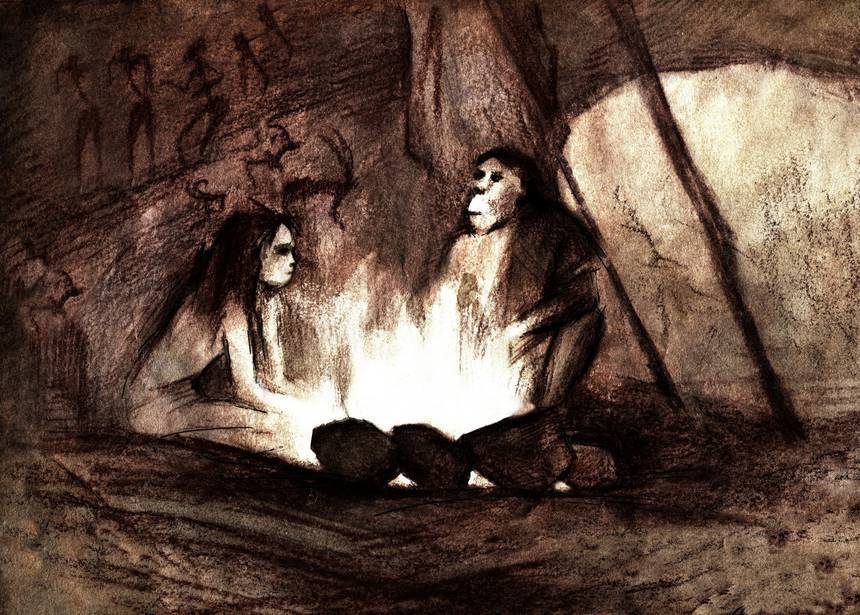
Neanderthal in CAve
© Yulliii/Shutterstock
When the Neanderthal genome was first sequenced in 2010 and compared with ours, scientists noticed that genes from Homo neanderthalensis also showed up in our own DNA. The conclusion was inescapable: Our ancestors mated and reproduced with another lineage of now-extinct humans who live on today in our genes.

When the Denisovan genome was sequenced soon after, in 2012, it revealed similar instances of interbreeding. We now know that small populations from all three Homo lineages mixed and mingled at various times. The result is that our DNA today is speckled with contributions from ancient hominin groups who lived alongside us, but did not survive to the present day. Genes from Denisovans and Neanderthals are not present in everyone's DNA - for example, some Africans have neither, while Europeans have just Neanderthal genes. But, these genetic echoes are loud enough to stand out clearly to scientists.

On one level, it's not shocking that DNA from other human groups resides within us. H. sapiens today is the result of millions of years of evolution; we can count numerous species of ancient hominin among our ancestors. But the Neanderthal and Denisovan contributions to our genetic makeup happened far more recently, after H. sapiens had already split from other human groups. Those interbreeding events, also called introgressions, did not create a new species of human - they enriched an already existing one. Some of the traits we acquired are still relevant to our lives today.

"There's a lot of evidence for some type of introgression from ancient hominins into modern humans, particularly modern humans out of Africa," says Adam Siepel, a computational biologists at the Cold Spring Harbor Laboratory. "I don't think there's any real question among experts in the field as to whether the evidence overwhelmingly supports that event."

Finger Bone Fragment
© Thilo Parg/Wikimedia CommonsReplica of a Denisovan finger bone fragment, originally found in Denisova Cave in 2008, at the Museum of Natural Sciences in Brussels, Belgium.
Some evidence also suggests that there may be more than two additional human groups lurking in our DNA, what researchers sometimes call "ghost lineages." Modern humans living in Africa may have interbred with one or more hominin species there, resulting in even more addition to our current DNA. And a recent study of modern-day Indonesians suggests that what we call Denisovans was actually three separate groups of hominins, at least one of which can be thought of as its own species. The ancestors of Asians and Melanesians mated with at least one of these groups, and possibly more.

Flashlight

'Extinct' creatures found alive deep within Honduras rainforest

honduras rainforest
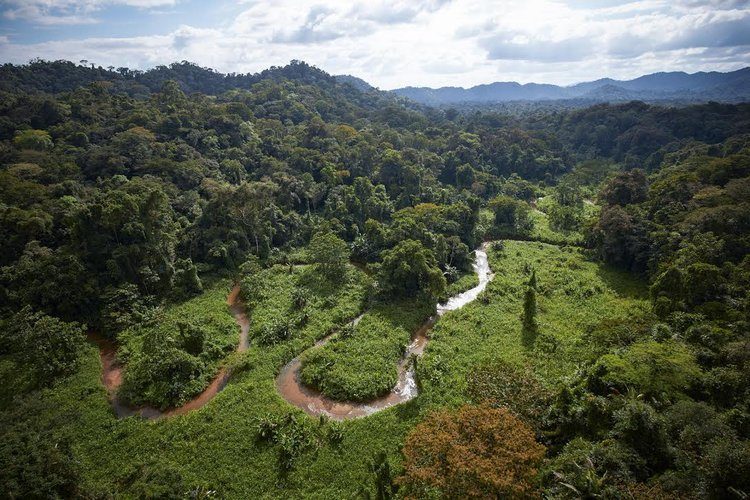
Rainforest, Honduras
A team of scientists have discovered an ecosystem filled with rare and endangered species, including species that were thought to be extinct, in a "lost city" deep within a rainforest in Honduras.

The conservation team spent three weeks exploring an ancient settlement, known as the "Lost City of the Monkey God" or "White City", in the Mosquitia rainforest and found a diverse hub of wildlife, including hundreds of species of butterflies, bats and reptiles.

Scientists also rediscovered three species that were thought to be no longer living in Honduras: the pale-faced bat, the False Tree Coral Snake and a tiger beetle which had only been recorded in Nicaragua and was believed to be extinct.

Comment: There's no denying that life on our planet is under strain right now and that it's undergoing many shifts, including extinction level events, but there does appear to be a trend of declaring extinctions far too prematurely: See also:


Attention

Britain sees worrying rise in Asian Hornets - 80 nests found

Asian Hornets
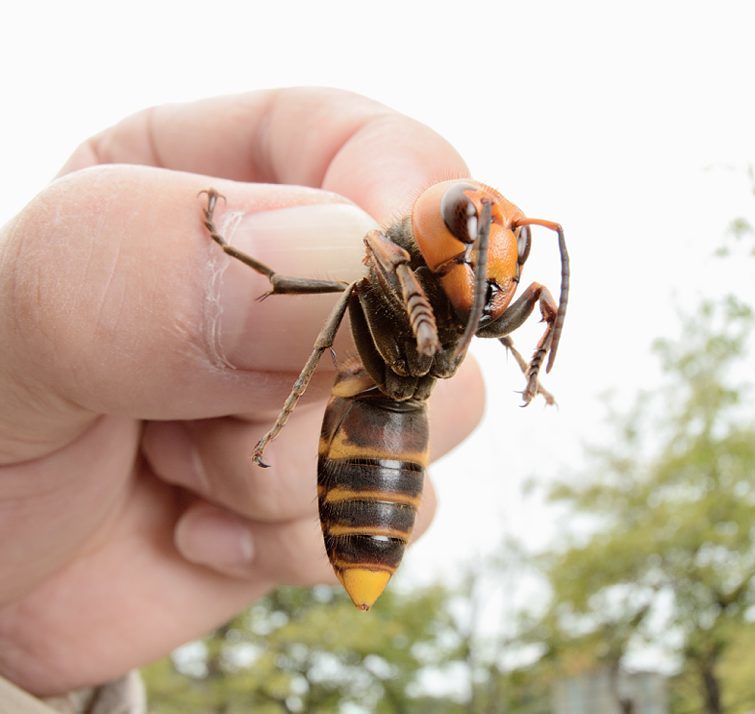
© GETTYKILLER: Asian Hornets can deliver a fatal sting to humans
The insects - which can grow up to 1.6 inches - have powerful stings which can be fatal to humans with just a single strike if the person is allergic.

Record numbers of nests have been found on Jersey as there are fears they will move onto the mainland.

The fight is on-going on the Channel Island and is seen as a crucial battle-ground to stop the spread.

Just one of the foreign menaces can eat up to 50 bees a day and their impact on honey production could be devastating.

Comment: See also: Deadly Asian hornets invading Europe, scientists adding electronic trackers to enable destruction of nests


Attention

Teen girl describes harrowing attack by sea lion

Megan Pagnini
© Pagnini familyMegan Pagnini, 13, was attacked by a sea lion on Friday, June 14, 2019, and suffered a deep gash to her leg.
Hanging out and taking selfies on the beach is hardly an unusual pastime for a 13-year-old girl. But Megan Pagnini never expected a day at the shore to turn into the nightmare of being attacked by a sea lion.

The teen was in Pismo Beach, California, along the state's central coast, last Friday evening when her and a friend walked down to the water after dinner.

"I was at the water, I was just playing around, jumping -- having fun," Pagnini told "Good Morning America" in an interview airing Friday. "And I was taking silly pictures, when all of a sudden, it came out of nowhere and bit my leg."

The "it" she was referring to was a very angry sea lion.

The animals are common in the region, and Pagnini said she thought nothing of the animals swimming in the area.

Fish

Angler revives exotic oarfish in rare encounter off Baja California Sur, Mexico

OARFISH
A fisherman who had always dreamed of holding an oarfish—an exotic sea creature from the deep—became one of the few people to see and hold an oarfish that was still living, and he possibly even saved its life.

The extremely rare encounter occurred last week on a Mexican beach in Baja's East Cape as Noah Thompson, 24, and Jacob Thompson, 17, were just getting started for a day of fly-fishing.

The brothers from Austin, Tex., were working their way down the beach on quads just north of Rancho Leonero Resort when Jacob spotted something silvery that had just washed ashore.

Noah told USA Today/For The Win Outdoors that his brother "knew exactly what it was and he was thrilled."

Doberman

Boy dies a day after attack by 10 stray dogs in the Philippines

canine attack
© Angela Antunes / CC by 2.0
A five-year-old boy in Basilan in southern Philippines died a day after being savagely attacked by stray dogs as officials took steps to address feral canine assaults on the local populace.

Reports reaching Manila said the boy was out walking on the streets of Aguada in Isabela City on Sunday evening when about ten stray dogs mauled him. The victim, a Muslim, was later taken to a hospital in Zamboanga City for treatment, but died on Tuesday morning due to his injuries.

The incident drew concern from local officials as it was not the first time that such attacks from feral dogs were recorded in Isabela City.

Info

New study says gender inequality arose 8000 years ago

Neolithic cave painting
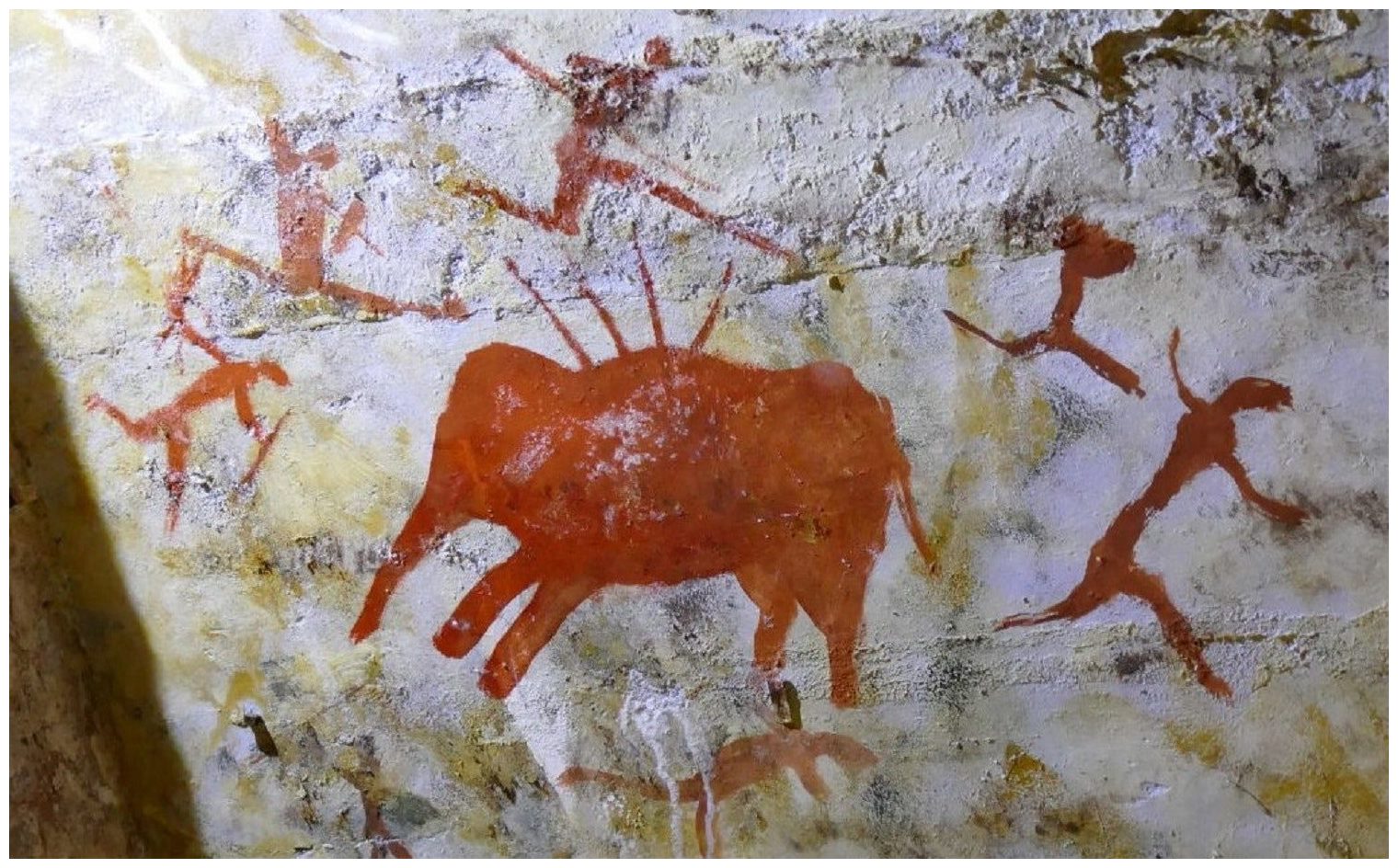
© Universal History Archive/ Universal Images Group via Getty ImagesA Neolithic cave painting in Cantabria, Spain. As the period progressed, men were depicted more often than women, and in ways often associated with violence.
At a time when human societies were abandoning their wanderlust in favour of agricultural settlements, the first inklings of gender inequality were taking root.

That's according to a study published in the European Journal of Archaeology, which analysed 5000-to-8000-year-old graves on the Iberian Peninsula.

Accounts of historical gender inequalities have largely focused on written records. Work by the historian Gerda Lerner in the early 1990s, for instance, found that by the second century BCE gender inequalities were already entrenched in middle eastern societies.

Lerner figured that the cultural practice of valuing men over women arose some time in pre-history, before written records emerged.

Archaeologists Marta Cintas-Peña and Leonardo García Sanjuán from the University of Seville in Spain decided to plumb the archaeological record to find out if she was right.

Twenty-one sites, which together contained the remains of more than 500 individuals buried in everything from individual tombs to pit graves and collective cave burials, were analysed.

The majority of the bodies were of an undetermined sex, many of them children. Nevertheless, of the 198 whose sex was known, men were over-represented. For every female grave, there were 1.5 male graves. Children were also less common than would be expected.

Arrow Down

Birds fall from the sky as temperatures soar in Hyderabad, India

A bird rescued at Dilsukhnagar.
Lack of spaces to perch and rest causing them to collapse or, worse, drop down dead

Severity of summer has taken a toll not only on human beings but also avian life with temperatures soaring up to 45 degrees or even 47 degrees C in some pockets of the city.

Calls for rescue

Several instances of birds dropping out of exhaustion have been noticed by concerned citizens who alerted animal welfare organisations. "Even yesterday, we received an alert from Dilsukhnagar about an exhausted bird. We rushed a volunteer to check on it. It was rescued and given first aid before it recovered and flew away," says Mahesh Agarwal, general secretary of Bharateeya Prani Mitra Sangh.

Doberman

Pit bulls involved in attack that killed woman in Bakersfield, California

PIT BULL ATTACK
Officials confirm that three dogs fatally attacked a woman, who was found dead in a Costco parking lot Sunday morning, in Northwest Bakersfield.

Bakersfield Police Department spokesman Nathan McCauley said one Pit bull and one mixed breed escaped from a nearby business before the attack. The third dog was a stray Pit bull.

The woman, who has not been identified, was in her late 30s to early 40s and is a Bakersfield resident. She was found by a bystander shortly after 6 a.m Sunday morning, but officials say the attack appeared to have happened several hours prior to their arrival.

All three dogs were located and will be euthanized by animal control, according to officials.