Animals
S


Bug

'Worst invasion in 60 years': Huge plague of locusts wreak havoc on Italy's island of Sardinia

Locust
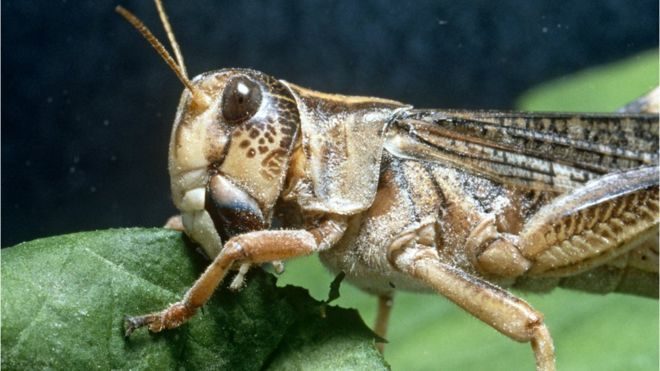
© BBC (stock photo)

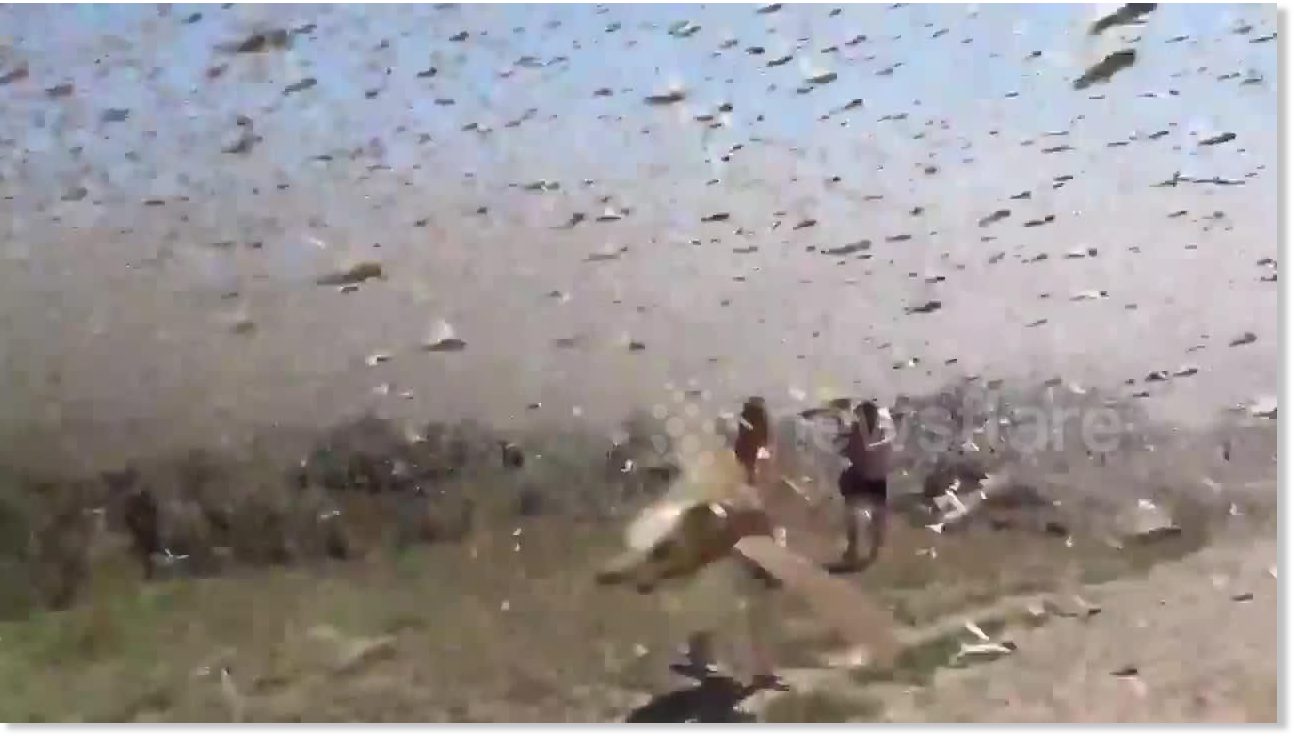
A huge plague of locusts is wreaking havoc on the Italian island of Sardinia in the worst insect invasion in more than 60 years, local media report.

Large swarms are destroying crops and invading homes in Ottana and Orani in the central province of Nuoro. More than 2,000 hectares of farmland has been destroyed by "blankets" of the insects, reports said.

The locust invasion has been linked to a recent rise in temperatures after months of cooler weather on the island. "There are millions in the countryside," the Italian farmers' association Coldiretti warned in a statement on Monday.

"The locusts emerge on uncultivated land, but then they go to cultivated land to eat," the group said, adding that there was little that could now be done to remedy the situation.

At least 12 farms have been affected, with animal grazing pastures ruined and "little left to harvest", Italy's La Stampa newspaper reported.

Attention

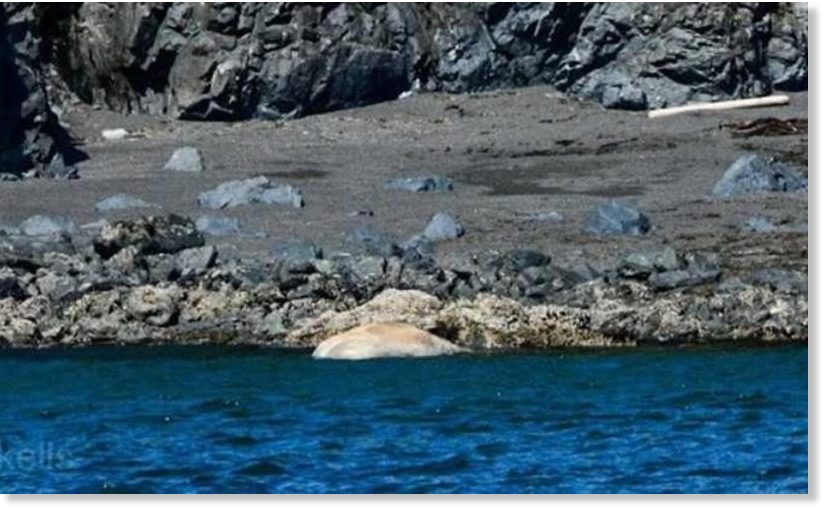
2 more dead gray whales have been found in Alaska, bringing the year's toll to 75 along the US West Coast

A dead gray whale near Portage Bay
A dead gray whale near Portage Bay, Kodiak Island
Two more gray whales were found dead this week in Alaska amid the mysterious surge of deaths within the species this year along the US West Coast, CNN affiliate KTUU reports.

That makes seven in Alaska and at least 75 total, in what the National Oceanic and Atmospheric Administration calls an "unusual mortality event," the station reports.

One of the two found near Kodiak Island in the Gulf of Alaska showed signs of killer whale "predation," KTUU reports.

Two more were discovered this week off Washington state.

Attention

Russian man fights off Siberian bear by biting its tongue off

Bear
© Global Look Press / CTK Photo / Miroslav Chaloupka
An unarmed Russian man fended off a gruesome bear attack in a remote forest in Siberia by biting the animal's tongue off, the media reports citing local police.

Ten days ago, Nikolay Irgit, 30, along with two friends went to a local forest reserve in the Tuva region of southern Siberia to collect horns shed by deer and moose. The journey into the wilderness was not only dangerous but illegal as well, since the men had no permits for collecting the remains of animals. The horns, used for medical purposes and making furniture, are often sold for a hefty price on the black market.

The horn hunt went as planned at first. The men arrived at the spot and set up camp. They started a fire, cooked food, and split up to cover more ground. Irgit went alone, deep into the forest, where he suddenly stumbled across a brown bear.

Eye 2

Crocodile attacks have increased 20-fold over the past decade in East Timor

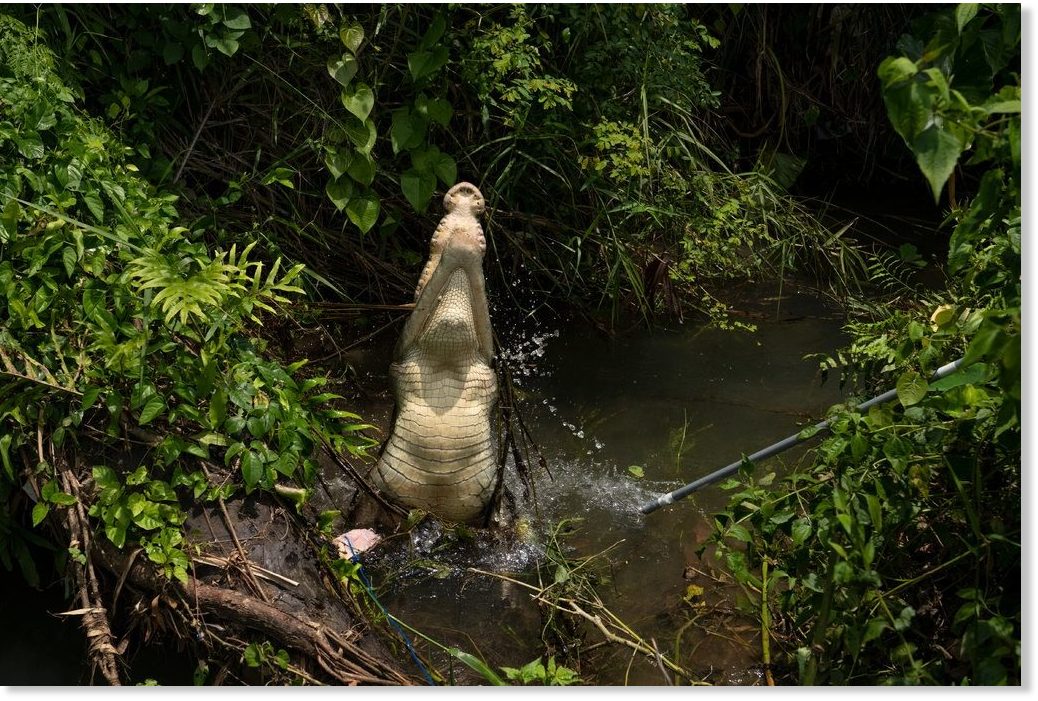
Crocodile attacks in East Timor have increased in recent years, and scientists are trying to figure out why. This crocodile is having a DNA sample drawn.
© Matthew AbbottCrocodile attacks in East Timor have increased in recent years, and scientists are trying to figure out why. This crocodile is having a DNA sample drawn.
The two scientists, crammed in the back of a sweltering car, had come a long way hoping to encounter what most people try to avoid: man-eating crocodiles.

Yusuke Fukuda and Sam Banks, biologists from Australia, traveled in March to East Timor, one of the world's least developed countries, to investigate what has become a deadly national mystery: Why are so many Timorese being killed by crocodiles?

Crocodile attacks here have increased 20-fold in the past decade, numbering at least one death a month in a country of 1.2 million people.

"We became concerned after many people were taken by crocodiles in East Timor," said Mr. Fukuda, a Ph.D. candidate at Australian National University in Darwin, adding that it had taken years of bureaucratic wrangling between the researchers and the governments in both Australia and East Timor to be permitted to conduct research.

The people of East Timor, also know as Timor-Leste, have for centuries revered and even worshiped crocodiles.

Bug

Honey bee colonies down by 16 percent

honey bee
Honeybee
The number of honey bee colonies fell by 16% in the winter of 2017-18, according to an international study led by the University of Strathclyde.

The survey of 25,363 beekeepers in 36 countries found that, out of 544,879 colonies being managed at the start of winter, 89,124 were lost, through a combination of circumstances including various effects of weather conditions, unsolvable problems with a colony's queen, and natural disaster.

Portugal, Northern Ireland, Italy and England experienced losses above 25%, while Belarus, Israel and Serbia were among those with loss rates below 10%. There were also significant regional variations within some countries, including Germany, Sweden and Greece.

The total loss rate was down from 20.9% in 2016-17 but was still higher than the 2015-16 figure of 12.0%. The total loss rate for Scotland increased over these three years, from 18.0% to 20.4% to 23.7%.

Comment: See in addition: A third of the honeybee colonies in America died in 2016: Why you should care

The death and global extinction of honeybees


Attention

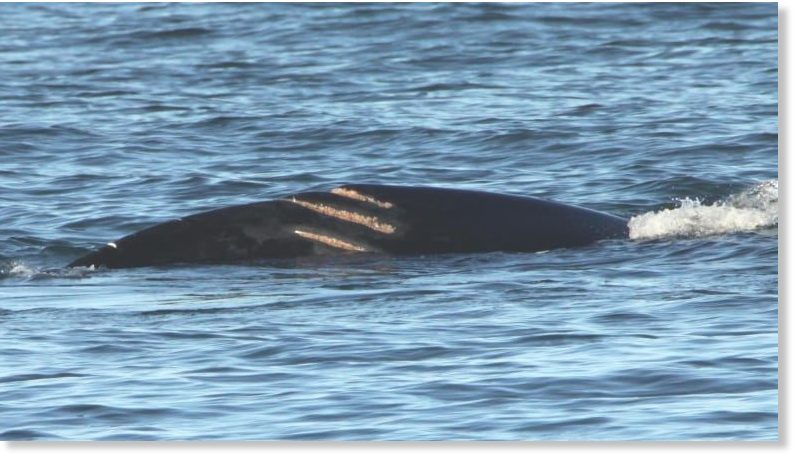
Rare North Atlantic right whale found dead in Gulf of St. Lawrence

Pictured in 2011, Wolverine, a male endangered north Atlantic right whale, was found killed in the Gulf of St. Lawrence
Fisheries and Oceans Canada currently assessing recovery options

A dead North Atlantic right whale has been found drifting in the Gulf of St. Lawrence.

Fisheries and Oceans Canada said in a media release the dead whale was spotted during an aerial surveillance flight on June 4.

"We are working with the Marine Animal Response Society (MARS), the Quebec Marine Mammal Emergency Response Network, and the National Oceanic and Atmospheric Administration (NOAA) to find the whale and try to recover it," reads the release.

Attention

73 gray whales dead in 6 months on the west coast of North America - scientists don't understand why

An unusually high number of gray whales have washed up dead
© Cara Field/The Marine Mammal CenterAn unusually high number of gray whales have washed up dead
Since January, more than 70 dead gray whales have washed up on the coasts of California, Oregon, Washington, Alaska and Canada. That's the most in a single year since 2000, and scientists are concerned.

Last week, the National Oceanic and Atmospheric Administration (NOAA) Fisheries designated these strandings as part of an Unusual Mortality Event (UME). Under the U.S. Marine Mammal Protection Act, the designation of a UME means that more resources and scientific expertise will be dedicated to investigating what's causing so many whales to die.

Seeing numerous gray whales (Eschrichtius robustus) swimming along the west coast this time of year is expected. From about March to June, these large marine mammals swim north from the coast of Baja California, Mexico, to the cool, food-rich waters of the Bering and Chukchi seas, north of Alaska. They'll start their return trip south in November.

Info

Stone artefacts from 2.6 million years ago are the earliest Homo tools ever found in Ethiopia

Ancient Tools
© Wikipedia OrgOldowan tools mark the first technology developed by humanity's distant ancestors.
Humans are expert tool-makers, and as far back as 2.6 million years ago our stone age relatives were getting there too.

That's according to an analysis of 300 stone artefacts - including sharp-edged rock flakes and the rocks they have been chipped from, known as "cores" - published in the journal PNAS.

The new trove of artefacts was unearthed in Ethiopia's Afar Basin, a region that rocketed to fame in 1974 when the 3.2-million-year-old remains of our ancient relative "Lucy" (Australopithecus afarensis) were discovered.

The new site - known as Bokol Dora 1 (BD 1) - lies just five kilometres away from the location of one of oldest fossil remains of our own genus, Homo, a lower jaw that is 2.8 million years old.

Stone artefacts are the best evidence available of the early cognitive abilities of prehistoric humans.

But discoveries in recent years show that other early hominins, lines that pre-dated the Homo lineage, got in on the act too. Primitive stone tools from the Lomekwi 3 site in Kenya, for instance, date to 3.3 million years ago.

Modern primates - chimpanzees and capuchin monkeys - are also known to fashion rudimentary tools.

Bug

Huge swarm of locusts blight Indian town

locusts
An army of locusts coming from the Pakistan side has laid siege to a western Indian border district.

Rajasthan's Jaisalmer district is witnessing the biggest attack in 26 years, said the Locust Warning Organisation (LWO), headquartered in Jodhpur.

According to the officials, locust hunters are trying to limit the damage.

The last major locust outbreak was reported in Rajasthan in 1993.


Doberman

Man dies following dog attack in Fort Madison, Iowa

canine attack
© Angela Antunes / CC by 2.0
Authorities say a man is dead after a dog attacked him and two others Friday morning.

According to Lee County Sheriff Stacy Weber, the Fort Madison Police Department responded to the attack at a home near the Old Iowa State Prison.

Weber says officers found a large dog attacking a different man who was lying on his back in the front yard.

Officers say the dog was very aggressive and would not release the man which prompted the officers to shoot at the animal to stop the attack.