Animals
S


Microscope 2

A mysterious disease is striking American beech trees

nematode
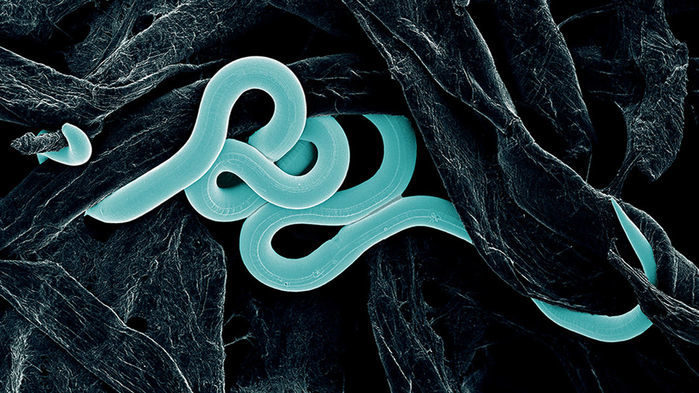
© USDA/ARS/ELECTRON & CONFOCAL MICROSCOPY UNIT/LYNN CARTA/GARY BAUCHAN/CHRIS POOLEY/MYCOLOGY AND NEMATOLOGY GENETIC DIVERSITY AND BIOLOGY LABORATORY; COLORIZATION BY IT SPECIALIST/SOYBEAN GENOMICS AND IMPROVEMENT LABORATORYSome researchers believe a nematode native to Asia is causing a deadly disease in American beech trees.
A mysterious disease is starting to kill American beeches, one of eastern North America's most important trees, and has spread rapidly from the Great Lakes to New England. But scientists disagree about what is causing the ailment, dubbed beech leaf disease. Some have recently blamed a tiny leaf-eating worm introduced from Asia, but others are skeptical that's the whole story.

Regardless of their views, researchers say the outbreak deserves attention. "We're dealing with something really unusual," says Lynn Carta, a plant disease specialist with the U.S. Department of Agriculture (USDA) in Beltsville, Maryland.

American beech (Fagus grandifolia), whose smooth gray trunks can resemble giant elephant legs, can grow to almost 40 meters tall. It is the fifth most common tree species in southern New England and in New York state — and the single most common tree in Washington, D.C. Its annual nut crop provides food for birds, squirrels, and deer.

Comment: It's notable that the wild Beech trees were already suffering from a fungus. What is even more concerning is that cases where pathogens are affecting life on our planet appear to be on the rise, and that includes everything from trees to frogs to deer to humans. One wonders whether these unusual diseases and epidemics are related to the extremes in weather; solar minimum; the influx of cosmic rays; a decrease in immunity; mutation and adaptation; foreign viruses, and so on:


Question

Mystery surrounds why hundreds of dead seabirds have washed up on Sydney's beaches

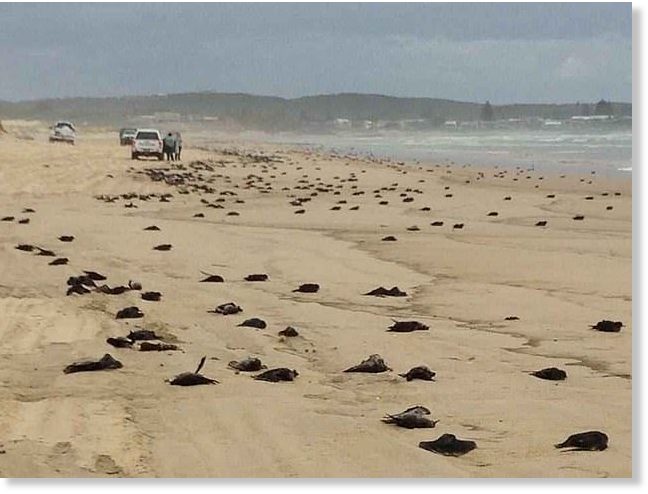
Hundreds of dead birds are washing up on Sydney's iconic beaches. Pictured: The corpses of short-tailed shearwaters on an Australian beach in October
Hundreds of dead birds are washing up on Sydney's iconic beaches.

The corpses of short-tailed shearwaters have been spotted at several shorelines including Bondi, Manly and Cronulla.

The birds are migrating back to southern Australia to breed after spending the summer in Alaska.

But, according to experts, a higher number than usual are dying on the way due to a lack of food.

Comment: For some time now these types of events have also been occurring widely across the world, see these similar reports from recent years:


Attention

Sixth mass extinction well under way

Rare Tiger
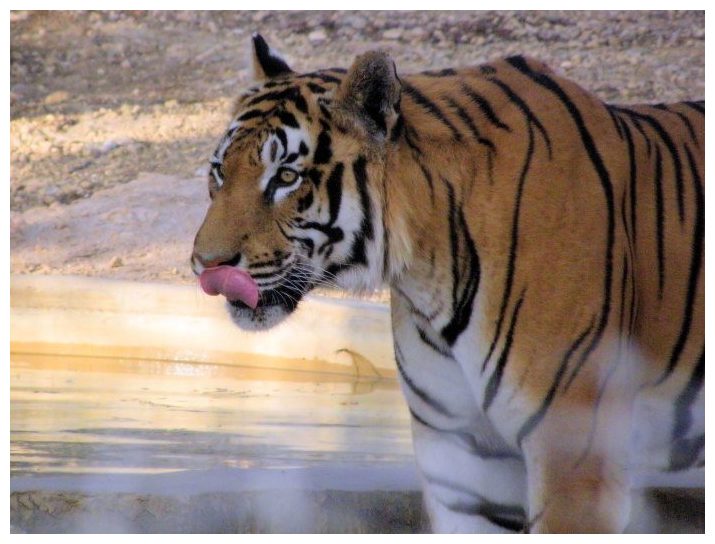
© Keith Roper/Flickr, CC BY-SAHumans are probably causing what ice ages and asteroids caused before them.
For more than 3.5 billion years, living organisms have thrived, multiplied and diversified to occupy every ecosystem on Earth. The flip side to this explosion of new species is that species extinctions have also always been part of the evolutionary life cycle.

But these two processes are not always in step. When the loss of species rapidly outpaces the formation of new species, this balance can be tipped enough to elicit what are known as "mass extinction" events.

A mass extinction is usually defined as a loss of about three quarters of all species in existence across the entire Earth over a "short" geological period of time. Given the vast amount of time since life first evolved on the planet, "short" is defined as anything less than 2.8 million years.

Since at least the Cambrian period that began around 540 million years ago when the diversity of life first exploded into a vast array of forms, only five extinction events have definitively met these mass-extinction criteria.

These so-called "Big Five" have become part of the scientific benchmark to determine whether human beings have today created the conditions for a sixth mass extinction.

Bug

'Unnoticed Apocalypse': Dying insects put humankind's existence at risk

bees
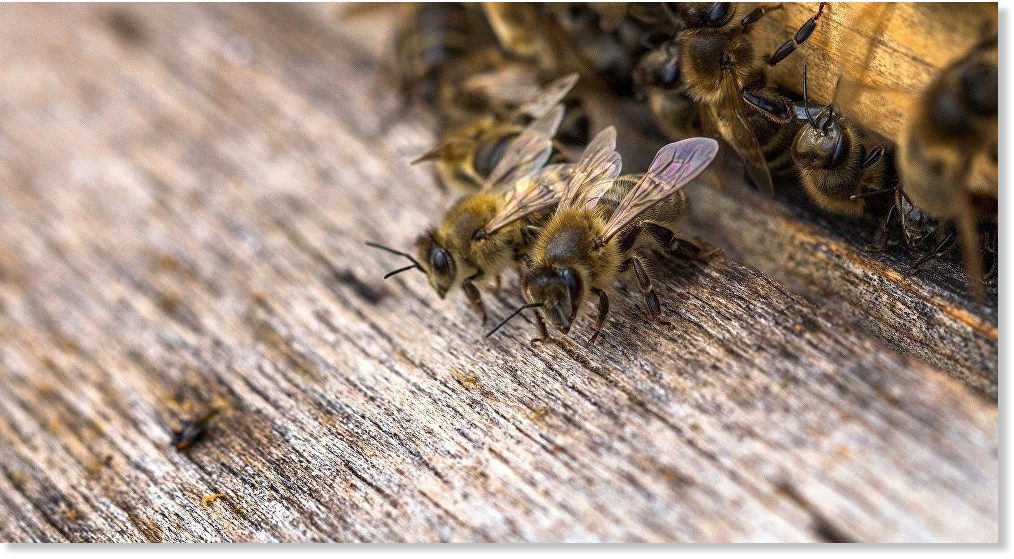
The analysis conducted by Professor David Goulson, one of Britain's leading ecologists says that 50 percent of insects have perished since 1970 as a result of habitat loss and the heavy use of pesticides. Goulson notes that this number could be even higher.

A new scientific report warns that if we don't stop extinction and decline in the population of insects it would pose catastrophic consequences to all forms of life on Earth. Three quarters of crop types grown by humans are pollinated by insects, we wouldn't be able to feed ourselves if they disappear.

The research for the Wildlife Trusts, which has a particular focus on the United Kingdom, says 41 percent of insect species are threatened with extinction. Twenty-three bee and wasp species have died out in the United Kingdom since 1850, the report said, while the number of butterflies that specialise in particular habitats have declined by 77 percent. The research сites another scientific review conducted by an Australian entomologist, who stressed humans are witnessing the largest extinction event since the late Permian.

Info

Over 140 new geoglyphs discovered at Nazca

New Nasca Birds
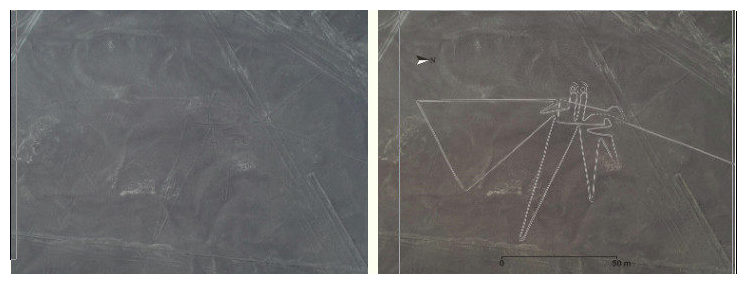
© Yamagata UniversityLeft - Bird (line type) and Right - Bird (processed picture)
A research team led by Professor Masato Sakai (Cultural anthropology, Andean archeology) at Yamagata University discovered 142 new geoglyphs, which depict people, animals and other beings, on the Nasca Pampa and surrounding area in Peru, South America.

Situated mainly in the west of the Nasca Pampa, these new geoglyphs were identified through fieldwork and analyzing high-resolution 3D data, among other activities conducted up to 2018. The biomorphic geoglyphs are thought to date back to at least 100 BC to AD 300. Additionally, in a feasibility study carried out from 2018 to 2019 together with IBM Japan, the university discovered one new geoglyph by developing an AI model on the AI server IBM Power System AC922 configured with the deep learning platform IBM Watson Machine Learning Community Edition (formerly known as IBM PowerAI) . This study explored the feasibility of AI's potential to discover new lines, and introduced the capability to process large volumes of data with AI, including high-resolution aerial photos, at high speeds. This represented the first glyph at the site discovered by an AI.

Doberman

Austrian soldier killed by 2 service dogs

canine attack
© Angela Antunes / CC by 2.0
An Austrian soldier has been killed by two Belgian Shepherd service dogs he was tasked with feeding.

The 31-year-old, who had worked as a dog handler since 2017, was in charge of caring for and feeding the dogs at the barracks at Wiener Neustadt near the capital Vienna.

An officer spotted the two Belgian Shepherd dogs running loose at the barracks south of Vienna early Thursday. The fatally injured staff sergeant was then found inside the dogs' kennel.

Pharoah

Ancient Egyptian ibises were wild birds

Egyptian Book of the Dead Depiction
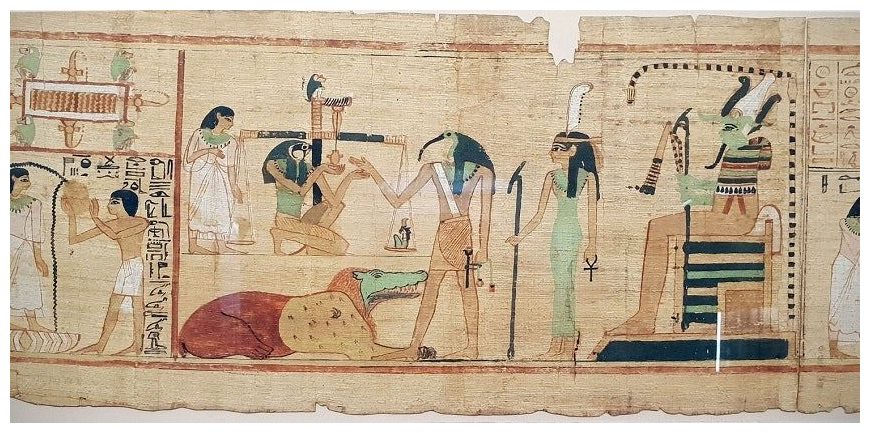
© Wasef et al, 2019A scene from the Books of the Dead (The Egyptian Museum) showing the ibis-headed God Thoth recording the result of the final judgement.
An analysis of ancient DNA extracted from the mummified remains of sacred ibises suggests ancient Egyptians captured the birds from the wild rather than farming them.

In Australia, the white ibis is unceremoniously referred to as a bin chicken, for its propensity to scavenge scraps from rubbish bins.

But in ancient Egypt, its relative, the sacred ibis (Threskiornis aethiopicus), was revered.

It was seen as a living representation - or even physical manifestation - of the God of Wisdom, Thoth, perhaps because it looks like a scribe writing on water when it dips its long slender beak into the water to feed.

Archaeologists have unearthed several million mummified ibises from a roughly 800-year period between 600 BCE and 250 CE.

Unlike victual mummies, which were buried in a person's tomb to come alive in the afterlife, ibis mummies were usually what's known as votive mummies.

These would have been purchased from a temple devoted to the God Thoth and displayed as an offering, much like candles or sticks of incense in Buddhist temples today.

After a period of time, the ibis mummies - some roughly wrapped in bandages, others exquisitely decorated - were moved into catacombs, vast underground tunnels and storage rooms beneath the temple.

Info

Fossils of two new snake species found in Greece

Fossilized snake bones
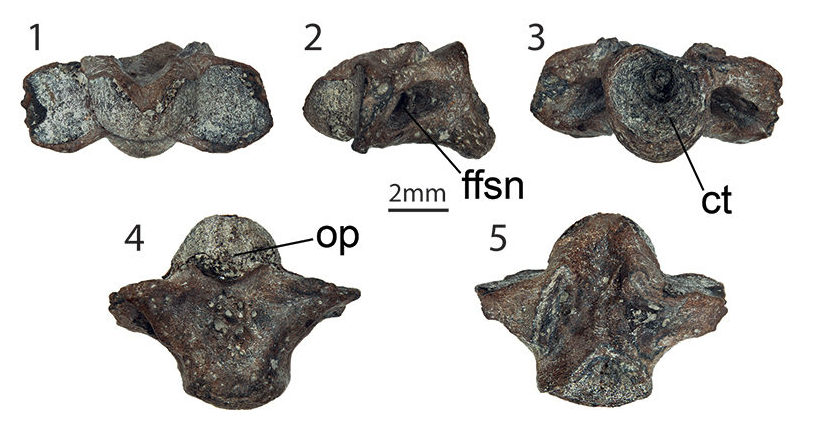
© Palaeontologia ElectronicaCryptobranchidae indet. from Maramena: atlas (UU MAA 7441) in anterior (1), left lateral (2), posterior (3), ventral (4), and dorsal (5) views. Abbreviations: ct, cotyle; ffsn, foramen for the first spinal nerve; op, odontoid process.
Fossilised remains of two new species of snakes found for the first time were discovered near the city of Serres in northern Greece.

Greek researcher George Georgalis from the University of Toronto named the 5.5- to 6-million-year-old snakes: periergophis micros and paraxenophis spanios.

"These two new snakes have new names because they belong to a totally new species and are completely different from any other species," Dr Georgalis told the Athens Macedonia News Agency. "The strange thing is that such vertebral anatomy has not been observed anywhere else and there is nothing, either in modern or in extinct serpent species, that even comes close to the morphology of these new species."

Question

Thousands of migratory birds die mysteriously at lake in Rajasthan, India

migratory birds die mysteriously
Migratory birds die mysteriously
Officials said they suspect water contamination as one of the reasons for the deaths but were awaiting viscera test reports.

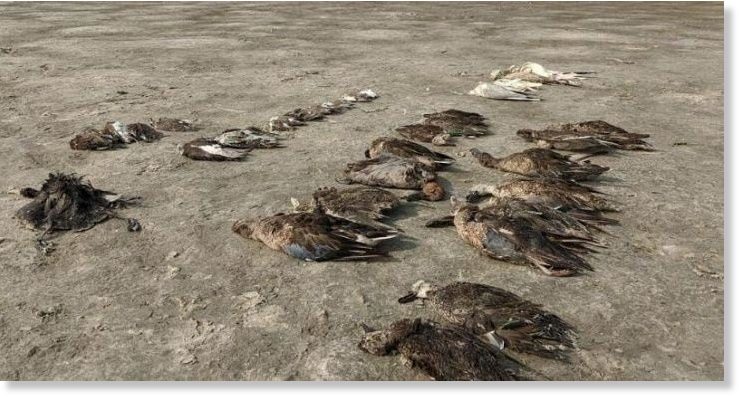
Thousands of migratory birds of about ten species were found dead around Sambhar Lake, the country's largest inland saltwater lake near Jaipur, sending shock waves among locals and authorities.

Officials said they suspect water contamination as one of the reasons for the deaths but were awaiting viscera test reports. Though the official toll was 1,500, locals claimed the number of dead birds could be as high as 5,000.

"We have never seen anything like that. Over 5,000 birds died mysteriously all over the place," 25-year-old Abhinav Vaishnav, a local bird-watcher, told PTI.


Boat

Meet 'Whaledimir', a 'spy beluga whale' for the Russian Navy

Whaledimir, the beluga whale
© Sputnik News
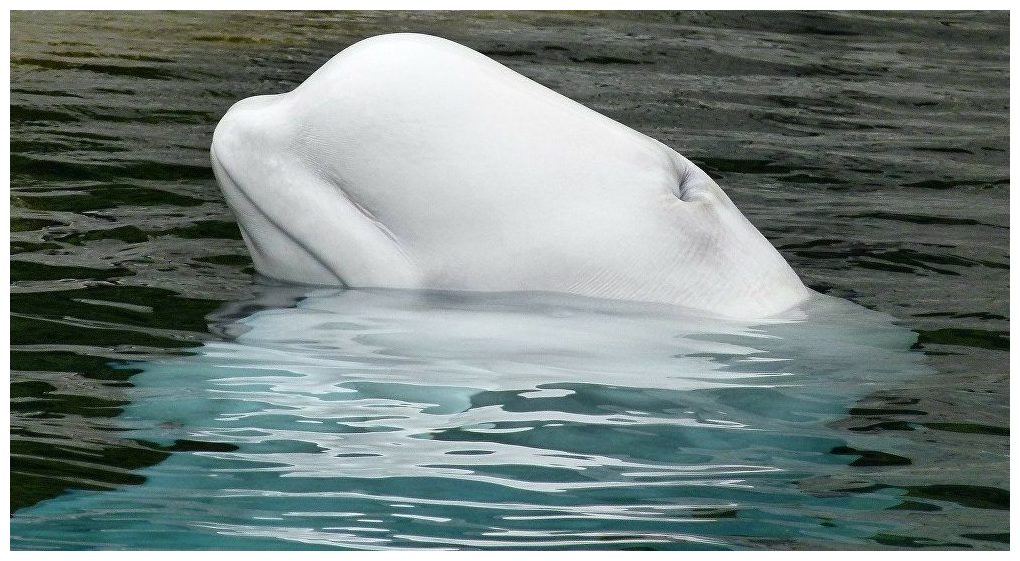
'Whaledimir,' the beluga whale that made headlines in Norwegian media this spring amid speculation that he may be a super-secret 'spy whale' for the Russian Navy, appears to have made it into the news again.

Footage of a beluga whale playing rugby with a group of South African sailors near the Arctic Circle went viral this week, with the video viewed over 19.5 million times on Facebook, and millions of times more on Twitter and YouTube.


The fascinating clip shows the beluga bringing a rugby ball to the hands of a man onboard the small Gemini Craft boat, who then throws it, with the whale giving chase. The beluga is then seen picking up the ball in its mouth, swimming toward the boat, and handing the ball back to the men.

The footage, filmed aboard a South African marine research vessel outside Hammerfest, northern Norway, has led to the renewal of speculation in some quarters about whether the beluga was really Whaledimir, the alleged 'Russian spy whale' named after the Russian president.