Animals
S


Lemon

Snakes disembowel toads and feast on the living animal's organs one by one

snake toad
© Winai SuthanthangjaiA small-banded kukri snake with its head inserted through the right side of the abdomen of an Asian black-spotted toad, in order to extract and eat the organs. Tissue of a collapsed lung (above, left), and possibly fat tissue, is covered by clear liquid that foams as it mixes with air bubbles from the lung. The upper part of the front leg is likewise covered by foaming blood, mixed with air bubbles from the collapsed lung.
Pity the toads that encounter Asian kukri snakes in Thailand. These snakes use enlarged, knifelike teeth in their upper jaws to slash and disembowel toad prey, plunging their heads into the abdominal cavities and feasting on the organs one at a time while the toads are still alive, leaving the rest of the corpse untouched.

While you're recovering from the horror of that sentence, "perhaps you'd be pleased to know that kukri snakes are, thankfully, harmless to humans," amateur herpetologist and naturalist Henrik Bringsøe, lead author in a new study describing the gruesome technique, said in a statement.

This grisly dining habit was previously unknown in snakes; while some rip chunks from their prey, most snakes gulp down their meals whole. Scientists had never before seen a snake Bury its head inside an animal's body to slurp up organs — sometimes taking hours to do so, Bringsøe and his colleagues reported.


Comment: See also:


Question

Short-tailed shearwaters fail to arrive at breeding ground for second year running in Victoria, Australia

The short-tailed shearwater is a prodigious but extremely punctual traveller — but that's not been the case for the past few years.
© Eric WoehlerThe short-tailed shearwater is a prodigious but extremely punctual traveller — but that's not been the case for the past few years.
Bird experts are concerned after a migratory shorebird colony failed to arrive in south-east Australia in time for start of the breeding season for the second straight year.

The short-tailed shearwater, or mutton bird, is one of Australia's most common and hardy birds.

Each year the birds clock up more than 32,000 kilometres, following the warm weather between the northern and southern hemispheres as they chase an "eternal summer".

Known for their endurance and accuracy, the birds usually arrive along Victoria's south-east coast to breed within 48 hours of September 22.

But last year only half of the 40,000-strong colony at Port Fairy's Griffiths Island turned up.

This year the island's bird count remains at zero more than a week after they were expected to arrive.

Info

Newly described rock art images show human-animal relationships

Rock Art
© P. TaçonMaliwawa macropod over 3MFC hand stencil, Namunidjbuk.
Arnhem Land rock art is continuing to provide a window into Australia's past, with scientists describing 572 previously unknown images in a paper in the journal Australian Archaeology.

The Maliwawa Figures, which range in age from 6000 to 9400 years, were documented across 87 sites from Awunbarna (Mount Borradaile area) to the Namunidjbuk Estate of the Wellington Range in northwest Arnhem Land.

The researchers suggest they are a missing link between early-style Dynamic Figures, 12,000 years in age, and X-ray figures made in the past 4000 years.

The images were created in various shades of red, with stroke-infill or outline forms and a few red strokes as infill. Some are more than 50-centimetres high.

The scenes depict humans and macropods, including three bilbies and a dugong, and lead researcher Paul Taçon, from Australia's Griffith University, suggests the presence of various forms of headdresses shows they are not just simple depictions of everyday life.

"Maliwawas are depicted as solitary figures and as part of group scenes showing various activities and some may have a ceremonial context," he says.

Doberman

Woman found dead in South Carolina yard was mauled to death by dogs, coroner says

dog attack
A woman who was found dead at a yard in South Carolina was mauled to death by dogs, it has been reported.

Laurens County Deputy Coroner Patti Canupp said an autopsy was performed on Wednesday after the 32-year-old was discovered at an address in Allegra Lane, Gray's Court.

Officials told WYFF News 4 the dead woman, identified as Jacqueline Nicole Robinson, was found by a home health care nurse who had called at the property.

Canupp revealed the cause of her death was "mauled by dogs."

Courtney Snow, spokesperson for Laurens County Sheriff's Office, told the news channel that several dogs were removed from the property.


Attention

Bear kills woman in Kashmir

print
A woman was killed after bear attacked her in Tumberhama village of Tangmarg in North Kashmir's Baramulla district on Thursday afternoon.

According to Kashmir News Service Correspondent the woman was working in her orchards when the bear attacked her and left her critically injured.

However the locals of the area tried hard to save her but they couldn't save.

The deceased has been identified as Zooni Begum Wife of Mohd Akbar Malik from Tumberhama Tangmarg.

Notably, several persons were injured in a bear attack in Tangmarg area earlier.

Meanwhile, a police officer confirmed the incident to KNS

Comment: In addition a man was killed by a group of sloth bears on Sept. 30 in Chhattisgarh, India


Attention

Nine pilot whales die stranded on Spain's northern coast

File
File photo
Nine stranded pilot whales have died on a beach on Spain's northern coast but local authorities and residents managed to help others back at sea, the regional government said on Tuesday.

The whales were spotted on Monday on the Moris beach, in Carreno, Asturias. Officials and volunteers worked until late at night to help them, the Asturias government said.

"Half a dozen have managed to return to the sea, although they remain close to the coast. Efforts are now focused on keeping them from returning to the beach," it said.

The bodies of the nine dead whales will undergo an autopsy in the nearby town of Gijon.

Images of stranded whales attracted worldwide attention earlier this month in Australia, where hundreds died.

Comment: Beached pilot whales are a sign of the magnetic pole shift and waning magnetosphere


Attention

6 dolphins found dead in 'historic' stranding in Alabama after Hurricane Sally

dead dolphin
Six dolphins were found dead in an Alabama marsh last week in what experts call an "historic mass stranding."

A paddle boarder discovered the Atlantic spotted dolphins Friday in a Dauphin Island marsh, according to a Tuesday news release from the Alabama Marine Mammal Stranding Network. They seemed to have "stranded alive" several days before.

"This is the first mass stranding of its kind in the state of Alabama," the release says.

Atlantic spotted dolphins live in waters along the continental shelf and are also found in "deep, oceanic habitats," according to the ALMMSN. It's rare for the species to strand on the Alabama coast, with the last documented occurrence in January 2018.

Doberman

Parents face jail after toddler mauled to death by family dog on second birthday in Ukraine

dog attack
Toddler died after 10 days in hospitalA two-year-old boy has died as a result of his injuries after he was attacked by the family's German Shepherd dog while celebrating his second birthday.

The incident unfolded on 18 September in Selydove, a small town in eastern Ukraine.

The toddler, Yegor, died after 10 days in hospital where he remained in critical condition on a ventilator and kidney dialysis.


Before the incident, the boy had reportedly walked outside while his parents sat with guests.

The dog broke free of its enclosure and attacked the toddler in a courtyard.

Info

The Younger Dryas impact research debate update

Ice Age Skeletons
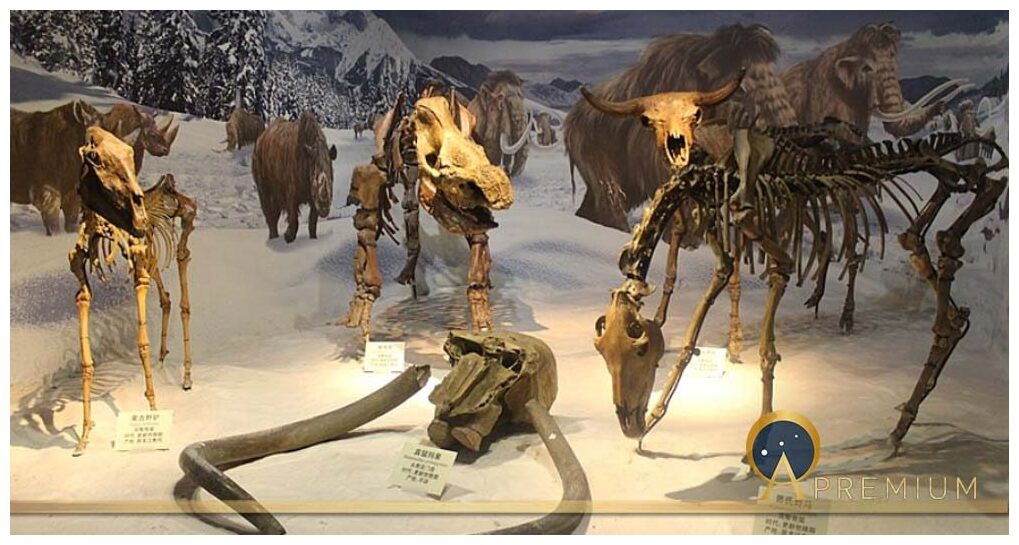
© Jonathan Chen / CC BY-SA 4.0Ice Age Diorama. From left to right: Equus hemionus, Mammuthus primigenius, Coelodonta antiquitatis, Bison exiguous skeletal mounts at the Tianjin Natural History Museum.
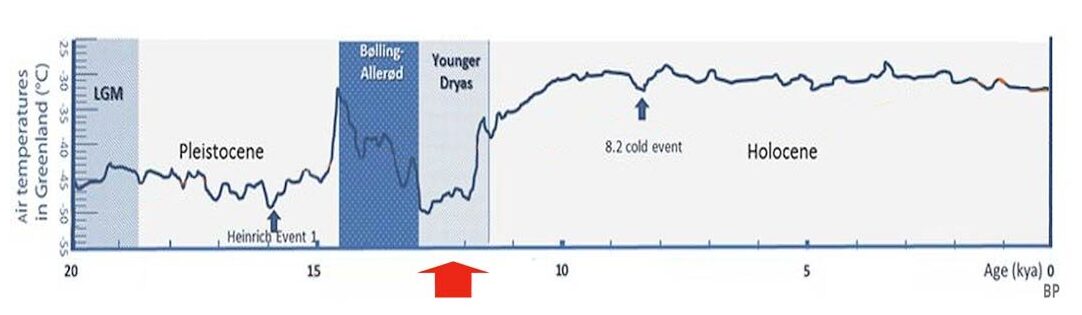
The Younger Dryas impact hypothesis has received considerable attention since its publication in 2007 in the prestigious peer-reviewed journal PNAS (Proceedings of the National Academy of Sciences). It suggests the Younger Dryas geological period and mini Ice-Age, from around 10,850 to 9600 BC, along with associated megafaunal extinctions and human societal changes, was triggered by a catastrophic cosmic impact, probably with a fragmented comet from the Taurid meteor stream.

As of now, this paper by Richard Firestone, Allen West and Simon Warwick-Smith and colleagues has amassed over 550 citations in Google Scholar - which is a lot! It is on its way to becoming a classic. But it has also received more than its fair share of criticism, mostly sustained from just a handful of vehement opponents. But has any of their criticism stuck? And what is the status of Firestone et al.'s paper today? Has the dust settled on an outcome? Are we there yet?
Evolution of Temperatures
© Evolution of temperature in the Post-Glacial period according to Greenland ice cores/CC BY-SA 4.0Evolution of temperatures in the post glacial period, after the Last Glacial Maximum (LGM), showing very low temperatures for the most part of the Younger Dryas, rapidly rising afterwards to reach the level of the warm Holocene, based on Greenland ice cores.

Better Earth

Arctic dimming causing 'devastating' forest decline

Norilsk forest
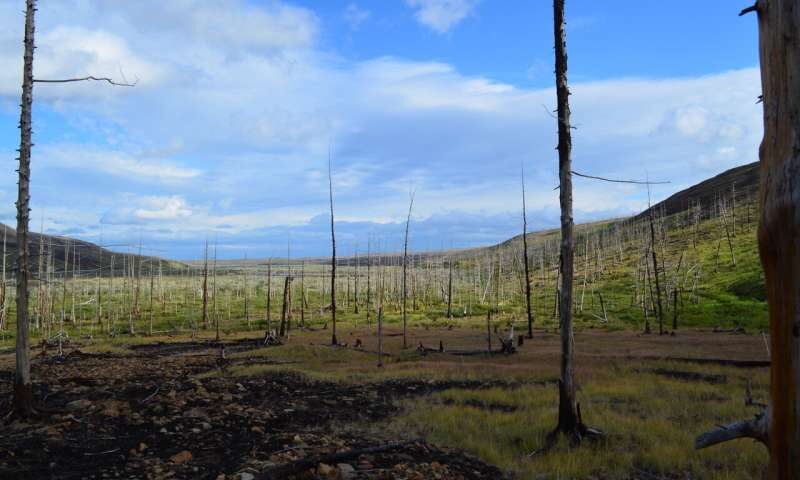
© Dr Alexander KirdyanovWidescale pollution has caused devastating forest decline east of Norilsk, Russia.

The largest-ever study of tree rings from Norilsk in the Russian Arctic has shown that the direct and indirect effects of industrial pollution in the region and beyond are far worse than previously thought.

An international team of researchers, led by the University of Cambridge, has combined ring width and wood chemistry measurements from living and dead trees with soil characteristics and computer modeling to show that the damage done by decades of nickel and copper mining has not only devastated local environments, but also affected the global carbon cycle.

The extent of damage done to the boreal forest, the largest land biome on Earth, can be seen in the annual growth rings of trees near Norilsk where die off has spread up to 100 kilometers. The results are reported in the journal Ecology Letters.

Comment: It would appear that part of the problem is that these studies are performed with foregone conclusions, and assumptions science knows more than it does; that human activity is the primary cause of changes on our planet, and that we understand the complexities of plant and soil life better than we really do .

Pierre Lescaudron explicates the more likely drivers of global dimming - some that are not factored into the models mentioned above - and their effect globally - not just in the Arctic - in his book with Laura Knight-Jadczyk Earth Changes and the Human-Cosmic Connection:
Global dimming

Global dimming is the reduction in the amount of solar radiation received on Earth's surface during fair weather. One of the main causes of global dimming is atmospheric dust. Numerous scientists have demonstrated that a global dimming trend has been in
process for decades.

There's been some debate as to whether atmospheric dust induces a net warming effect on the planet (because it absorbs more than it reflects radiation), or whether it induces a net cooling effect (because it reflects more than it absorbs radiation). In 2008, atmospheric scientist Richard Hansell tested and measured the net effect of atmospheric dust particles on temperatures and concluded that although atmospheric dust both absorbed and reflected solar radiations, it induced an overall cooling effect:
The analysis showed that over half of dust's cooling effect is compensated for by its warming effect. The finding, published in the Journal of Geophysical Research, Atmospheres, could clarify scientists' understanding of how dust influences moisture fluctuations in the atmosphere and surface temperatures around the planet.
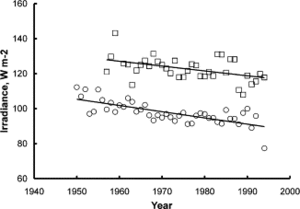
As shown in the diagram below, researchers from the Institute of Soil, Water and Environmental Sciences found a significant reduction, globally averaged 2.7% per decade, in solar radiation reaching the Earth's surface over the last 50 years.
global dimming
© Stanhill & CohenReduction in solar irradiance over the period 1950-2000.
In the 90's an inversion occurred and our planet experienced a global brightening in some regions. Then, after the year 2000, global dimming restarted in certain areas and became overall more chaotic with different continents experiencing opposite trends.

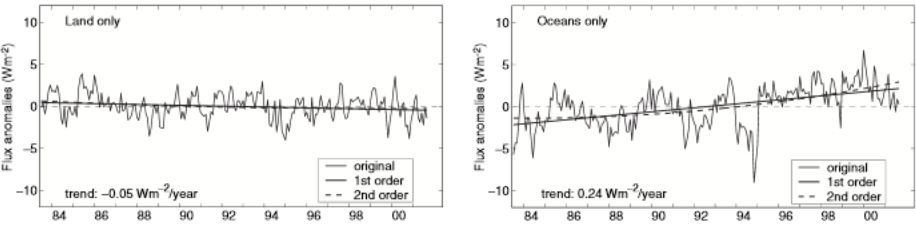
Now, according to mainstream science, global dimming is man-made, caused by the accumulation of aerosol particles in the atmosphere due to industrialization. The trend inversion noticed in the 90s is attributed to the ban of several types of aerosols and other anti-pollution measures. However, a paper published in 2005 showed that over the period 1986-2000, although a slight dimming was occurring over land, a brightening occurred over the oceans.

global dimming 2
© Pinker et alIrradiance over the period 1982-2002. Land measurements on the left (global dimming), ocean measurements on the right (global brightening).
If human activity was indeed the cause of global dimming, and the reduction in human aerosol use the cause for the brightening observed in the 1990s, a brightening over land should have been observed and, possibly, a delayed brightening over the oceans (due to air circulation), since most industrial sources are located on continents. But the paper referenced here shows exactly the opposite.

Since 2000, dimming has been observed in numerous places, including China, India and the whole southern hemisphere, despite the relatively lower presence of anthropogenic pollution in this less industrialized hemisphere. We can deduce from this that while human pollution might indeed affect the amount of sunlight reaching the surface, it's obviously not the only cause and its effects are probably negligible in the larger context.

Unlike human pollution, cometary activity could, at least partly, explain both the global dimming observed above the oceans during the 1990s and the dimming since 2000.

Between 40 and 400 tons of extraterrestrial material is estimated to enter the Earth's atmosphere daily 214,215 most of it arriving in the form of cometary dust. These estimates calculated years ago do not, however, take into account the recent surge in cometary activity. If we factor in the 655% increase in confirmed fireballs (see AMS statistics above) over the past eight years, the quantity of cometary dust entering Earth's atmosphere should be at least six times higher than that generally estimated; that is, daily incoming dust measuring between 260 and 2,600 tons.
He later goes onto to explicate how a rise in cosmic rays accelerates cloud formation, global dimming and global cooling, and that, while this appears to be a more recent phenomenon, with an increase of 13% in just 3 years, their impact on further cooling the planet will also likely have an affect on tree growth in the Arctic, a factor also not accounted for in the study above.

See also: And check out SOTT radio's: