
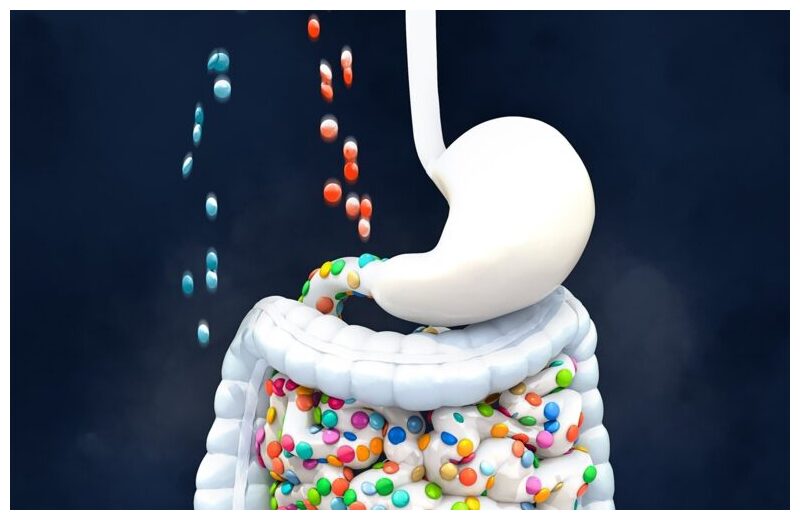
© Illustration: Mattias KarlénThe KI researchers identified 12 different neuronal subtypes (confetti) in the small intestine of mouse, and discovered that these develop through two embryonic neuron prototypes (sprinkled confetti streams).
Researchers at Karolinska Institutet
have succeeded in mapping the neuron types comprising the enteric nervous system in the intestine of mice. The study, which is published today in the scientific journal
Nature Neuroscience, also describes how the different neurons form during fetal development, a process that follows different principles to brain neurons.
Our approximately seven-metre long gastrointestinal (GI) tract has its own functionally distinct neurons. Since this enteric nervous system (ENS) operates autonomously, it is sometimes referred to as the "second" or "abdominal" brain.
While the ENS controls muscle movement (peristalsis) in the gut and its fluid balance and blood flow, it also communicates with the immune system and microbiome. It therefore has a systemic affect on the body and is thought to be involved in a wide range of diseases. Some 30 percent of the population are estimated to live with permanent gastrointestinal complications.
Using single-cell sequencing, a method that enables scientists to functionally categorise and classify individual cells by determining which genes are active in them, researchers from Karolinska Institutet have now mapped the neurons that make up the mouse ENS.
















Comment: Another shark attack (though non-fatal) took place 2 days earlier on December 5 off South Australia with the victim being airlifted to hospital: