Volcanoes
S


Attention

Flooding & sulphuric smells at rivers in Iceland linked with change in geothermal & volcanic activity

iceland river
© Vísir/Jóhann K.
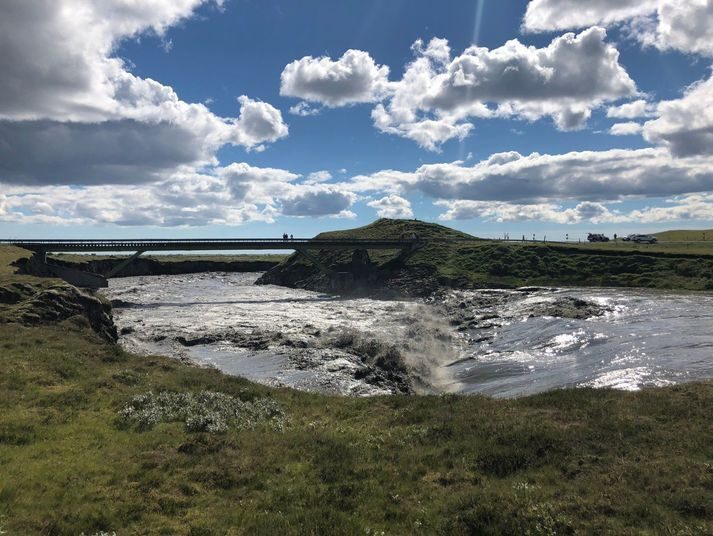
The river Skaftá in Southern Iceland has been seeing changes in recent days indicating a flood has begun.

Electrical conductivity in the river has increased steadily over the past two days, an indication that geothermal factors are involved. The water level has also risen in the past few hours, according to MBL. According to the Icelandic Meteorological Office, sulphuric smells have also been reported in the vicinity of Skaftá and Hverfisfljót.

Residents and passersby in the area are encouraged to remain diligent and apprise themselves of potential changing conditions in the area. Flooding over the riverbank and across nearby roads is possible in the next few days.

Comment: Regarding activity at Vatnajökull, Wikipedia notes:
In more modern times, the volcanoes continue to erupt beneath the glaciers, resulting in many documented floods. One jökulhlaup in 1934 caused the release of 15 km3 (3.6 cu mi) of water over the course of several days.[5] The volcanic lake Grímsvötn was the source of a large jökulhlaup in 1996.[6] There was also a considerable but short-lived eruption of the volcano under these lakes at the beginning of November 2004.[7] On 21 May 2011 a volcanic eruption started in Grímsvötn in Vatnajökull National Park at around 7 p.m.[7] The plume reached up to 17 kilometres (11 mi).[7]
See also: And check out SOTT radio's:
For more, check out SOTT radio's:


Attention

Italy's Mount Etna erupts after weeks of calm

Etna
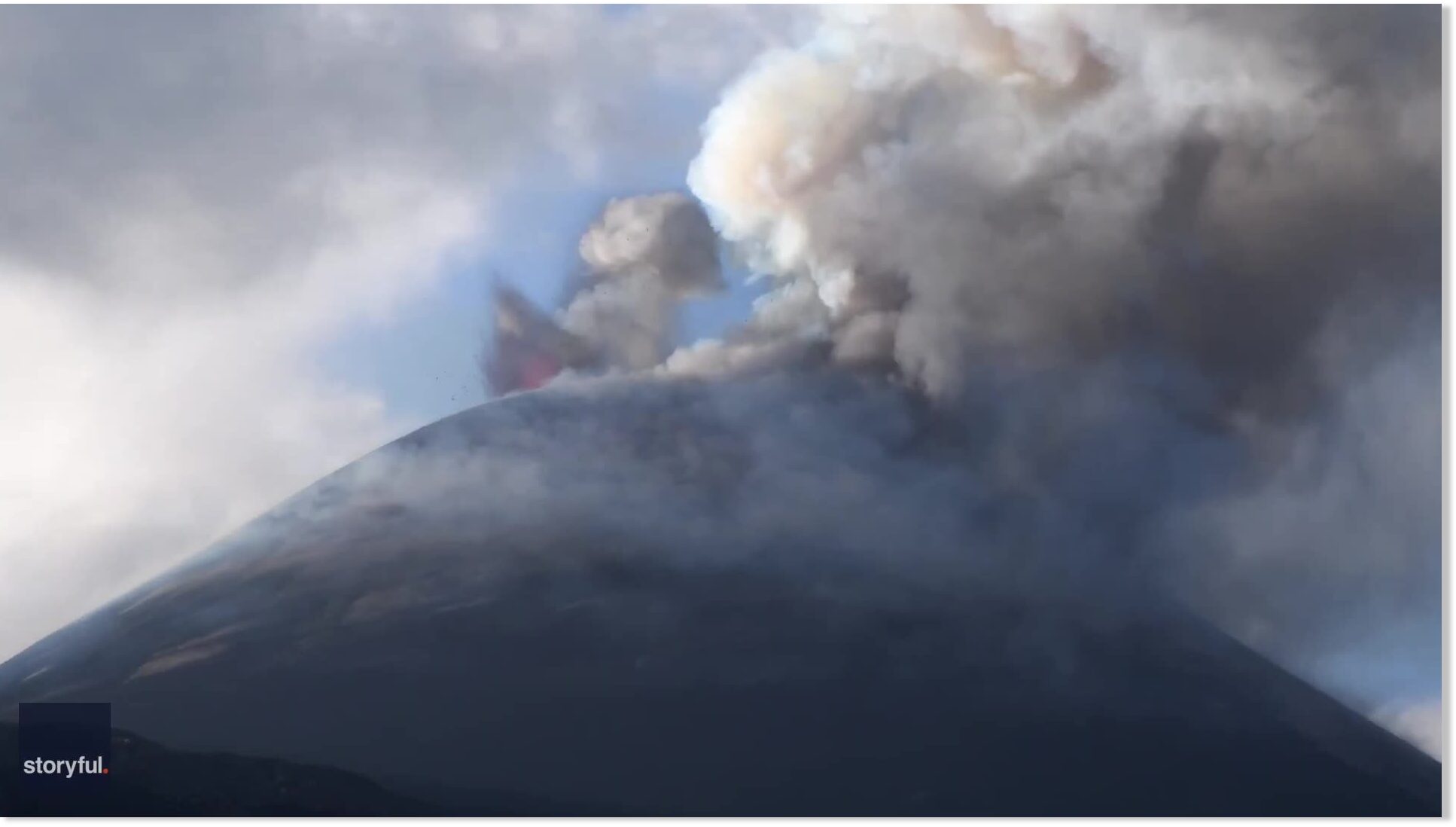
Italy's Mount Etna erupted on August 29 spewing ash and lava after weeks of calm.

This footage by Giuseppe Tonzuso shows the volcano spraying debris and bright red lava down the side of its southeast crater as smoke and ash billow skyward.

Credit: Giuseppe Tonzuso via Storyful


Comment: More footage:


Attention

Ebeko volcano sends forth column of smoke after erupting on Kuril Islands, Russia

eruption
An ash eruption of the Ebeko volcano was seen on the Paramushir island of the Kuril Islands, reported the Kamchatka Volcanic Eruption Response Team, on Wednesday.

"According to visual data of volcanologists from Severo-Kurilsk, the height of the ash release was up to 3.7 kilometres (2.29 miles) above sea level," the experts said.

According to the response team, Ebeko's ash emissions could cause problems for local airlines. The volcano's Aviation Colour Code status warning was placed at orange.


Comment: A day earlier a strong magnitude 6.0 earthquake was registered off the Kuril Islands.


Bizarro Earth

Scientists detect earthquake swarm at Hawaii volcano

Hawaii volcano
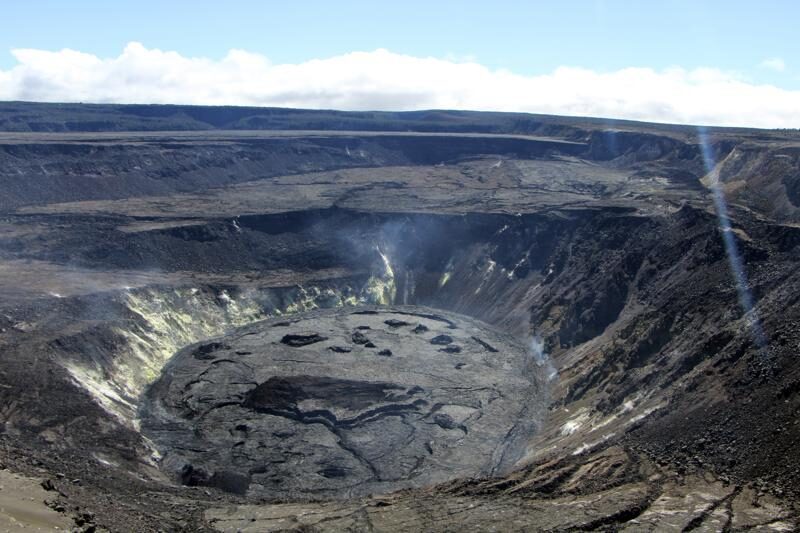
© Drew Downs/U.S. Geological Survey via APThis Aug. 13, 2021 photograph provided by the U.S. Geological Survey shows the crater of the Kilauea volcano south of Honolulu. Geologists on Tuesday, Aug. 24 said they had detected a swarm of earthquakes at the volcano, though it is not erupting.

Geologists on Tuesday said they had detected a swarm of earthquakes at Hawaii's Kilauea volcano, though it is not erupting.

The quakes began overnight and continued into the morning, The Hawaiian Volcano Observatory said.

More than 140 earthquakes were recorded as of 4:30 a.m. The largest was magnitude 3.3. Most were less than magnitude 1.

Comment: See also:


Attention

Observations of Fukutoku-Okanoba volcano in Japan confirm 16 km plume from latest eruption

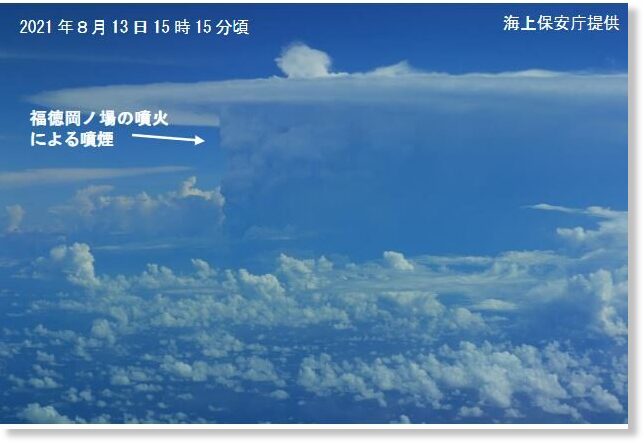
Major submarine eruption from Fukutoku-Okanoba volcano captured by the Japan Coast Guard
The renewed explosive activity continues.

As we reported in the latest report, the volcano produced the submarine explosion on 13 August.

The Japan Coast Guard made a flight observation that confirmed the height of the eruption column.

The spectacular white steam and gas plume rose to estimated 16 km (53,000 ft)! altitude and spread into an umbrella cloud.


Attention

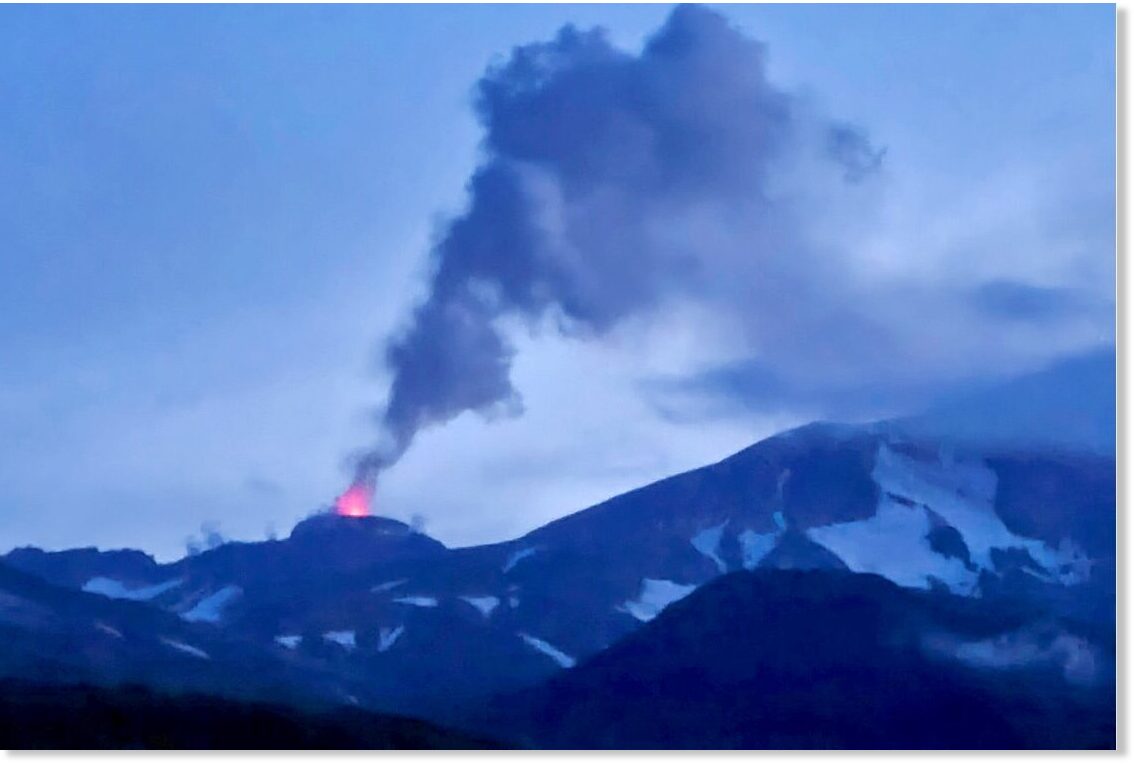
Three volcanoes are erupting at the same time in Alaska

Active lava fountains spew from the Great Sitkin volcano in Alaska, on Aug. 5.
© Peggy KruseActive lava fountains spew from the Great Sitkin volcano in Alaska, on Aug. 5.
Along a remote, roughly 800-mile stretch of Alaska's Aleutian island chain, three volcanoes are erupting at the same time, with at least two spewing low levels of ash and steam.

The simultaneous eruptions have been going on for more than a week but do not currently pose a threat to nearby communities and have not disrupted any air travel so far, according to the Alaska Volcano Observatory.

Still, the volcanic activity has made for a busier-than-usual time across the Aleutian Islands, the vast archipelago that juts westward from the Alaska Peninsula and acts as a border between the North Pacific Ocean and the Bering Sea.

"Alaska has a lot of volcanoes, and we typically see maybe one eruption every year, on average," Matthew Loewen, a research geologist with the Alaska Volcano Observatory, told NBC News. "To have three erupting at once is less common, but it does happen."

Blue Planet

Adapt 2030 Ice Age Report: Downfall of civilization triggers

Histomap
© YouTube/Adapt 2030 (screen capture)
The Histomap of the last 4000 years of world history published in 1931 shows all of the major Grand Solar Minimums with contractions of empires and kingdoms through history. Its simple, inadequate food supplies equal civilization crumbling. There are several unnamed GSM's in the 4000 years as well. 2024 brings the next global contraction in food supplies.


Comment: See also:


Attention

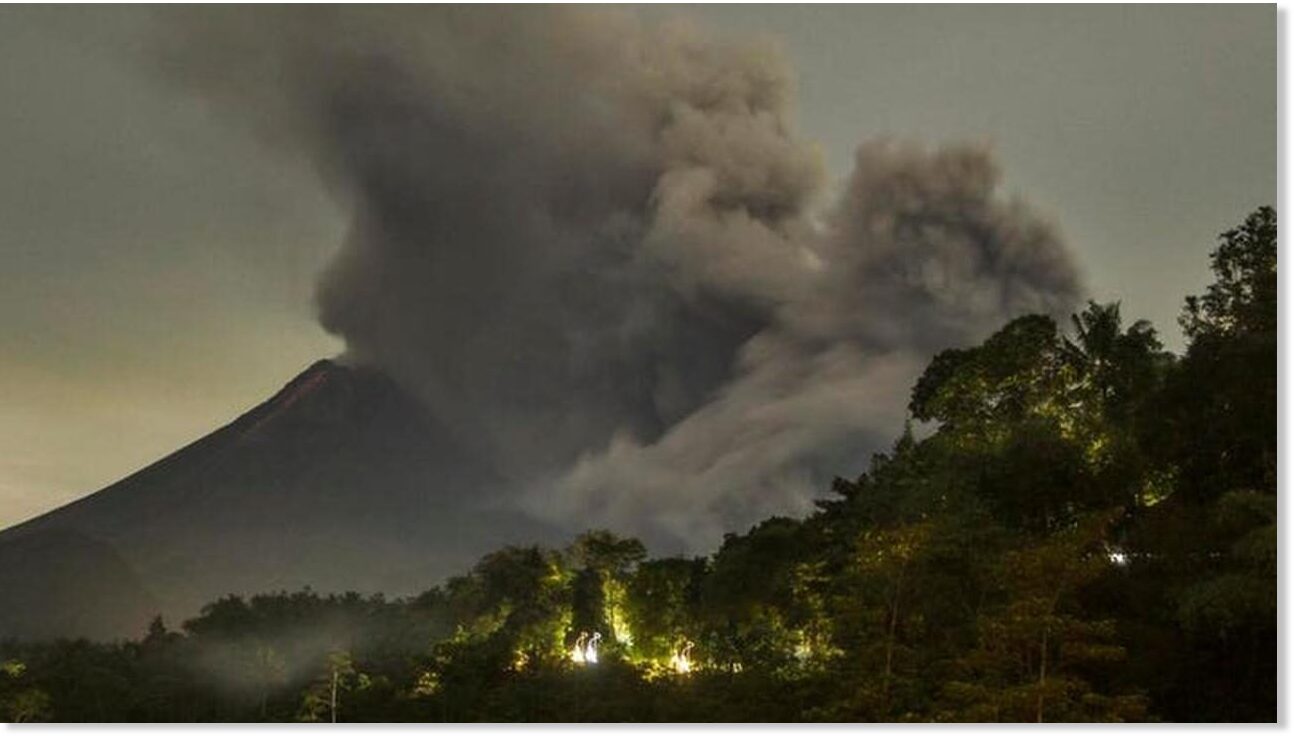
Indonesia Mount Merapi: Volcanic eruption on Java island unleashes clouds of ash and smoke into the sky

eruption
Mount Merapi in Indonesia erupted on the densely populated island of Java, spewing smoke and ash high into the air and sending streams of lava and gasses down its slopes.

The volatile volcano unleashed clouds of hot ash at least seven times on Sunday, as well as a series of fast-moving pyroclastic flows - a mixture of rock, debris, lava and gasses - said Hanik Humaida, who heads the city of Yogyakarta's Volcanology and Geological Hazard Mitigation Center.

The rumbling sound could be heard several kilometres away. No casualties have been reported.


Attention

1,000+ earthquakes rattle Yellowstone in July - the most in a single month since 2017

Yellowstone
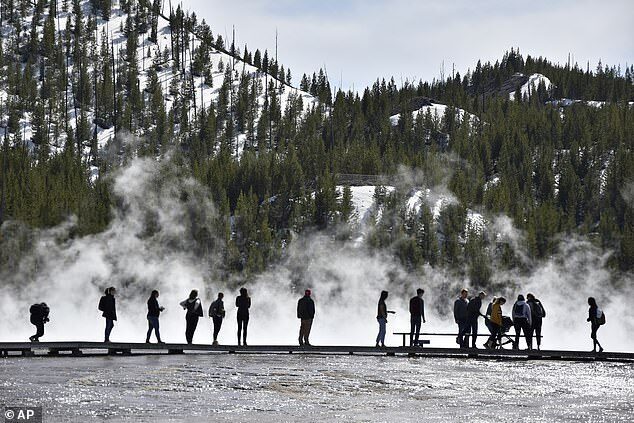
Yellowstone National Park sits in the northwest region of Wyoming and is home to bursting geysers, steam vents and bubbling pools. At 3,472 square miles, the park is larger than the states of Rhode Island and Delaware combined
A swarm of more than 1,000 earthquakes ripped through Yellowstone National Park in July, which officials are calling a 'doozy' of a month.

This was the most seismic activity in the region since the Maple Creek swarm of more than 1,100 quakes shook the park in June 2017.

Although some may fear this increase in activity may mean 'the big one [earthquake] is near,' the US Geological Survey (USGS) says the earthquakes were not caused by magma, but rather groundwater moving through pre-existing faults.


Comment: Is this an attempt to be reassuring?


The University of Utah Seismograph Stations, responsible for the operation and analysis of the Yellowstone Seismic Network, located 1,008 earthquakes in the park, with a whopping 764 beneath Yellowstone Lake.

Comment: Despite the attempts to downplay what's happening at Yellowstone, it's concerning that activity is increasing, and to record levels, and this alongside an uptick in seismic and volcanic activity elsewhere on the planet:


SOTT Logo Media

SOTT Focus: SOTT Earth Changes Summary - July 2021: Extreme Weather, Planetary Upheaval, Meteor Fireballs

ecs0721
China's monsoon season has been catastrophic so far, unprecedented heavy floods have taken a heavy toll. The southwest and central regions in the Yangtze river basin witnessed the heaviest rainfall in 1,000 years, and the water continues to pour down with no rest.

Across Henan, rains deluged 1,700 large-scale farms, killing more than a million animals, and whose many small farmers still play a major role in meat production. The floods also caused a major explosion in an aluminum alloy unit in central Henan.

At least 14 people lost their lives in Zhengzhou city when their subway train flooded. More than 500 people were trapped in the subway in one of the worst-affected areas of the city.

China's biggest river, the Yangtze, and several of its tributaries have risen to dangerous levels after days of heavy rain, forcing evacuations of thousands of people and triggering an unprecedented emergency response alert.

A very serious double earthen dam failure sent 46 million cubic meters of water to the Hulunbuir area of Inner Mongolia, causing massive flooding.

The Three Gorges Dam has successfully contained the heavy floods, sighing relief to Chinese authorities, as a collapse could have had an even more catastrophic impact on the area.

Severe flooding caused by historic rainfall wreaked havoc across western Europe taking the lives of 189 people. Tens of thousands were unable to return to their homes and were left without access to power and drinking water. Towns in river valleys and low-lying plains in Germany, the Netherlands, Belgium, France, and Austria were heavily damaged. Most of the affected areas had not experienced that much rainfall in 100 years.

Drought and extreme heat triggered the two largest wildfires in the Western US. The fires have burned land nearly the size of New York City, Los Angeles, and Chicago combined.

The Dixie Fire in California scorched 241,000 acres has destroyed more than 60 houses. The widespread fires have forced the evacuation of more than 7,800 residents.

The Bootleg Fire is still raging in southern Oregon, burning 413,000 acres since igniting this month. The fire has torn through more than 400 houses.

Greek firefighters faced dangerous and unprecedented conditions as they battled 154 wildfires through Athens, with one of them threatening Mount Parnitha national park — one of the last remaining substantial forests near the city. Meanwhile, in Turkey, eight people died in the country's worst blaze in decades that raged through swaths of the southern coast.

Hot weather and strong winds fueled multiple wildlife fires in Akkar, Lebanon, consuming the iconic Lebanese pine forests. The flames forced thousands to evacuate.

And on the southern hemisphere, Brazil, Argentina, and Uruguay reported rare snowstorms and surprisingly cold temperatures this winter.

A magnitude-8.2 earthquake rattled Chignik, Alaska this month, it has been recorded as the most powerful U.S. earthquake in half a century. Several Alaskan coastal communities were evacuated following the quake, but no major damage was reported due to the remote location and depth of the epicenter.

Have you noticed that more and more people, cattle, buildings, and trees are getting struck by lightning? Things are charging up in higher layers of the atmosphere. Keep your eyes open, and prepare accordingly!

All this and more in our SOTT Earth Changes Summary for July 2021: