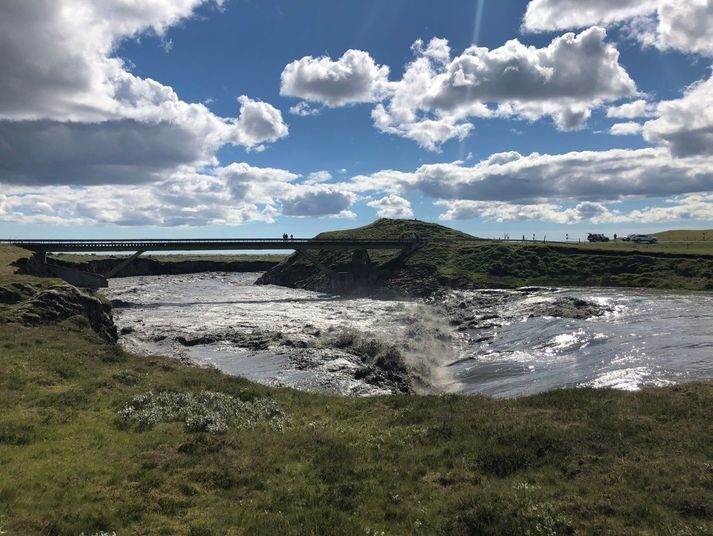
© Vísir/Jóhann K.
The river Skaftá in Southern Iceland has been seeing changes in recent days indicating a flood has begun.
Electrical conductivity in the river has increased steadily over the past two days, an indication that geothermal factors are involved. T
he water level has also risen in the past few hours,
according to MBL. According to the Icelandic Meteorological Office,
sulphuric smells have also been reported in the vicinity of Skaftá and Hverfisfljót.
Residents and passersby in the area are encouraged to remain diligent and apprise themselves of potential changing conditions in the area. Flooding over the riverbank and across nearby roads is possible in the next few days.
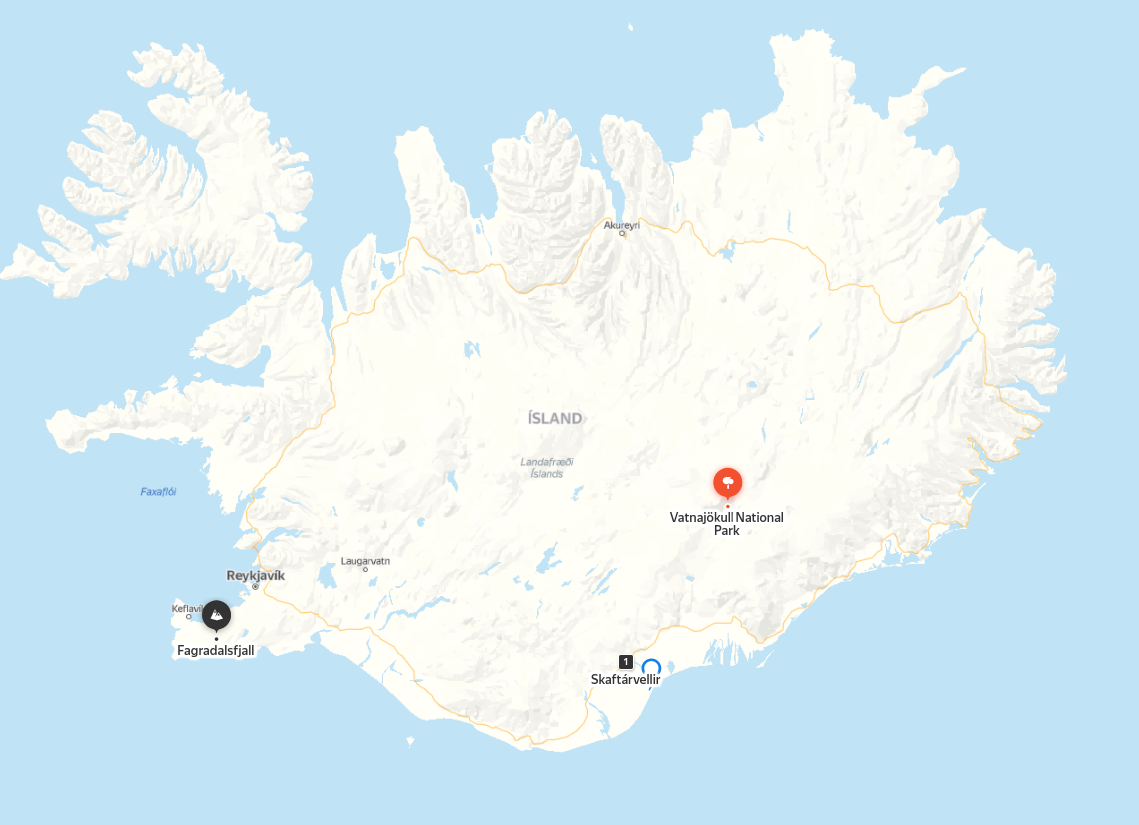
© YandexMap showing location of Vatnajökull National Park, Skaftárvellir, and Fagradalsfjall volcano that saw earthquake swarms in 2019 and began erupting in 2021
Additionally,
the concentration of hydrogen sulphide from glacier runoff to the river is so high that it may damage the mucus membranes of the eyes and respiratory tract. Cracks are also able to quickly form around Vatnajökull at this time. Tourists are therefore encouraged to avoid this area as well as Skaftárjökull, Tungnárjökull and Síðujökull where running water may come to the surface.
Note: Due to the effect the Coronavirus is having on tourism in Iceland, it's become increasingly difficult for the Grapevine to survive. If you enjoy our content and want to help the Grapevine's journalists do things like eat and pay rent, please consider joining our High Five Club.
Comment: Regarding activity at Vatnajökull, Wikipedia notes:
In more modern times, the volcanoes continue to erupt beneath the glaciers, resulting in many documented floods. One jökulhlaup in 1934 caused the release of 15 km3 (3.6 cu mi) of water over the course of several days.[5] The volcanic lake Grímsvötn was the source of a large jökulhlaup in 1996.[6] There was also a considerable but short-lived eruption of the volcano under these lakes at the beginning of November 2004.[7] On 21 May 2011 a volcanic eruption started in Grímsvötn in Vatnajökull National Park at around 7 p.m.[7] The plume reached up to 17 kilometres (11 mi).[7]
See also:
And check out SOTT radio's:
For more, check out SOTT radio's:



Comment: Regarding activity at Vatnajökull, Wikipedia notes: See also:
- Himalayan glacier bursts in India causing flash flooding & destroying dam, 150 feared dead (Feb 2021)
- 34,000 quakes in two weeks near Fagradalsfjall volcano, Iceland - 900% increase in activity compared with whole of 2020 (March 2021)
- Melting icebergs key feature of an ice age, scientists find
And check out SOTT radio's:For more, check out SOTT radio's: