Volcanoes
S


Bizarro Earth

Geologists unravel plate tectonic chain reaction

A plate tectonic chain reaction.
© Utrecht UniversityA plate tectonic chain reaction.
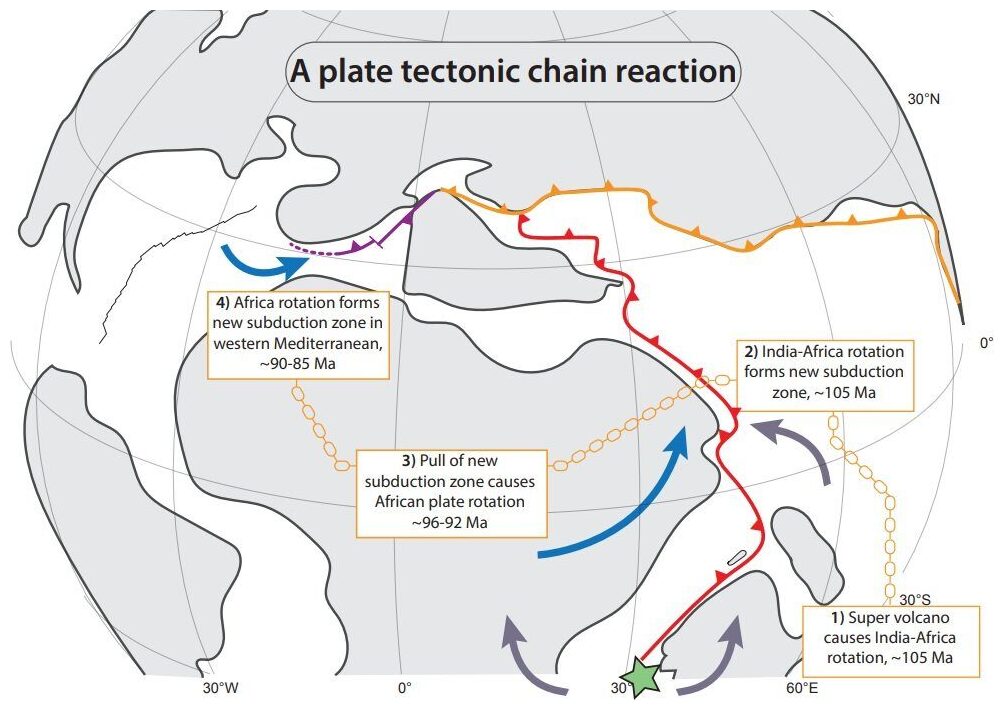
Geologists at Utrecht University are working hard to unravel the secrets of plate tectonics, the mechanism that continuously shapes Earth's crust and is causing earthquakes and volcanic eruptions. This time, another mystery has been dissected. In the Earth's geological past, there were 'short' periods of a few million years during which many tectonic plates around the world suddenly changed their speed and direction. What caused these abrupt changes in plate movements? Earlier research showed that changes in movement between two plates can result from continental collisions or rising mantle plumes. But could such collisions or mantle plumes set off a global chain reaction? Now geologists have succeeded in finding evidence that supports this. "With this discovery, we are able to better understand the driving forces behind plate movements, and thus processes such as mountain formation or volcanism."

This paper, published in Nature Geoscience, was a collaboration between geoscientists from Utrecht University, Australian National University, and Ben-Gurion University of the Negev. To test their hypothesis, the researchers asked themselves the following question: did the formation of a new subduction zone north of Arabia that was triggered by a mantle plume that caused a super volcano near Madagascar ~100 million years ago set off a chain reaction? Utrecht professor of plate tectonics and paleogeography Douwe van Hinsbergen, geologist, former Utrecht PhD student and first author Derya Gürer, and geophysicist Roi Granot, analysed the consequences step by step. "If our hypothesis is correct, the new subduction zone that formed north of Arabia should have caused forces that accelerated, and rotated the African Plate in the 10 million years after subduction initiation. However, to analyse this, we had to solve a major problem," says Gürer.

Bizarro Earth

Mount Etna is erupting and astronauts are watching it from space

The Sicilian volcano is 'smoking' and 'spitting lava,' one astronaut reports.
Mt.Etna
© Matthias Maurer/ESAMount Etna sends a plume visible from space in this Feb. 12, 2022 photo from ESA astronaut Matthias Maurer.
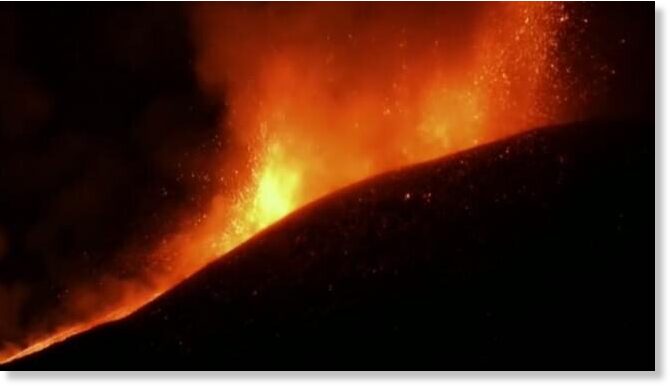
The majestic Mount Etna is erupting so strongly in the Mediterranean that it's catching the attention of the International Space Station crew.

Members of Expedition 66 currently in orbit shared some views of space of the highly active volcano, which has erupted dozens of times in the past year alone.

"@astro_luca's home volcano #Etna is clearly smoking (and spitting lava as I learnt from the news) 🌋," wrote European Space Agency astronaut Matthias Maurer on Saturday (Feb. 12), referring to fellow ESA spaceflyer Luca Parmitano, who is from Italy.

Fire

Sicily's Mount Etna volcano erupts again

Impressive columns of red lava that jump into the sky from the huge crater of the Etna volcano, on the Italian island of Sicily.
Mount Etna volcano, on the Italian island of Sicily, erupted again early this morning, Thursday, February 10. According to the Italian National Institute of Geophysics and Volcanology (INGV), the eruption occurred inside the southeast crater area, causing a slight and discontinuous ash shower.

The recorded tremors came from a depth of around 3,000 metres above sea level, reaching average values. A forecast model predicts the volcanic plume will travel in a south-westerly direction.

Vincenzo Bellini airport in Catania remains fully operational, and has not been affected by the expulsion of ash, which was described as "discontinuous and slight".


Fire

Ebeko Volcano erupts in Kuril Islands, Russia

Ebeko
© Siberian TimesEbeko
Ebeko is one of the most active volcanoes of the Kuril Islands, which is believed to have erupted at least 11 times over the past 230 years.

Ebeko, a so-called somma volcano (a type of volcano within a volcano), located on the Kuril Islands in Russia, has woken up after a long period of mild activity, shooting a pillar of ashes into the sky.

A video of Ebeko emerged online, showing what were described as its "rocket launches" because the billows of smoke and the roaring sounds made it resemble a spaceport just a few seconds before take-off.

Although the locals have become used to such displays, many tourists come to the islands to witness such beauty with their own eyes, forgetting how dangerous these eruptions can be.


Fire

Stunning photo captured from space: New eruption at Krakatoa Volcano

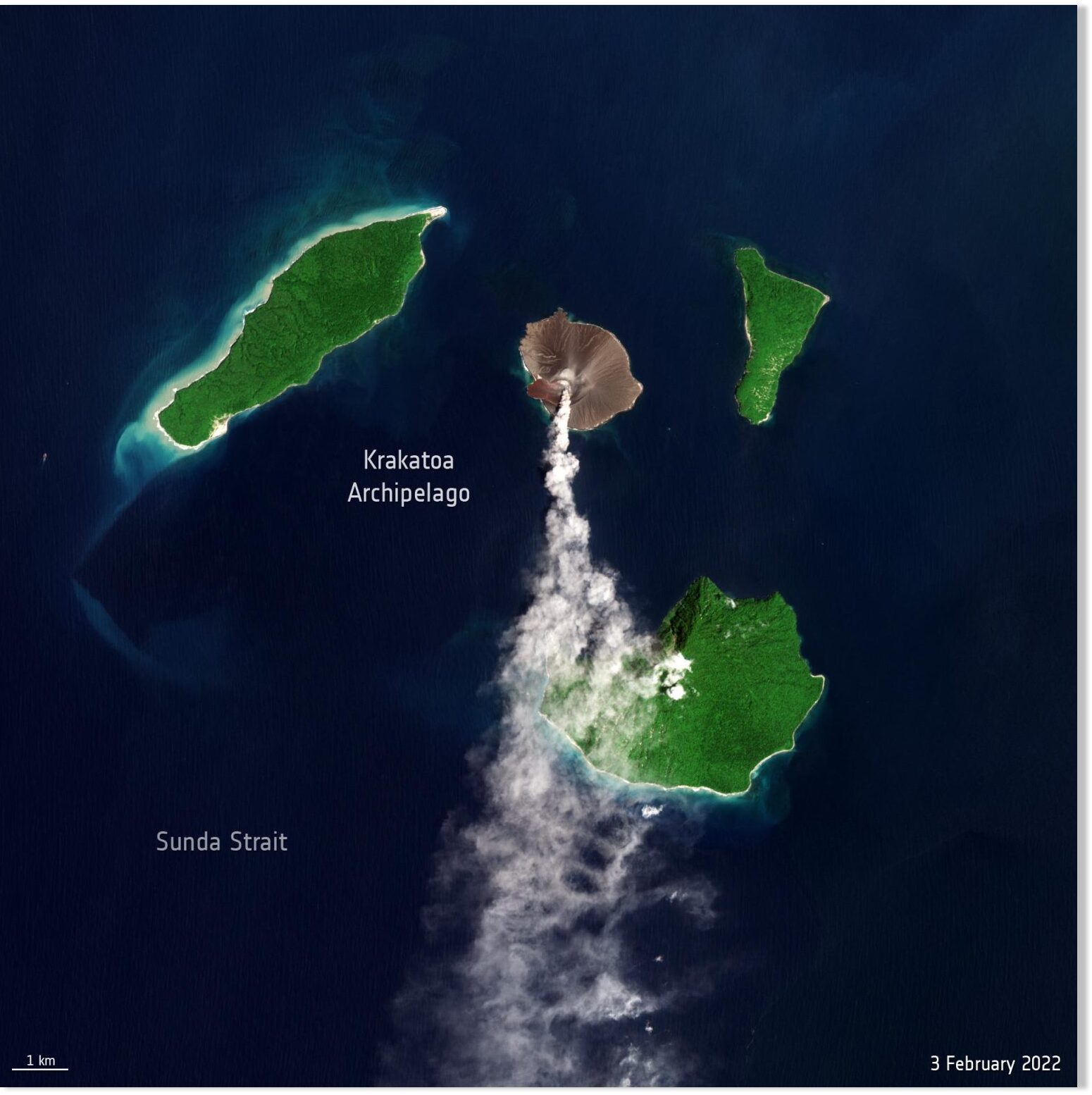
Anak Krakatoa, or Krakatau, volcano on Rakata Island in Indonesia captured by the Copernicus Sentinel-2 mission on February 3, 2022.
© ESAAnak Krakatoa, or Krakatau, volcano on Rakata Island in Indonesia captured by the Copernicus Sentinel-2 mission on February 3, 2022.
A new eruption started at the Anak Krakatoa, or Krakatau, volcano on Rakata Island in Indonesia on February 3, 2022, as seen in this image captured by the Copernicus Sentinel-2 mission. The eruption prompted the Anak Krakatau Volcano Observatory to raise the aviation color code to orange.

The eruption started at around 16:15 local time, with a thick column of gas, with possible volcanic ash content, rising to around 200 m above the crater.

Bizarro Earth

Geologists 'closely monitoring' rising magma under Oregon volcanic region

Geologist: 'Things are coming back to life now'.
Three Sisters Uplift
Portland, Oregon — The Pacific Northwest is well known for its stunning summits and plentiful peaks, but are the mountains moving?

In a USGS Hazard Notification statement Monday, Cascades Volcano Observatory announced their scientists have tracked an increased rate of ground uplift in the Three Sisters volcanic region found in the southwest corner of Oregon.

Using satellite radar images and GPS units, USGS scientists have tracked an increased rate of uplift for a 12-mile diameter region, 3 miles west of the South Sister volcano. According to USGS, the data suggests the ground rose 0.9 inches (2.2 cm) from June 2020 to August 2021.

Scott Burns, a geology professor at Portland State University, told Nexstar's KOIN that while episodes of increased uplift have been observed in this region before, the cause is what local scientists are excited about.

"The Three Sisters area is an area that we've been studying for the last 25 years," Burns explained. "It's very exciting because magma is moving up underneath the volcano ... the last major volcanic eruption in Oregon, which was 2,000 years ago, was right there in that area."

Fire

Volcán de Fuego in Guatemala erupts with 4,500m plume of ash and pyroclastic flows

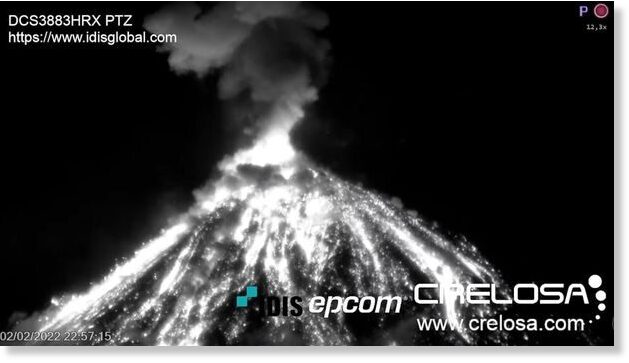
The resulting explosion could be seen 4,500 metres above sea level
© Sismología Nacional de GuatemalaThe resulting explosion could be seen 4,500 metres above sea level
A large explosion has been heard for miles around after Volcan du Fuego erupted in Guatemala and deposited molten lava.

A tweet from the National Seismological agency of Guatemala (Sismología Nacional de Guatemala) said that an "explosion of moderate to strong characteristics" was recorded at 10:57pm on Wednesday evening (4:57am UK time).

The agency added that they are not currently aware of ash fall or "generation of pyroclastic flows" that could affect nearby communities, and wrote: "At first glance, it can be seen that the explosion generated a column of ash at approximately 4,500 metres above sea level, in addition to expelling incandescent material (lava, boiling rocks) which completely covered the volcanic cone."

They added that the activity at the volcano could be seen from long distances.


Fire

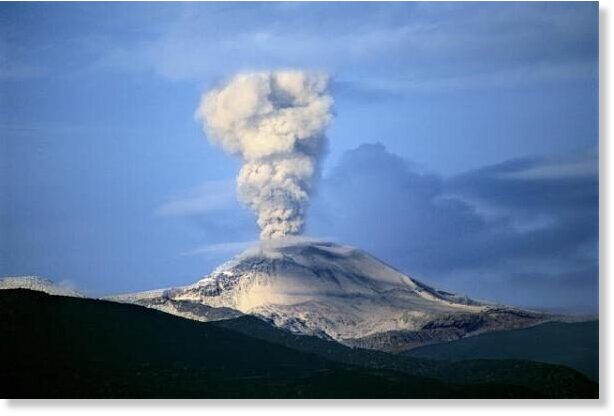
Chikurachki Volcano erupts on Paramushir Island, Russia

Chikurachki volcano
Chikurachki volcano
Volcano erupted, there is danger in the skies due to a large ash cloud.
The Russian Chikurachki volcano erupted yesterday, emitting pyroclasts.

Located south of the Kamchatka Peninsula, on Paramushir Island, the 1,816-meter-high volcano began to emit ash and gases.

The activity caused the ash rise to first rise up to 5 kilometers above sea level, while the latest update from the Institute of Volcanology indicated that it has even reached 6 km above sea level 5 km above the crater.

The Volcanological Institute raised the alert level for air transport to Naranja a Chikurachki, since the ash cloud extends more than 104 km in the west-southwest direction of the massif.
To date, it is reported that there is no threat to the life of the population.


(Translated by Google)

Attention

'The Bulge' is back: Renewed uplift near South Sister volcano in Oregon detected by USGS

South Sister volcano
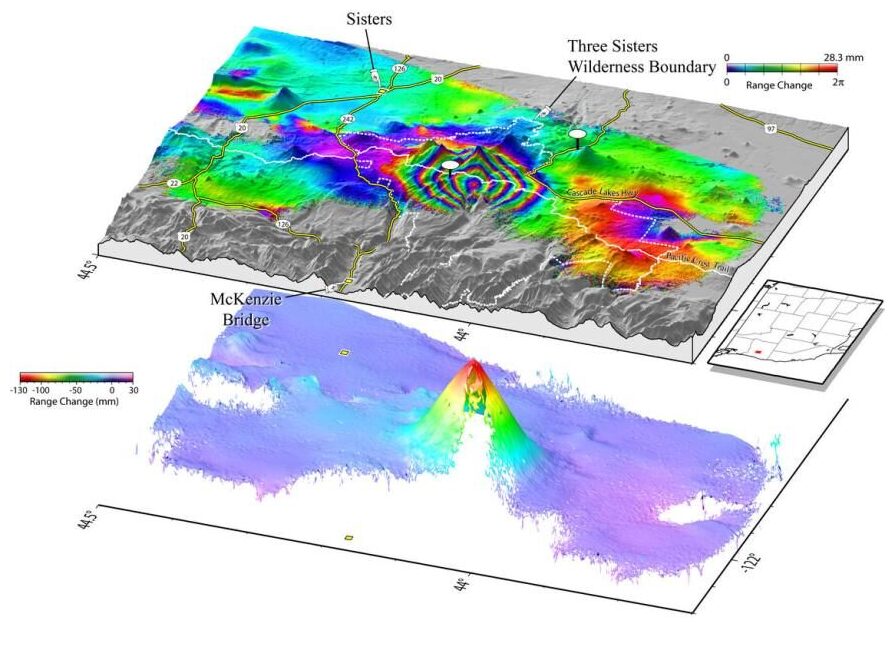
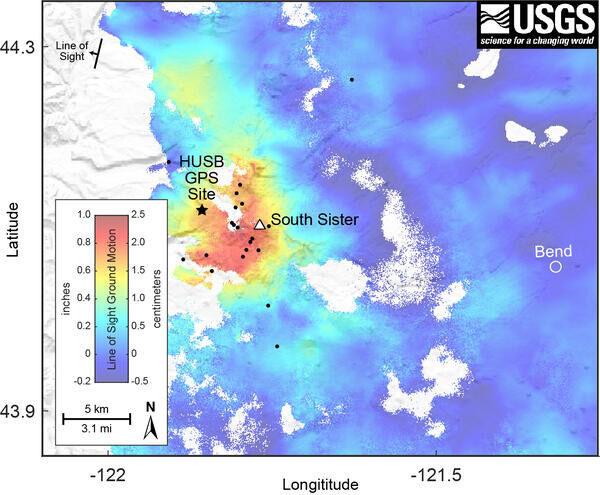
© USGSSatellite radar interferogram spanning June 19, 2020, to August 13, 2021, and showing the ground motion in the direction of the satellite. The maximum uplift, indicated by the red color, is about 2.2 centimeters (0.85 inches), and it is located to the west of South Sister. The HUSB continuous GPS site is marked by the large black dot. Earthquakes that occurred during the time period spanned by the interferogram are indicated by small black dots
Some two decades after first drawing widespread attention, a small (but detectable by satellite) uplift near the South Sister volcano is making news once again, with a quicker rate of rising ground than seen for years, accompanied by some small but noticeable, shallow earthquakes. But an eruption, geologists assure, is not in the cards any time soon.

Here's the U.S. Geological Survey's news release, issued Monday, of the latest activity:

Using satellite imagery and sophisticated GPS instruments, Cascades Volcano Observatory geophysicists have detected a subtle increase in the rate of uplift of the ground surface about 3 miles (5 km) west of South Sister volcano, Oregon. Episodes of increased uplift have been observed in this area before, and the volcano's alert level and color code remain at NORMAL / GREEN.

Comment: In recent years there seems to have been a notable rise in similar activity in known volcanic hotspots, at there same time subsidence and uplift has also been documented in areas with no known volcanic activity: Also check out SOTT radio's:


Fire

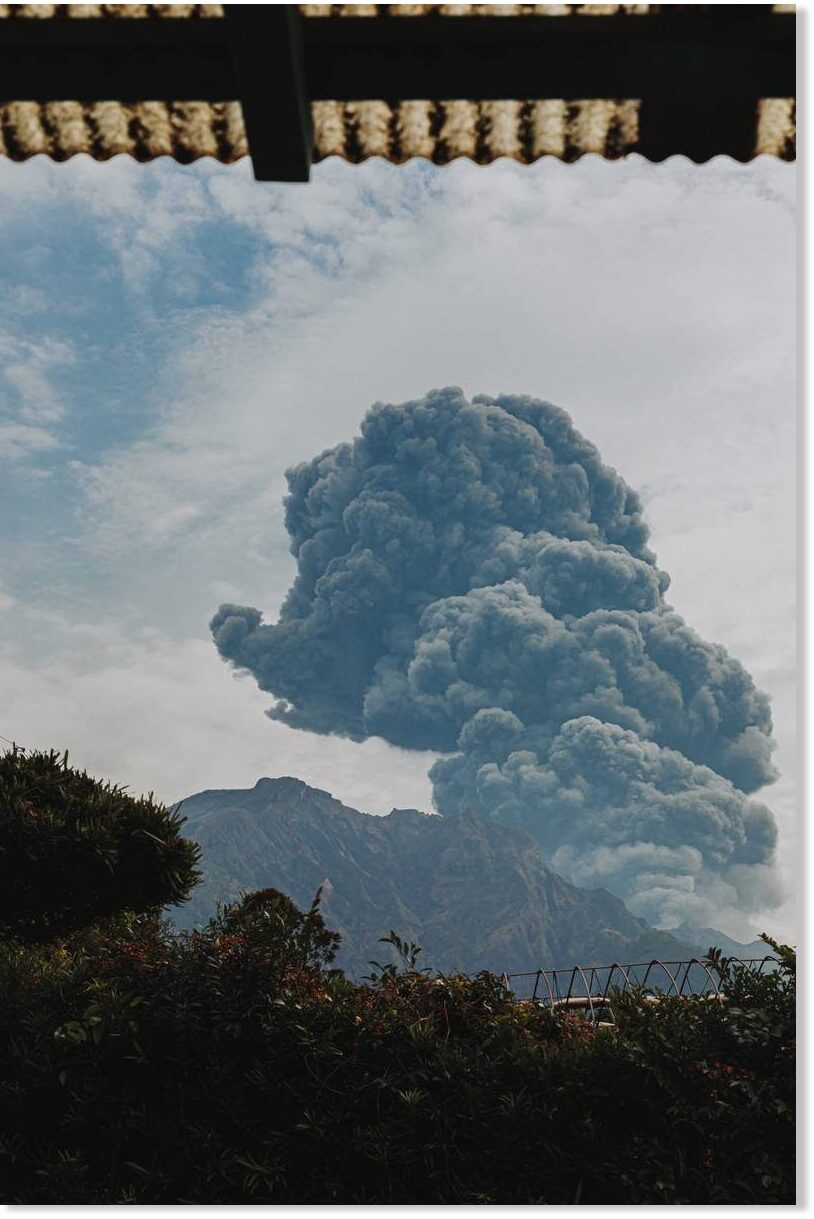
Japan's Sakurajima volcanic eruption sends plumes of smoke and ash into the air

Sakurajima volcano erupts in Japan.
Japan's Sakurajima volcano sent large plumes of smoke and ash over Kyushu Island, images and videos shared online on Friday showed.

Located on the southernmost main island of Kyushu, Sakurajima is considered one of the world's most active volcanoes. It spews ash and lava every four to 24 hours.

The volcano also sits off the coast of Kagoshima, a city of about 600,000 people.