Volcanoes
S


Fire

This week in Volcano News: Eruption report at Agung, new eruption at Poas

Poas volcano
Poas volcano
There are currently 51 volcanoes actively erupting on the planet. While the Karangetang volcano is continuing to produce viscous lava flows, several developments have occurred at other regional volcanoes.

In Japan, the Kirishima volcano is continuing to show signs of unrest as a series of volcanic earthquakes expanded to a group of 2 vents.

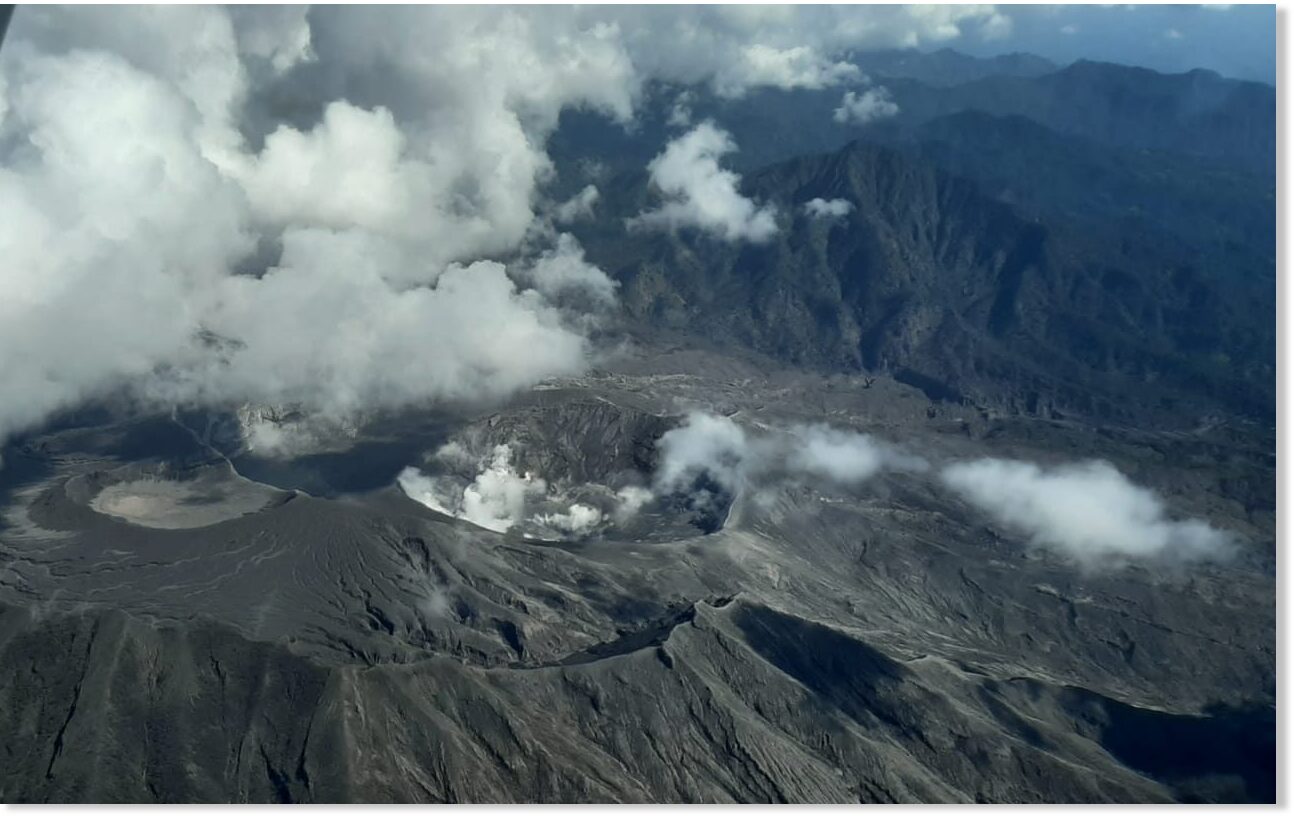
In Indonesia, the Agung volcano was widely reported by news outlets to have erupted when in fact no such eruption ever occurred. Meanwhile, in Costa Rica, the Poas volcano produced its first eruption since 2019.

This video will discuss these volcano related news stories, as told and analyzed by a volcanologist.


Fire

Ebeko volcano eruption Kuril Islands, Russia

Ebeko volcano eruption today Kuril Islands.


Attention

Mud volcano erupts near temple in Pingtung's Wandan Township, Taiwan

mud volcano
© Chen Yu-i
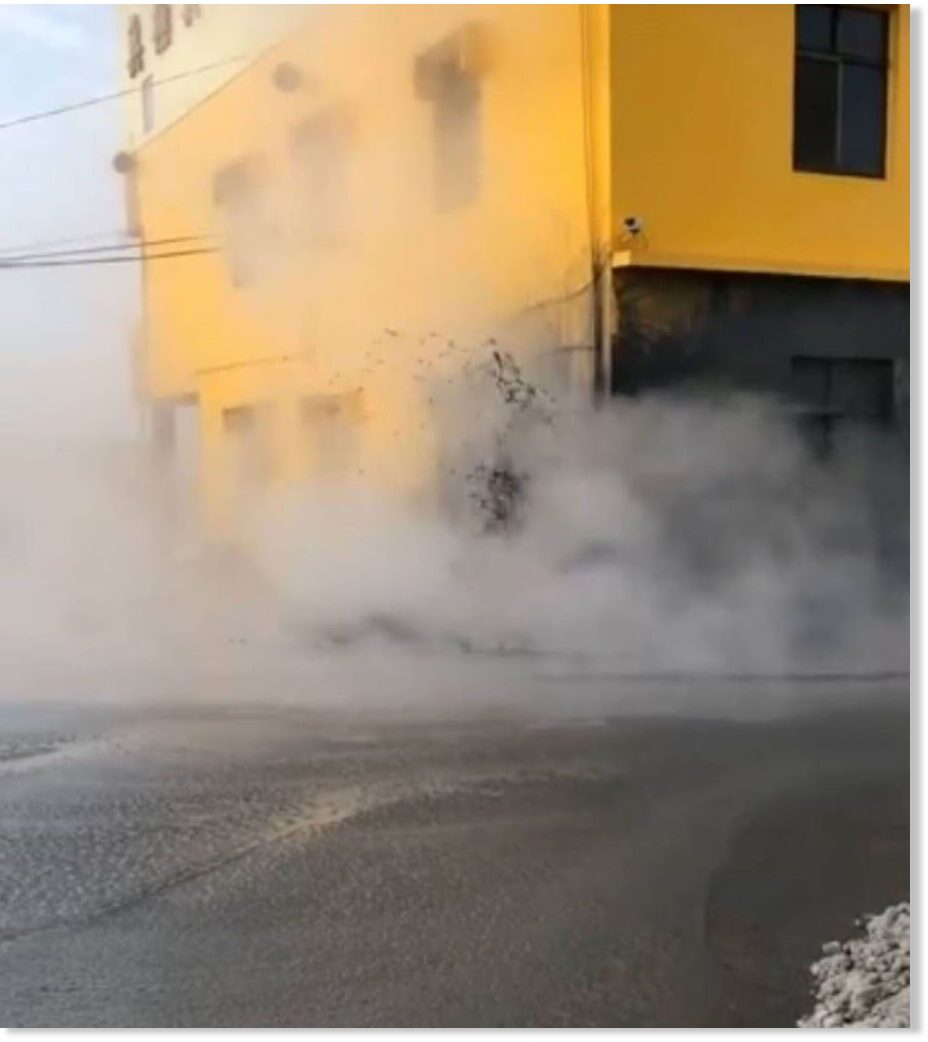
A mud volcano erupted near a local temple in Wandan Township in Pingtung County on Friday morning, heaving large amounts of mud above ground that flowed into surrounding roads and fields.

The eruption, the second by the volcano since October 2021, occurred at around 6 a.m. near Huang Yuan Sheng Tien (皇源聖殿), a temple surrounded by farmland in Wannei Village in the eastern part of the county near Kaohsiung.

The bursts reached as high as a one-story building, and to keep the mud from further spreading into nearby rice paddies, excavators were mobilized to channel mud toward drainage ditches, Wannei Village chief Chen Yu-i (陳玉意) told CNA.


Attention

Submarine volcano erupts in Japan's Ogasawara Islands

maps
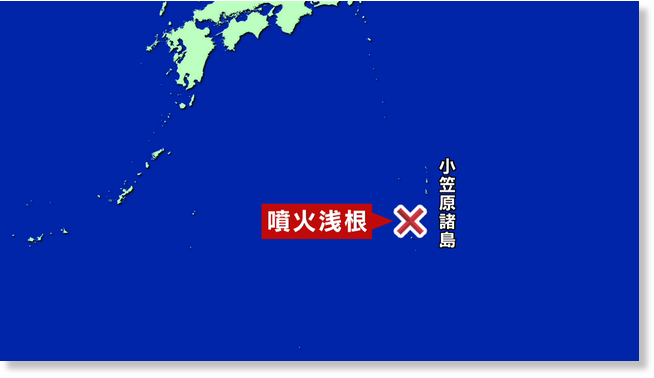
The Japan Meteorological Agency says a submarine volcano, far south of the country's main island of Honshu, has erupted. It issued a volcanic warning for nearby waters.

The agency says a weather observation satellite recorded volcanic material erupting from the Funka Asane area in the Ogasawara Islands at around 6 p.m. on Sunday.

The column rose about 5,500 meters above sea level. An image taken by the satellite shows it billowing northeast over waters.

Eruptions continued afterwards. Volcanic plumes reached 7,000 meters above sea level at around 11:30 p.m. on Sunday and 2:20 a.m. on Monday.


Attention

This week in Volcano News - Potential eruption in Azores, Mauna Kea earthquake

Azores island prepares to evacuate amid major earthquake fears
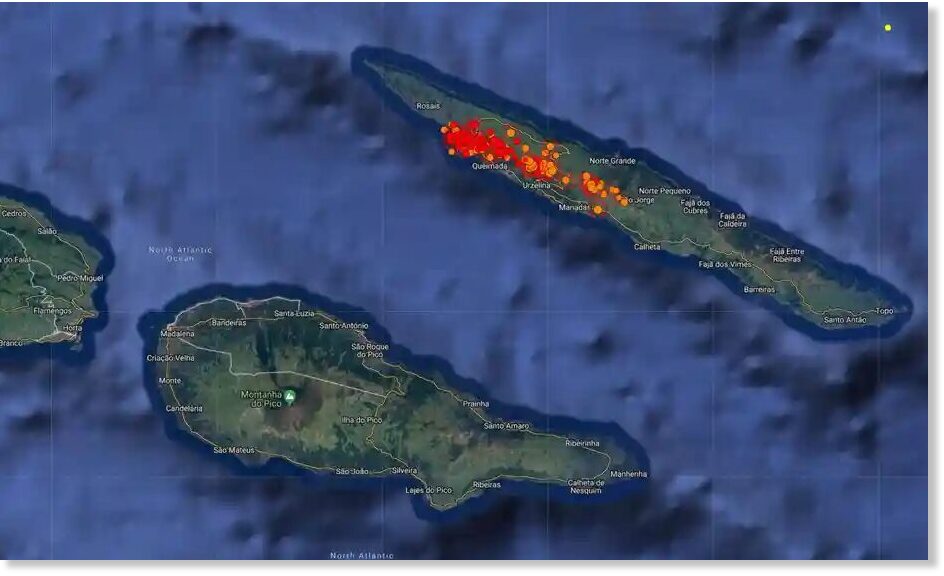
Right now, there are 51 volcanoes actively erupting on the planet. This week's top story regards the Sao Jorge volcano in Portugal, where a shallow intrusion of magma is ongoing. Its alert level was raised three times in a week, and ground deformation and elevated gas levels have been detected. Thus, an eruption might occur in the next few days.

Meanwhile in Chile, the alert level at the Lonquimay volcano was raised to yellow due to a swarm of earthquakes underneath its edifice. And, in Hawaii, a large earthquake occurred underneath the flank of Mauna Kea. This video will discuss these volcano related news stories, as told and analyzed by a volcanologist.


Fire

Taal volcano: thousands flee after eruption in Philippines

Taal Volcano spews white steam and ash as seen from Balete, Batangas province, south of Manila.
© Reynante Olitan De Villa/APTaal Volcano spews white steam and ash as seen from Balete, Batangas province, south of Manila.
Thousands of people fled their homes near a Philippine volcano after an eruption sent ash and steam hundreds of metres into the sky.

Taal volcano, which sits in a picturesque lake south of Manila, exploded with a "short-lived" burst at 7.22 am on Saturday, the Philippine Institute of Volcanology and Seismology said in a statement.

It warned further eruptions were possible, which it said could trigger dangerous, fast-moving volcanic flows of gas, ash and debris, as well as a tsunami.

Residents in five fishing and farming settlements around the lake were ordered to leave their homes, in the third mass evacuation in as many years around one of the country's most active volcanoes.


Attention

This week in Volcano News - Problems at 9 Alaskan volcanoes - La Soufriere update

St Vincent La Soufriere Volcano
La Soufriere Volcano

Right now, there are 49 volcanoes actively erupting on the planet. This week's top story regards a group of 9 volcanoes in Alaska, whose alert levels were just changed. The list of volcanoes with a changed alert level includes the infamous Novarupta volcano, which produced the planet's largest volcanic eruption of the 20th century in 1912.

Meanwhile, in Russia, the Bezymianny volcano produced a paroxysm that created pyroclastic flows. And, on the island of Saint Vincent, the alert level at the La Soufriere volcano was lowered from yellow to green.

This video will discuss these volcano related news stories, as told and analyzed by a volcanologist.


Bizarro Earth

Ancient ice reveals scores of gigantic volcanic eruptions

Ice cores drilled in Antarctica and Greenland have revealed gigantic volcanic eruptions during the last ice age. Sixty-nine of these were larger than any eruption in modern history. According to the University of Copenhagen physicists behind the research, these eruptions can teach us about our planet's sensitivity to climate change.
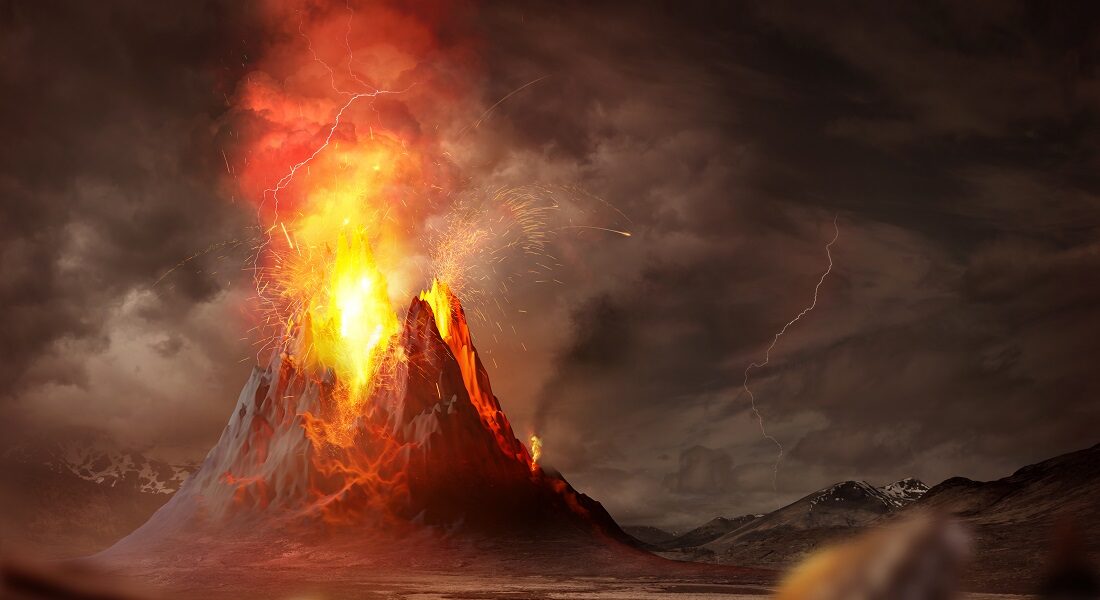
Illustration of volcanic eruption
© Getty ImagesIllustration of volcanic eruption.
For many people, the mention of a volcanic eruption conjures up doomsday scenarios that include deafening explosions, dark ash billowing into the stratosphere and gloopy lava burying everything in its path as panicked humans run for their lives. While such an eruption could theoretically happen tomorrow, we have had to make do with disaster films and books when it comes to truly massive volcanic eruptions in the modern era.

"We haven't experienced any of history's largest volcanic eruptions. We can see that now. Eyjafjellajökull, which paralysed European air traffic in 2010, pales in comparison to the eruptions we identified further back in time. Many of these were larger than any eruption over the last 2,500 years," says Associate Professor Anders Svensson of the University of Copenhagen's Niels Bohr Institute.

By comparing ice cores drilled in Antarctica and Greenland, he and his fellow researchers managed to estimate the quantity and intensity of volcanic eruptions over the last 60,000 years. Estimates of volcanic eruptions more than 2,500 years ago have been associated with great uncertainty and a lack of precision, until now.

Info

Did volcanic dust from Hunga Tonga cause flooding in Australia?

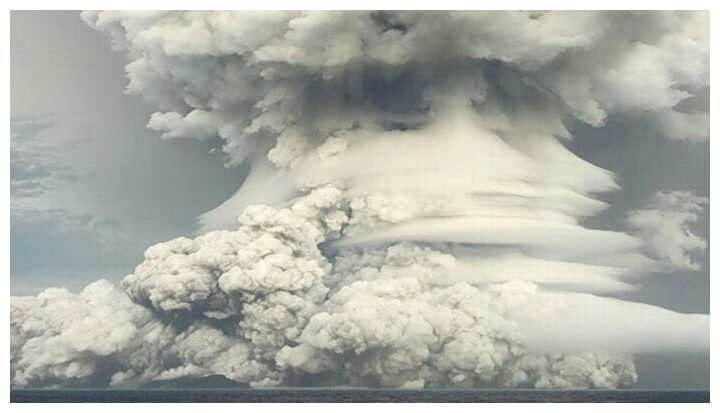
Hunga Tonga-Hunga Ha’apai.
© JoNovaHunga Tonga-Hunga Ha’apai.
Unusual rain in Australia started within days of the Hunga Tonga dust cloud travelling across the continent

On January 15th, Hunga Tonga launched a magma-powered thunderstorm that sent atmospheric shockwaves around the world. Ash, salt and particulates were carried through rising columns, right through the stratosphere, into the mesosphere and all the way up to 58 kilometers above Earth. For hours 400,000-odd lighting bolts zapped the airborne chemical soup.

The dust from Hunga-Tonga travelled West and reached Australia on Jan 18 - 20th. On Jan 21-22 flooding rain washed out the main railway line and roads in central Australia. Over the next few weeks, rains soaked the ground across parts of Queensland and New South Wales. By February 15th, the remnant volcanic dust that had circled the Earth and was back again creating rich red sunsets over Australia. A week or so after that, the rain bombs fell on South East Queensland, and travelled south through New South Wales to Sydney.

The big unknown is that the Hunga-Tonga volcano launched water vapor, salt and dust incredibly high — almost too high. The aerosols are far above the troposphere where rainfall originates and some of that floating ash was still too high even as it returned on the second lap of the Earth at 25km above sea level. On the other hand, some particles will fall out faster than others, others will be highly charged and possibly novel entities created in the monster lightning storm above the volcano, and some ash and particles will have been released at lower heights.

This post was inspired by Jennifer Marohasy who pointed out the weak La Nina conditions don't really explain the floods in Australia this year. She wondered if the recent Australian rain was fueled by aerosols from Hunga Tonga and describes how rainfall has been linked to past eruptions in scientific papers: after "El Chichon spewed 20 million tonnes of aerosols into the stratosphere in 1982, Hong Kong recorded very high rainfalls as the dust arrived across the Pacific".

Seismograph

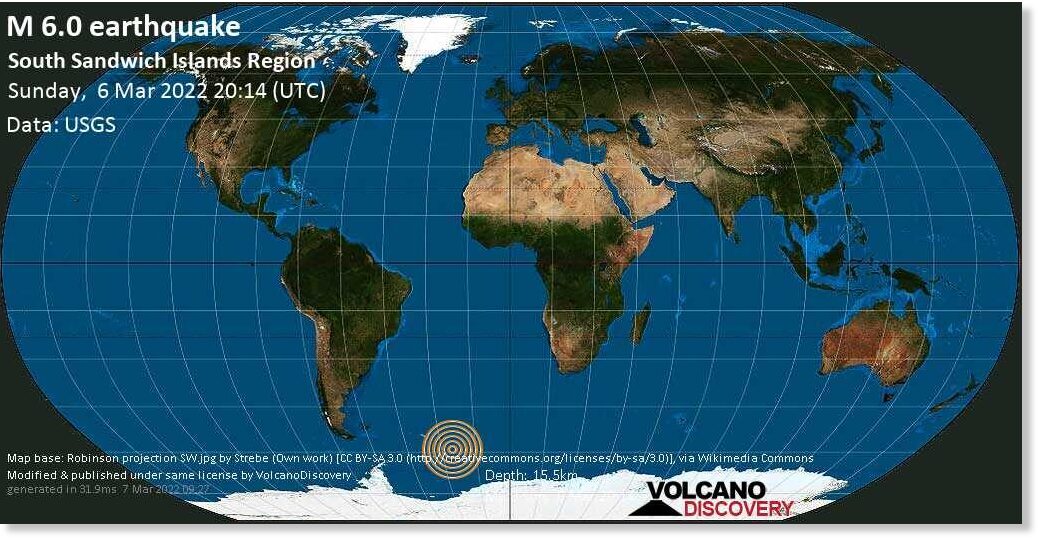
Shallow 6.0 magnitude earthquake near South Sandwich Islands

maps

Very strong magnitude 6.0 earthquake at 16 km depth

Date & time: Mar 6, 2022 20:14:30 UTC
Local time at epicenter: Sunday, Mar 6, 2022 at 6:14 pm (GMT -2)
Magnitude: 6
Depth: 15.5 km
Epicenter latitude / longitude: 58.7354°S / 24.8859°W (South Atlantic Ocean, South Georgia & South Sandwich Islands)