Extreme Temperatures
S


Snowflake

Record breaking Spring blizzard Valarie, over 3 feet of almost Summer snow, crops lost

map weather
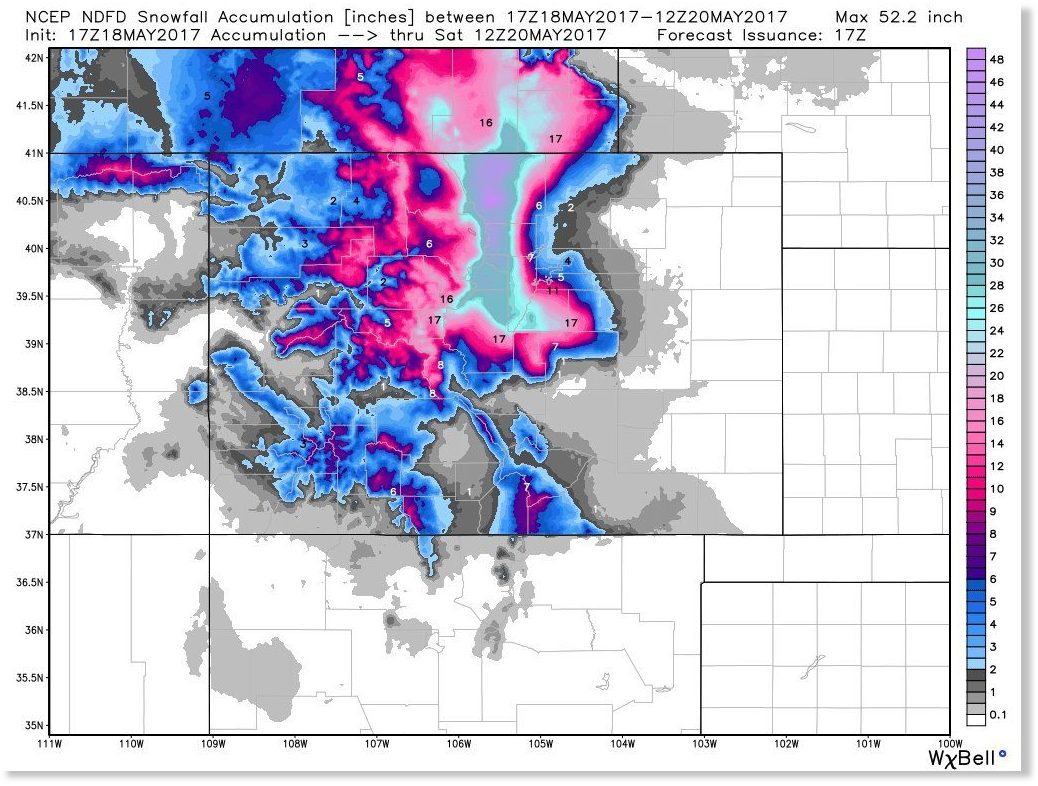
Unprecedented late spring blizzard / winter storm Valerie ripping across the western USA dumping more than three feet of snow. Record snow falls down to Mexican border, traffic stopped, crops being decimated again by high wind, heavy wet snow and cold temperatures. The inter-Tropical Convergence Zone is shifting due to the onset and strengthening of the Mini Ice Age, but the media won't tell you that because they don't want you to alter your lifestyle of take your cash out of savings and investments. Its here and intensifying, you have until 2019 to prepare.


Sources

Snowflake

Parts of Colorado hit with 3 feet of snow in May

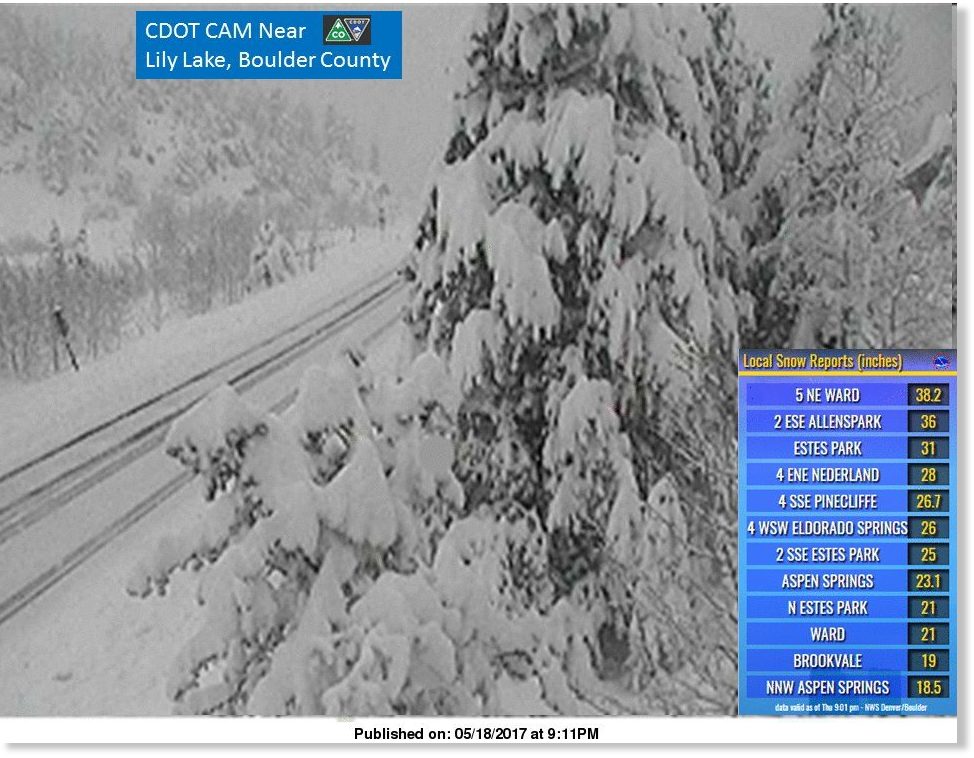
18 to 36 inches of snow has fallen in the foothills with this spring storm. An additional 6
© NWS Boulder18 to 36 inches of snow has fallen in the foothills with this spring storm. An additional 6" to 12" is expected by morning
A May snowstorm continued to pound the central and northern Rockies on Friday, a day after burying portions of Colorado under three feet of snow.

The storm has created headaches for travelers on highways, caused thousands of power outages and forced schools and businesses to close.

The highest reported snow total was 38.5 inches near Ward, Colo., the National Weather Service said. Many other locations picked up between two and three feet.

More snow is forecast Friday before it tapering off Saturday.


Sun

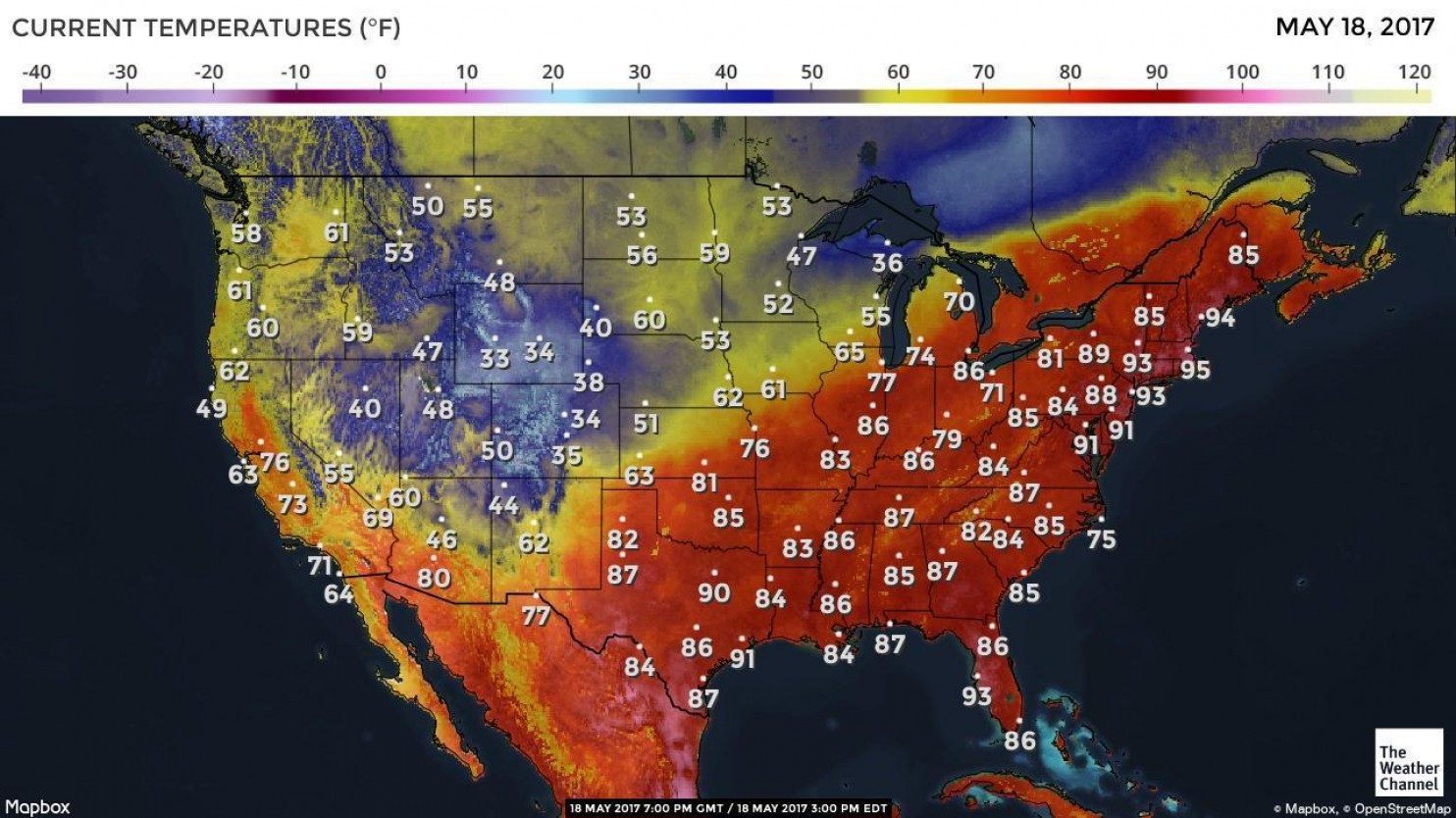
So weird: Northeast US has nation's hottest weather, Boston hits record 95 degrees

Northeast US heat wave
© Weather.comTemperatures at 3:00 p.m. across the Lower 48.
The hottest weather in the nation was in an unlikely place Thursday afternoon: the Northeast.

Cities such as New York, Boston and Portland, Maine, soared into the low- to mid-90s and were hotter than the likes of Phoenix, Los Angeles and Miami.

At 3 p.m., Boston stood out as the hottest city in the nation — something that hardly ever happens. The mercury had risen to a scorching 95 degrees.

Connecticut, according to WeatherBell Analytics meteorologist Ryan Maue, was the warmest state in the nation.

Record highs were falling like flies in New England. Nearly every major city along Interstate 95 set a record for the date, and a few spots were closing in on monthly records.

Some of the records established Thursday afternoon:
  • Newark hit 94, breaking a record of 90 from 1986
  • LaGuardia Airport in New York hit 96, shattering the record of 86 from 1989 and just one from its monthly record high of 97.
  • Central Park in New York hit 91, breaking the record of 90 from 1936
  • Providence, R.I., hit 93, breaking the record of 92 from 1936
  • Hartford, Conn., hit 96, breaking the record of 90 from 1936
  • Boston (Logan Airport) hit 95, breaking the record of 91 from 1936 and tying for the third-hottest May reading on record
  • Blue Hill Observatory just outside Boston hit 95, its hottest May day recorded back to 1885.
  • Burlington, Vt., hit 93 degrees, breaking the record of 89 from 1989 and tying for the warmest May day on record.
  • Concord, N.H., hit 94, shattering the record of 86 from 1906 and 1889.
  • Portland hit 91, shattering the record of 82 from 1949
In a number of areas, temperatures were 20-plus degrees warmer than normal.

Snowflake

Spring storm delivers snow to the Colorado mountains

A strong thunderstorm band swept through the Denver area between 9 and 10 p.m., bringing heavy rain, up to an inch per hour in some areas, along with hail in some spots, according to the National Weather Service.
© Denver 7A strong thunderstorm band swept through the Denver area between 9 and 10 p.m., bringing heavy rain, up to an inch per hour in some areas, along with hail in some spots, according to the National Weather Service.
Rain, heavy at times, drenched downtown Denver on Wednesday night as hail pelted several areas in northern Colorado and snow fell in the mountains.

A strong thunderstorm band swept through the Denver area between 9 and 10 p.m., bringing heavy rain, up to an inch per hour in some areas, along with hail in some spots, according to the National Weather Service.

Pea-size hail fell in the Dacono area along the I-25 corridor north of Denver at about 8:50 p.m. to a depth of 4 inches, according to the weather service.

Snow levels along the Wyoming state line dropped down to 7,500 feet in elevation about 8 p.m. Wednesday.

Lightning flashed across the night sky Wednesday as rain and hail swept through the area.


Snowflake

Snowstorm in mid-May snaps trees, cuts power in Missoula, Montana; 5 inches of snow reported

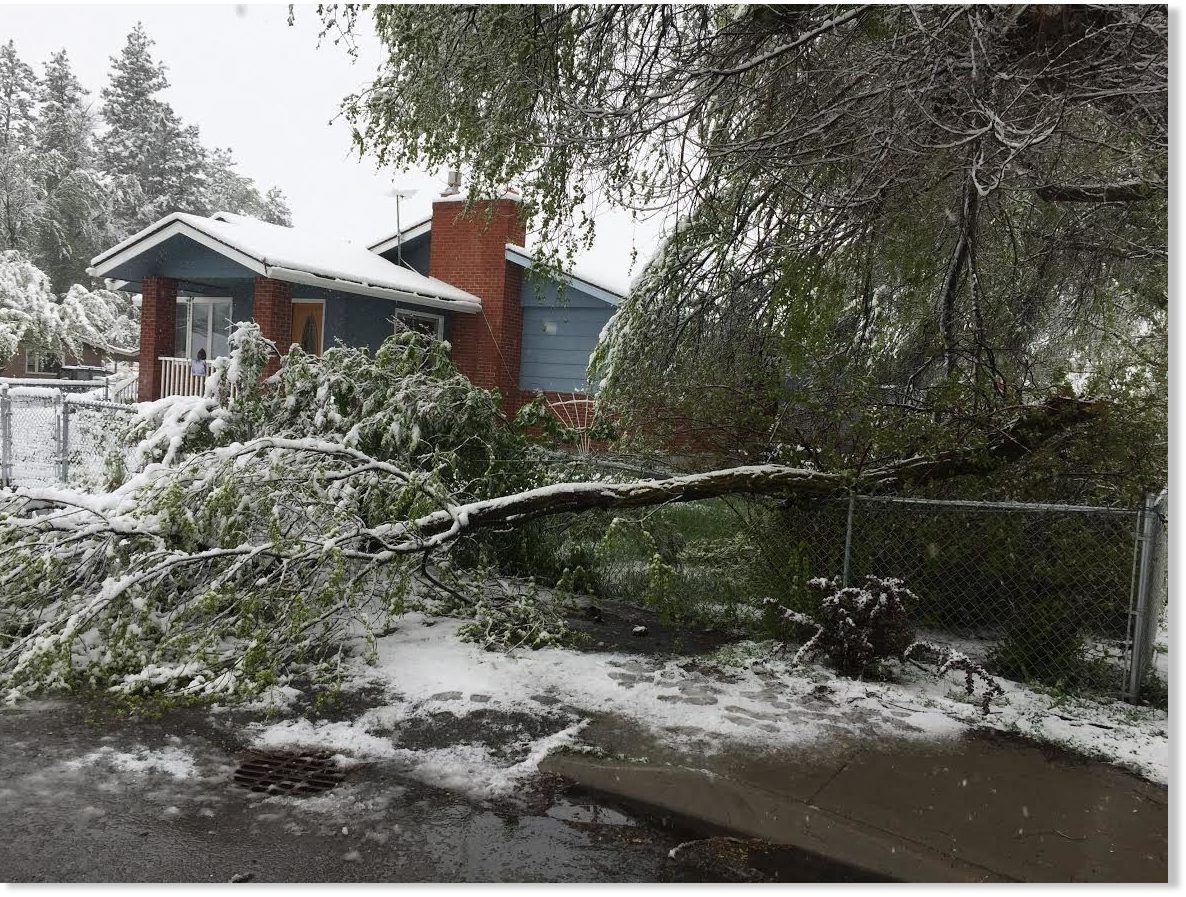
Downed tree
© NWS MissoulaDowned tree
Missoulians awoke to snapped tree limbs, smothered shrubs and intermittent power outages on Wednesday as a slow-grinding snowstorm delivered as forecast.

Utility vehicles were scrambling up Rattlesnake Drive, where dozens of branches were down across power and communications wires.

For fallen trees and limbs that are not blocking a street or threatening power lines, Missoula residents can call the City Park Operations Office at 552-6253. Those with fallen tree limbs blocking travel can call the City Forester at 552-6270 to get a crew out as soon as possible.

National Weather Service volunteer observers reported 5 inches of snow in many places around Missoula.


Snowflake

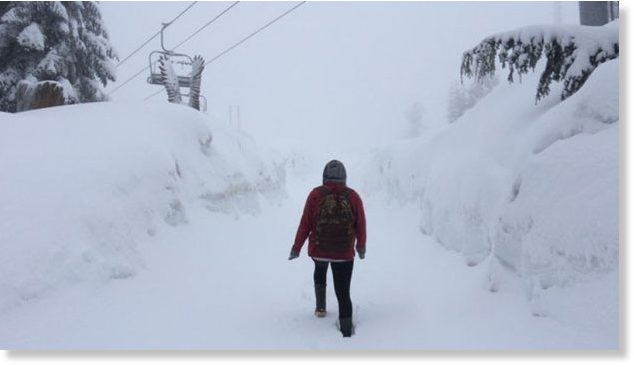
Grouse Mountain in British Columbia receives 25-cm (9 inches) dump of May snow

Grouse Mountain saw 25 cm of snow fall from May 15-16, 2017.
© Photo: Grouse MountainGrouse Mountain saw 25 cm of snow fall from May 15-16, 2017.
Monday night's heavy snowfall was good news for skiers and snowboarders in the Vancouver area but for not so much for drivers on mountain highways in the B.C. Interior.

Grouse Mountain saw a total of 25 centimetres of fresh snow skiers. Cypress Mountain and Mount Seymour both remain closed for the season.

Meanwhile, snowfall is forecasted to continue in the Interior, and Environment Canada has sent out a warning to motorists to expect winter conditions between Hope and Kamloops, as well as along the Okanagan Connector from Merritt to Kelowna. Conditions are expected to get worse later in the day.

Snowflake

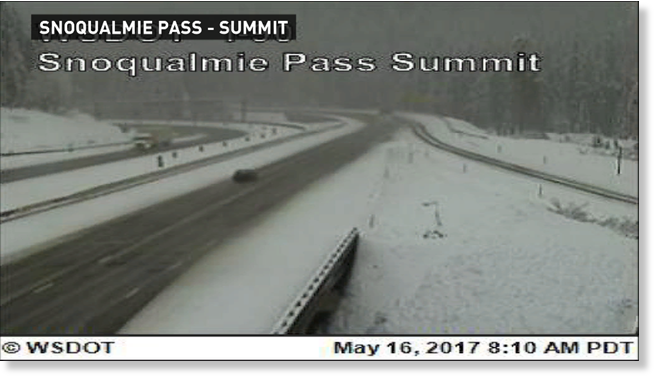
Fresh May snowfall in the Cascades, Washington

cam shot
As this seems to be the winter that never ends, the Cascades are once again under winter weather headlines. A Winter Weather Advisory is in effect for the Washington Cascades until this evening, with accumulating snow as low as Snoqualmie Pass.

An unusually strong low-pressure system for this time of year is currently moving through the region. This movement brings colder temperatures into the mid-levels of the atmosphere. As the temperatures aloft fall, so does the snow level.

This morning, the snow level had fallen to around 3,000 feet. While it's not unusual to see May snow in the Cascades, it is somewhat rare to see accumulating snow this low this late in the year. If you're traveling over the mountain passes today, plan on encountering some slushy snowfall on the range of 1-4 inches. Above 4,500 feet, the totals will be closer to 6-12 inches.

Ice Cube

Dragon ice traps crab fishermen's boats in warming Arctic Oceans

trapped in ice
Dragon ice is a form of ice pancakes stacking on top of each other during prolonged gale force wind events. This was captured by research scientists from New Zealand on an expedition to Antarctica. Crab fishermen are asking for compensation as heavy ice delayed their season by several weeks due to huge icebergs and thick ice stretching for miles. New article explains the worlds oceans are warming 13% faster than thought, although the Atlantic, Pacific, Arctic and Antarctic all show cooling. Interesting.


Sources

Comment: See also: Dragon-skin ice, has been discovered by scientists, forged by intense Antarctic gales


Snowflake

Mt. Washington gets record snowfall as Massachusetts prepares for heat

Mount Washington Observatory record snow
© Mount Washington ObservatoryThere was snow on Mount Washington on Mother’s Day.

More than 30 inches of snow enveloped Mount Washington Observatory this weekend — just days before parts of Massachusetts are expected to have temperatures in the 90s.

The snow started Saturday night at the New Hampshire observatory and continued through Monday, covering the mountain with about 33 inches before stopping, according to a Facebook post from the observatory.

A May snowfall is not unusual at the observatory, said Chris Kimble, a National Weather Service meteorologist. About 12 inches of snow typically falls in May at the observatory, which has an altitude of 6,300 feet.

But this weekend's storm broke a couple weather records, including the largest snowfall for a single day in May.

"In 1967, 22.2 inches fell, and this weekend we got 22.9 and counting," Kimble said.

The record for the largest single-storm snow in May was also broken, he said. From May 21 to 24, 1997, the observatory was hit with 30.6 inches of snow. This weekend, 33.3 inches fell.

So far, over 45 inches of snow have fallen at the observatory this month.

Ice Cube

Atlantic ocean begins to cool, icebergs abound & global warming can't explain cosmic cycles

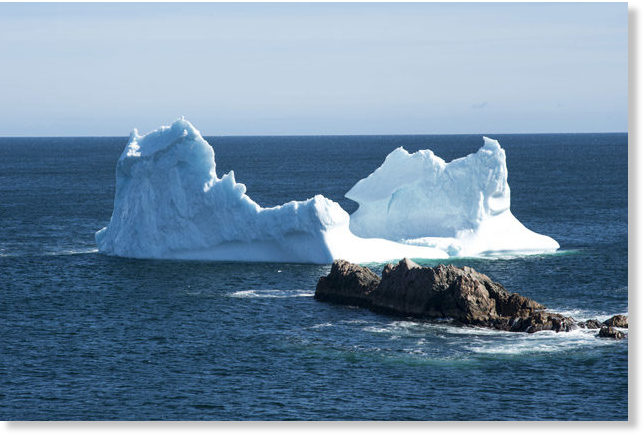
iceberg
With the Atlantic Multi-decadal Oscillation beginning its 30 year cooling phase in the 60 year cycle, near record iceberg sightings dot the Canadian coastline. Excuses are give such as the Peterman Glacier developing a crack, the ice on Greenland calving as new ice builds in the center, any excuse except the real cause, a cosmic cycle. The late Holocene sea surface temperatures show a warm period at 1000AD, and cool period 100AD which we are beginning to repeat.


Sources