Earthquakes
S


Seismograph

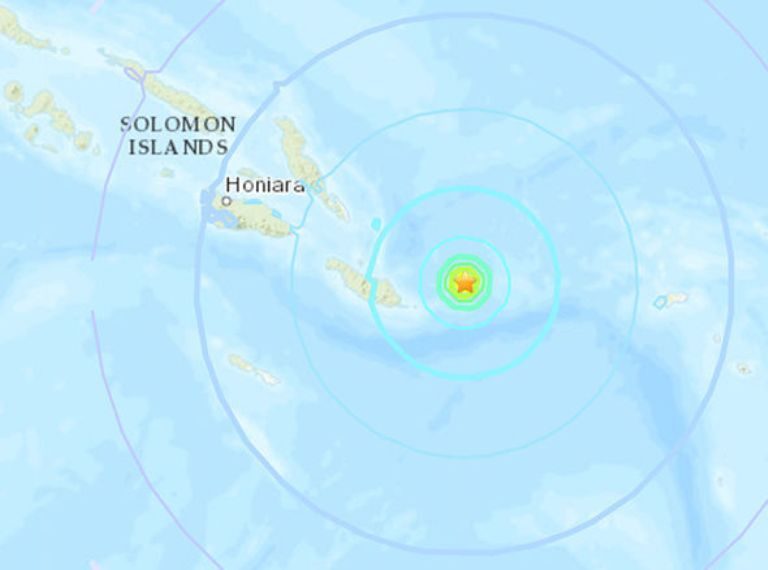
Strong and shallow M6.2 earthquake hits Solomon Islands

Soloman Islands quake map
© USGSA map shows where the earthquake hit
The quake, at a depth of 33km (20 miles), was centred 161km (100 miles) east of Kira Kira in the Solomon Islands.

The Solomon Islands, a nation of hundreds of islands in the South Pacific, has many World War Two-era sites.

The earthquake, which struck at 3.26am (GMT), was reviewed to a magnitude 6.2 and a revised depth of 10.6km (6.5miles).

Affected areas include Kirakira, the provincial capital of the Makira-Ulawa Province in the Solomon Islands.

The earthquake's epicentre was 132 km (82.3 miles) west of the city, which has a population of 11,222.

It is located on the north coast of Makira, the largest island of the province.

The area is known for its stunning natural beauty and ample beaches.

Comment: The USGS also registered a strong and shallow (10.0 km depth) M6.3 earthquake hit Southern East Pacific Rise on November 15, 2018.


Better Earth

Seismic study reveals huge amount of water is dragged into Earth's interior

under water
Slow-motion collisions of tectonic plates under the ocean drag about three times more water down into the deep Earth than previously estimated, according to a first-of-its-kind seismic study that spans the Mariana Trench.

The observations from the deepest ocean trench in the world have important implications for the global water cycle, according to researchers in Arts & Sciences at Washington University in St. Louis.

"People knew that subduction zones could bring down water, but they didn't know how much water," said Chen Cai, who recently completed his doctoral studies at Washington University. Cai is the first author of the study published in the Nov. 15 issue of the journal Nature.

"This research shows that subduction zones move far more water into Earth's deep interior - many miles below the surface - than previously thought," said Candace Major, a program director in the National Science Foundation's Division of Ocean Sciences, which funded the study. "The results highlight the important role of subduction zones in Earth's water cycle."

Comment: When we consider that major seismic activity has been risen by 2000% since the 1900s, are there any implications for the water on our planet?

See also:


Seismograph

Central Pennsylvania residents report loud booms, shaking

Mystery boom in York, PA
© York Daily Record
Don Vitale had just walked into his house Tuesday evening when he heard a boom that sounded like a thunderstorm in the distance.

Then, a few minutes later, he heard a louder boom, and a pan on the stove rattled.

Vitale, who moved into his Carroll Township home about six years ago, wondered what it was. Then a neighbor called him: "Did you hear that?" Vitale said that he did.

"That's an earthquake," the neighbor told him.

It's been 10 years since an earthquake swarm rattled the Dillsburg area of northern York County. It started with a 2.0 tremor on Oct. 5, 2008, and the booming and rattling occurred periodically until early 2010. The tremors were centered in an area along Old York Road and Brandon Lane in Carroll Township.

Seismograph

Earthquake of 6.5 magnitude rocks Russia's Far East

Russia's Far East
© Yury Smityk/TASS


The press service of the regional branch of the Russian Emergencies Ministry said that no injuries or damages have been reported


An earthquake of 6.5 magnitude was registered off the Kamchatka Peninsula on Thursday. Tremors were felt in four settlements in the Russian Far Eastern Kamchatka Region. The strongest tremors of 6 magnitude were felt in the settlement of Ust-Kamchatsk with a population of around 4,000 people, a representative of the local branch of the Russian Academy of Sciences' Geophysical Service told TASS.

"The earthquake struck at 9:21am local time [0:21am Moscow time]. Its magnitude stood at 6.5. Residents of Ust-Kamchatsk felt it the most with 6 magnitude. Residents of Kozyrevsk and Klyuchi felt tremors of 3 magnitude. In Petropavlovsk-Kamchatsky, tremors of 2 magnitude were registered," the spokesman said.

The earthquake's epicenter lay to the south of Ust-Kamchatsk, in 78 and 36 kilometers from the coastline.

The press service of the regional branch of the Russian Emergencies Ministry said that no injuries or damages have been reported.

Seismograph

Very shallow magnitude 6.3 earthquake hits North Atlantic Ocean

graph
A shallow magnitude 6.3 earthquake was reported North Atlantic Ocean, at a depth of 7.28 km, according to the U.S. Geological Survey. An earthquake of this magnitude is considered to be strong.

It struck at Nov 11, 2018 at 02:03:59 UTZ. USGS reports that this quake event was manually reviewed. USGS alert level for this quake is 'green' which mean an estimate of zero fatalities and less than $1 million in losses.

4 people reported they felt this tremor via the USGS website.

Comment: This is the third strong quake within the last 2 days:

Strong shallow earthquake of magnitude 6.2 hits off Tonga

Major 6.8 magnitude earthquake jolts Norwegian volcanic island in Arctic Ocean


Seismograph

Strong shallow earthquake of magnitude 6.2 hits off Tonga

graph
A strong earthquake has hit off the Pacific island nation of Tonga, but there were no immediate reports of injuries or damage.

The U.S. Geological Survey says the magnitude 6.2 quake hit Saturday evening at a depth of 10 kilometers (6 miles).

The quake struck 98 kilometers (60 miles) southeast of Pangai, Tonga.

The Pacific Tsunami Warning Center has not issued a warning.

Tonga is prone to earthquakes and sits on the "Ring of Fire," the arc of seismic faults around the Pacific Ocean where most of the world's quakes and volcanic activity occur.

Source: AP

Comment: See also: USGS seismic data points to 2,000% increase in major earthquakes since 1900


Seismograph

Best of the Web: USGS seismic data points to 2,000% increase in major earthquakes since 1900

chart
Last week we looked at the state of our planet...Two-thirds of all animal and insects extinct by 2020: Dying oceans fish replaced by plastic: One in five of the world's plant species threatened.

Today we will see the incredible rise of major quakes since 1900 and the mindblowing fact these statistics are not mentioned on MSM or even mentioned by our religious leaders, below is the famous quote from Jesus to His disciples...

Luke 21: 10,11. Then he said to them: "Nation will rise against nation and kingdom against kingdom. There will be great earthquakes, and in one place after another food shortages and pestilences; and there will be fearful sights and from heaven great signs.

Seismograph

Major 6.8 magnitude earthquake jolts Norwegian volcanic island in Arctic Ocean

Jan Mayen
© GETTYAn earthquake has hit the Arctic Ocean near Jan Mayen
A strong earthquake has hit by a Norwegian volcanic island called Jan Mayen in the Arctic Ocean, measuring 6.8 on the Richter Scale.

The quake took place 10km deep and 722km from Akureyri, Iceland.There is no yet known information of whether the quake has disrupted the island's volcanic activity.

The earthquake struck at 1:49am GMT and its epicentre was in a remote area of the ocean around 253 miles east of Ittoqqortoormitt in Greenland.

The force caused local waves to appear in the Greenland Sea.

However, the US Tsunami Warning System said it is not expected to cause a tsunami in more populated areas.

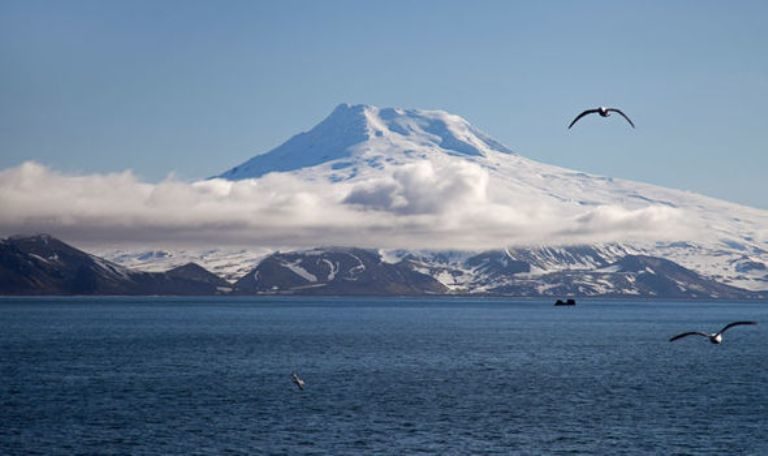
The island is mountainous, the largest mountain being the volcano Beerenberg in the northeast.

It is the world's northernmost active volcano that is not underwater.

Comment: USGS seismic data points to 2,000% increase in major earthquakes since 1900


Seismograph

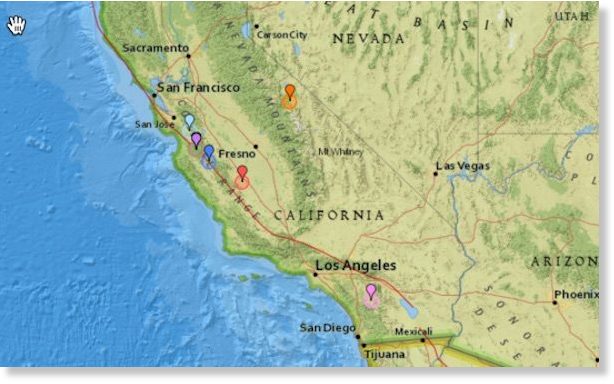
California struck by 39 earthquakes in 24 hrs, scientists observe 'movement along the San Andreas Fault'

California Hit By 39 Earthquakes
A series of large earthquakes has rattled California over the last 24 hours, and scientists are telling us that the shaking was the result of "movement along the San Andreas Fault system". In recent months there has been an alarming amount of seismic activity all along "the Ring of Fire", and there have been times when the number of global earthquakes has been way above normal. Could it be possible that all of this unusual seismic activity is leading up to something? As you will see below, experts are telling us that we are overdue for the "Big One" to hit California. And when it does eventually strike, it could be far worse than most people would dare to imagine.

Most of the 39 significant earthquakes that have struck California within the last 24 hours have happened along the San Andreas Fault. The following comes from CBS News...
A swarm of earthquakes along the San Andreas Fault, the largest measuring a 4.1 magnitude, rumbled through the Hollister area and the Salinas Valley Friday morning. CBS San Francisco, citing officials, reports the quakes rattled nerves but caused no major damage.

According to the U.S. Geological Survey, the 4.1 quake hit at 5:58 a.m. PDT 12 miles southwest of the small community of Tres Pinos. It was followed by quakes measuring 3.6, 3.2 and 3.0.

Seismograph

Strong 6.0-magnitude earthquake rocks the Philippines

chart
A 6.0-magnitude earthquake occurred at 8 a.m. on November 4 in the Philippines, the European-Mediterranean Seismological Centre (EMCS) reported.

The epicenter of the quake was located 47 km southwest of the city of Maravi with a population of about 201,000 inhabitants, situated on the island of Mindanao.

The center of the earthquake was at a depth of 603 km (374 miles). Some 35,379,000 people are estimated to have felt weak tremors.