Health & WellnessS


Syringe

Covid Vaccine Spike Protein is a Pore-forming Toxin

spike protein
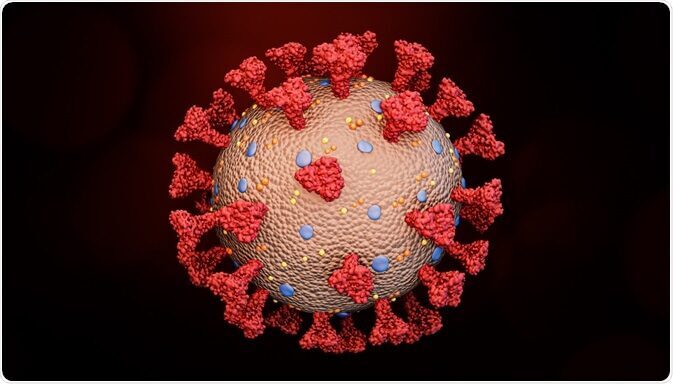
The spike protein pokes holes in cell membranes at concentrations much lower than those achieved with vaccination, contributing to COVID-like illness and mitochondrial damage. But is the J&J immune?

Comment: See also:


Syringe

Fauci warns that COVID isn't over and that US restrictions could always come back

Fauci CNN
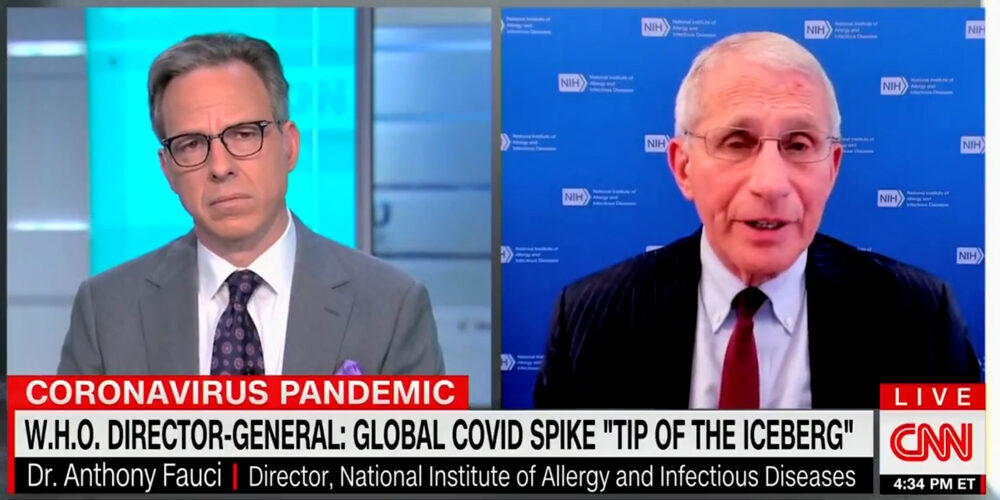
Dr. Anthony Fauci recently told CNN viewers to be prepared for anything in terms of pandemic response measures for the current BA.2 COVID variant.

In an appearance on Jake Tapper's program, Fauci said that the United States follows the trends of the United Kingdom by two to three weeks. While noting the lessened severity in the BA.2 COVID variant - it spreads faster.

The main message from health authorities is that COVID is still not over.

Comment: It'll be a relief when Fauci goes the way of Greta Thunberg and becomes completely irrelevant in the eyes of the public.

See also:


Syringe

Moderna plans three more mRNA vaccines, not all for infection

moderna logo vaccine syringe
© SOPA Images/LightRocket via Getty ImagesModerna was last year’s third-best-performing stock in the S&P—now it's this year’s worst.
Moderna produces one of three COVID shots available in the U.S.1 In November 2021, Moderna released data on third-quarter sales showing phenomenal profits from the vaccine of $5 billion worldwide and forecasted $18 billion for the year just from the mRNA vaccine.2 To take advantage of this revenue stream, the company announced they are developing three new mRNA vaccines for shingles, cancer and herpes.3

At the start of the vaccine race, the Health and Human Services Operation Warp Speed pledged to deliver 300 million doses of the vaccine by 2021.4 This was just months after the pandemic had been declared in early 2020. Yet, developing a safe and effective vaccine normally takes years and begins with animal studies.5

In addition to the speed at which the vaccine was developed, the shot did not fit the definition of a vaccine at that time, as the mRNA product the pharmaceutical companies were planning does not induce immunity in and of itself; rather, it delivers instructions to the recipient's cells to do that by producing their own proteins to fight the targeted disease. So what did the CDC do? They changed the definition of vaccine.

Health

Fired ER Doctor tells RFK, Jr. 'We just bowed down' instead of practicing science

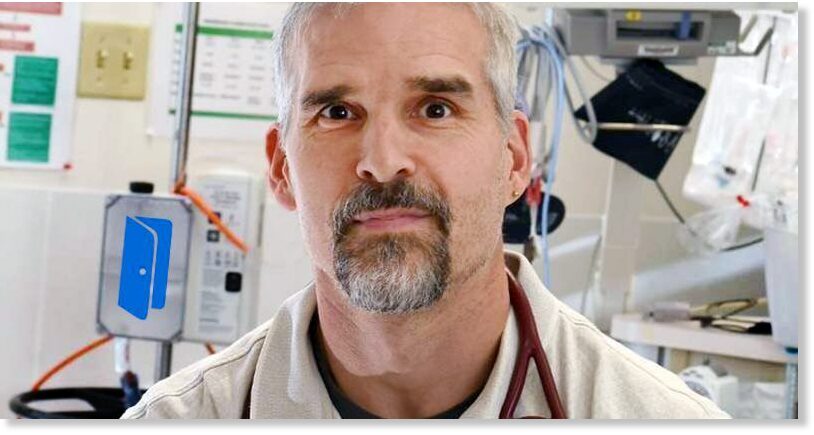
Dr. Chris Milburn
Dr. Chris Milburn
In an interview with emergency medicine physician Dr. Chris Milburn on "RFK Jr. The Defender Podcast," Robert F. Kennedy, Jr. and Milburn discussed how physicians can stand up for their right to treat patients honestly.

Kennedy introduced Milburn:
"He has a background in heart science and a long history of involvement with public health — nationally, provincially and locally. His strong commitment to free speech and scientific integrity put him at odds with a medical profession that is increasingly politicized and unwilling to tolerate debate — especially in the age of COVID.

"In 2021, [Milburn] was fired from his job as director of emergency medicine for the Eastern Zone of the Nova Scotia Health Authority and accused of the crime of creating vaccine hesitancy, for speaking out against mandatory COVID vaccination school closures — and for suggesting that the medical officers of health had been granted a dangerous amount of power."

Brain

Study finds some of the world's lowest dementia rates in Amazonian indigenous groups

tsimane family amazon
© Michael Gurven, UC Santa BarbaraA Tsimane family travels upstream in the local river.
Research adds to evidence that healthier pre-industrial lifestyles may hold clues to preventing Alzheimer's and other dementias.

As scientists around the world seek solutions for Alzheimer's disease, a new study reveals that two indigenous groups in the Bolivian Amazon have among the lowest rates of dementia in the world.

An international team of researchers found among older Tsimane and Moseten people, only about 1% suffer from dementia. In contrast, 11% of people age 65 and older living in the United States have dementia, according to the Alzheimer's Association.

Comment: See also:


Syringe

Shocking findings on increased deaths in 25- to 44-year-olds

Edward Dowd
In this video portfolio manager Edward Dowd uses the CDC's own data to show that excess mortalities are occurring in the 25- to 44-year-old age group, to the tune of an 84% increase. The acceleration in deaths correlates with the mandates and boosters of the COVID-19 shots in the fall, he points out.

The news is "shocking," Dowd says. "It's the worst excess mortality, I think, in history. Basically, the millennials experienced a Vietnam War in the second half of 2021."


Comment: More from People's World Order:
Dowd became suspicious of COVID-19 shots early on, as he reviewed data on side effects from the Vaccine Adverse Event Reporting System (VAERS). "These jabs kill people and they maim people. That's my personal belief, and I think I'm 100% correct," he says.

Dowd has been analyzing data about mortality rates before and after COVID-19 shots became widespread, and found that death rates worsened in 2021 — after the shots became prevalent — compared to 2020, particularly among non-COVID-related deaths among young people.

For instance, Scott Davison, the CEO of Indiana-based insurance company OneAmerica, reported the death rate for 18- to 64-year-olds has risen 40% compared to before the pandemic.

Further, insurance companies citing higher mortality rates include Hartford Insurance Group, which announced mortality increased 32% from 2019 and 20% from 2020 prior to the shots. Lincoln National also stated death claims have increased 13.7% year over year and 54% in quarter 4 compared to 2019. Dowd tweeted:
Randy Frietag CFO just explained that in 2021 the share of young people dying from covid doubled in the back half of the year & that's driven the result for Lincoln & its peers. He cited 40% in 3Q and 35% in 4Q were below the age of 65 ... Mandates are killing folks ... This shouldn't be happening with miracle vaccines in a working age population period and a mild Omicron.
Further, Dowd pointed out "a spike in mortality among younger, working-age individuals coincided with vaccine mandates. The spike in younger deaths peaked in Q3 2021 when COVID deaths were extremely low (but rising into the end of September)."

Dowd also reported data from public funeral home company Carriage Services, which announced a 28% increase in September 2021 compared to September 2020, while August had a 13% increase. He tweeted:
Business has been quite good since the introduction of the vaccines & the stock was up 106% in 2021. Curious no? Guys this is shocking as 89% of Funeral homes are private in US. We are seeing the tip of the iceberg.


Arrow Up

Deadly Omicron surge hits South East Asia despite high vaccination rates

thailand reopening
South East Asian countries are experiencing their deadliest Covid waves to date despite the milder Omicron variant being dominant and high vaccination rates.

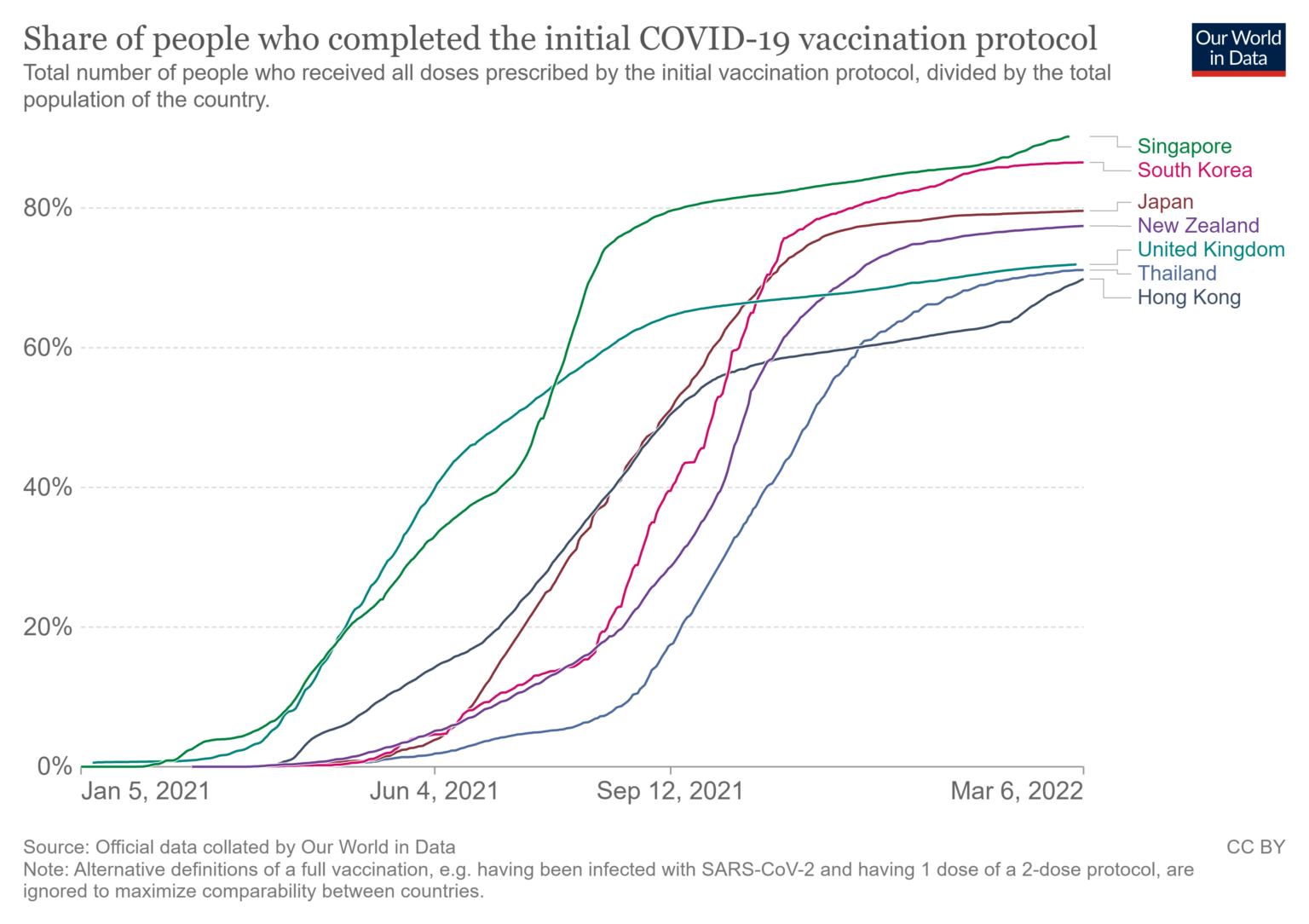
Here are the double-vaccination rates in South Korea, Japan, Singapore, Thailand and Hong Kong, plus New Zealand, with the U.K. included for comparison.

chart double-vaccination rates 1
The graphs below show record highs of reported infections in each of these countries, particularly in South Korea, Singapore, Hong Kong and New Zealand. They also show record levels of Covid deaths in South Korea, Japan and Hong Kong, though not yet in Thailand and Singapore. New Zealand has hit record deaths, though at a low level so far. Japan's and Singapore's curves (infections and deaths) appear to have peaked, whereas South Korea, Hong Kong and New Zealand are still on the way up. Thailand's reported infections appear to have peaked but not yet deaths.

Attention

Half of US adults exposed to harmful lead levels as kids

Los Angeles
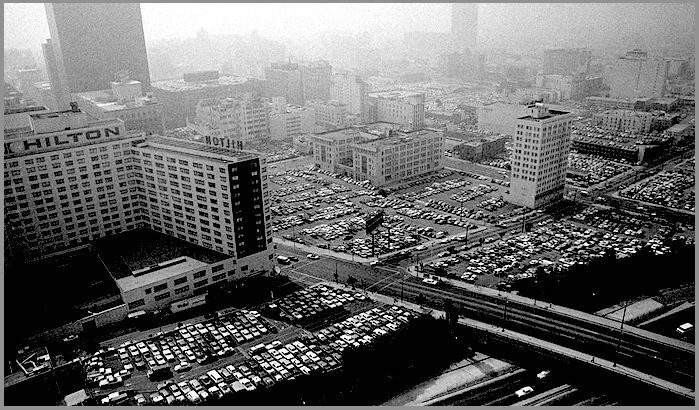
© APDowntown Los Angeles in 1979
Over 170 million U.S.-born people who were adults in 2015 were exposed to harmful levels of lead as children, a new study estimates.

Researchers used blood-lead level, census and leaded gasoline consumption data to examine how widespread early childhood lead exposure was in the country between 1940 and 2015.

In a paper published in the Proceedings of the National Academy of Sciences on Monday, they estimated that half the U.S. adult population in 2015 had been exposed to lead levels surpassing five micrograms per deciliter - the Centers for Disease Control and Prevention threshold for harmful lead exposure at the time.

The scientists from Florida State University and Duke University also found that 90% of children born in the U.S. between 1950 and 1981 had blood-lead levels higher than the CDC threshold. And the researchers found significant impact on cognitive development: on average, early childhood exposure to lead resulted in a 2.6-point drop in IQ.

Attention

Experts?

An Expert
© Medium
The COVID19 pandemic has thrown an issue into sharp focus that I have been observing for many years now. What is an expert? The simple answer is someone who has expertise. Deep knowledge of a subject that has been gained by spending many years researching, reading, speaking to colleagues, and suchlike.

However, that is clearly not enough. I have spent years researching cardiovascular disease. I have written papers about it, written books, given lectures... but I have never been referred to, by any in mainstream medical research at least, as an 'expert'. I am very much something else. A maverick, a denier, zealot a ... [insert insult of choice here].

I used to joke that there must be a secret expert exam that you have to pass in order to be called an expert. Or perhaps it's a bit like the Freemasons. Someone has a quiet word in your ear to sound you out. Then asks if you would like to join the international brotherhood of 'experts.' Dedicated to something, or other.

Very soon, after the COVID19 pandemic struck, Imperial College Business School had this to say on experts:
'In 2016, when Michael Gove made his famous statement that "people in this country have had enough of experts", it seemed experts and expert knowledge were on their way out. The opinion of populist politicians and online influencers were deemed much more relevant to decision making than the findings of scientists or the theories of economists. From the antivax movement to newly resurgent creationists, the spirit of the times was very much against the expert. Science and its evidence-based rationality were in retreat and the trend seemed unstoppable.

Fast-forward four years and the world is suddenly a very different place. Experts like Imperial College London's Neil Ferguson, and Peter Piot from the London School of Hygiene & Tropical Medicine are now central advisors to government and the profiles of experts are the material of front-page stories. With the arrival of a global pandemic, experts are back - and with a vengeance!

So, what has changed? And what can we learn from the recent success of the experts who are shaping government policy on coronavirus? First, the experts who are currently leading the government's policy response to the pandemic are not just experts, they are leaders. They know that simply understanding a topic deeply and having something to say on an issue is not enough.'
Etc. etc, glory glory Imperial College 1.

I found the final sentence interesting. 'They know that simply understanding a topic deeply and having something to say on an issue is not enough.'

In short, to be an expert you must also be a leader? I think this is probably true .... You certainly have to be at the top of some organisation or other.

Smoking

Smokers are not a 'burden' on health care systems - a rational discussion

JFK smoking
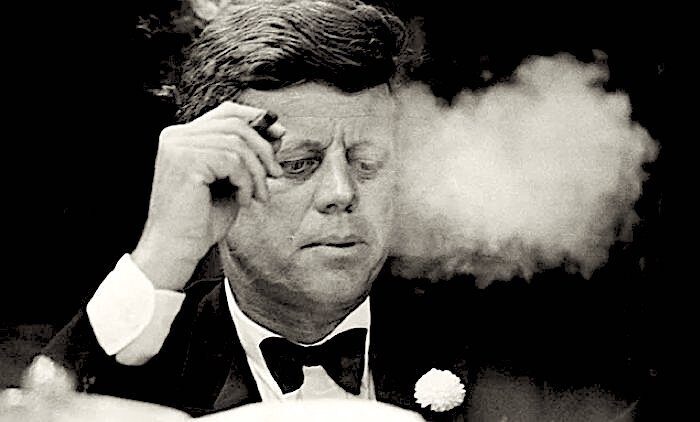
© IrishCentral.comFormer US President John F. Kennedy
There follows a guest post by John Staddon, Professor of Psychology, and Professor of Biology and Neurobiology, Emeritus at Duke University, which is an extract from Chapter 4 of his book Unlucky Strike: Private Health and the Science, Law and Politics of Smoking.

I have discussed the morality of smoking, its supposed lethality, its addictiveness and its effects on nonsmokers. The evidence shows that if smoking is a sin it is a pretty venial one; nor is smoking as lethal as its critics charge and many smokers imagine. The health effects of passive smoke are almost impossible to measure. The best attempts have failed to find significant effects.

This chapter deals with the most serious policy-related charge against smoking: that it costs non-smokers money - smoking has a Public Cost. Smoking-related disease is "a profound burden on our national health care system", wrote Judge Kessler. As we've seen, the National Socialists agreed (all those lost Volkswagens). "Smoking imposes a huge economic burden on society - currently up to 15% of total healthcare costs in developed countries," says an article in the BMJ in 2004. The case seems unarguable. A substantial fraction of smokers die of smoking-related illnesses. Treating illness, especially if the treatment is protracted and often ineffective, as it is with COPD and many cancers, is always expensive.

Comment: Many will be put off by the cold-blooded assessment of the facts, but there they are. But in the name of 'keeping people safe', the nanny state has imposed a huge number of formal and not so formal penalities. But are there also other reasons? Could it be possible that the health benefits gained smoking would cut into Big Pharma's profits? And what about the danger to the elites if faced with an aware, thinking population?