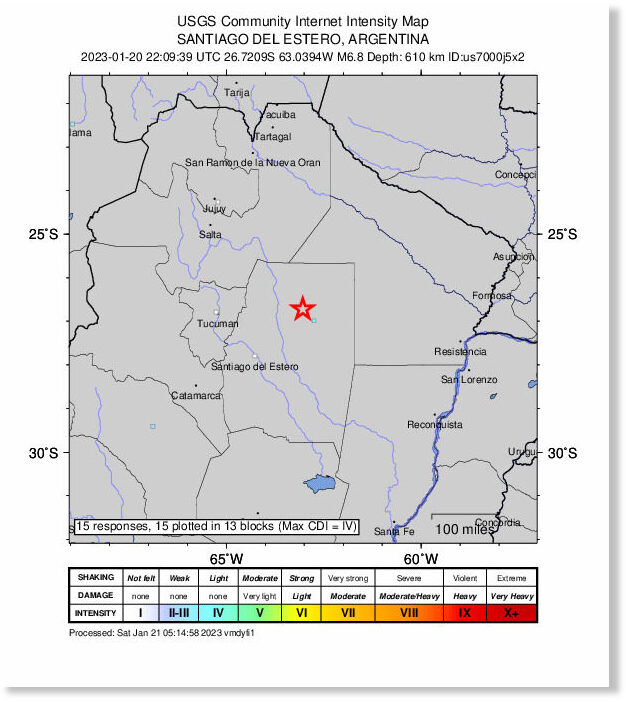
A powerful magnitude 6.8 earthquake shook northern Argentina on Friday but there were no immediate reports of damages.
The quake struck at 8:09 p.m. local time with its epicenter about 15 miles (24 kilometers) southwest of the town of Campo Gallo in Santiago del Estero province. Its depth was 610 kilometers.
Authorities and local media reported no damages or deaths.
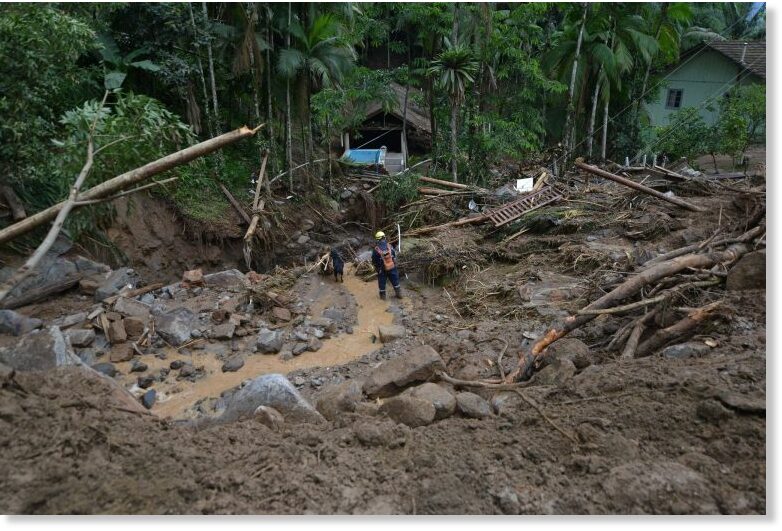
Stormy weather over the last 2 days has caused fatalities and material damages in the state of Santa Catarina in southern Brazil.
The Civil Defense of the State maintains the alert for this Friday, 20, due to the indication of more rain for Santa Catarina.
So far the state government said 26 municipalities have reported losses due to the storms of recent days and the cities of Rio Negrinho and Ascurra have declared a state of emergency.
The municipality of Rio Negrinho reported that there are 80 people displaced due to heavy rains. Around 60 buildings and structures were damaged.
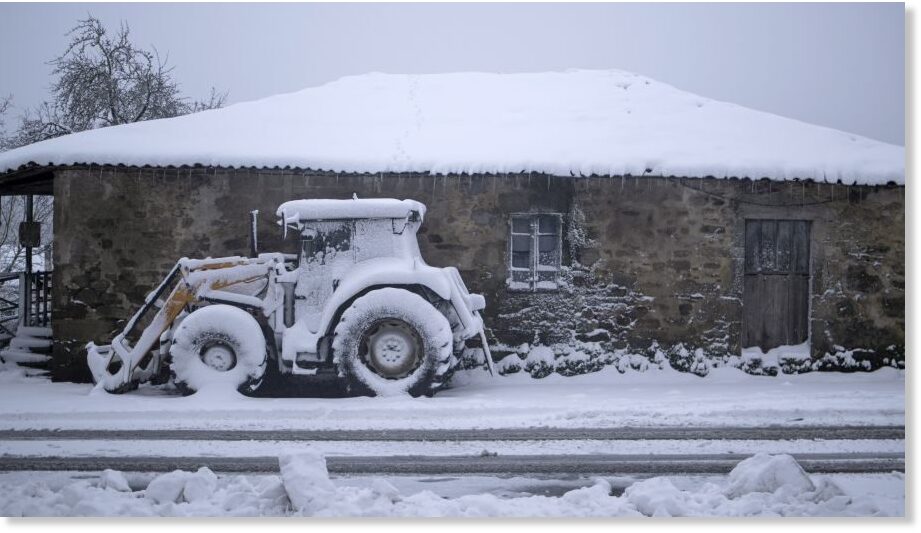
Northern Spain was hit by heavy snowfall and strong winds on Wednesday. The streets were covered in snow which caused difficulty for residents to commute to work.
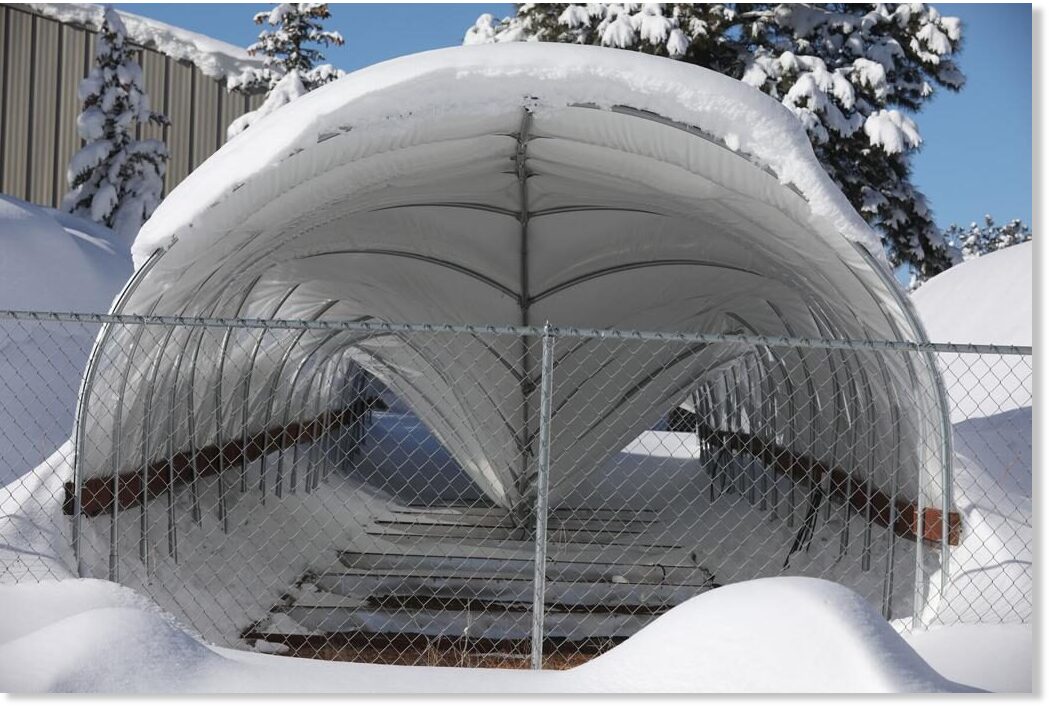
Winter storms in the past week dropped more than 5 feet of snow in parts of Flagstaff. And additional snowfall is expected with the latest weather system moving in Thursday night.
Angelina Grubb is with the Arizona Snowbowl. She said skiers and snowboarders will have plenty of fresh powder this weekend.
"It's been great to see that much snowfall so early in the season, and so we're really happy about it," Grubb said.
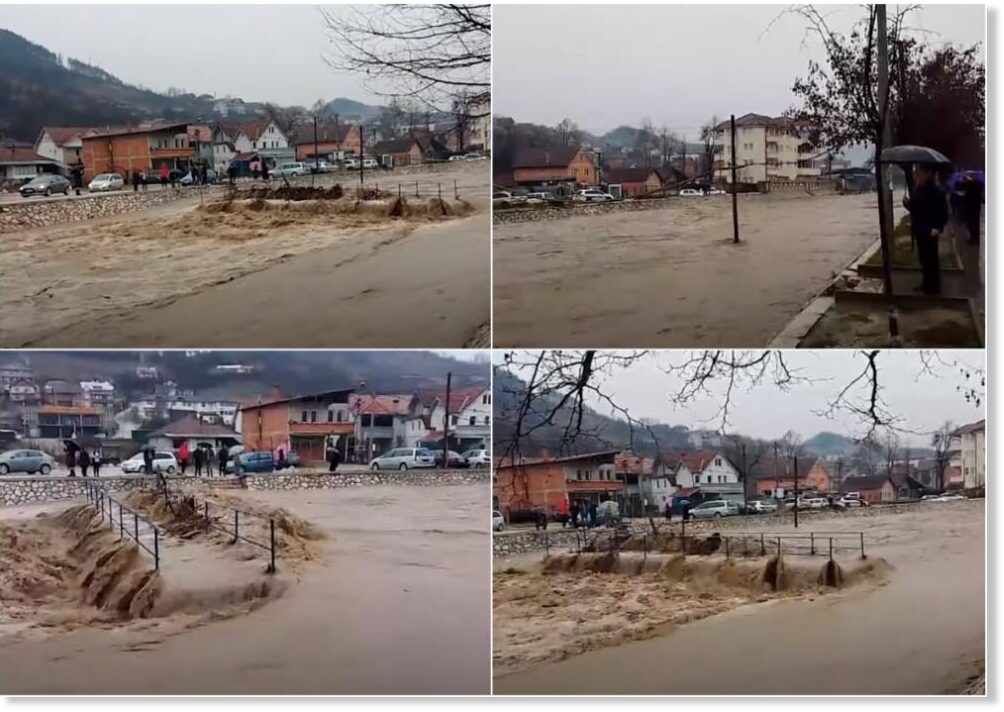
Emergency teams in Serbia Thursday were searching for two people swept away by a swollen river in a southwestern town as floods led to evacuations and emergency measures, state RTS television reported.
Heavy rainfall this week across the Balkans has caused rivers to rise dangerously in Serbia, Bosnia and Montenegro, flooding some areas and threatening flood defenses elsewhere.
Floods were also reported in Kosovo and Albania, where high waters soaked agricultural land, blocked roads and caused temporary power outages.
In northern Albania, the local power company had to open sluices and release water from bulging reservoirs, flooding nearby areas for a third time in as many months.
In northern Kosovo, authorities said parts of the town of Mitrovica have been flooded, forcing people to evacuate their homes.
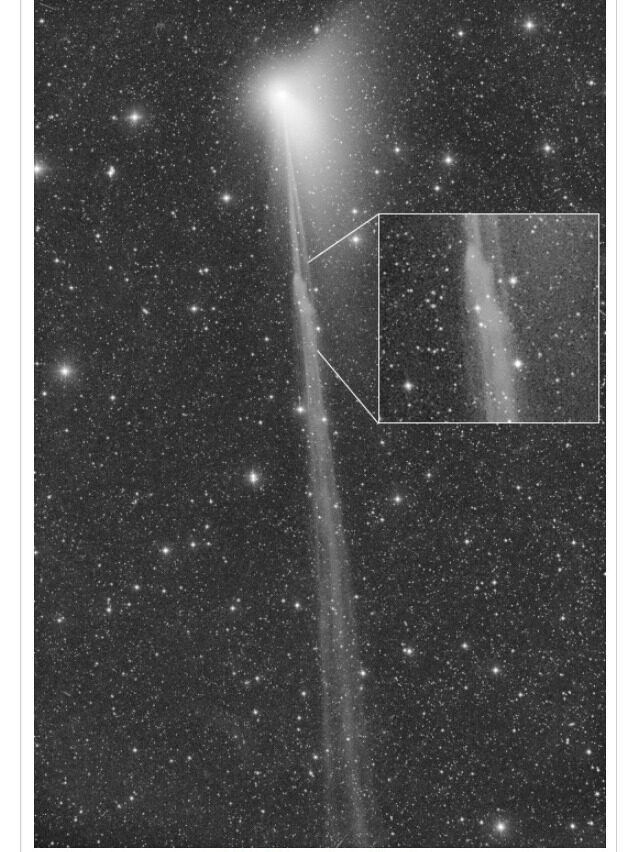
Something unusual is happening to the tail of Comet ZTF (C/2022 E3). It's being disconnected. The break is inset in this picture taken by Austrian astrophotographer Michael Jaeger on Jan. 17th:
This is a disconnection event: A piece of Comet ZTF's tail has been pinched off and is being carried away by the solar wind.
Blame space weather. CMEs hitting comets can cause magnetic reconnection in comet tails, sometimes ripping them off entirely. NASA's STEREO-A spacecraft watched this happen to Comet Encke in April 2007: movie.
This month, multiple CMEs have swept past Comet ZTF as a result of surging solar activity. One of them is responsible for the disconnection event.
Soon, we'll get a better look. Comet ZTF is approaching Earth for a close encounter (0.28 AU) on Feb. 1st. Between now and then, the comet's brightness will cross the threshold of naked-eye visibility, possibly peaking at magnitude +5. CME effects will be increasingly visible as the comet approaches. Stay tuned!
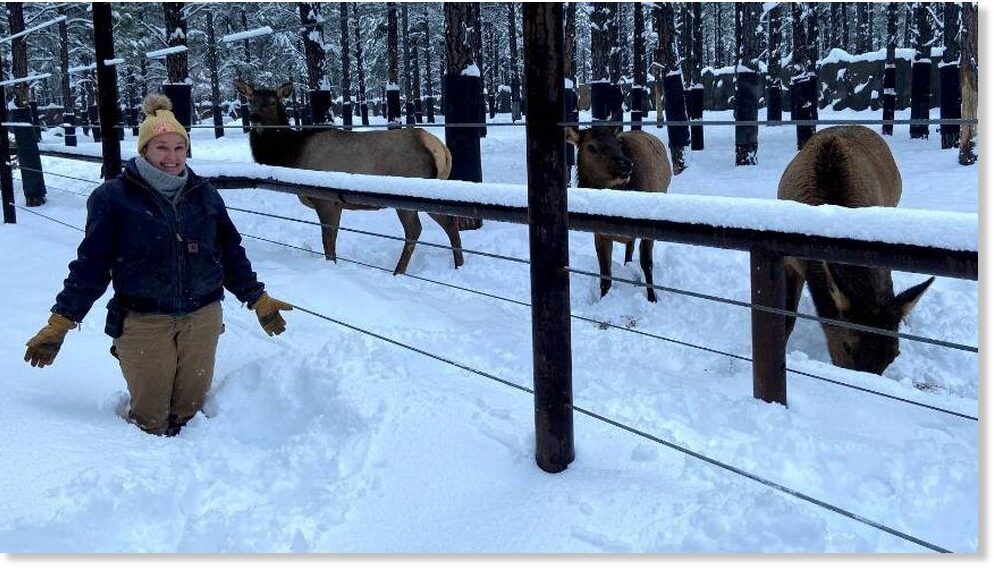
More than 2 feet of snow fell over two days across parts of northern Arizona, becoming the 25th largest snow event in Flagstaff history and breaking the record for single-day snow accumulation on Sunday.
The Flagstaff Airport measured 14.8 inches on Sunday, smashing the previous record of 8.9 inches that held for 45 years. As snow continued to fall, accumulation eventually reached 30 inches at the airport by Tuesday morning.
The last time Flagstaff saw a storm of this magnitude was in late January 2021 when officials measured a 33.2-inch snowfall.
The areas impacted by the storm were expansive, said meteorologist Benjamin Peterson, including most areas at elevation above 5,500 feet, stretching from the northern rim of the Grand Canyon east to the White Mountains.
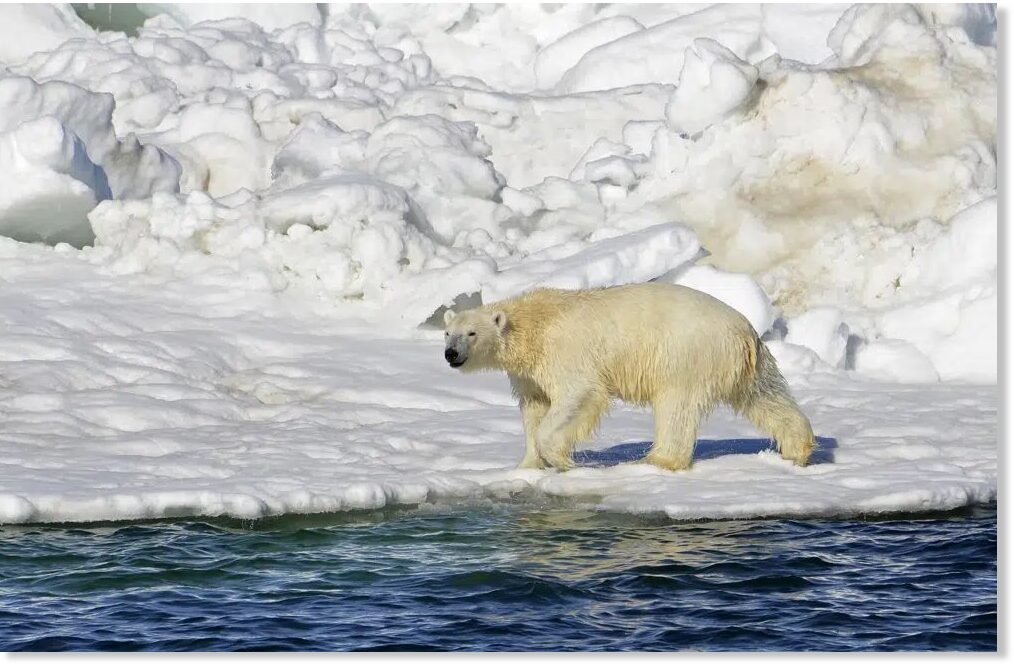
A polar bear has attacked and killed two people in a remote village in western Alaska, according to state troopers.
Alaska State Troopers said they received the report of the attack at 2:30 p.m. Tuesday in Wales, on the western tip of the Seward Peninsula, KTUU reported.
"Initial reports indicate that a polar bear had entered the community and had chased multiple residents," troopers wrote.
"The bear fatally attacked an adult female and juvenile male."
A 47-year-old man was mauled to death by two cattle dogs in Bloemhof, North West, on Monday afternoon.
Police spokesperson Capt Aafje Botma said the incident happened at about 4pm at a house in Dorp Street.
"Initial investigation indicates that the man was walking in the street when the dogs allegedly escaped through a hole in the fence of their yard and attacked him. The dogs bit him on his throat and he died on the scene," Botma said.
She said police were busy with the investigation and awaiting the post mortem results.
"The purpose of GLADIO was to attack civilians, the people - women, children, innocent people, unknown people, far removed from any political game. The reason was quite simple: to force the public to turn to the State and demand greater security. Under a strategy of tension, you 'destabilize in order to stabilize', to create tension within society and promote conservative, reactionary social and political tendencies."
~ Italian neo-fascist whose prosecution led to the discovery of NATO's 'Gladio' networks across Western Europe
- Vincenzo Vinciguerra
”
Recent Comments
He is supposed to have Prostate cancer.. That sounds very fitting in that the "cancer has cancer"! Ahhh, we can only hope. The sooner it...











Comment: Record-breaking snowfall blankets northern Arizona