Earth ChangesS


Snowflake Cold

Bone-chilling cold: Blizzards, snowstorms and floods wreak havoc across Europe

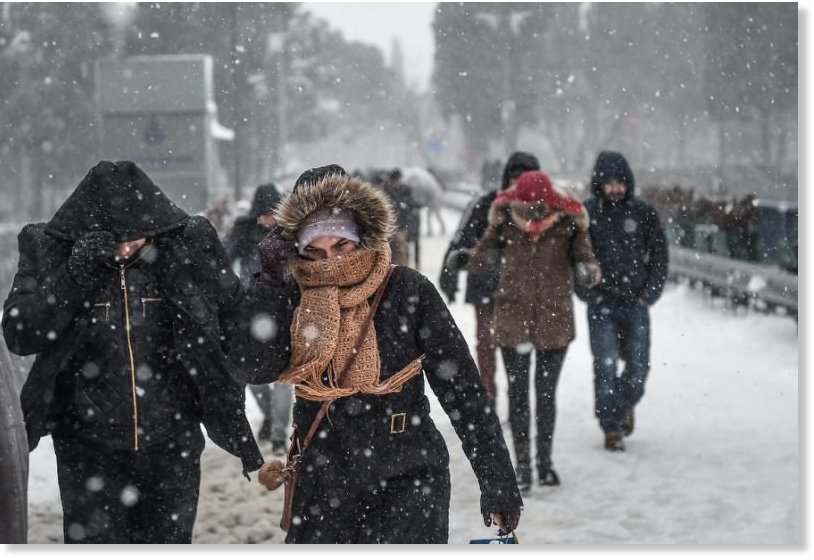
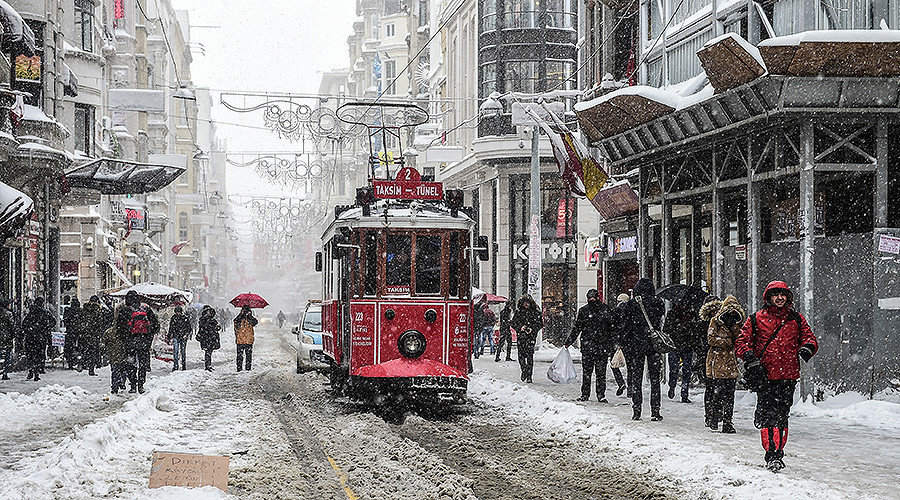
Istanbul snowstorm
© Yasin Akgul / AFP People walk on the Istiklal avenue during snowfalls in Istanbul on January 7, 2017.
Bone-freezing cold, heavy snowstorms, and floods have been plaguing the European continent this week, causing power outages, traffic jams, cancelled flights, and even a stream of plastic eggs with toys washing up on a German island.

On Saturday, heavy precipitation paralyzed Istanbul, Turkey. Around 6,000 passengers found themselves stranded as hundreds of flights to and from the city's main Ataturk Airport were cancelled due to the snowstorm.

The Bosphorus Strait was closed to ships due to poor visibility, cutting off the Black Sea and the Caspian Sea from the Mediterranean.

Many drivers abandoned their cars and walked rather than waiting for streets to be cleaned. Istanbul's metro system operated throughout the night to deal with a sudden passenger spike.
Comment: At least 9 dead as blizzards and icy weather grip parts of Europe


Snowflake Cold

At least 9 dead as blizzards and icy weather grip parts of Europe

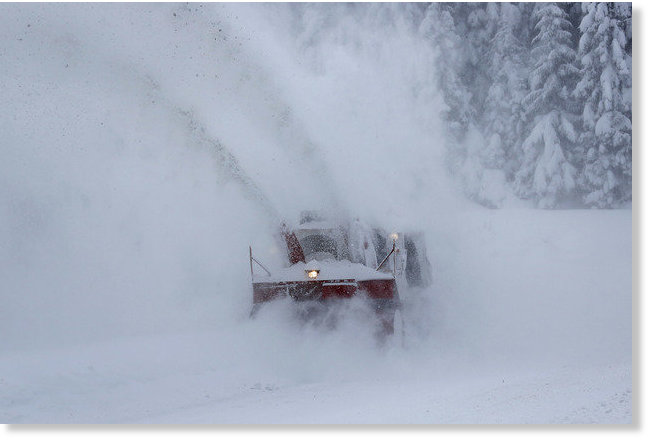
Bosnian worker tries to clear a mountain road near Sarajevo, Bosnia, on Friday, Jan. 6, 2017. The region is bracing itself for a spell of extremely cold weather with temperatures expected to remain between - 11 and - 26 degrees centigrade (from 5 to - 14.
© AP /Amel EmricBosnian worker tries to clear a mountain road near Sarajevo, Bosnia, on Friday, Jan. 6, 2017. The region is bracing itself for a spell of extremely cold weather with temperatures expected to remain between - 11 and - 26 degrees centigrade (from 5 to - 14.8 degrees Fahrenheit).
Blizzards swept parts of Europe on Friday, causing at least nine deaths, closing roads and resulting in traffic accidents, travel delays and medical evacuations.

In Poland, the cold snap was blamed for five deaths in 24 hours.
Three people died from hypothermia, while two more died from carbon monoxide poisoning caused by malfunctioning heaters, the government Security Center said.

Officials in neighboring Ukraine reported that four people had died from effects of the cold in the Lviv region near the Polish border.

In Romania, authorities said 90 people were rescued from stranded cars and that crews were working to save people stuck in some 30 cars on a major highway. More than 40 trains were not running due to snow on the tracks.

Senior emergency situations official Raed Arafat said Romanian authorities also evacuated 622 people who needed dialysis and 126 pregnant women. The blizzard is expected to ease off late Friday.


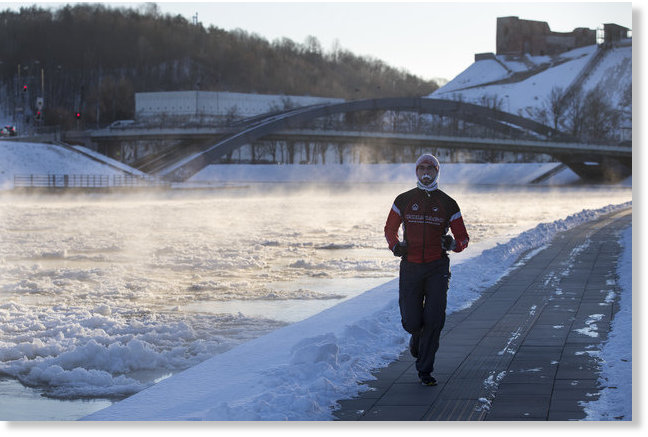
A man with frost on his face runs along the bank of the Neris river as temperatures dipped to -21 degrees Celsius (-5.8 degrees Fahrenheit) in Vilnius, Lithuania, Friday, Jan. 6, 2017.
© AP/Mindaugas KulbisA man with frost on his face runs along the bank of the Neris river as temperatures dipped to -21 degrees Celsius (-5.8 degrees Fahrenheit) in Vilnius, Lithuania, Friday, Jan. 6, 2017.

Snowflake Cold

Heavy snowfall disrupts life in Himachal, India: Electricity, water supply hampered in Shimla

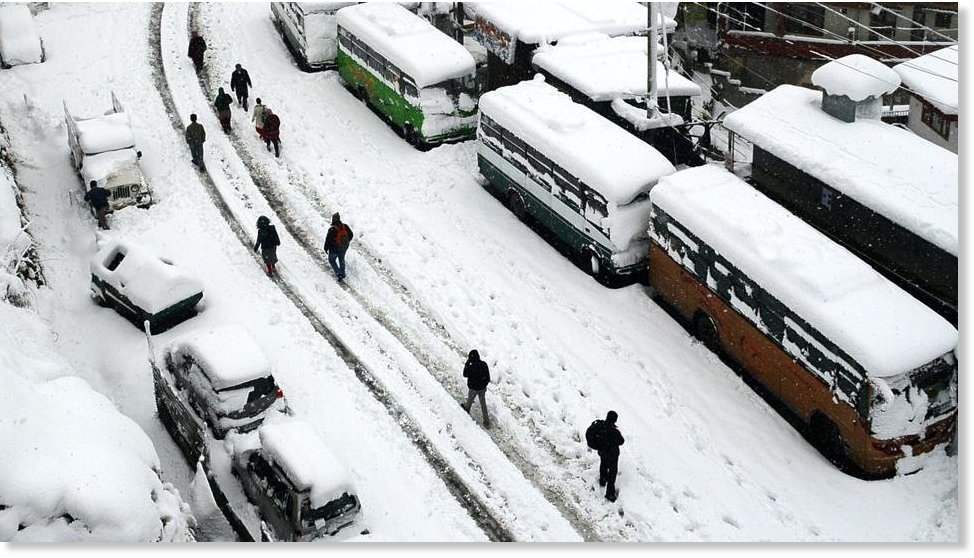
People walking on the snow covered road at Sanjauli, Shimla on Saturday.
© Deepak Sansta/HT People walking on the snow covered road at Sanjauli, Shimla on Saturday.
Winter's first heavy snowfall intensified the cold wave while it disrupted normal life in the state's capital Shimla and its surroundings.

Strong western disturbances brought intermittent spell of snow in the capital town that affected the normal life. Shimla's highest point Jakhu recorded 15 centimetres of the snow.

Snow covered roads disrupted the traffic movement in the capital town, hampering supplies of daily commodities. Kalka-Shimla national highway remained block beyond Taradevi, as the vehicles could not ply on the snow laden roads. Thunderstorm that lashed the town during the last 24 hours also impacted electricity supply in the town.

Many areas of the town including brockhurst, Jakhu, US Club and Khalini were affected . Kufri the closest tourist destination from states capital recorded 24 centimetres of the snowfall. The strategic Hindustan Tibet road has been closed for traffic beyond Sanjauli. The famous tourist resort Narkanda experienced 30 centimetres of snow.


Snowflake Cold

Heavy snowstorm paralyses Istanbul, Turkey

People walk during snowfalls in Istanbul on January 7, 2017
© AFP/Ozan KosePeople walk during snowfalls in Istanbul on January 7, 2017
A heavy snowstorm paralysed life in Istanbul on Saturday, with hundreds of flights cancelled and the Bosphorus closed to shipping traffic.

The snowstorm dumped almost 40 centimetres (16 inches) of snow in parts of the Turkish metropolis overnight, causing havoc on roads as travellers sought to leave the city for the weekend getaway.

For those not travelling, the snow however provided a rare chance to see Istanbul's famous minaret and dome-studded skyline caked in a white layer of snow.

Flag carrier Turkish Airlines (THY) cancelled some 500 flights from both the main Ataturk and Sabiha Gokcen airports, with the snow also bringing poor visibility.


Fire

Wildfires burn 1 million hectares in Argentina over the last several weeks

Argentina wildfires
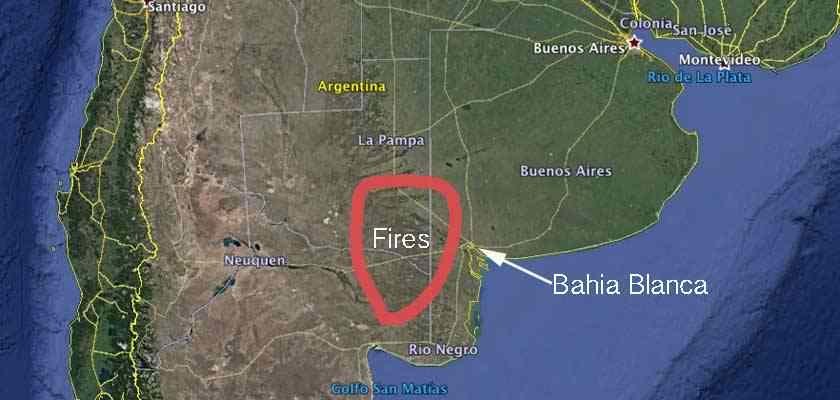
Most of the fires are in the provinces of La Pampas, Rio-Negro, and Buenos Aires.

Wildfires in Argentina have burned approximately 2.47 million acres (1 million hectares) over the last several weeks. On December 22 NASA satellites started detecting heat from fires that grew to become some of the larger blazes on the east side of the country 90 miles (145 kilometers) west of the coastal city of Bahia Blanca.

Below is an excerpt from an article by NASA, and following that is a series of five more satellite photos showing the progression of the fires up through January 6:
Severe drought during the winter and spring of 2016 in northeastern Patagonia played a large role in the current fires, said Guillermo Defossé, a professor of ecology at the National University of Patagonia San Juan Bosco and researcher for the Centro de Investigación y Extensión Forestal Andino Patagónico (CIEFAP), an organization that monitors Patagonian forests.

"While historically these ecosystems were fire prone, during the last century the number of wildfires severely declined as a consequence of a great grazing pressure—grazers consumed all fine fuels that otherwise will carry the fires—and a successful policy of fire exclusion," Defossé wrote in an email.

"This masked, in part, the fact that these ecosystems are naturally highly flammable, with a fire recurrence time of about 20 - 25 years. During the last 10 years, however, a very sharp decline in wool prices and continuous drought—probably due to climate change—made several ranchers to reduce the number of sheep or directly abandon the ranching activity. This abandonment increased the availability and amount of fine fuels."

Snowflake Cold

New cold record of -41.7C and freak winter thunderstorm in Finland

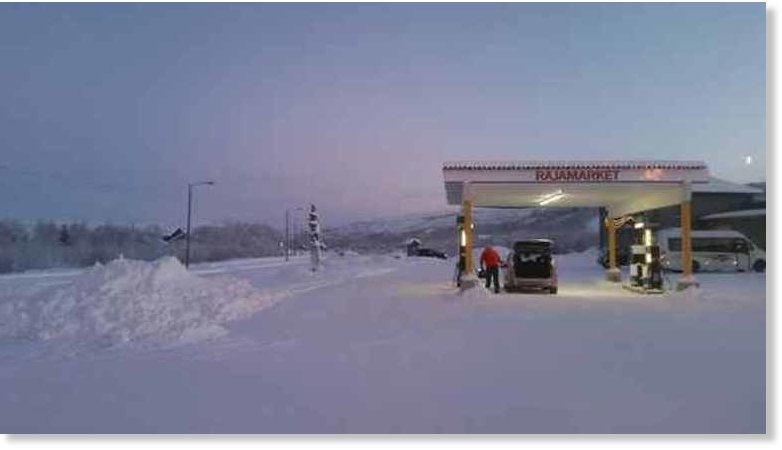
Nuorgam in Finland
© Saana Antikainen Nuorgam on January 4, 2017.
Early Thursday a new cold record for this winter of -41.7 degrees Celsius was set in Muonio, Finnish Lapland. It was nearly as chilly in the village of Naruska in Salla, where thermometers showed -41.4. On Thursday night temperatures are expected to fall further in southern and central Finland as well.

Shortly after midnight, this winter's new cold record of -41.7 degrees Celsius was set in Muonio, Finnish Lapland. It was nearly as chilly in the village of Naruska in Salla, where thermometers showed -41.4.

A day earlier, the record was snapped twice in Finnish Lapland.

According to the Finnish Meteorological Institute (FMI), thermometers sank to -38.7 degrees Celsius shortly before 7 am at Nuorgam in the northernmost municipality of Utsjoki. Just after noon that record was bested by the village of Väylä, slightly further south in Inari. There the mercury plunged to -39.8.

Snowflake Cold

Larsen C ice shelf crack may portend formation of giant Antarctic iceberg

Larsen C Iceshelf
© NASALarsen C Ice Shelf
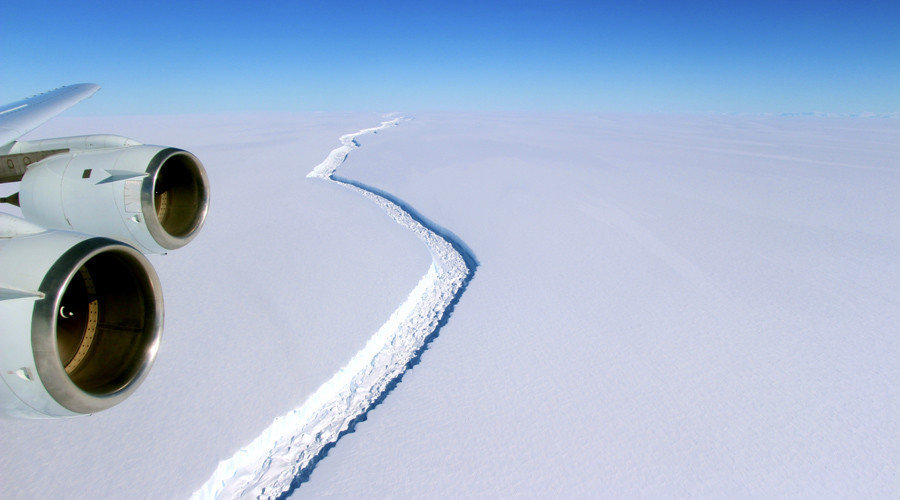
A glacier more than 80 times the size of Manhattan is on the brink of splintering from Antarctica's Larsen C ice shelf and floating off into the ocean.

Over time, a rift has steadily formed along the massive ice sheet, which lies in the Weddell Sea near the northwest of the Antarctic.

Pictures released by NASA last November showed a 100-meter (328ft) wide and 500-meter deep (1640ft) crack slicing the incredible sub-zero temperature environment.

According to Project Midas, a UK research group documenting the effects of global warming in the area, 10 percent of the overall Larsen C ice mass is now close to calving into the sea.

It could mean the creation of a 5,000 sq km (193 sq mile) iceberg.

Comment: The missing factor may be the reawakening of dormant undersea volcanoes in the area.


Fire

Pu'u 'Ō'ō volcanic show continues at Hawaii Volcanoes National Park

NPS photo/Janice Wei
© NPS photo/Janice Wei
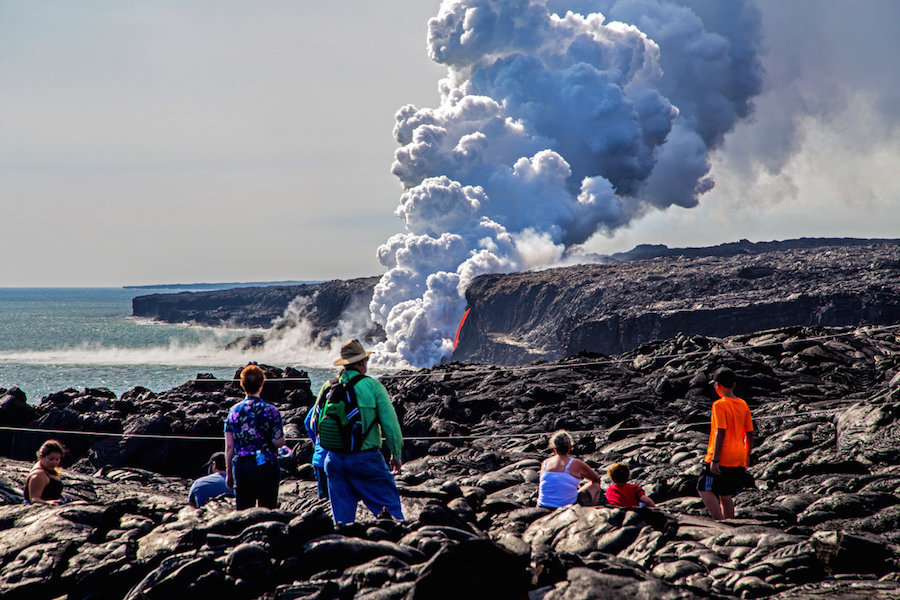
Four days after the huge delta collapse at the lava ocean entry at Kamokuna in Hawaii Volcanoes National Park, visitors are enjoying a new volcanic show.

National Park Service video taken by rangers on Tuesday, January 3, shows a "lava hose" streaming out of a severed tube and into the ocean. The active lava tube was exposed when 26-acres of new land suddenly broke off and fell into the sea on New Years Eve.

The lava viewing area inside the park had to be closed and relocated a short distance away.

Local lava photographer Tom Kualii captured the lava stream during the overnight hours in this remarkable video.


Comment: Part of Hawaii Volcanoes National Park collapses into ocean


Seismograph

Shallow 5.1 magnitude earthquake strikes west of Port Hardy, Canada

5.1 magnitude Earthquake strikes west of Port Hardy
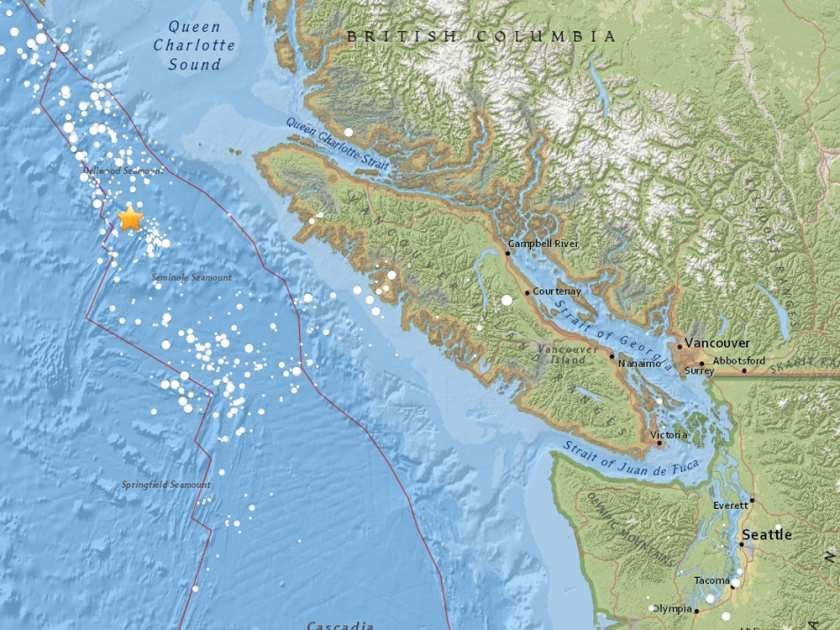
A 5.1 magnitude earthquake has struck 186 kilometres west of Port Hardy, on the northern tip of Vancouver Island.

According to the U.S. Geological Survey, the quake was reported at 7:49 a.m. Pacific Time. It occurred at a depth of 10 kilometres.

Pacific Tsunami Warning Center has not issued a tsunami warning, watch or advisory for the pacific coast.

In an online post, Natural Resources says there are no reports of damage and none would be expected.

The quake occurred in the seismically active area along the Cascadia subduction zone off Vancouver Island, where two plates of the earth's crust meet.

Comment: Also today:


Igloo

US in the grip of the 'The Big Chill'

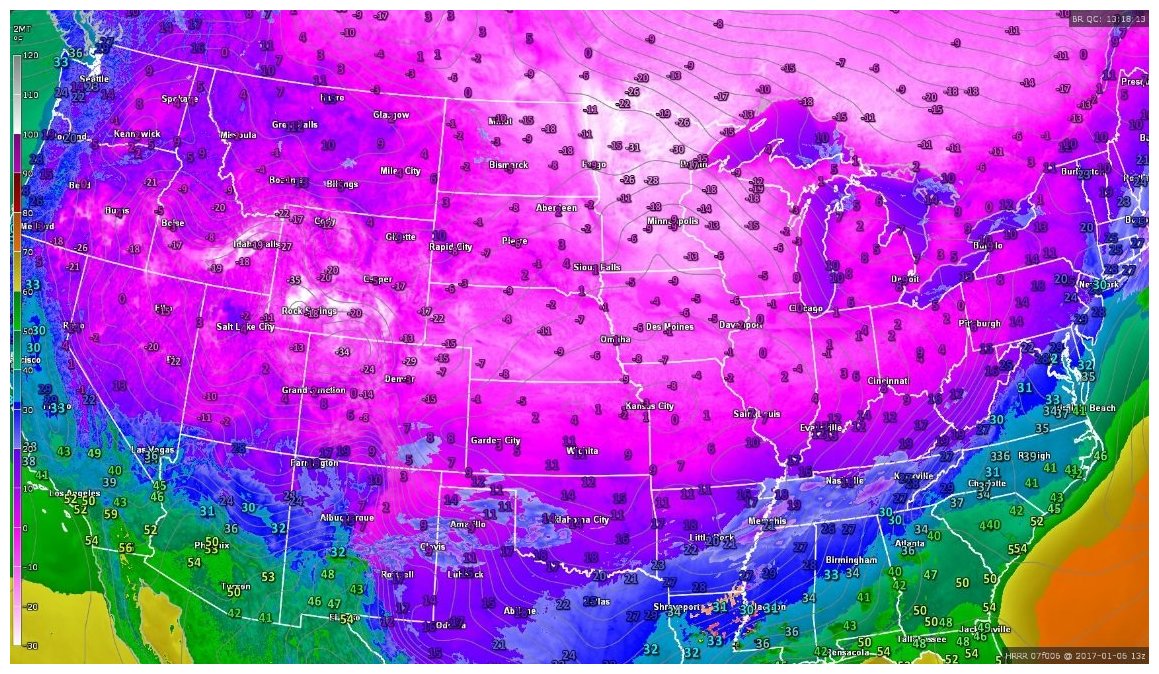
We've known that the USA is in for a bi-coastal blast of cold air, snow, and heavy rains, but this map by Jesse Farrell shows just how much of the contiguous USA has below freezing temperatures this morning.

Here is a summary of temperatures seen this morning by states:
  • All States except Florida (80% of US Land) are less than 32°F
  • 25 States (30% Land) Below 0 °F
  • 6 States Below -20°F
USA Temperatures
© Jesse Farrell
Of course, though not seen in the map above, Alaska has subfreezing temperatures, and Hawaii has subfreezing temperatures on the mountain peaks of Mauna Loa and Mauna Kea -not unusual for this time of year, but it is important not to exclude the 49th, and 50th states from any discussion about the USA.

Meanwhile, a once in a decade storm will hit California this weekend.