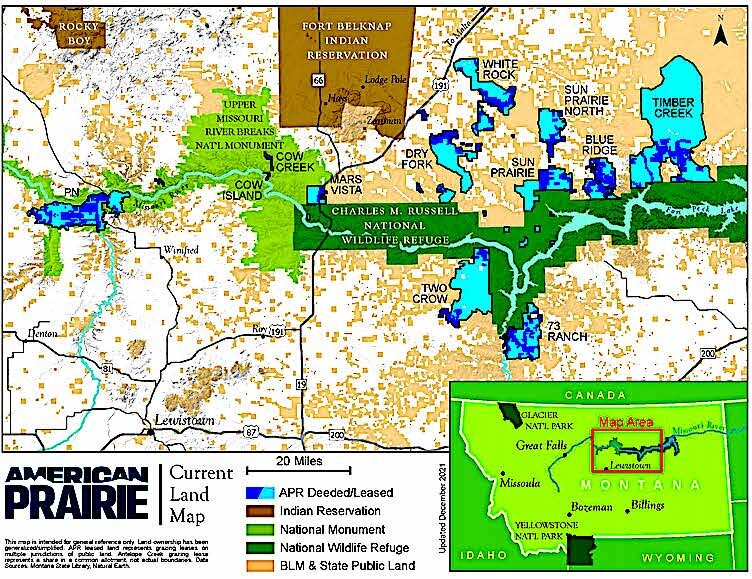
Current Property Map
The little-known project
aims to create the largest "fully functioning ecosystem" in the continental U.S. by stitching together about 3.2 million acres of private and public lands, according to the American Prairie Foundation, which founded the reserve more than 20 years ago. The group has recorded
34 transactions spanning roughly 453,188 acres of land throughout central Montana — much of which were once used for farming and grazing — since 2004 and continues to aggressively expand.
Pete Geddes, AP's vice president and chief external relations officer, told Fox News Digital in an interview:
"Our mission is to assemble the largest complex of public and private lands devoted to wildlife in the lower 48. For comparison, about 25% larger than Yellowstone."
"We're not asking the federal government to create anything, we're not asking the federal government for any money. Instead, we're engaged in private philanthropy and voluntary exchange by buying ranches from people who would like to sell that to us."
The American Prairie Foundation has raised tens of millions of dollars in recent years, according to recent tax filings, thanks in large part to its
donors, which include well-known Wall Street and Silicon Valley magnates. Hansjoerg Wyss, a Swiss financier and mega-donor of liberal causes, deceased German retail mogul Erivan Haub, John Mars, the heir to the Mars candy fortune, and Susan Packard Orr, daughter of the Hewlett-Packard Co. co-founder, have all donated to AP, Bloomberg previously reported. The AP said about 3% of its contributions have come from international donors. Geddes said:
"It's an area that doesn't have a lot of people in it and has been depopulating for a long, long time. So, the thinking was, perhaps there's greater potential for less conflict over conservation in this part of the world."
However, AP's plans have faced increasing pushback from top state officials and local ranchers who argue such a nature reserve would remove key land from production and negatively impact surrounding privately-owned lands. Using its donor funds, the group has purchased about 118,000 acres of private land and leased another 334,000 acres of public land owned primarily by the federal government.



















Comment: See also: