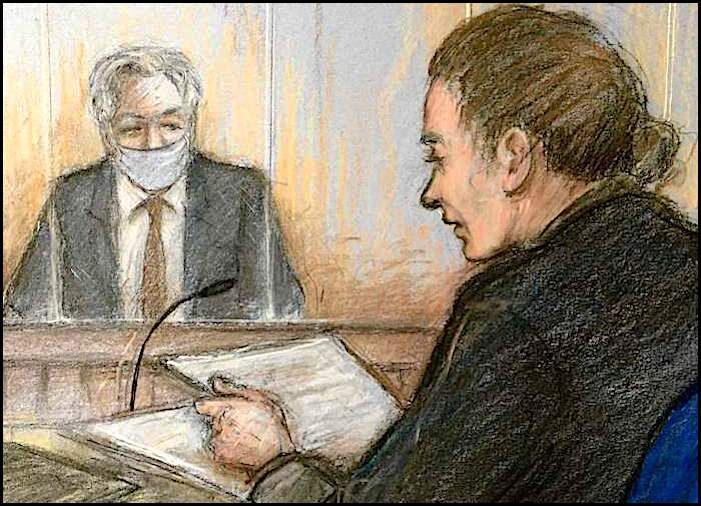
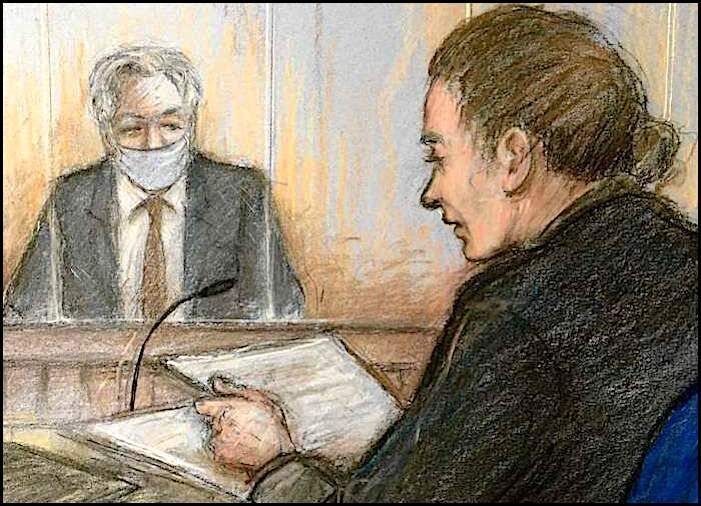
© Elizabeth CookJulian Assange appearing in Old Bailey in London
Iain Overton writes to Jane Hartley, US Ambassador to the UK, after Home Secretary Priti Patel approved the extradition of the WikiLeaks founder to America:
In February 2011, a British Lieutenant Colonel in Afghanistan, in receipt of daily military Situation Reports from UK special forces, wrote of something he described as "quite incredible". His surprise was regarding
the number of Afghan detainees that UK SAS units had sent "back into a building", only for those prisoners to grab a gun or grenade and to then be swiftly killed by their British captors. The Lt Col's superior, the Operations Chief of Staff, replied that such suspicious deaths constituted "a massive failure of leadership". Indeed, they did.
This month it was revealed - in part by Action on Armed Violence (the charity I head up) - that such leadership failed to prevent a killing spree that saw as many as
56 extra-judicial killings by the SAS over a six-month period alone. Hundreds more murders could have occurred. The Chief of Staff wrote:
"If we don't believe this, then no one else will. And when the next WikiLeaks occurs then we will be dragged down with them."
Truth, he felt, had a habit of getting out sooner or later. That at least was true.
What is not true is that the exposé of UK Special Forces would come from WikiLeaks. In part, this might be because Julian Assange today lies in a British jail, his extradition to your country approved by the UK Home Secretary Priti Patel.
It seems that a very effective way to stop someone exposing British or American death squads is to lock them up.













Comment: