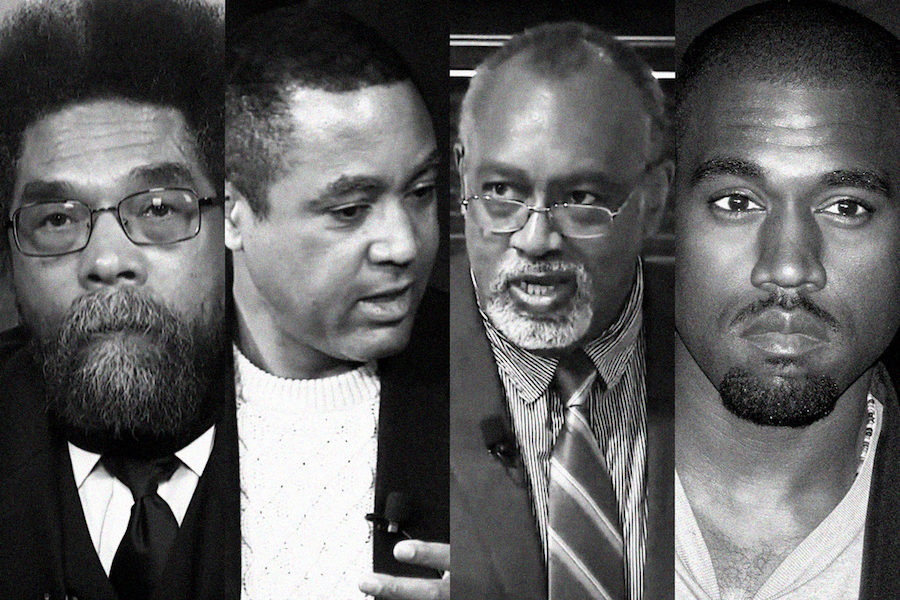
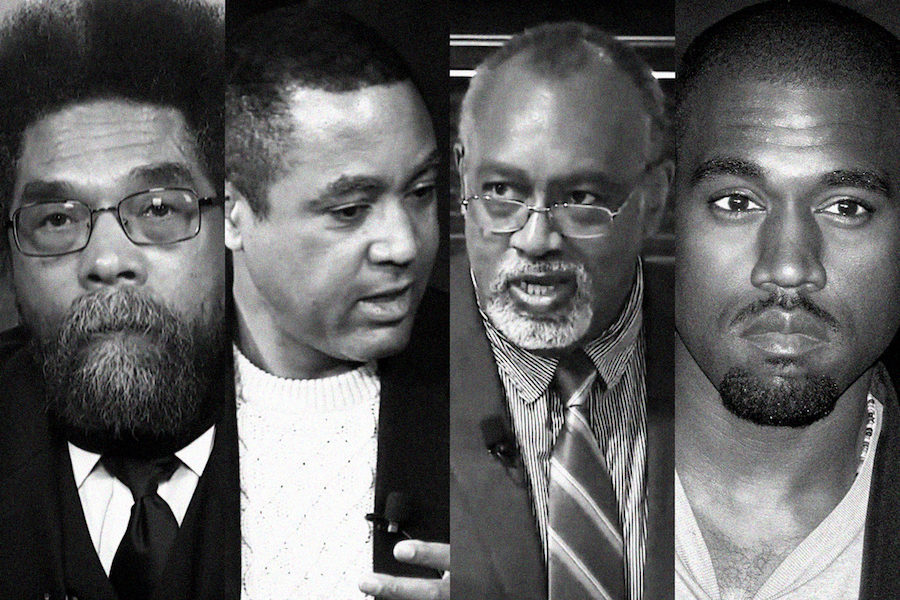
African-American politics are, it is often supposed, monolithic. Since the late 1960s, following the signing of landmark civil rights legislation by a Democratic president, the Democrats support of The Great Society, the anti-Civil Rights Act campaign of a Republican presidential nominee in 1964, the adoption of the "Southern Strategy" by Republican operatives in the latter part of the decade, and the decline of the Northeastern liberal wing of the GOP, black voters have emerged as the most reliably partisan voting bloc in American politics. They are the cornerstone of the Democratic coalition. This near monopoly of African-American party affiliation however does serve to obscure broad and diverse fissures within the philosophical landscape of the black community. There is wide-ranging discontent with the status quo of African-American politics and relatively little passion for the establishment liberalism that guides it. The question is, could this diversity of opinion allow for the realignment of political forces within the black community? Or are these dispersed frustrations inalterably resistant to meaningful coalitional rearrangement?
On October 11 2018, rapper Kanye West visited Republican president Donald Trump in the Oval Office. He was joined by Jim Brown, an NFL legend who has been revered in and beyond the black community as an icon of the civil rights era. During that meeting, West launched into a series of abstract policy musings and philosophical flourishes (punctuated with some profanity, swipes at liberal critiques, and effusions for President Trump) that left many fans and observers upset and bewildered. That Kanye West, erstwhile arguably America's most popular African-American artist, could wholeheartedly support a president whose politics and rhetoric seemed to fly in the face of the perceived interests and sensibilities of the black community has mystified many in the commentariat. Indeed, West may have reasons for supporting the president that are inscrutable.
But one plausible explanation for his support also serves to illustrate the basis upon which a broader axis of contrarian sentiment towards the institutional mainstream of black political culture persists.
That is the simple fact that the trend of social and economic progress in the black community during the decades of this hegemony has been, relative to all other ethnic groups, scantly positive and, in certain keys areas, dramatically negative. One does not have to spend any great amount of time reminding people where the black community resides on the scales of topline social statistics. African-American men constitute roughly 35 percent of the prison population while representing 7 percent of the total population. They average a life expectancy roughly
5 years below the average of all other American males. African-Americans graduate high school at a mere
69 percent nationwide and do so at the lowest rate of all four major racial groups in America in all but 11 states (where they slightly exceed Latinos).














Comment: See also: Nations around the globe are being buried in trash after China's garbage import ban