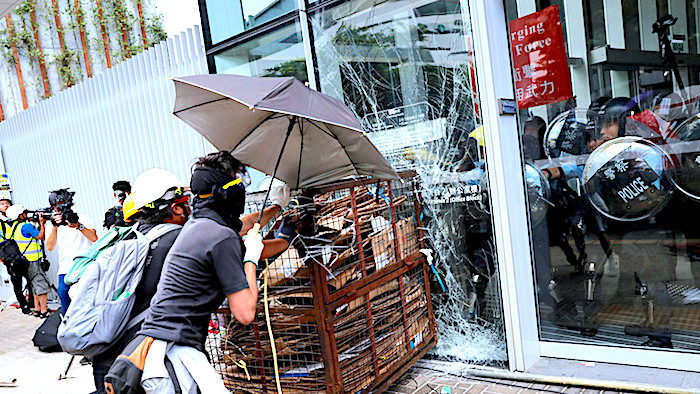
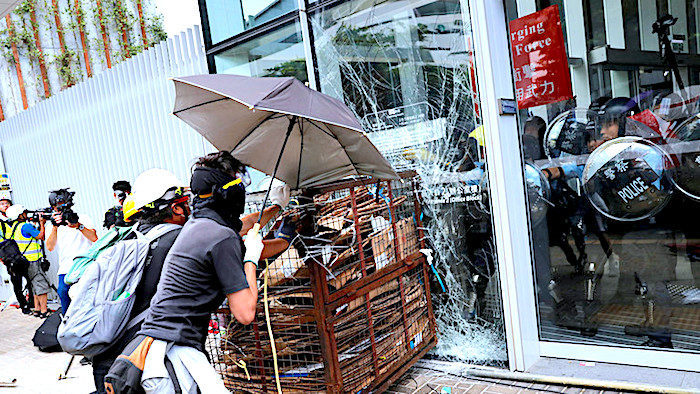
© Reuters/Tyrone SiuProtesters attempt break in at Legislative Council building
On a leafy college campus in Hong Kong Wednesday, the usual bustle of academic activity gave way to frenetic preparations for a revolution.
Instead of book bags, the students lugged carts full of bricks to the entrance gates, where sentries in black balaclavas monitored the steady flow of incoming supplies. Classrooms were emptied of their tables and chairs, the furniture repurposed to block unwanted traffic on the roads, bridges and nearby railway tracks on which a small fire smoldered. While lectures and study halls might have filled the schedules on any other day, this afternoon the undergraduates of the territory's second-oldest university, the Chinese University of Hong Kong (CUHK), practiced throwing Molotov cocktails behind a row of empty buses. "Whatever happens, we must defend the university, we must not allow the police to take it," says Simon, 21. He studies at a different university, but he trekked here yesterday evening after students called for reinforcements as they clashed with police in some of the most violent fighting Hong Kong has seen over the past five months of unrest.
Students lobbed literally hundreds of petrol bombs at police, who responded with rubber bullets and heavy volleys of tear gas. Plumes of smoke from large fires gave the campus the appearance of a battlefield.
CUHK has gained a reputation for being an epicenter of protest activity, noteworthy even among other campus hotbeds. Chinese state media has labeled it the "rioters' university," an epithet the students have sarcastically adopted. At a press conference Wednesday, police chief superintendent John Tse called CUHK "a bad omen" for Hong Kong. "A university is supposed to be a breeding ground for future leaders," he said, "but it has become a battlefield for criminals and rioters."

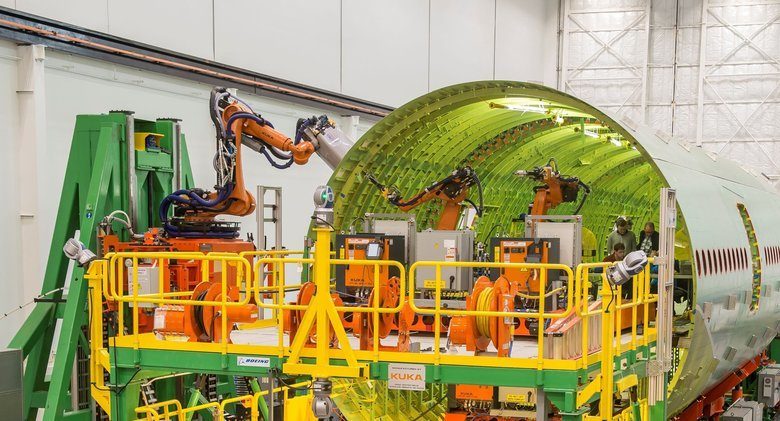











Comment: Well, maybe the robots won't be taking over quite as soon as predicted.