
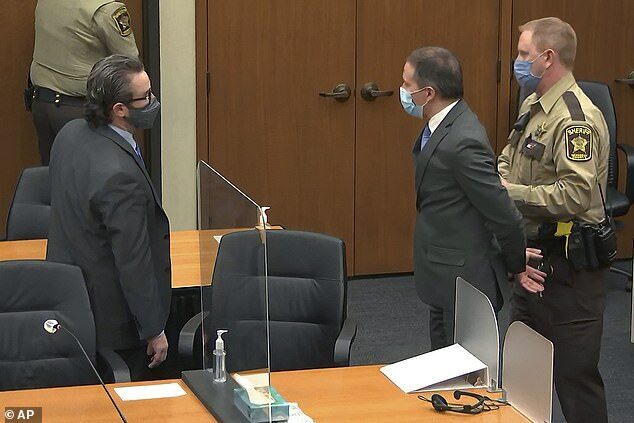
© Associated PressThe Department of Justice had a backup plan in place to immediately arrest Derek Chauvin in court if he was cleared of killing George Floyd, it has been revealed. Chauvin is led away in handcuffs after being convicted of all charges last week
Leading up to Derek Chauvin's murder trial, Justice Department officials had spent months gathering evidence to indict the ex-Minneapolis police officer on federal police brutality charges, but they feared the publicity frenzy could disrupt the state's case.
So they came up with a contingency plan: If Chauvin were found not guilty on all counts or the case ended in a mistrial, they would arrest him at the courthouse, according to sources familiar with the planning discussions.
The backup plan would not be necessary. On April 20, the jury found Chauvin guilty on all three murder and manslaughter counts, sending him to the state's most secure lockdown facility to await sentencing, and avoiding the riots many feared could engulf the city once again.



















Comment: