
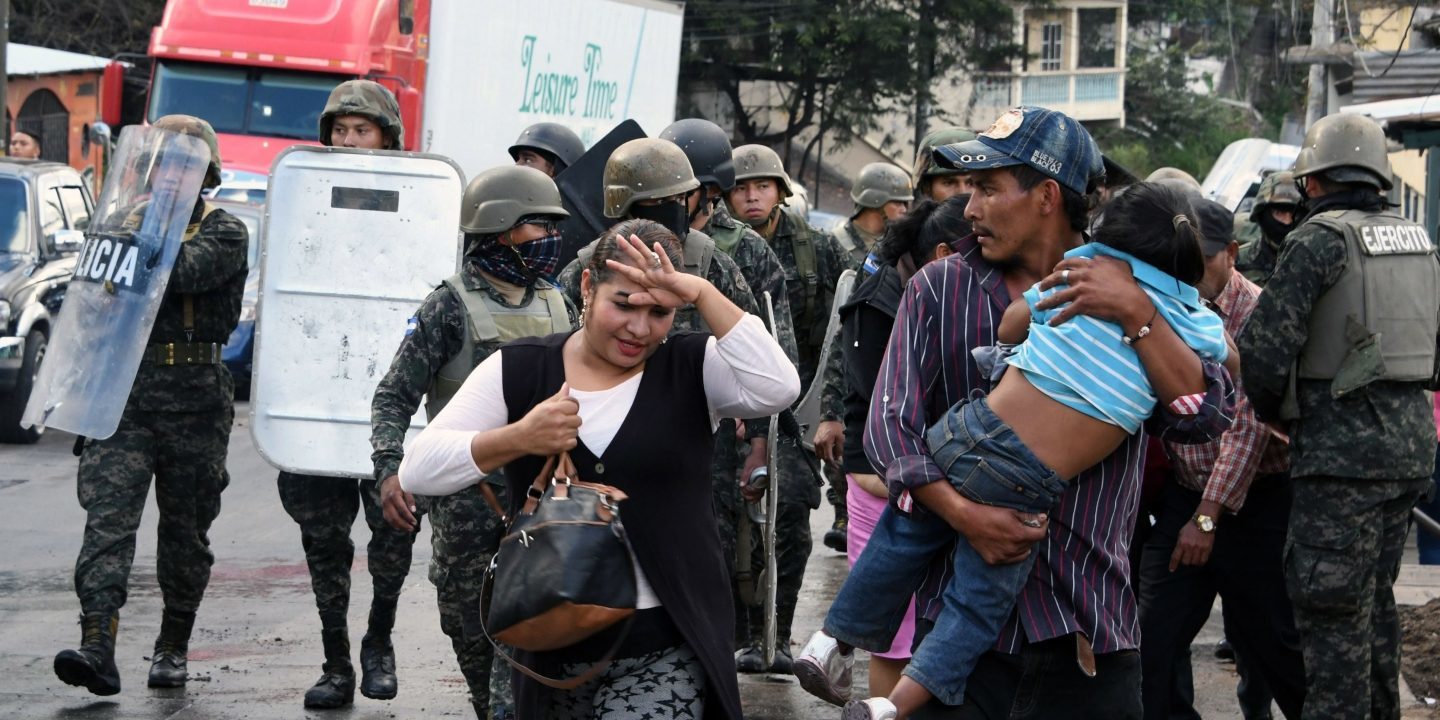
Residents get away from clashes between riot police and supporters of opposition candidate Salvador Nasralla, during protests in Tegucigalpa, on December 18, 2017.
The curfew and violence were sparked by a strange, contested election. On the day before Hondurans went to the polls, The Economist published evidence of what seemed to be a plan by Hernández's National Party to commit systematic fraud. The next day, November 26, the election results came in choppy waves: first a sizable lead by Hernández's opponent, Salvador Nasralla, and then the electronic voting system went off the air. When the system came back up, Hernández was winning. He was then proclaimed victor by a thin margin. International observers noted "strong indications of election fraud," and a partial recount still handed the win to Hernández. Packed protests and militarized streets followed. As of December 22, human rights organizations in the country have counted more than 30 people killed by security forces, at least four of whom were under the age of 18.














Comment: Further reading: