Puppet MastersS


Target

Erdogan targets a 'more active, risky' foreign policy in 2018

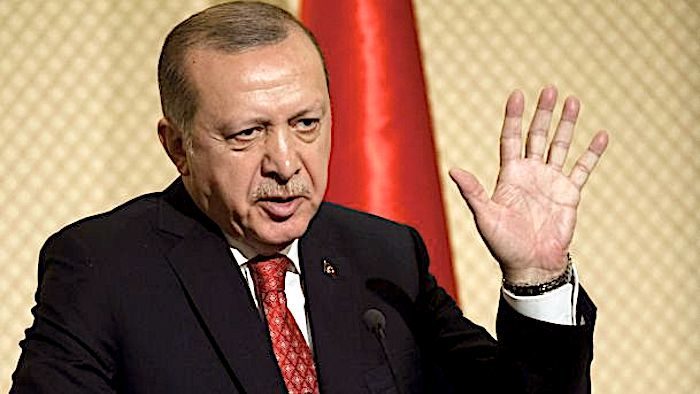
Erdogan
© Haaretz
Ankara is set to embrace a "bold and risky" foreign policy next year, Turkish President Recep Erdogan has promised in his New Year's message. He said Turkey will play an active role in the Middle East and on the Jerusalem issue.

"Turkey will not be able to secure its future without resolving problems in its region," Erdogan said in his message published on December 31. "This leads us to pursue a more active, bold, and if necessary, more risky foreign policy," he added, as cited by Hurriyet newspaper.

The Turkish president said Ankara cannot hold negotiations with other actors on the international arena and play a particularly active role in the Middle East "without being [active] in the field." He then listed Turkey's recent actions that allowed it to take on a more prominent role among regional powers.

"To this end, we have taken significant steps over the last year by launching an operation into Idlib [in Syria] and by nixing the regional government's independence bid in Iraq," he said. In autumn, Turkey launched a campaign in the northwest Syrian province of Idlib aimed at enforcing the de-escalation zone in the area.

Red Flag

Possible new color revolution being attempted in Iran reeks of US and Saudi Arabian influence

protest in Iran
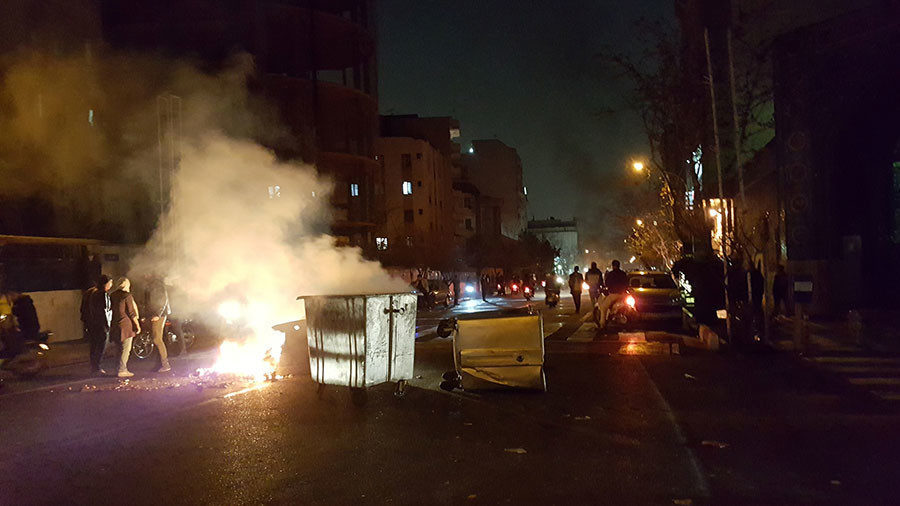
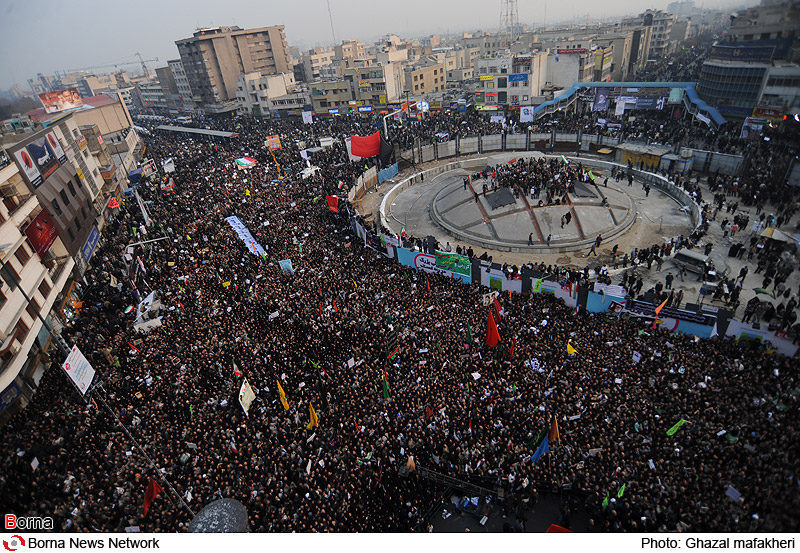
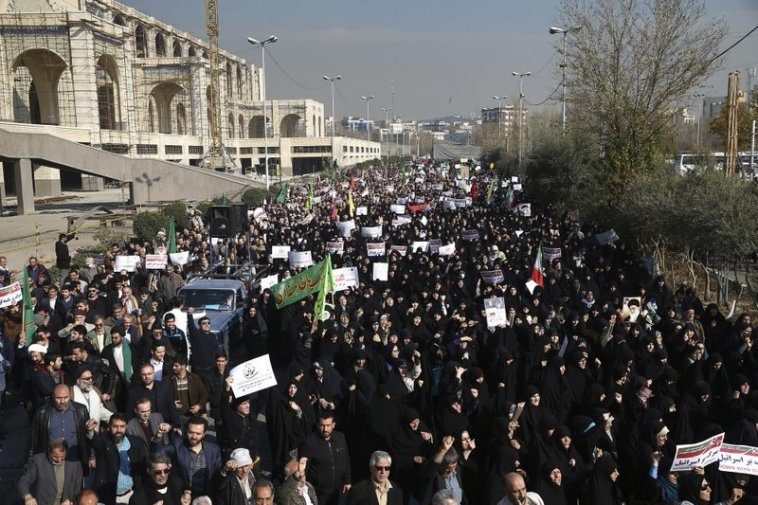
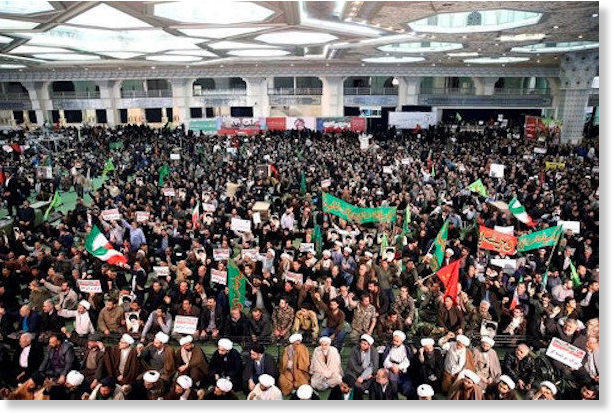
Over the last few days, anti-government protests have broken out across Iran. It's reported the protests are focused on deteriorating economic conditions and corruption in the Islamic Republic. Demonstrators have gathered in a number of cities, including Tehran, the holy city of Qom, Isfahan, Kermanshah, Rasht, Sari, and Hamedan.

While average Iranians undoubtedly suffer as a result of the policies and actions of a highly centralized religious government, we must ask if the latest round of anti-government activity is part of a foreign effort to destabilize the country by exploiting discontent with the country's leadership.

In June, we learned that the Trump administration is behind an effort by Saudi Arabia and the UAE to topple the government in Tehran. This shouldn't come as a surprise. The Trump administration includes a number of hardliners on Iran, most notably Defense Secretary James Mattis, National Security Advisor H. R. McMaster, and Trump's CIA director, Mike Pompeo.

Comment: There is much else to suggest that the current "movement" we're seeing in Iran is largely manufactured; just like it was in Libya, Ukraine, Syria (and to a lesser extent) what's being attempted now in Venezuela. Woe to the US when more of the world begins to catch on to what the exceptional nation is doing on a global scale.

See also:


Bad Guys

Two people killed during wave of protests across Iran; foreign agitators suspected of inciting violence

Tehran Iran protests Dec 2017
© ReutersPeople protest in Tehran, Iran December 30, 2017
At least two people taking part in pro- and anti-government rallies in Iran were killed overnight, local media reported, citing officials. These are the first fatalities attributed to the recent mass protests.

The deaths were reported in the city of Doroud (Dorud), 325 kilometers southwest of Tehran, in Iran's western Lorestan Province, the semi-official Mehr News Agency reported. The unauthorized rally ignited clashes, Habibollah Khojastepour, the security deputy of Lorestan's governor, told the agency, adding that two protesters were killed in the clashes.

"The gathering was to be ended peacefully, but due to the presence of the [agitators], unfortunately, this happened," Khojastepour said. The official did not specify the causes of the deaths, adding that "no bullets were shot from police and security forces at the people."

Comment: Fort Russ adds:
In an interview on state television, the Deputy Governor of Lorestan Province blamed demonstration violence on "enemies of the revolution, Takfiri groups and foreign agents."

He then went onto explain that "No shots were fired by the police and security forces."

If true, this bears resemblance to Syria in 2011 where peaceful protests were infiltrated by armed Muslim Brotherhood extremists who then went onto kill security forces and protesters to create a violent reaction.

This is consistent with Iranian media claims that radical Sunni jihadist groups based in Iran are taking advantage of the peaceful protests to infiltrate Iranian cities to conduct attacks, as reported by FRN earlier today.

Iranian officials also blamed Saudi Arabia for the protests turning violent, as reported by FRN earlier today.

The protesters initially called for economic reforms, however, the protests have quickly been hijacked by people calling for regime-change in a classic color revolution method.

However, not reported by the mainstream media is that counter-protests in support of the government, with larger attendances, are taking place all across Iran.
See also:


Gold Coins

British gas industry official claims Russia's first LNG delivery will not enter UK transmission network

Russian LNG UK
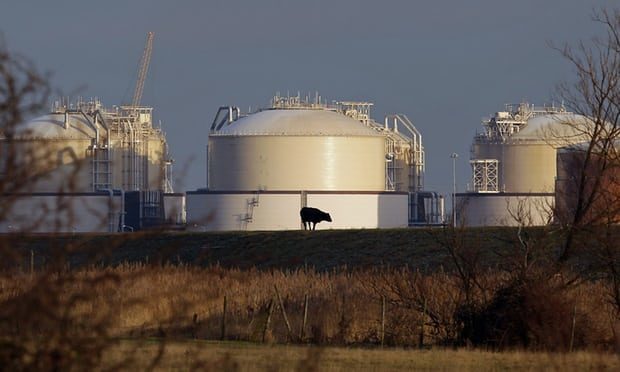
© Peter Macdiarmid/Getty ImagesGas from a Russian icebreaker was delivered to LNG storage facilities on the Isle of Grain in Kent.
The first-ever shipment of Russian gas to the UK looks likely to head straight back out on another ship, disproving Moscow's claims that Britain will be reliant on it for supplies this winter.

National Grid confirmed that gas from a Russian field targeted by US sanctions had been delivered by a Russian icebreaker to storage facilities at the Isle of Grain in Kent on Thursday night.

Russian media seized on the delivery of liquefied natural gas (LNG) to claim it would "keep Britons from freezing this winter" while the Russian embassy in the UK tweeted: "Feeling cold? Help is on the way."

However, industry experts said the most likely scenario was that the UK would simply be a stopping-off point for the gas, which could fetch a much higher price in Asia.

Comment: More details from PressTV:
Russia has sent its first consignment of liquefied natural gas (LNG) to Britain but signs have appeared that show the sanctions by the US and EU could prevent it from being supplied to the country which is facing a severe shortage of fuel.

The consignment was reportedly delivered at the British Grain terminal on Thursday by an ice-class tanker - the Christophe de Margerie - that brought the LNG from Russia's Yamal project.

However, Russia's Tass news agency quoted Jeanette Unsworth, an official from the British energy company National Grid, as saying that the gas would not be supplied to homes after regasification.

"It will not enter the National Grid UK transmission network," Unsworth said, adding that she could not comment on the final destination of the consignment "for commercial reasons".

On December 11, Russia's Novatek natural gas producer, having a share in Yamal LNG, said that the first batch of gas from the facility had been sold to Petronas LNG UK Limited, a subsidiary of Malaysia's Petronas state oil and gas company, according to a report by Sputnik news agency.


Post-It Note

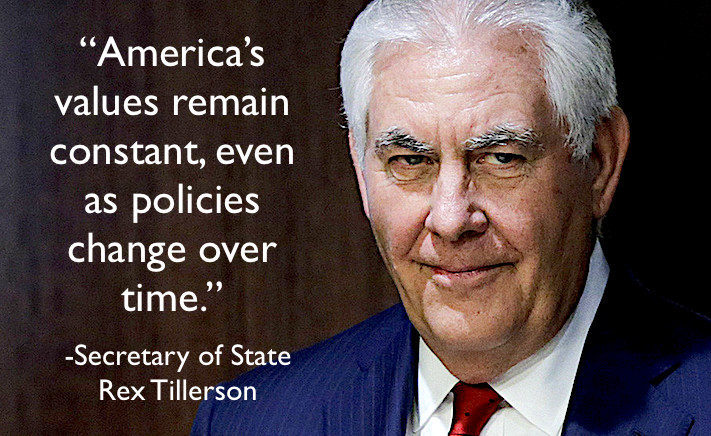
Leaked memo reveals Tillerson schooled on human rights

Rex T
© Eduardo Munoz Alvarez/AFP/Getty
A tutorial from policy aide Brian Hook followed the secretary of state's controversial remarks about balancing U.S. values and interests.

Three months into his tenure as secretary of state, Rex Tillerson alarmed veteran diplomats with remarks that sounded like a potential shift in American foreign policy: The U.S., he said, should be careful not to let values like human rights create "obstacles" to the pursuit of its interests.

The comment, at a gathering of State Department employees, provoked an outcry among former U.S. officials and human rights activists who feared America was abandoning a vital mission. Two weeks later, a top Tillerson adviser wrote up a short tutorial, in the form of a confidential memo to his boss, recapping "the debate over how far to emphasize human rights, democracy promotion, and liberal values in American foreign policy."

The May 17 memo reads like a crash course for a businessman-turned-diplomat, and its conclusion offers a starkly realist vision: that the U.S. should use human rights as a club against its adversaries, like Iran, China and North Korea, while giving a pass to repressive allies like the Philippines, Egypt and Saudi Arabia.

"Allies should be treated differently-and better-than adversaries. Otherwise, we end up with more adversaries, and fewer allies," argued the memo, written by Tillerson's influential policy aide, Brian Hook.

Comment: Whether Secretary Tillerson read the memo or not, the memo's author has unwittingly, made the case as to why the US has been a two-faced disaster at foreign affairs and why a shakeup in policy and the department should be welcomed. Sometimes 'the snakes' have to be made to 'shed their clothes' and remember they are paid representatives of the people.

See also:


Nuke

German FM: Europe should advocate improvement in US-Russia ties, non-proliferation

OverlapPutrump
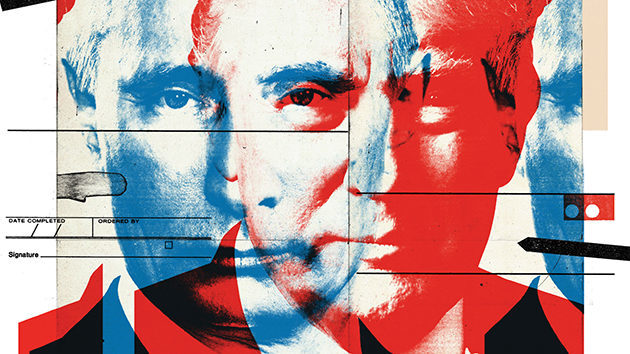
© Mother JonesSeeing eye-to-eye?
Improvement in US-Russia relations should be of great interest for Europe, since the two states' joint efforts are key to halting nuclear proliferation and resolving the North Korean deadlock, the German foreign minister says.

"We in Europe should exactly be interested [to see] the relations between the United States and Russia improve, "Foreign Minister Sigmar Gabriel told Germany's Funke media group on Sunday, as cited by Berliner Morgenpost.

If relations between the two world powers remain as bad as they are now, other countries might take advantage of it, he maintained, adding that this is why Europe is so keen to bring the Americans and the Russians closer.

Gabriel, who on numerous occasions has called for ties between Russia and the West to be mended, said only Washington and Moscow - backed by Beijing - are able to halt nuclear proliferation.

North Korea, one of the main sources of problems in the area of non-proliferation, should not become a nuclear power, Gabriel said. "If North Korea obtains nuclear weapons and if the rest of the world looks on, this will be damn dangerous," as other nations will follow in Pyongyang's footsteps. Meanwhile, going too tough on North Korea will draw consequences that are hard to foresee, the foreign minister said, warning that military action would cost "incomprehensible human casualties."

Comment: As in a circle of gunmen, if one fires his gun, they all fire. Such is the proliferation concern and why better relations to forgo a standoff must be forthcoming.


Telephone

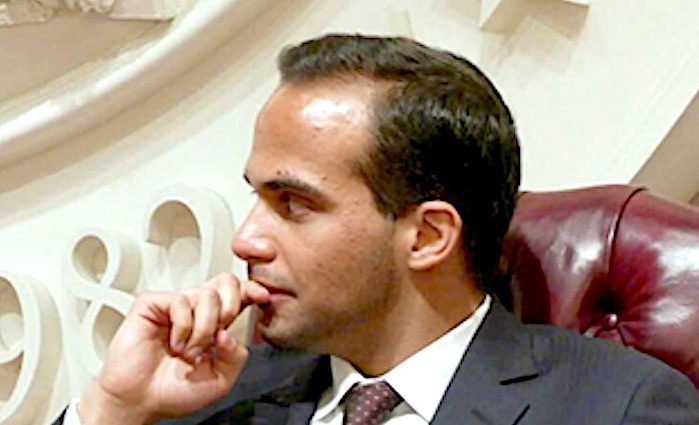
Tip by Aussie diplomat may have triggered FBI's Russian probe

Papadopoulos
© The National HeraldGeorge Papadopoulos
A tip by a top Australian diplomat may have been what caused the FBI to begin its investigation into Russian meddling in the 2016 U.S. presidential election, The New York Times is reporting.

According to report, published on December 30, a campaign adviser for then-Republican candidate Donald Trump, George Papadopoulos, told the diplomat, Alexander Downer, during a meeting in London in May 2016 that Russia had thousands of e-mails that would embarrass Democratic candidate Hillary Clinton.

After Democratic Party e-mails were hacked and leaked, Australia passed the information on to the FBI, the report said.

Comment: See also:


Binoculars

The bigger plan behind US support for riots in Iran

iran protest
In Iran - Regime Change Agents Hijack Economic Protests we looked at the developing U.S.-Israeli operation to instigate a revolt in Iran. What follows are a few more background points and a view on the developments since. A color revolution or revolt in Iran have only little chances of success. But even as they fail they can be used as pretext for additional sanctions and other anti-Iranian measures. The current incidents are thus only one part of a much larger plan.

The "western" democracies are used to distinguish political parties as left or right with fixed combinations of economic and cultural policies. The "left" is seen as preferring a social economy that benefits the larger population and as cultural liberal or progressive. The right is seen as cultural conservative with a preference for a free market economy that favors the richer segments of a nation.

The political camps in Iran are different.

The simplified version: The conservatives, or "principalists", are cultural conservative but favor economic programs that benefit the poor. Their support base are the rural people as well as the poorer segments of the city dwellers. The last Iranian president near to them was Mahmoud Ahmedinejad. One of his major policies was the implementation of cash payments to the needy as replacement of general and expensive subsidies on oil products and foodstuff. The current Iranian president Hassan Rouhani is a member of the "reformist" camp. His support base are the merchants and the richer parts of the society. He is culturally (relative) progressive but his economic polices are neoliberal. The new budget he introduced for the next year cuts back on the subsidies for the poor Ahmedinejad had introduced. It will increase prices for fuel and basic food stuff up to 30-40%.

Comment: See also:


No Entry

Alexander Mercouris on Iran protest wave: Regime change very unlikely

iran protest
Information about the protests in Iran is very difficult to assess because for the moment it is very sparse.

It appears the protests began in the city of Mashhad on 28th December 2017. They have however continued and have spread elsewhere though they appear so far to be on a small scale.

Most reports say that the trigger for the protests was economic grievances, with particular stress being given to the 40% shock increase in egg and poultry prices, which was announced last week.

Undoubtedly there is some truth to this but it must be heavily qualified.

The reality is that contrary to some reports Iran's economy is currently doing very well and after several years of recession which did cause living standards to fall is now actually in the throws of a boom, with double digit growth rates being recorded during the last two years.

Whilst it is said that the benefits of this boom have yet to reach the wider population, the boom has now been underway for almost two years, making it most unlikely that however unevenly its benefits are distributed the wider population has experienced no benefit from it at all.

As for price growth, the trend in Iran over the last four years is for price growth to fall.

Comment: See also: Fort Russ: Everything you need to know about the Iran protest crisis

Zero Hedge reports:
The US State Department has issued a formal condemnation of the Iranian government following two days of economic protests centering in a handful of cities, calling the regime "a rogue state whose chief exports are violence, bloodshed, and chaos" while announcing support for protesters. It fits a familiar script which seems to roll out when anyone protests for any reason in a country considered an enemy of the United States (whether over economic grievances or full on calling for government overthrow).

The statement by spokesperson Heather Nauert, released late on Friday, further comes very close to calling for regime change in Iran when it asserts the following:
On June 14, 2017, Secretary Tillerson testified to Congress that he supports "those elements inside of Iran that would lead to a peaceful transition of government. Those elements are there, certainly as we know." The Secretary today repeats his deep support for the Iranian people.
Though most current reports strongly suggest protests are being driven fundamentally by economic grievances, the US has already framed this week's events inside Iran as revolutionary in nature and as aiming for "transition of government". On Friday evening White House Press Secretary Sarah Huckabee Sanders tweeted the following statement:
Reports of peaceful protests by Iranian citizens fed up with the regime's corruption and its squandering of the nation's wealth to fund terrorism abroad. The Iranian government should respect their people's rights including their right to express themselves. The world is watching.
The media is already promoting a regime change narrative

As we noted during our initial coverage of Thursday's protests, Israeli as well as Iranian opposition media commentators (and of course pundits in the US mainstream) have generally appeared giddy with excitement at the prospect that protests could spread inside Iran, potentially culminating in society-wide resistance and possible change in government. It goes without saying that Iran has been enemy #1 for the United States and Israel since the Islamic Revolution and embassy hostage crisis beginning in 1979.
Iran's Foreign Ministry Spokesman Bahram Qassemi returned the favor:
"The great Iranian nation regards the opportunist and duplicitous support of the American officials for certain gatherings over the recent days in some Iranian cities as nothing but [part of] the deceit and hypocrisy of the US administration," Qassemi said on Saturday.

He condemned the "cheap, worthless and invalid" remarks by US officials and said, "The Iranian people attach no value to the opportunistic remarks by American officials and [President Donald] Trump himself."

He emphasized that the Iranian people are the main pillar of the country's security and progress.
...
Qassemi further said the noble Iranian nation is closely monitoring Trump's active role in human rights violations in Palestine, Yemen and Bahrain.

The nation also remembers Trump's "spiteful" bids to bar Iranians from entry to the United States and "the arrest of many Iranians residing in that country under baseless pretexts," he added.

"The Constitution of the Islamic Republic of Iran has envisaged democratic structures to legally protect people's civil demands, and it is completely possible to follow up on these demands within the framework of law," he said.

The Iranian spokesperson pointed to nearly 70 years of interference of different US administrations in the Islamic Republic's internal affairs and said, "US officials are not in a position to sympathize with the great and wise Iranian nation."


Jet5

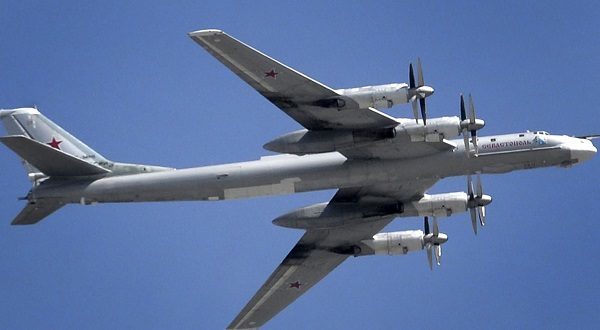
Australia's air force on alert after Russia conducts perfectly legal military exercises in neutral waters over Indonesia

fighter jet
© Alexander Nemenov/AFP/Getty ImagesTwo Russian Tupolev Tu-95 strategic bombers conducted joint exercises off Indonesia in a rare foray into the Pacific region.
An Australian air force base was put on alert while Russian strategic bombers conducted exercises in neutral waters off Indonesia, a move experts said showed Moscow was looking to extend its influence in the Pacific.

The base in Darwin was briefly put on a state of "increased readiness" in early December during the Russian exercises, which, according to the Russian Ministry of Defence, involved two nuclear-capable Tu-95MS bombers and more than 100 personnel.

RT, the Kremlin-backed English-language news channel, reported the exercise was the first Russian air patrol in the Pacific launched from Indonesia.

One of Australia's foremost national security experts, Peter Jennings of the Australian Strategic Policy Institute, said the exercises showed Russia was again extending its influence to the peripheries of the world. "It is a reminder Russia is here and wants to be a player in Pacific security and will use military force to demonstrate that," he told the ABC, which first reported the story.