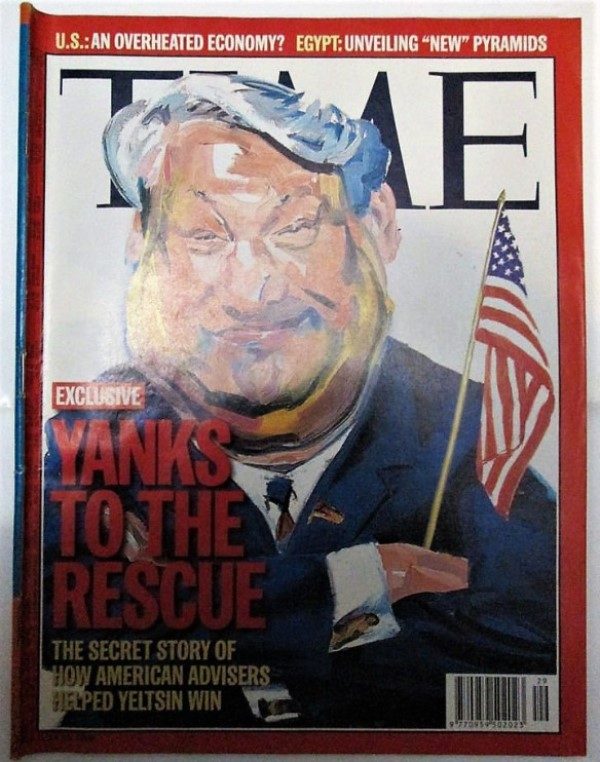
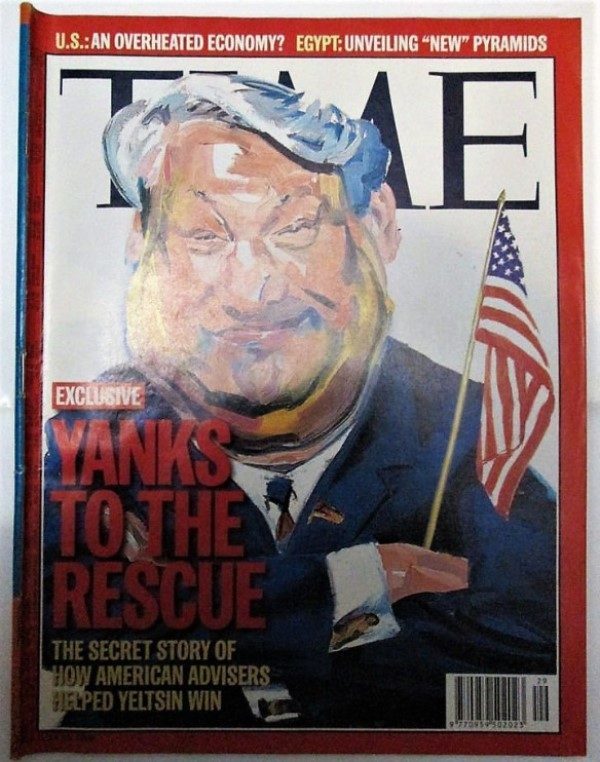
© Time
A response to Joseph Biden, Jr. and Michael Carpenter's article in Foreign Affairs Magazine, Part IThe first week in December I received an e-mail from
Foreign Affairs magazine with a featured article attached, "How to Stand Up to the Kremlin," by Joseph Biden, Jr., and Michael Carpenter. "The Team" at
Foreign Affairs [FA] told me to enjoy it and please share it. I began reading it,
but pretty soon it looked a lot like a typical anti-Russian propaganda piece, and I lost interest. Then when I checked my Facebook page I was greeted with a post from a FB friend on my "wall" with this same article attached asking me to please write a blog in response. Since the "friend" was my wife, I decided to at least post back a brief response to a few of the "misleading" points in the article and gave a vague promise to perhaps respond at some point with a blog. A couple of other "friends" joined in with comments assuring me I needed to give a full response. I don't really enjoy writing political blogs as much as I do the personal ones. For one thing it takes more work to dig up specific references. I often make notes on small cards to myself while reading such things, but I'm not very disciplined about where I keep these. So my "research" is actually searching every nook for where I put my notes. Second, as I have indicated before, my time in the academic world was not in contemporary politics or Russian history. It is my avocation, but my vocation as an academic was in another field. Then I received another e-mail from FA the next week, however, proclaiming how proud they were of this "breakout" piece. Furthermore, if I wanted to read more by their "brilliant writers" I could subscribe now at a reduced rate. I decided to respond to this breakout piece. (To read the article go
here)
First, the article sets forth the transition from the Communism of the USSR in a very positive-even glowing-manner. I will give the full quote here:
After the Cold War, Western democracy became the model of choice for postcommunist countries in central and eastern Europe. Guided by the enlightened hands of NATO [5] and the EU, many of those countries boldly embarked on the transition from dictatorship to democracy. Remarkably, most succeeded. Post-Soviet Russia also had an opportunity to reinvent itself. Many in Europe and the United States hoped that by integrating Russia into international organizations (such as the Council of Europe, the World Bank, and the International Monetary Fund), they could help Russia become a responsible member of the rules-based international order and develop a domestic constituency for democratic reforms. Many Russians also dreamed of creating a democratic, stable, and prosperous Russia. But that dream is now more distant than at any time since the Cold War ended.











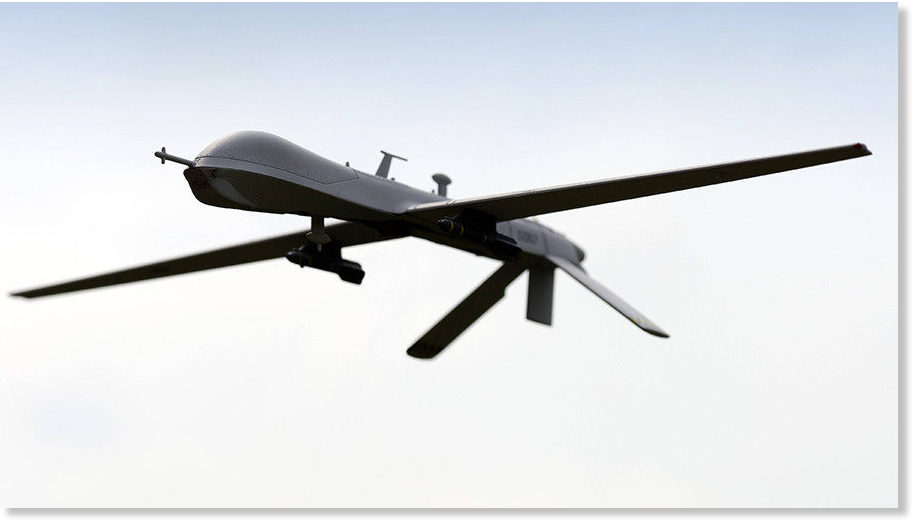




Comment: Of course these drones were not the product of DIY jihadist or black-merchant ingenuity, in spite of what the Pentagon tells us.