Puppet MastersS


Black Magic

Manafort indictment also implicates creepy Tony Podesta, Clinton-connected superlobbyist

tony podesta
  • Clinton-connected lobbyist Tony Podesta knew he was working with Paul Manafort on behalf of a Ukrainian politician, according to an indictment released Friday by the special counsel's office.
  • Podesta, Manafort and Mercury Public Affairs all failed to register as foreign agents of Ukraine for the work.
  • Manafort entered a plea agreement with the special counsel Friday.
Two lobbying firms, including one owned by Democratic superlobbyist Tony Podesta, knowingly worked with Paul Manafort at the direction of the Ukrainian government, according to an indictment released Friday by the special counsel's office.

Comment: For more background on the kind of person Tony Podesta is, see: Progressive liberal values: Tony Podesta's creepy taste in art, the creepy people he hangs out with, and Pizzagate


Bad Guys

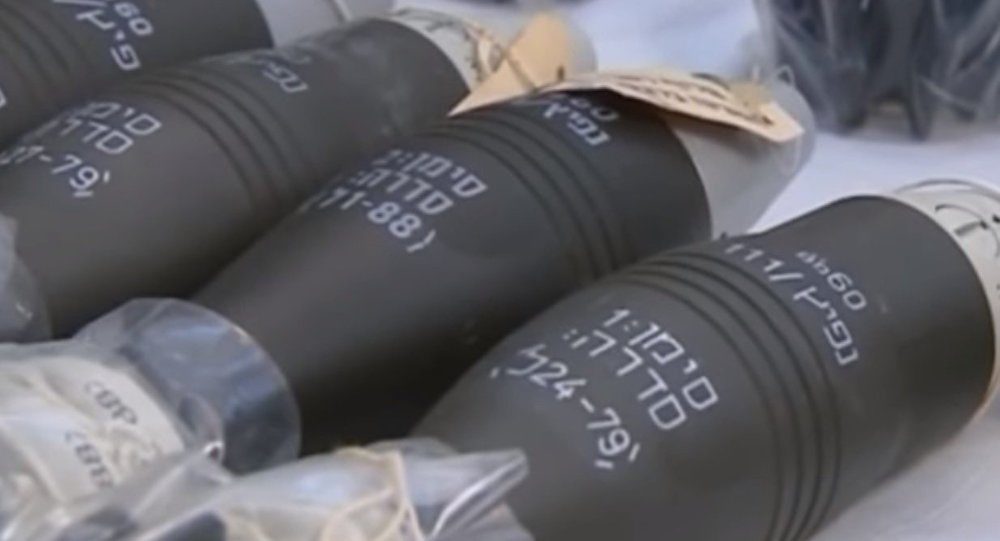
Syrian army discovers more Israeli weapons at ISIS locations in Daraa

israeli weapons in syria
© Youtube / Syrian Ministry of Defense
Syrian government forces regularly carry out mop-up operations in provinces liberated from terrorist and militant groups and have on multiple occasions discovered caches and depots of ammunition and weapons made in Western countries and Israel.

During a combing operation on Saturday, the Syrian army found loads of cannons, RPGs, rockets, small arms and ammunition, including Israeli, in one of Daesh's former strongholds in Hawz Yarmouk in western Daraa province, Fars News Agency reported.

This is not the first time that the Syrian army has stumbled upon depots full of foreign-made arms left behind by militants in Daraa.

Comment: For more information:


Info

Analyst believes US sanctions 'bill from hell' targeting Russian debt could backfire on Western allies

Washington
© Jonathan Ernst / Reuters
The proposed US sanctions targeting Russian bonds, OFZs, will likely hurt not only Moscow, but also numerous holders of such bonds in the West, an analyst has said.

The measure was proposed by a group of US senators lead by Republican Lindsey Graham. The senator said he planned a "sanctions bill from hell" to punish Russia because "the current sanctions regime has failed to deter Russia from meddling in the upcoming 2018 midterm elections."

But the US Congress is unlikely to pass the bill, which includes restrictions on Russian sovereign debt transactions, experts tell RT.

"Cracking down on seven largest Russian state banks, the way it is described in the US bill, is unlikely. How will these banks and companies working through them settle on debt and contractual obligations in dollars with Western counterparties?" according to Peter Pushkarev, chief analyst at TeleTrade.

Radar

Flightpath of US high-altitude drone near Crimea revealed by tracking website

RH-4 Global Hawk drone
© Northrop Grumman
A US military high-altitude Global Hawk drone has reportedly been spotted flying an hours-long spy mission over eastern Ukraine and off the shore of Crimea along with another American surveillance plane.

The RQ-4 Global Hawk cruised over war-torn eastern Ukraine before coming within 40km of the Crimean coast. PlaneRadar website, which tracks military flights worldwide, reported the mission in a series of tweets on Saturday.

It is understood that the unmanned aircraft took off at around 9:00am GMT from a US Navy installation at NATO Base Sigonella in Sicily, Italy.

Chess

War in Syria: Why Tehran summit failed to ease Idlib tensions

Russia and Iran differed with Turkey on several major issues around the upcoming offensive, leading to an impasse and collapse of talks
Rouhani , Putin & Erdogan
The three-way summit that concluded in Tehran recently has failed, rather dramatically, raising fears on what might be in store for the region in the weeks to come as Russian President Vladimir Putin and Iranian President Hassan Rouhani part ways, albeit temporarily, with their Turkish counterpart, Recep Tayyip Erdogan.

Biohazard

Swiss lab spy games support the theory that Novichok WASN'T used in Salisbury

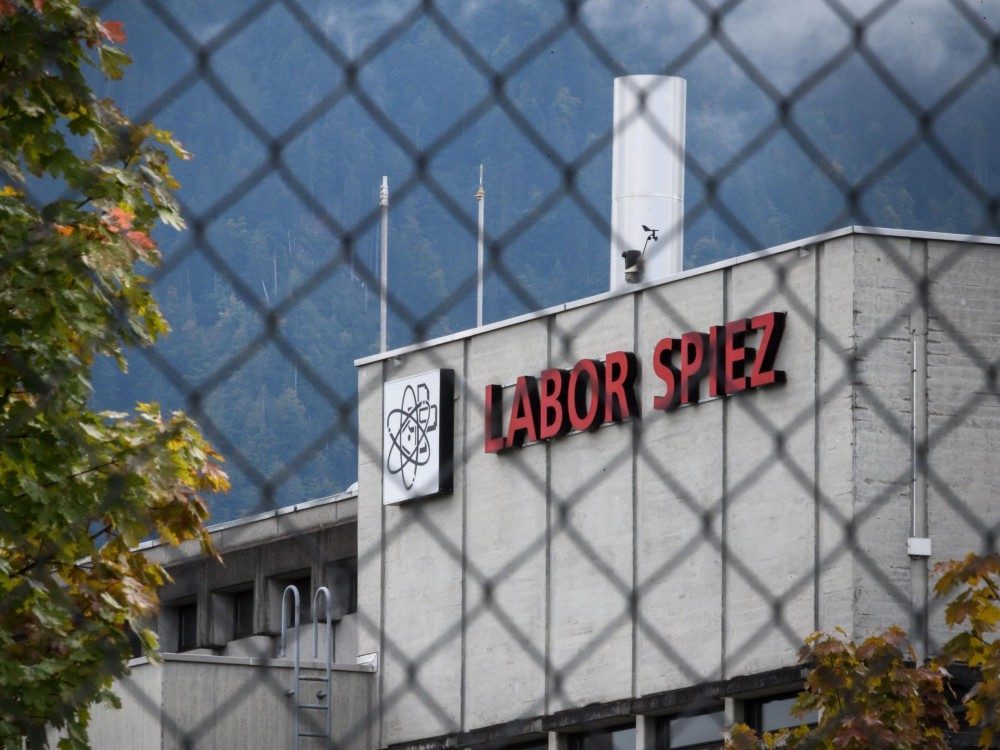
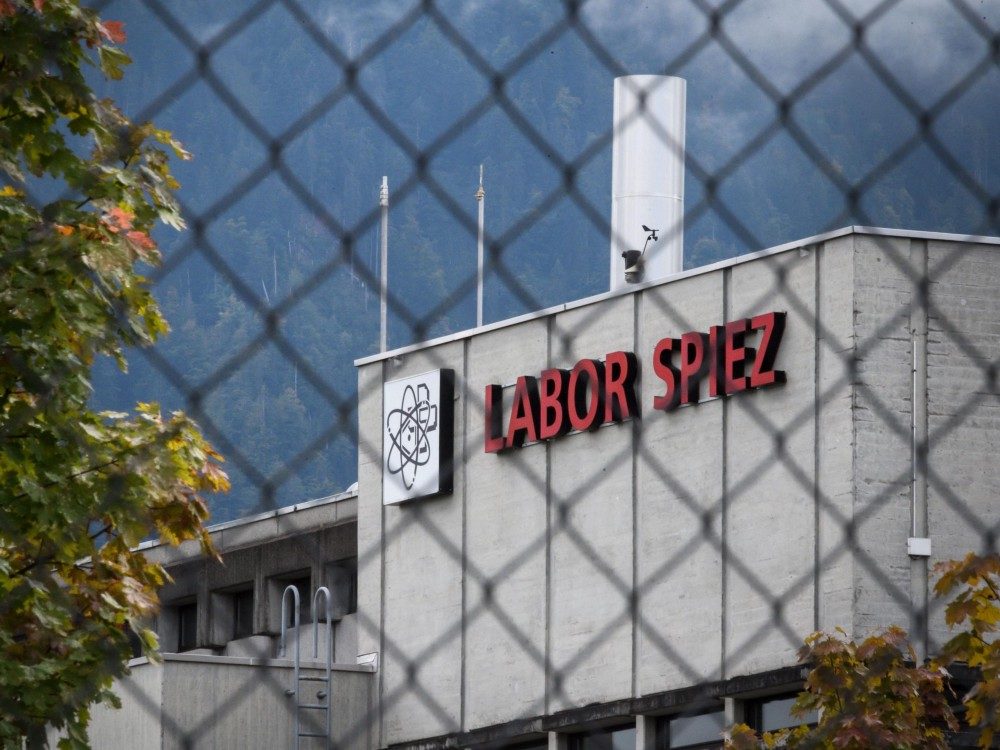
labor spiez
The Spiez Laboratory in Switzerland
The last 24 hours of the Novichok saga has seen a new twist - European media are widely reporting that two Russian spies were caught attempting to either hack or break into the Spiez laboratory in Switzerland that was examining samples from the Salisbury poisoning. While this announcement of an event that happened months ago is clearly designed to bolster the British government's account, in reality it does the opposite.

The Spiez Laboratory Story

Beginning with Dutch and Swiss media on Thursday night, reports claim that Dutch military intelligence (working with other intelligence agencies including British) detained two men at The Hague in late March, around four weeks after the Skripals were poisoned. They were suspected to be GRU agents and reportedly had equipment to help them break into the lab, which was examining samples from both Salisbury and from suspected chemical weapons attacks in Syria.

The two men - who have not been named or identified in any way - were sent back to Russia so none of this will ever be placed before a court or properly examined. The news reports of the last 36 hours are contradictory on the question of whether this was an attempted cyber-attack (i.e. hacking into the lab's computer system) or a physical break-in.

Most of the reports say this was a hacking attempt, echoing other reports from late July saying that Russian hackers were either trying to or had successfully hacked the Swiss lab.

Comment: This Swiss government has confirmed that it was an 'attempted' hack.
Switzerland summoned the Russian ambassador to protest an "attempted attack" as Moscow rejected the allegations, the latest Western claim about Russian spying and other acts of interference.
...
The confirmation by Switzerland's Federal Intelligence Service (FIS) to AP on September 14 came after reports by the Dutch newspaper NRC Handelsblad and the Swiss newspaper Tages-Anzeiger that two Russians suspected of working for Russian military intelligence, known as the GRU, were kicked out of the Netherlands earlier this year as part of a Europe-wide investigation.
...
"The Swiss authorities are aware of the case of Russian spies discovered in The Hague and expelled from the same place," FIS spokeswoman Isabelle Graber said in an e-mail to AP. She said the agency helped prevent "illegal actions against a critical Swiss infrastructure," and declined further comment.

Switzerland's Foreign Ministry said on September 14 that it summoned Russia's ambassador to "protest against this attempted attack" and demanded that Russia "immediately" end its spying activities on Swiss soil.

But Russian Foreign Minister Sergei Lavrov dismissed the charges and questioned why it took so long to come to public light.

"I cannot suppose that such an occurrence, in which the specialists of three Western countries participated, could remain out of the field of view of the mass media," Lavrov said on September 14 after meeting with his German counterpart in Berlin, Russian news agencies said.

The AFP news agency reported on September 15 that the two Russians expelled from the Netherlands are also being investigated by Swiss authorities for an attempted cyberattack on the World Anti-Doping Agency (WADA).
Very interesting news. If Tom Secker is correct, and Lavrov's revelation that the poison used in Salisbury was identified as BZ, perhaps events played out something like this: Russian spies succeeded in either physically penetrating or hacking Spiez, obtaining the evidence that BZ was used. They were caught, but a deal was worked out to keep it covered up. The Russians got sent back to Russia with a light slap on the wrist, as they now had proof that the West was engaging in a vast propaganda war to blame Russia for the Salisbury despite finding possibly exculpatory evidence.

If this scenario is at all plausible, perhaps a similar one could apply to the news that the same spies were caught "trying" to hack WADA. After all, WADA are now being strangely rational in their decision to reinstate RUSADA despite vociferous calls for them to continue with their previously anti-Russian policy.

Pills

WADA stands by decision to reinstate Russian anti-doping org RUSADA

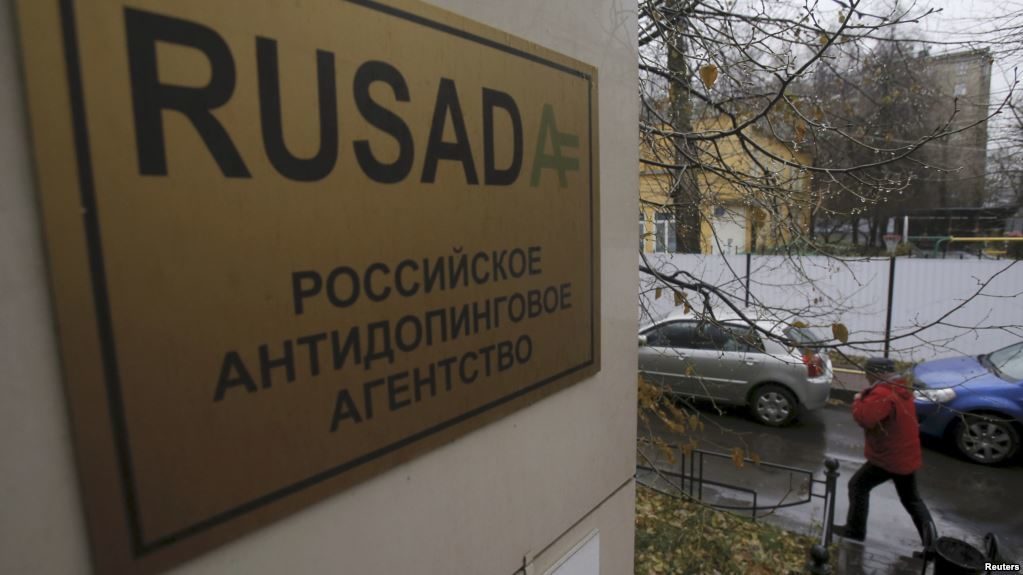
rusada
© ReutersRUSADA, the Russian antidoping agency, could have its international ban ended at a September 20 WADA meeting.
The World Anti-Doping Agency (WADA) has defended its review committee's decision to recommend reinstatement of Russia's antidoping organization amid criticism about transparency and the resignation of a Canadian Olympic champion from the panel.

WADA in a statement on September 15 rejected criticism it had softened requirements that Russian officials acknowledge wrongdoing and also turn over data and other information as part of the country's efforts to be reinstated from a global sports ban.

WADA said its actions were "grounded in pragmatism," reflected "flexibility," and were "entirely in line with the RUSADA Roadmap to Compliance" established in 2017.

Bringing Russia back in compliance "was never going to be achieved without small degrees of movement on both sides," it insisted.

WADA, based in Montreal, suspended RUSADA, Russia's antidoping agency, in 2015 over alleged state-backed doping in sports. Moscow has repeatedly denied state involvement in doping.

Comment: It's interesting to see WADA taking such a sane approach. Maybe they realized how hard they were duped and actually felt some remorse? Or perhaps this has something to do with it: Swiss Lab Spy Games Support the Theory that Novichok WASN'T Used in Salisbury


Blackbox

What are French troops doing in Deir ez-Zor, Syria?

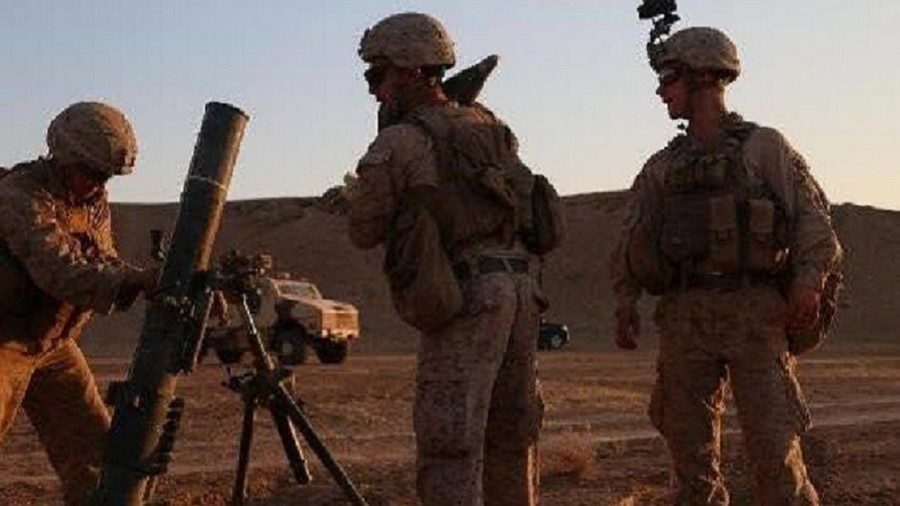
troops syria iraq
Screenshot from a Twitter post of the US Special Ops Joint Task Task Force-OIR (Iraq / Syria).
A French army vehicle spotted in a photo taken in Deir ez-Zor province has led to questions about the extent of Paris's involvement in the Syrian conflict. The image was reportedly shared by the US military on social media.

The vehicle in question is a wheeled armored personnel carrier equipped with a turret, which resembles the French army's Aravis infantry mobility vehicle. It can be seen in the background of the photo, which purportedly shows US troops lending support to Syrian armed groups fighting Islamic State in the eastern province.


France 24 journalist Wassim Nasr was the first to draw attention to the picture. He said it was released by the US Special Ops Joint Task Force in Iraq and Syria on Wednesday, before being promptly removed - possibly at the request of French authorities.


Comment: See also:


Attention

Best of the Web: FBI/DOJ violated FISA rules to begin criminal investigation of Trump team without evidence of a crime

fbi logo
© Jim Bourg/Reuters
Will this be the week? With bated breath, we wait to find out whether we've reached the moment, after the Labor Day end of summer, just as the critical midterm races heat up, when President Trump will follow through on his threat to declassify and publicize key FISA-gate documents - in particular, the redacted portions of the Carter Page surveillance-warrant applications.

I hope the president follows through, at least to the extent he can do so without putting intelligence methods and sources at risk. Accountability is essential here.

The FBI and the Obama Justice Department launched an investigation of the Democrats' political adversaries, and they used Clinton-campaign-generated, foreign-provided innuendo to do it. They strained to make a case on Donald Trump even as they were burying a daunting criminal case on Mrs. Clinton. As I have previously explained, moreover, the president was misled about his status: not only was he a suspect in the investigation, he was the main suspect.

The main suspect in an investigation with no crime.

Binoculars

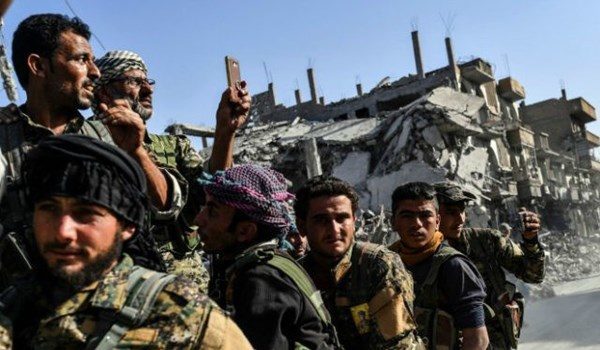
US-backed SDF attacks civilians in Syria's Deir ez-Zor

sdf deir ezzor
Heavy clashes were reported between the Syrian Democratic Forces (SDF) and civilians in Eastern Deir Ezzor.

Local sources in Eastern Deir Ezzor said on Thursday that the SDF forces fired at the residents of the town of al-Sajar, and wounded several people, adding that a number of them were also detained by the US-backed militants.

They noted that the incident happened after residents of the town attacked one of the SDF commanders, namely Damhat.

It was the second time in a week that residents of al-Sajar engaged in clashes with the SDF and were targeted by the SDF's fire.

In a relevant development on Tuesday, civilians in Southeastern Deir Ezzor raided the positions of the US-backed SDF, destroying their checkpoints.

The SDF opened fire at the people in the village of al-Sajar in Southeastern Deir Ezzor, injuring seven villagers.

The villagers, later, set fire at the SDF-run al-Sijan oilfield near al-Sajar, destroying the terrorists' checkpoints.