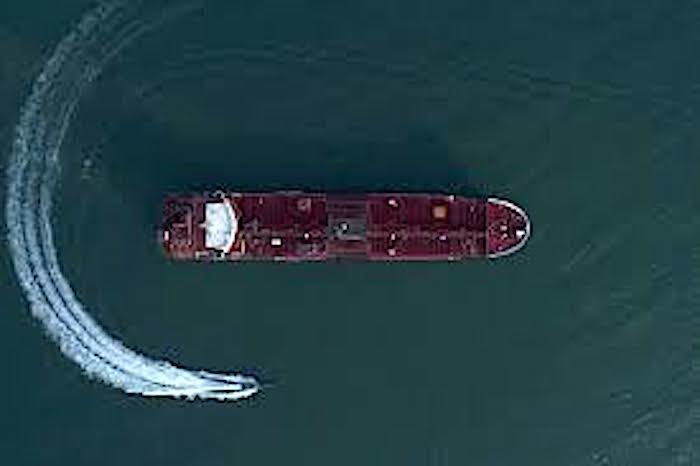
© UnknownIRGC Navy speed boat circles British-flag tanker Stena Impero to slow it down before boarding by Special Forces.
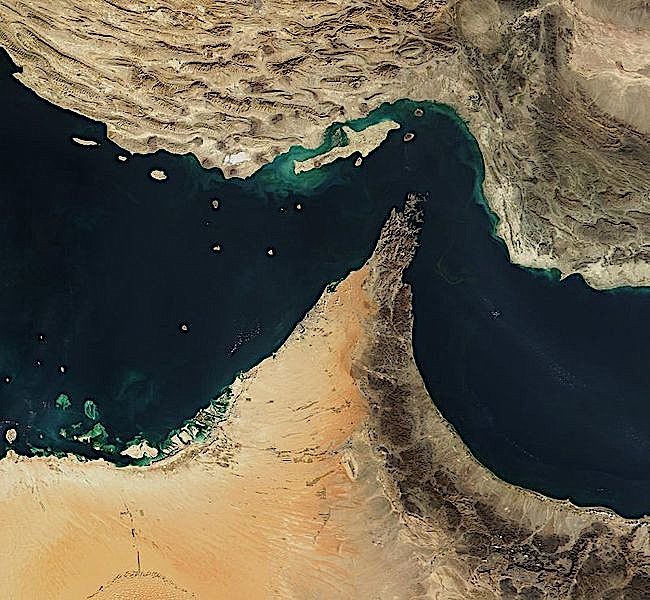
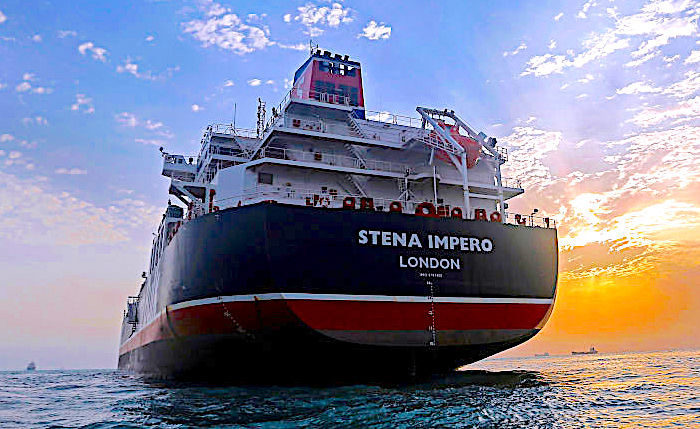
The Royal Navy will accompany British-flagged vessels through the strait of Hormuz to defend freedom of navigation after Iran seized a tanker this month, the Ministry of Defence has said.
"The Royal Navy has been tasked to accompany British-flagged ships through the strait of Hormuz, either individually or in groups, should sufficient notice be given of their passage. Freedom of navigation is crucial for the global trading system and world economy and we will do all we can to defend it."
It is an interim move before discussions about the development of an international maritime protection force in the Gulf either led by Europe in coordination but separate from the US or jointly with the US. The US is calling a conference on the issue on Thursday.
Jeremy Hunt as foreign secretary had proposed a European maritime force,
arguing it was likely to garner more support than a US-led convoy as the US wanted to scrap the Iran nuclear deal and European powers did not. Differing national approaches to the nuclear deal were seen as likely to colour the terms of engagement for protecting European shipping going through the strait, ministers argued.
It is not yet clear whether Boris Johnson's new administration will pursue winning favour with Europe,
which might irritate the US as it is the dominant naval force in the area.Some Gulf states are proposing an international maritime conference, to which Iran would be invited, to try to agree on basic principles of maritime protection. The conference would be held in either France or Germany and include countries such as India, China and Japan as well as Gulf shipping states such as Saudi Arabia and the UAE. Supporters of a conference argue
it could either agree at minimum on a collective statement on the sanctity of shipping or establish a contact group to provide early warning and advise of threats to shipping.












Comment: See also: