
© yourNEWS Media Newsroom IllustrationUS President Donald Trump • Strait of Hormuz • Attack
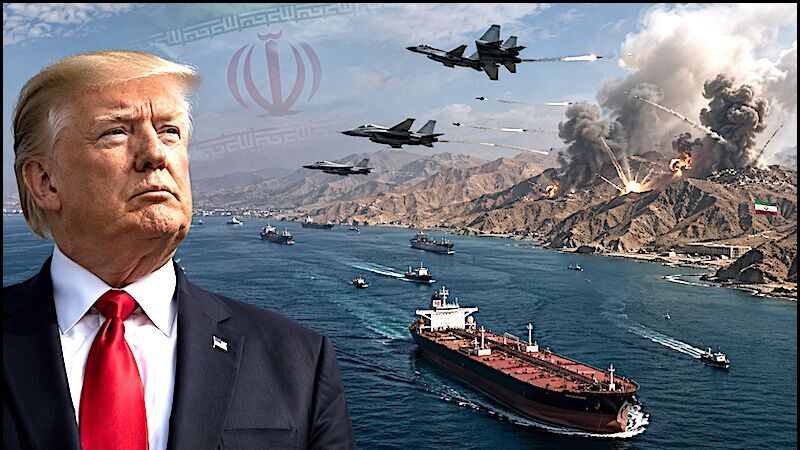
U.S. forces began launching strikes against Iran on Tuesday after Tehran attacked commercial ships moving through the Strait of Hormuz, according to U.S. Central Command.
CENTCOM announced the military action in a post on X, saying the strikes were aimed at imposing costs on Iran for targeting civilian-crewed commercial vessels in an international waterway.
"U.S. Central Command forces have begun launching a series of powerful strikes against Iran to impose heavy costs for targeting and attacking commercial shipping crewed by innocent civilians in an international waterway," the command wrote. "The U.S. strikes are in response to Iranian attacks on three commercial vessels that were transiting the Strait of Hormuz."CENTCOM said Iran's actions violated the ceasefire and created a dangerous escalation in one of the world's most important shipping corridors.
"Iran's demonstrated aggression was unwarranted, dangerous, and a clear violation of the ceasefire."Reuters reported that the strikes came after the vessel attacks, citing Central Command's statement that the U.S. response was tied to Iranian targeting of commercial shipping in the strategic waterway.
Iran responded by saying it would take all necessary measures to protect its security and interests. The Iranian Foreign Ministry blamed the United States for any violations of the truce agreement and pointed to Washington's revival of oil sanctions Tuesday as a breach of the agreement.
The confrontation came after maritime security warnings intensified around the Strait of Hormuz. CNBC reported Tuesday that the threat level near the waterway had been raised to "severe" after Iran attacked tankers traveling on a route protected by the U.S. Navy.
The Strait of Hormuz sits between Iran and Oman and serves as a critical passage for global energy shipments. A significant share of the world's oil and liquefied natural gas moves through the narrow waterway, making disruptions there a major concern for energy markets and international shipping.
The military strikes also came as the Trump administration continued its broader pressure campaign against Tehran. That effort includes restrictions on Iran's ability to generate revenue from oil exports.
The administration recently moved to end a waiver that had allowed certain countries to continue purchasing Iranian oil despite U.S. sanctions. The waiver had permitted limited transactions involving Iranian crude exports, and ending those exemptions was intended to further restrict Tehran's access to oil income.
The Trump administration has argued that cutting off Iranian oil revenue is a key part of pressuring Tehran over its nuclear program and regional activities.
Iran has repeatedly warned that efforts to limit its energy exports could lead to retaliation, including actions affecting commercial shipping in the Persian Gulf and the Strait of Hormuz.
The latest tanker attacks and U.S. strikes have increased concerns that shipping through Hormuz could face further disruption. Any prolonged threat to traffic through the waterway could affect oil prices and raise costs for consumers.
Tuesday's strikes mark another escalation between Washington and Tehran as tensions continue over Iran's nuclear ambitions, regional conduct and oil revenue.


Reader Comments
to our Newsletter