© Steve Rhodes / Flickr
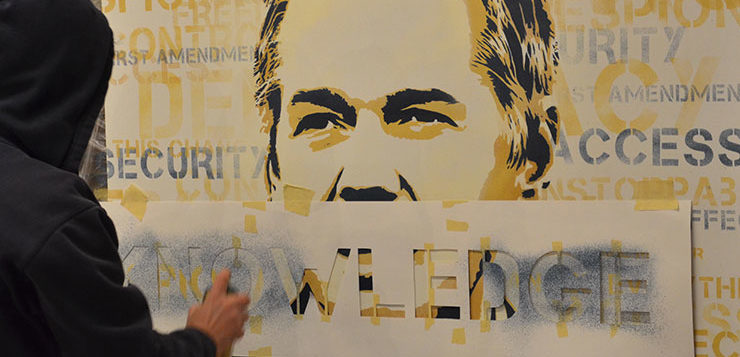
While Julian Assange rots in prison for publishing journalism, clinical psychologist Dr Lissa Johnson explains some of the science behind how we got here, and also how we push back.On Sunday June 28
th 2019, Western democracy arrived at an historic crossroads. Moving forward from this day, citizens of Western nations will head down one of two paths.
The first path leads towards genuine democracies, wherein governments are accountable to the publics they govern, and publics have a right to know what leaders do in their name. It is a path along which a free press fosters an informed electorate, capable of making informed decisions at election time. Such principles are not only fundamental
prerequisites for democracy, but essential protections against government abuses of all kinds.
The second path heads down
totalitarian terrain, currently being blazed by the Trump administration, wherein governments decide who is free to speak and who is not, including who is a 'journalist' and who is not, by granting themselves the power to silence those who make them look bad. This pathway not only spells death to democracy and the public's right to know, it is a recipe for state-sanctioned abuse.
As the Science of Human Rights Coalition warns in a document titled
Human Rights 101,
"Unless citizens want their governments to support human rights, government leaders rarely will do so... [Human rights principles] carry no weight unless the people know them, unless the people understand them, unless the people demand that they be lived."
People kept in the dark about their government's activities, however, are in no position to demand anything of their governments at all, as political philosopher
Hannah Arendt reminds us. Down the pathway of governmental secrecy, citizens can kiss goodbye not only to respect for human rights, but to holding their leaders accountable over any issue in which the interests of the elites and the majority clash, whether fossil fuels, climate emergency, racial and economic inequality and injustice, endless wars, mass surveillance or any other public interest matter one might care to name.


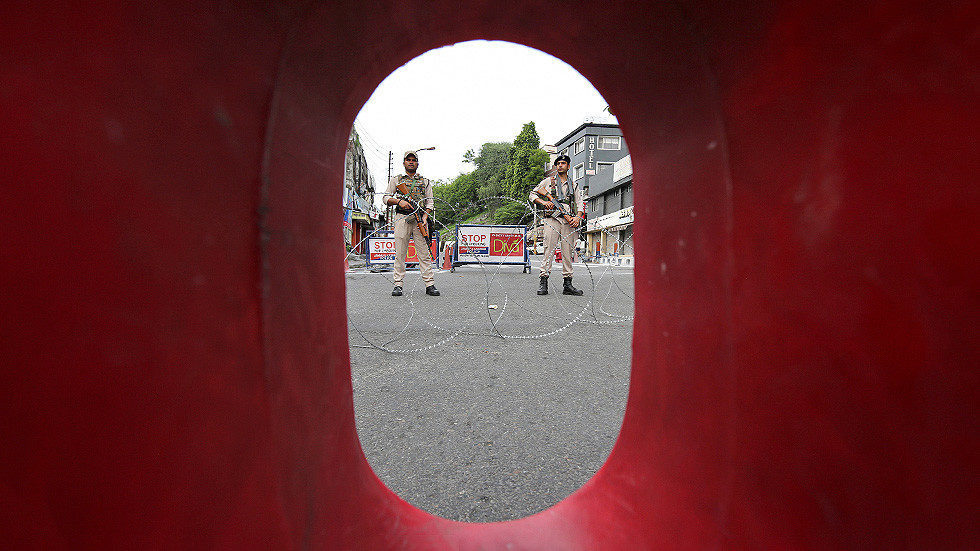







Comment: So that is why Modi was so 'touchy-feely' with the leaders of Israel and the US during his first term. He was buttering them up in advance of his 'Crimean move'.
Also in advance of this, Modi's govt launched an anti-corruption drive in the disputed regions, along with govt-funded development programs.
UAE, Sri Lanka have stated they consider this to be an internal Indian matter. While Sri Lanka hailed the decision to separate Buddhist-dominated Ladhak from J&K, China opposed it while asking both India and Pakistan to maintain restraint over Kashmir. The demand to have a separate administrative entity for the Ladhak region goes back 70 years.