OF THE
TIMES
"The nuclear program should proceed according to the needs of the country and we expect it to be strengthened after this [move], and the aim of the plan is to counter the sanctions imposed on the Iranian people by American and Western countries."The legislation will also oblige the government to suspend implementation of the Additional Protocol of the Non-Proliferation Treaty Safeguards Agreement with the International Atomic Energy Agency, which allows the global watchdog to inspect Iran's nuclear facilities.
The national parliament of Iran on Tuesday approved a bill demanding the suspension of UN inspections of its nuclear facilities, but the country's government has opposed the move.
The bill approved by MPs would suspend any further UN inspections, and require the government to "produce and store 120kg per year of uranium enriched to 20 percent" if European signatories to the 2015 nuclear deal fail to provide relief from oil and banking sanctions.
This would run counter to Iran's commitments under the deal agreed with world powers, and the parliament's vote prompted the executive to dismiss such a move.
"The government has explicitly announced that it does not agree with [this] plan" and considers it "neither necessary nor useful," Ministry of Foreign Affairs spokesman Saeed Khatibzadeh told reporters on Tuesday. But Speaker of Parliament Mohmmad Baqer Ghalibaf explained that the lawmakers were "hopeful to remove sanctions through this stern decision."
Rafael Grossi, head of the International Atomic Energy Agency (IAEA), told AFP on Monday that "no-one, starting with Iran, would have anything to win from a decrease, limitation or interruption" of inspections of the nuclear facilities.
The Iranian parliament's vote on Tuesday also requires approval by the Guardian Council, a constitutional watchdog, and the country's supreme leader, Ayatollah Ali Khamenei, who has the final say on all of the country's nuclear policies.


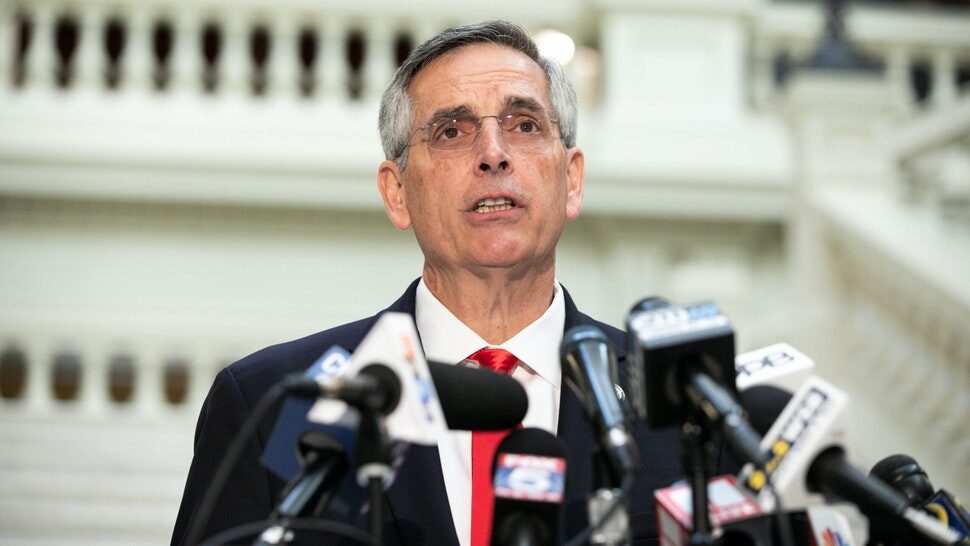
The complaint (pdf), brought by Paul Andrew Boland, a registered elector, against Georgia Secretary of State Brad Raffensperger and other officials, was filed on Nov. 30 in a court in Fulton County. It claims that 20,312 ballots were cast by people who are no longer residents of Georgia and that "suspiciously low ballot rejection rates" suggest signature-verification procedures "were not enforced with their usual rigor," resulting in dilution of Boland's vote, "casting doubt on the integrity of the Election" and providing grounds to contest the Georgia vote.
In support of the claim that over 20,000 ballots were cast by out-of-state residents, the complaint cites an expert analysis by Matt Braynard, an analyst and former data chief and strategist for President Donald Trump's campaign. Braynard and his team reviewed addresses on voter rolls and found that thousands were postal and commercial addresses made to appear like residential addresses, in violation of Georgia law.
"This number of invalid votes far exceeds the certified margin of victory of 12,760 in the presidential results," the complaint says.
The claim of lax signature verification is based on unusually low absentee ballot rejection rates. Citing an affidavit by Benjamin Overholt, an expert in applied statistics and research methods at the University of Northern Colorado, the complaint notes a 0.15 percent rejection rate in the 2020 general election, compared to a 0.28 percent rejection rate in the 2016 general election, 0.20 percent in the 2018 general, and 0.28 percent in the 2020 primary.
"There are other anomalies in the reported data that should be analyzed, and many raise significant questions about the conduct and results of the 2020 General Election," Overholt wrote in his sworn statement, and argued that the recent "hand count" audit of Georgia's election results would not resolve these issues.
The complaint says that while Raffensperger's office carried out an audit and recount, "no signature matching was required during that process" and argued that, "without a meaningful verification of signatures, the election results cannot be certified."
It also alleges that, ahead of the election, Raffensperger took unlawful and unconstitutional steps to weaken safeguards against fraudulent ballots, including around signature requirements.
The suit asks the court to decertify the results of the election until Raffensperger's office completes an investigation of a sample of the 20,311 individuals flagged as having voted in violation of residency requirements. It also calls for a signature match check for the absentee ballots cast in the election, and to make all ballots and envelopes used in casting absentee ballots available for public scrutiny.
If the two probes and related remedies cannot be assured, the suit calls for a redo of the election in Georgia.
Comment:
Update 12/01/20:
Barr's DOJ has responded to the criticism levied at him by Trump's legal team: See also: