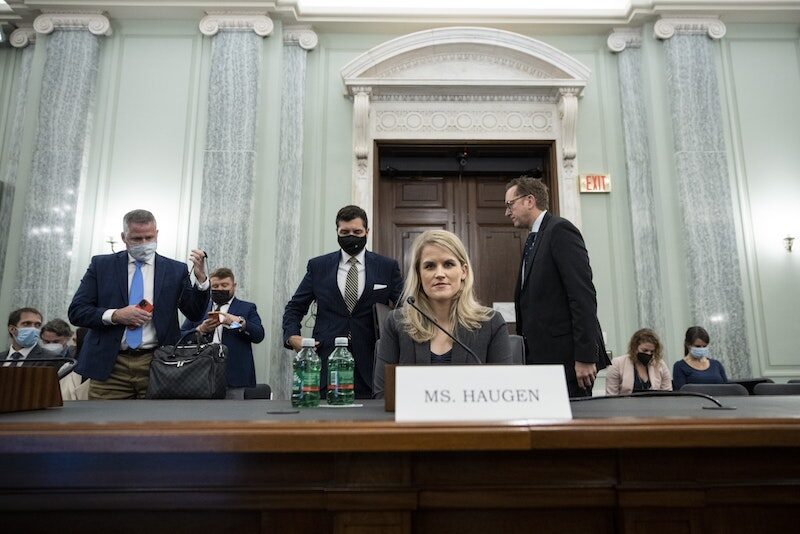
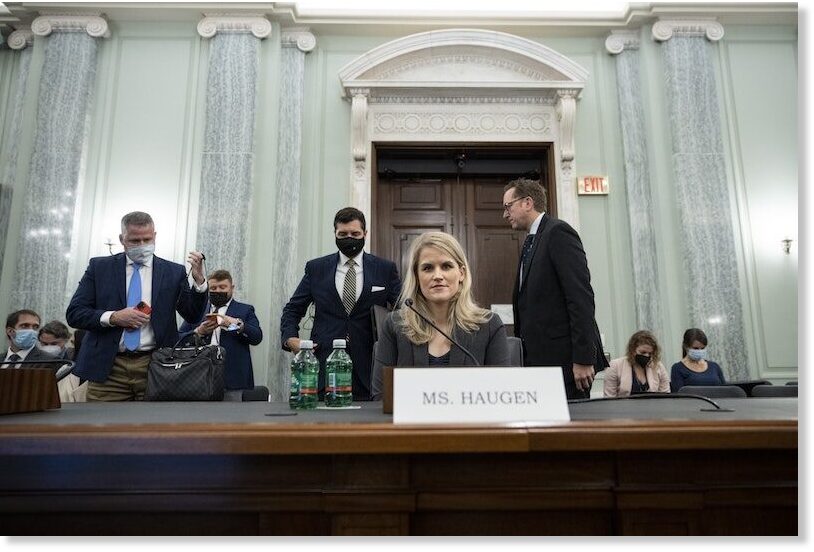
© Drew Angerer/Getty ImagesFormer Facebook employee Frances Haugen testifies at the Senate Committee on Commerce, Science, and Transportation hearing entitled 'Protecting Kids Online: Testimony from a Facebook Whistleblower' on Capitol Hill October 5, 2021 in Washington,
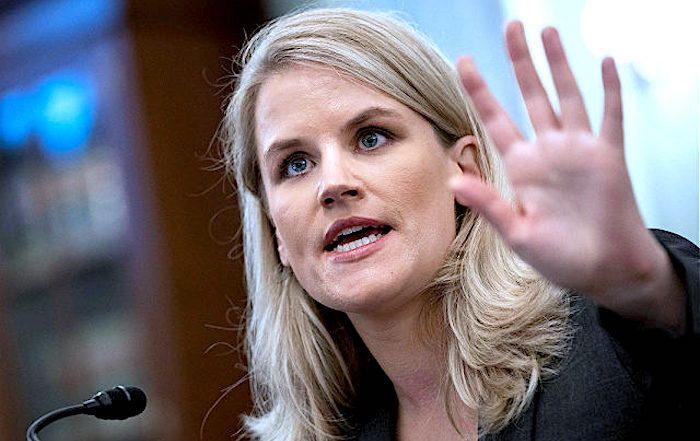
"Whistleblower" Frances Haugen is a vital media and political asset because she advances their quest for greater control over online political discourse.
Much is revealed by who is bestowed hero status by the corporate media. This week's anointed avatar of stunning courage is Frances Haugen, a former Facebook product manager being widely hailed as a "whistleblower" for
providing internal corporate documents to the
Wall Street Journal relating to the various harms which Facebook and its other platforms (Instagram and WhatsApp) are allegedly causing.
The social media giant hurts America and the world, this narrative maintains, by permitting misinformation to spread (presumably more so than cable outlets and mainstream newspapers do virtually every week); fostering body image neurosis in young girls through Instagram (presumably more so than fashion magazines, Hollywood and the music industry do with their glorification of young and perfectly-sculpted bodies); promoting polarizing political content in order to keep the citizenry enraged, balkanized and resentful and therefore more eager to stay engaged (presumably in contrast to corporate media outlets, which would
never do such a thing); and, worst of all, by failing to sufficiently censor political content that contradicts liberal orthodoxies and diverges from decreed liberal Truth. On Tuesday, Haugen's star turn took her to Washington, where she spent the day testifying before the Senate about
Facebook's dangerous refusal to censor even more content and ban even more users than they already do.

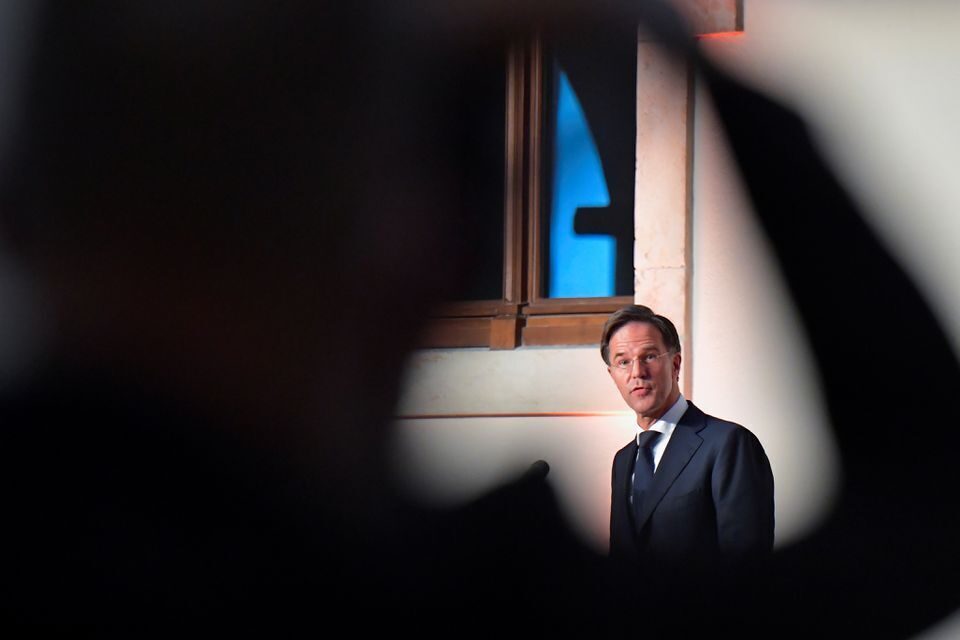











Comment: Notably, the Dutch political situation this year has been marred by scandal: "Unprecedented injustice": Dutch government quits over tax subsidy scandal
See also: