Puppet MastersS


Radar

Russia sees NATO Ukraine arms convoys as legitimate targets in Ukraine operation

ukraine army
© Sergei SUPINSKY / AFP
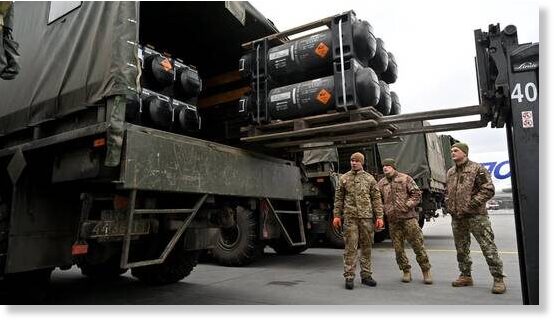
Russia will perceive convoys delivering arms from NATO states to Ukraine as legitimate targets for its military once they reach Kiev controlled territory, Deputy Foreign Minister Sergey Ryabkov warned in an interview published on Wednesday.

Regular contact with the US is impossible for Russia, considering "Washington's unabashed support for militaristic intentions of the Kiev regime [and] the pouring of modern weapons" into the country by NATO members, the diplomat explained Moscow's goal now is to make it abundantly clear for the US and its allies that Russia will use harsh methods in response to attempts to stymie its military in Ukraine.

"We are warning that American-NATO transports carrying weapons across the Ukrainian territory are considered legitimate military targets," he stressed.

Arrow Up

US-led NATO, not China, is responsible for global conflicts

NATO HQ
© XinhuaPhoto taken on April 6, 2022 shows a sculpture and flags at NATO headquarters in Brussels, Belgium.
NATO Secretary-General Jens Stoltenberg's hostile comments about China on Thursday were not only provocative, but defied the facts on the ground.

At the news conference following a NATO foreign minsters' meeting, Stoltenberg blamed China for being "unwilling to condemn Russia's aggression "without saying that many other countries, such as India, South Africa and Vietnam, held the same or a similar stance. These countries maintain good relations with both Russia and Ukraine and hope to solve the conflict through dialogue and diplomatic means, while United States-led NATO has been fanning the fire.

In addition, more than 150 countries have not joined the US and European Union in imposing economic sanctions on Russia because they know sanctions are ineffective in conflict resolution, except in impoverishing innocent civilians.

Contrary to what Stoltenberg claimed, China has been calling for the respect of national sovereignty and has urged de-escalation. But it was abundantly clear from the beginning that NATO is not innocent in the current conflict.

Comment: Sweden and Finland just announced that they intend to join NATO, despite their leadership saying just months earlier that to do would destablise Europe and that the West should not "undermine" Russia: Also check out SOTT radio's: NewsReal: Russia, China and the New World Order


Handcuffs

Ukrainian opposition leader arrested UPDATE

Medvedchuk
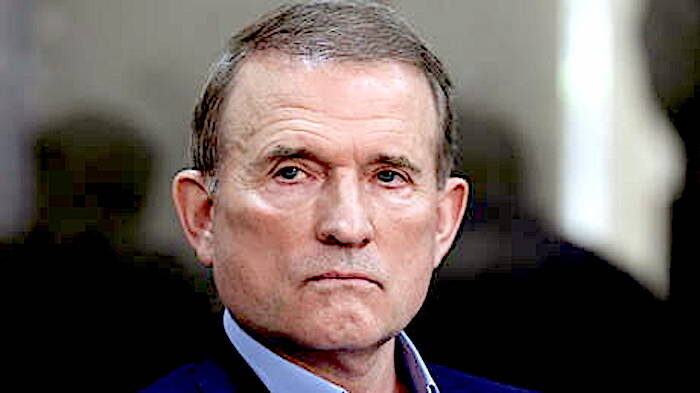
© Reuters/Serhii NuzhenenkoFILE PHOTO: Ukraine opposition leader Viktor Medvedchuk. The US and EU have a vested interest in the country, no matter how radical the government becomes, Viktor Medvedchuk said.
Ukrainian President Volodymyr Zelensky expressed his delight on Tuesday after Kiev's successor to the Soviet-era KGB arrested the country's most prominent opposition leader. The SBU is Ukraine's main intelligence and security agency, founded in 1991 to replace the KGB.

The President shared a photo of his handcuffed rival Viktor Medvedchuk on social media, with the caption:
"A special operation was carried out by the SBU. Well done! Details to follow."
Zelensky later said "I consider it especially cynical of him to use military camouflage," mocking Medvedchuk as trying to pose as a "warrior" and "patriot" and proposing to exchange the detained politician for Ukrainian prisoners of war held by Russia.

Medvedchuk heads the second largest party in the national parliament, the "Opposition Platform - For Life." He was previously placed under house arrest, last year, as part of Zelensky's clampdown on dissent, which was granted tacit approval by the regime's Western supporters.

Medvedchuk, who opposed the 2014 Kiev Maidan, and believes the country's Western turn to be detrimental to Ukraine's interests, has led his party since 2018. He previously served as Chief of Staff to former President Leonid Kuchma, in the early 2000s.

Comment: Ukraine has learned well from its US overlords: Deflect by accusation.
Opposition leader Viktor Medvedchuk should be swiftly tried, sentenced and physically assaulted before an attempt is made to swap him for Ukrainian soldiers captured by Russia, said an advisor to Ukraine's interior minister. President Volodymyr Zelensky suggested an exchange after announcing the politician's arrest on Tuesday.

Vadim Denisenko said of the arrested politician:
"At the very minimum, he has to make some confessions because he knows a lot about who in Russia gave how much and to whom to create a fifth column" in Ukraine. "At the maximum ... he needs to be tried swiftly, given a prison term, beaten into providing certain testimony and then exchanged."
Denisenko's remarks, particularly the implication that Medvedchuk could be coerced into cooperating by violence, were criticized by some Russian officials.

Dmitry Medvedev, the deputy chair of the Russian national security council, made a not-so-veiled threat by saying that people supporting such ideas
"should pay attention to their surroundings and keep the door locked for the night not to get added to the list of individuals eligible for a prisoner swap themselves."
Maria Zakharova, the spokesperson for the Russian foreign ministry, mocked the suggested sequence of events in Medvedchuk's prosecution plan:
"It's a British scheme: hold a swift trial, give a prison term, and then extract testimonies. Works every time."
Medvedchuk is reputed to have friendly connections in Moscow and served as an intermediary between the governments of Ukraine and Russia on several occasions since tensions escalated after the 2014 armed coup in Kiev. Among other things, he said he helped organize several prisoner swaps between Ukraine and rebel forces in the east.

He repeatedly rejected his characterization as a "pro-Russian" politician that Western and pro-government Ukrainian media routinely use. He said he represents his voters and defends their interests, which would be better served if Ukraine had good relations with its powerful neighbor.
UPDATE: 13/APR/2022 Kremlin rejects Kyiv's offer to swap Medvedchuk for captured troops:
Kremlin spokesman Dmitry Peskov told reporters on April 13:
"Medvedchuk is not a Russian citizen and has nothing to do with the special military operation [in Ukraine]. We do not know at all if he wants Russia's involvement in resolving this libelous situation he faces."
Peskov added that Russia will continue following the situation around Medvedchuk's arrest and the criminal cases launched against him, deemed politically motivated.

Medvedchuk, who owns energy assets in Russia, is one of Ukraine's wealthiest individuals with a fortune estimated in the hundreds of millions of dollars. On April 13, Britain imposed sanctions against Medvedchuk and several Russian citizens over Russia's invasion of Ukraine.


X

Macron won't join Biden's 'genocide' claim against Russia

MacronBiden
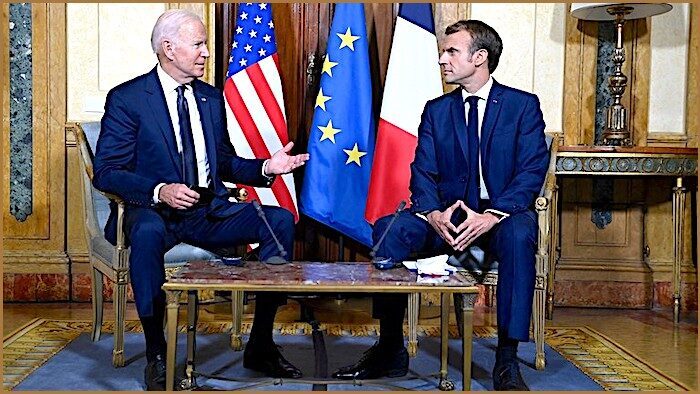
© AFP/Brendan SmialowskiFrench President Emmanuel Macron and US President Joe Biden.
French President Emmanuel Macron declined to join his US counterpart Joe Biden in describing the actions of the Russian military in Ukraine as "genocide." Verbal attacks would not help further peace in Ukraine, he said, in an interview with France 2 television on Wednesday.

Biden appeared on Tuesday to endorse Kiev's claims that the goal of the Russian attack was to exterminate the Ukrainian people. In a speech in Iowa, referring to Russia's President Vladimir Putin, Biden said:
"Your family budget, your ability to fill up your tank, none of it should hinge on whether a dictator declares war and commits genocide half a world away."
Biden had previously called the Russian leader a "war criminal" and stated that the man "cannot remain in power."

When asked about the characterization during the interview, Macron said he "would be careful with such terms" and said the peoples of Ukraine and Russia were "brothers."

Comment: The US emperor has no clothes.


Propaganda

Ray McGovern: Corporate media deploys the big guns on Ukraine

Miller
© unknownJudith Miller and "weapons of mass destruction in Iraq"
Judith Miller and AF General Philip Breedlove are back! At first I thought it a sickening flashback. Two nights ago, there were Judy Miller and former NATO commander Philip Breedlove on TV pontificating on Ukraine.

For younger readers, Judy was the NY Times Archdeacon blessing all those reports of "weapons of mass destruction in Iraq" (that weren't there) and ties between Iraq and al-Qaeda (that weren't there either).

As for Breedlove, as a sad sign of the times, he appears (via Radio Free Europe) on Reader Supporter News, with zero allusion to his pedigree on truth and falsehood (See: "FOCUS: Former NATO Commander Says Western Fears of Nuclear War Are Preventing a Proper Response to Putin.")

Breedlove's all-too-familiar, damn-the-torpedoes line on the need to confront Russia head-on in Ukraine brought back more sickening memories. For this is precisely what he tried to do - behind President Obama's back - when he was commander of NATO troops (2013-2016). It got so bad that we Veteran Intelligence Professionals for Sanity (VIPS) sought to warn German Chancellor Angela Merkel about Breedlove's checkered record for credibility in advance of a NATO summit in early July, 2014. We urged Merkel to temper Breedlove's distemper.

Stock Up

Russia's export windfall catapults key trade barometer to record

flag and charts
© Investopedia/Oilprice.com/KJN
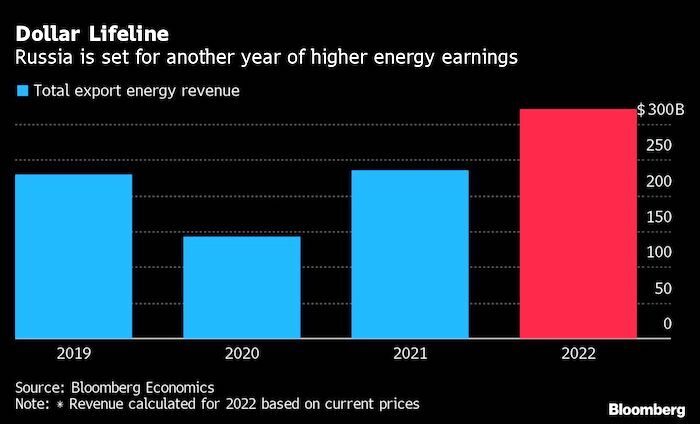
Russia recorded the largest current-account surplus since at least 1994, as revenues from oil and gas exports surged and imports plunged after the U.S. and its allies imposed sanctions over President Vladimir Putin's invasion of Ukraine. The proceeds have become a critical source of hard currency during the war, enabling authorities to pay for imports, support the economy and restore confidence in the ruble. The surplus in the current account, the broadest measure of trade and investment flows, reached $58.2 billion last quarter, more than double the $22.5 billion reported a year earlier, the Bank of Russia said Monday.
Chart
© Bloomberg
Sofya Donets, economist at Renaissance Capital in Moscow, estimates the surplus was at $19 billion in March, the first full month of the conflict with Ukraine. "The effect of sanctions had yet to manifest itself on exports in March," she said. While the sweeping sanctions are expected to trigger the deepest recession in decades, the restrictions so far don't extend to Russia's key energy exports, which have benefited after prices jumped since the invasion began on Feb. 24. Capital controls imposed to limit the drop in the ruble mean that investment outflows are all but cut off.

Bloomberg Economics expects Russia will earn nearly $321 billion from energy exports this year, an increase of more than a third from 2021. It's also on track for a current-account surplus that the Institute of International Finance says may reach as high as $240 billion.

Black Magic

Plots and counter-plots: Western skulduggery to realign Central Asia

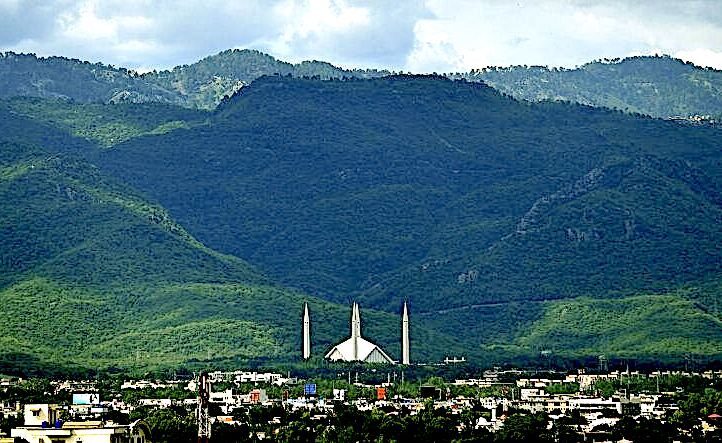
Faisal Mosque
© Ali Mujtaba /CC BY-SA 4.0Faisal Mosque, Islamabad, Pakistan.
Someone sure wants regime change in Kazakhstan and Pakistan. Someone sure aims to realign Central Asia from its current Russia-China tilt to a more western-friendly posture. And that someone may be willing to use violence and lawfare to get such results. Who on earth could it be? Answer that question correctly and you go to the head of the class - the class that never gets mentioned by the western propaganda machine, aka corporate media.

This malodorous silence, whiffling through our press and TV, means no focus, ever, on western machinations to engineer regime change. That skullduggery may be alluded to as the wild charges of some unreliable non-western politico, but that's it. They'll tell you that Pakistan's president, Imran Khan, who is not very friendly with Washington, faced a no-confidence vote and to get out of it precipitated a constitutional crisis and that Kazakhstan foiled a foreign agent's attempt to kill President Kassym Jomart Tokayev, but they're strangely reluctant to draw lines of causality between the likely shadowy culprits, and those who pull their strings, namely Washington's rulers.

Comment: See also:


Russian Flag

Who wins, who loses General Milley's long war?

Milley
© AP/Kevin WolfGeneral Mark Milley
Speaking of the seven-week war in Ukraine ignited by Vladimir Putin, Gen. Mark Milley, chairman of the Joint Chiefs of Staff, is warning us to expect a war that lasts for years. He told Congress:
"I do think this is a very protracted conflict ... measured in years. I don't know about a decade, but at least years, for sure."
As our first response, said Milley, we should build more military bases in Eastern Europe and begin to rotate U.S. troops in and out.

Yet this sounds like a prescription for a Cold War II that America ought to avert, not fight. For the territorial integrity and sovereignty of Ukraine, while a declared goal of U.S. policy, is not a vital U.S. interest to justify risking a calamitous war with Russia.

Proof of that political reality lies in political facts.

Comment: Hubris goes before a fall - and it won't be Russia.


Oil Well

No alternative to Russian oil - OPEC

Oil well
© grandriver/Getty ImagesRussian Oil
Sanctioning Russian energy could trigger catastrophe, cartel warns!

Current and future sanctions on Russia could spawn one of the worst oil supply shocks in history, OPEC secretary general Mohammed Barkindo warned EU officials on Monday, adding that it would be impossible to replace the volumes lost in such an event.

Some seven million barrels of Russian crude per day are leaving the world market as a result of embargoes and other restrictions on Russian trading, he explained.

The OPEC official also told the EU that the current volatility in the market is due to "non-fundamental factors" beyond OPEC's control and that it is the responsibility of the EU to promote a "realistic" approach to energy transition.

The bloc has announced it plans to join the US and UK in instituting an embargo on Russian energy products. However, unlike the US and UK, the EU imports a majority of its energy supplies from Russia, and experts have warned that attempting to cut off the supply could have catastrophic results. In particular, Germany is anticipating the collapse of entire industries, while the head of Austrian energy giant OMV has declared it would be "impossible" for his country to quit buying Russian gas.

Hourglass

NATO sanctions and the coming global diesel fuel disaster

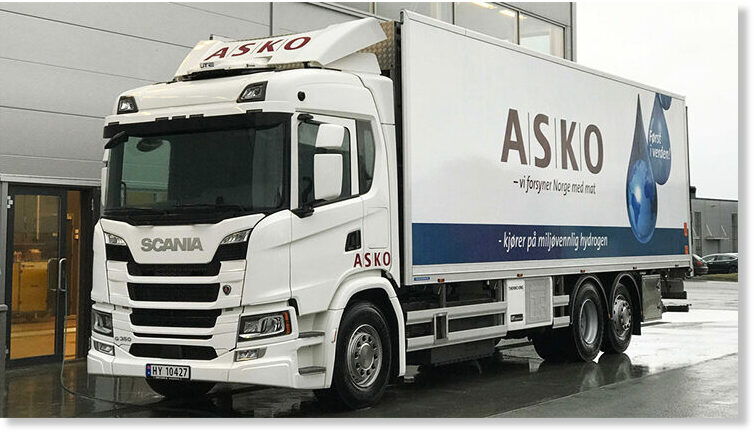
ASKO truck
Amid the ongoing global inflation crisis, NATO heads of state and mainstream media repeat a mantra that high energy prices are a direct result of Putin's actions in Ukraine since end of February. The reality is that it is the western sanctions that are responsible. Those sanctions including cutting SWIFT interbank access for key Russian banks and some of the most severe sanctions ever imposed, are hardly having an impact on the military actions in Ukraine. What many overlook is the fact that they are increasingly impacting the economies of the West, especially the EU and USA. A closer look at the state of the global supply of diesel fuel is alarming. But Western sanctions planners at the US Treasury and the EU know fully well what they are doing. And it bodes ill for the world economy.

While most of us rarely think about diesel fuel as anything other than a pollutant, in fact it is essential to the entire world economy in a way few energy sources are. The director general of Fuels Europe, part of the European Petroleum Refiners Association, stated recently, "... there is a clear link between diesel and GDP, because almost everything that goes into and out of a factory goes using diesel."

At the end of the first week of Russia's military action in Ukraine, with no sanctions yet specific to Russia's diesel fuel exports, the European diesel price was already at a thirty-year high. It had nothing to do with war. It had to do with the draconian global covid lockdowns since March 2020 and the simultaneous dis-investment by Wall Street and global financial firms in oil and gas companies, so-called Green Agenda or ESG. Almost on day one of Russian troop actions in Ukraine, two of the world's largest oil companies, BP and Shell, both British, stopped deliveries of diesel fuel to Germany claiming fear of supply shortages. Russia supplied some 60 to 70% of all EU diesel before the Ukraine war.