Puppet MastersS


Magic Hat

Former Clinton campaign lawyer Michael Sussmann acquitted in Trump Russia collusion case

michael sussmann
© Jose Luis MaganaAttorney Michael Sussmann
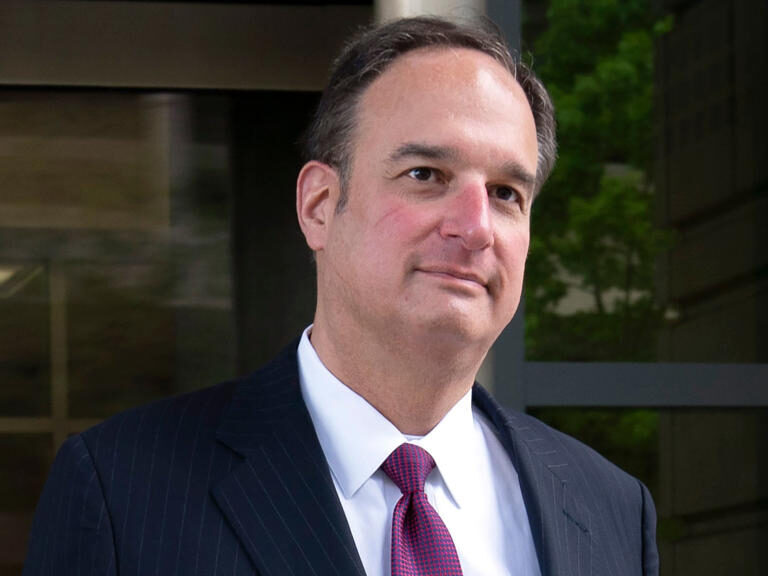
On Tuesday, a federal jury found former Hillary Clinton campaign lawyer Michael Sussmann not guilty of lying to the FBI.

According to the New York Post, the verdict came halfway through the second day of deliberations, following a two week trial.

Sussmann had been charged with one count of lying to the FBI in relations to his actions in 2016.

Comment: Disappointing, but unsurprising. It was a long-shot that anyone was actually going to be punished for their role in perpetrating the Russia hoax. The snakes in suits take care of their own.

See also:


Cross

More Catholic bishops vow to deny Nancy Pelosi Communion over abortion stance

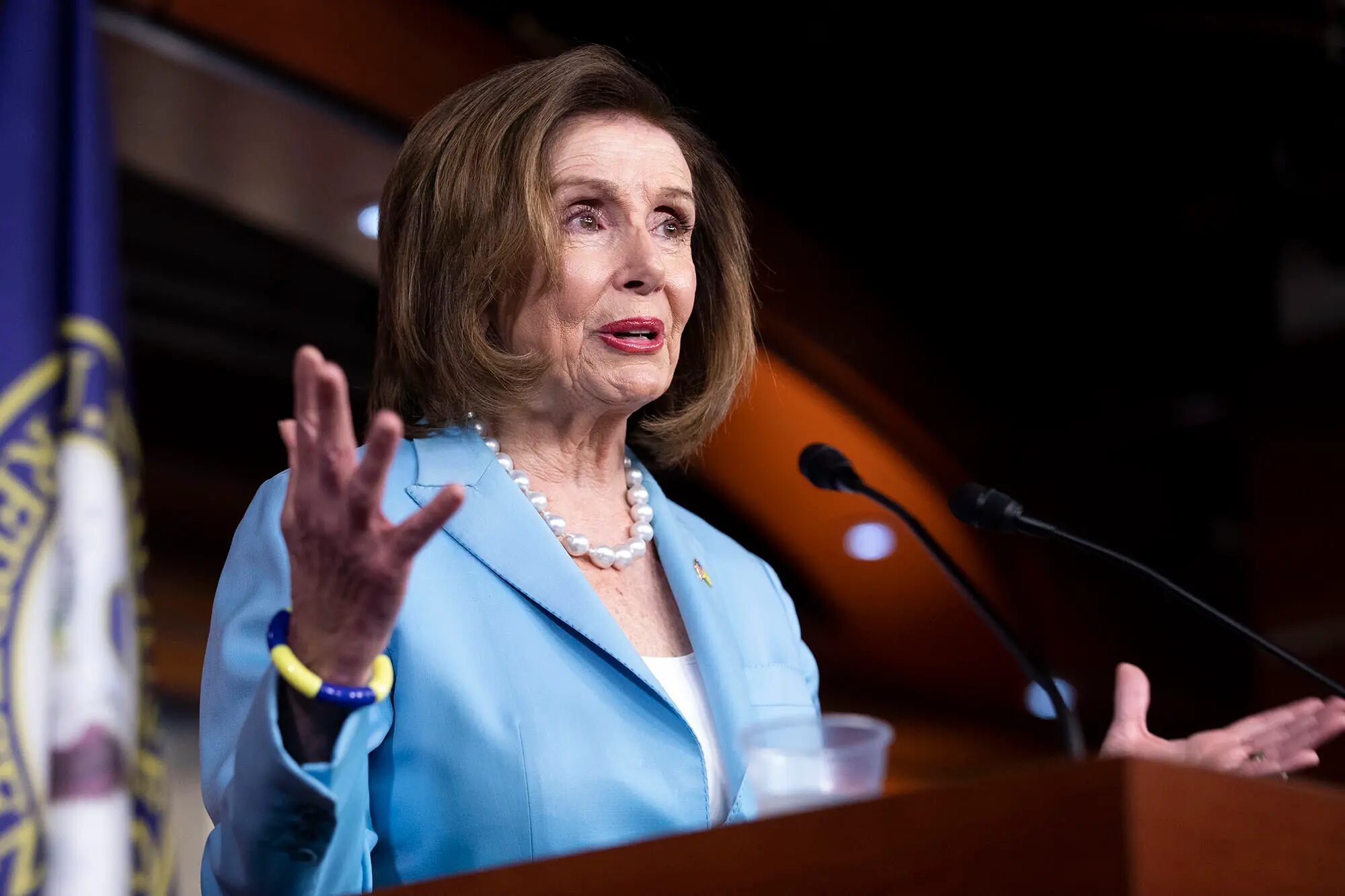
Nancy Pelosi
© EPA/MICHAEL REYNOLDSMore Catholic bishops have endorsed the San Francisco archbishop's decision to bar House Speaker Nancy Pelosi (D-Calif.) from receiving Communion.
A quartet of Roman Catholic bishops have endorsed the San Francisco archbishop's decision to bar House Speaker Nancy Pelosi (D-Calif.) from receiving Communion in her home diocese over her support for abortion.​

Archbishop Salvatore Cordileone earlier this month ​wrote to Pelosi, whose ​congressional ​district includes parts of the city, ​that she is banned ​from receiving the sacrament "until you publicly repudiate your advocacy for the legitimacy of abortion and confess and receive absolution of this grave sin in the sacrament of Penance."​

Cordileone's announcement was triggered by Pelosi's outspoken reaction when a draft Supreme Court opinion was leaked that suggested the justices were on the verge of striking down Roe v. Wade, the landmark 1973 ruling that legalized abortion across the nation.

Comment: See also:


Bizarro Earth

DHS 'concerned' over Nazis returning to US after fighting in Ukraine. Why isn't the media?

American neo-Nazi Paul Gray on Fox News
American neo-Nazi Paul Gray on Fox News in front of a wall featuring emblems of fascist militias like the Azov Battallion
US corporate media has provided glowing coverage to Paul Gray, a notorious American white nationalist fighting in Ukraine. A DHS document warns he's not the only US fascist drawn to Kiev.

As the United States undergoes a national mourning process over a spate of mass shootings, American white nationalists with documented histories of violence are attaining combat experience with advanced US-made weapons in a foreign proxy war.

That's according to the Department of Homeland Security, which has been gathering intelligence on Americans who have joined the ranks of the more than 20,000 foreign volunteers in Ukraine.

The FBI has indicted several American white nationalists associated with the Rise Above Movement after they trained with the neo-Nazi Azov Battaliion and its civilian wing, the National Corps, in Kiev. But that was almost four years ago. Today, federal law enforcement has no idea how many US neo-Nazis are participating in the war in Ukraine, or what they are doing there.

But one thing is for certain: the Biden administration is allowing the Ukrainian government to recruit Americans - including violent extremists - at its embassy in Washington DC and at consulates across the country. As this report will show, at least one notorious extremist fighting in Ukraine has received extensive promotion from mainstream media, while another who is currently wanted for violent crimes committed in the US was mysteriously able to evade FBI investigators looking into war crimes he previously committed in Eastern Ukraine.

According to a Customs and Border Patrol document released thanks to a May 2022 Freedom of Information Act request by a nonprofit called Property of the People, federal authorities are concerned about RMVE-WS's, or "racially-motivated violent extremists - white supremacy" returning to the US armed with new tactics learned on the Ukrainian battlefield.
"Ukrainian nationalist groups including the Azov Movement are actively recruiting racially or ethnically motivated violent extremist white supremacists to join various neo-Nazi volunteer battalions in the war against Russia," the document states. "RMVE-WS individuals in the United States and Europe announced intentions to join the conflict and are organizing entry to Ukraine via the Polish border."
The document, which was drafted by Customs and Border Protections, the Office of Intelligence, and other Homeland Security sub-agencies, contains write-ups of interviews conducted by law enforcement with Americans en route to Ukraine to fight Russia.

Comment: See also:


Arrow Down

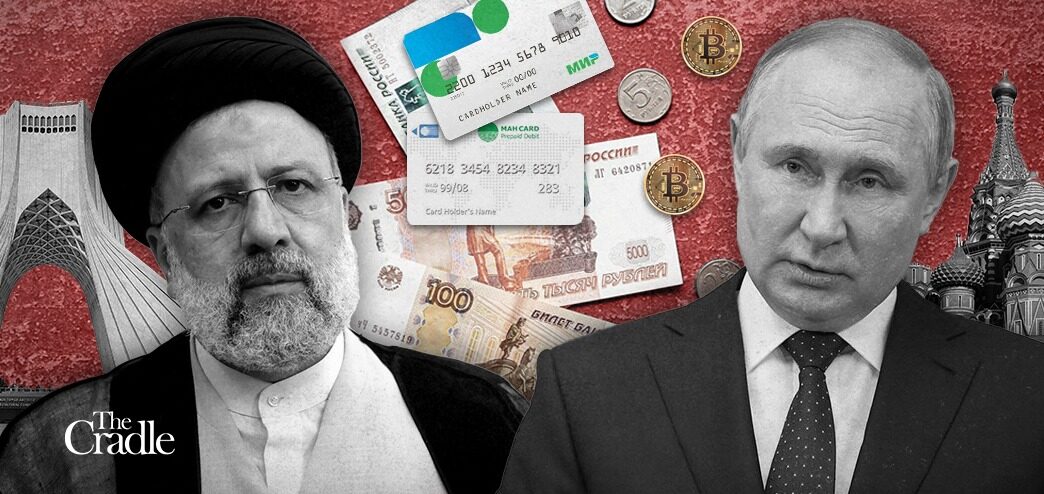
The Sanctioned Ones: How Iran-Russia are setting new rules

While China, keen to ward off US sanctions as long as possible, is lagging, its RIC partners Iran and Russia are doing the legwork to break the west's global financial grip.
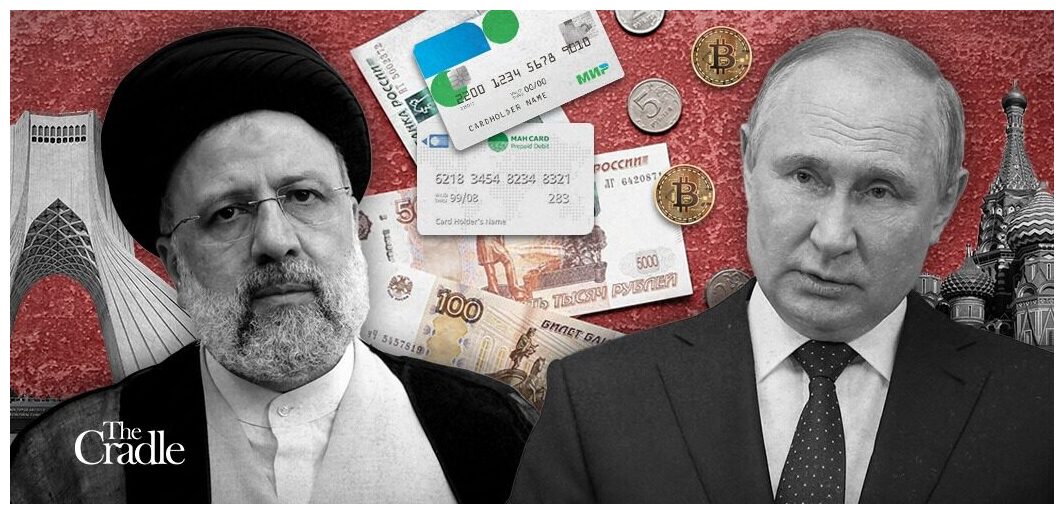
Iran & Russia
© The CradleIran and Russia are taking the lead in establishing alternative financial networks to bypass western sanctions.
The first Eurasia Economic Forum, held last week in Bishkek, Kyrgyzstan, should be regarded as a milestone in setting the parameters for the geoeconomic integration of the Eurasian heartland.

Sergei Glazyev, Russia's Minister in Charge of Integration and Macroeconomics of the Eurasia Economic Union (EAEU), is coordinating the drive to design an alternative monetary-financial system - a de facto post-Bretton Woods III - in cooperation with China.

According to Glazyev, the forum "discussed the model of a new global settlement currency pegged to baskets of national currencies and commodities. The introduction of this currency instrument in Eurasia will entail the collapse of the dollar system and the final undermining of the US military and political power. It is necessary to start negotiations on signing an appropriate international treaty within the framework of the SCO."

Glazyev described the initiative to upend the western global financial system in more detail during an exclusive interview with The Cradle in April.

It's particularly relevant to understand how Glazyev interconnects the EAEU's drive with the increasing geopolitical and geoeconomic role of the Shanghai Cooperation Organization (SCO), which unites at the same table key Eurasian powers: China, Russia, India, Pakistan, Kazakhstan and Iran.

That connects directly with Russian President Vladimir Putin, at the meeting of the Supreme Eurasian Economic Council, supporting the extension of a temporary free trade agreement between the EAEU and Iran, which is the newest (and only West Asian) full member of the SCO. Putin said this should go ahead despite the "confrontation by the collective West."

The EAEU, inaugurated in 2015 with five full members - Russia, Kazakhstan, Kyrgyzstan, Belarus and Armenia - represents a market of 184 million people and a collective GDP of over $5 trillion. The next step with Iran will be to implement a full free trade agreement, possibly before the end of the year, according to Iranian deputy trade minister Alireza Peymanpak. Egypt, Indonesia and the UAE are also candidates to strike deals with the EAEU.

Iran, which has for over four decades now been forced to find creative solutions to bypass serial, imperial sanction packages, may have a conceptual lesson or two to teach Russia. Barter arrangements are gaining ground: Tehran is offering spare parts and gas turbines to Moscow's power plants in exchange for much needed zinc, aluminum, lead and steel for its metal and mining industries, according to Iranian trade and industries minister Reza Fatemi Amin.

And more barter on a wide range of commodities is ahead, as discussed during a recent visit to Tehran by Russian Deputy Prime Minister Alexander Novak.

Quenelle

Chinese diplomacy in South Pacific upends US-Australian security plans

china solomon island pacific
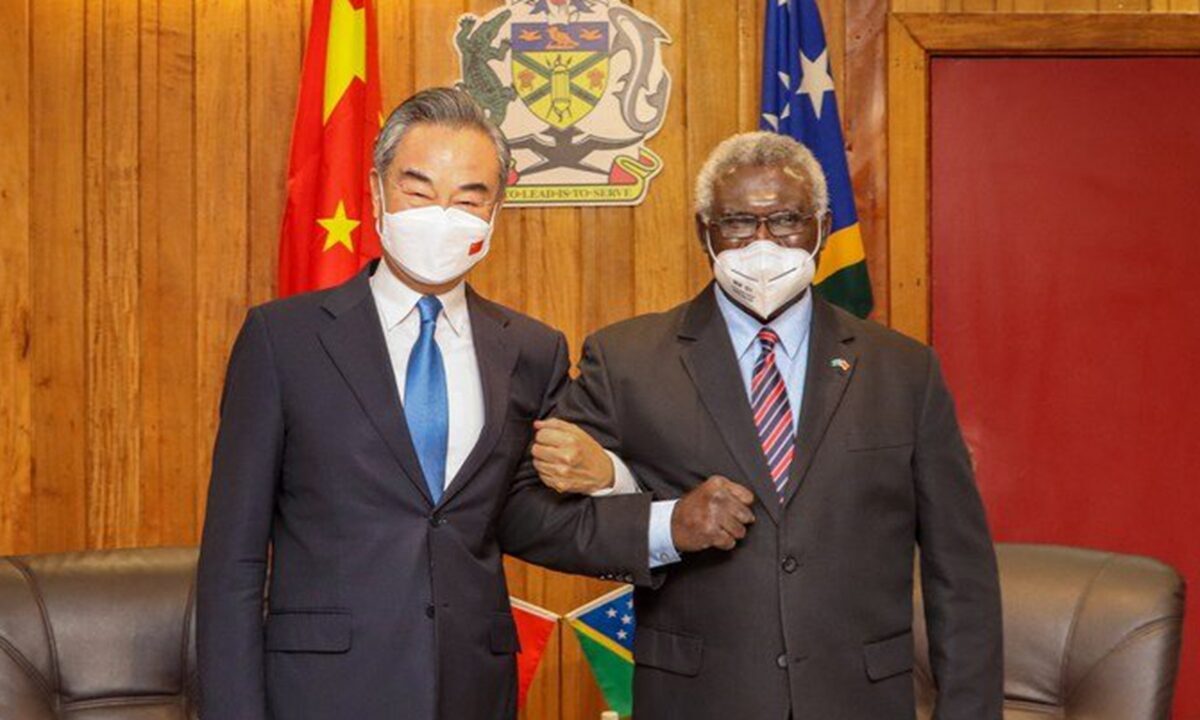
© Courtesy of Chinese Ministry of Foreign AffairsChinese State Councilor and Foreign Minister Wang Yi (left) holds arms with Solomon Islands Prime Minister Manasseh Sogavare after arriving in Solomon Islands for a visit on May 26, 2022.
The visit by Chinese Foreign Minister Wang Yi to the Solomon Islands on May 26, part of a 10-day tour of the South Pacific, including Kiribati, Samoa, Fiji, Tonga, Vanuatu, Papua New Guinea, and East Timor, has stoked western fears about growing Chinese influence in the region. Upon his arrival to the capital Honiara, the Chinese Foreign Minister is expected to sign cooperation agreements with the Solomon Islands.

The Chinese Foreign Minister's diplomatic swing through the South Pacific is viewed by the US and Australia as part of a concerted effort from Beijing to upend a developing strategy intended to contain China's newly solidified presence in the South China Sea. This strategy builds on the concept of an enhanced US presence in East Asia that uses existing bases in Guam, Tinian, and Wake Island to expand the Washington's military presence in Australia, Papua New Guinea, and the Federated States of Micronesia.

Comment: See also: China to sign a pact with 10 Pacific island nations on matters of security, policing, data and trade


Quenelle

Russia cuts off gas to Netherlands following non-payment

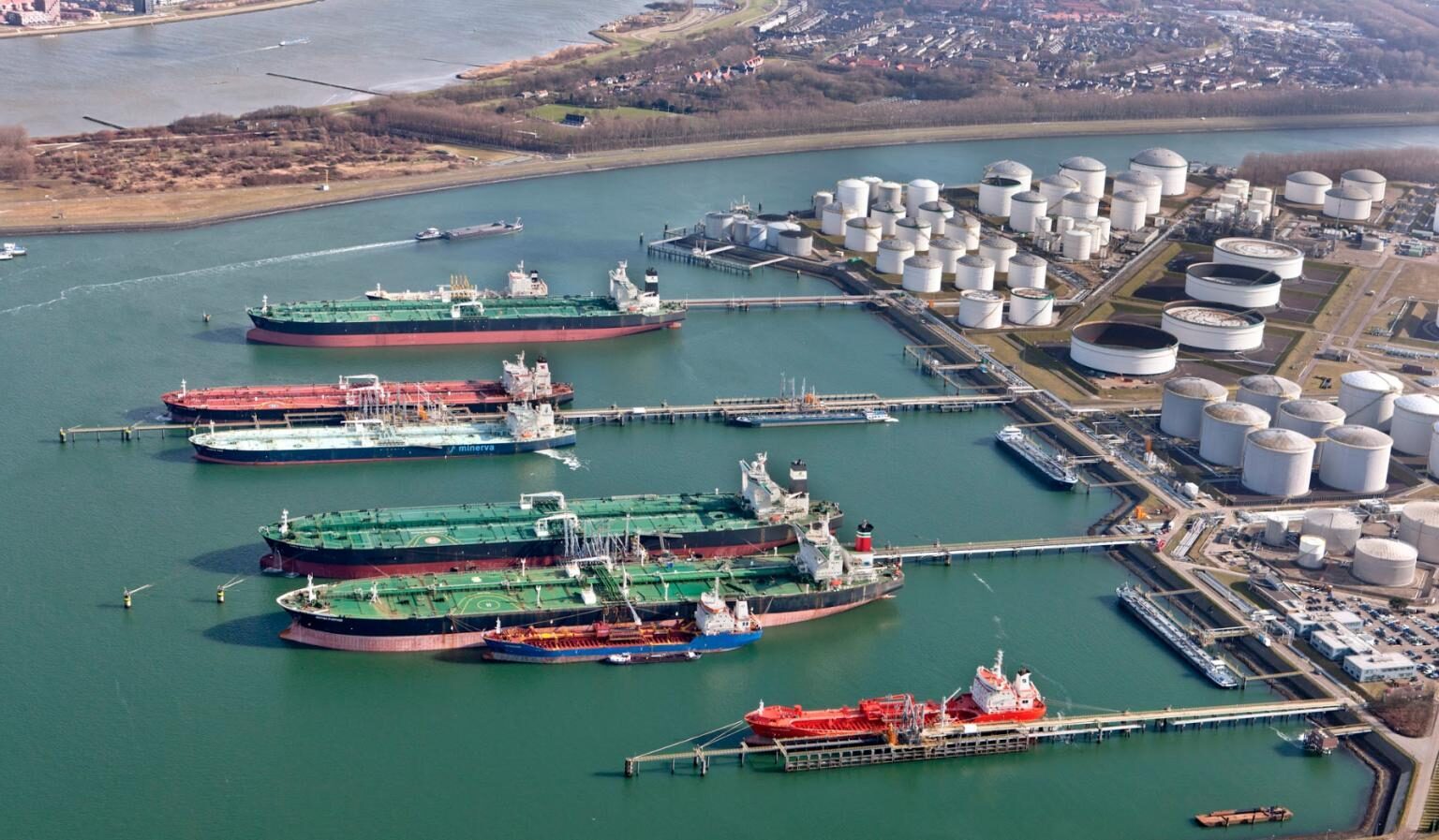
Rotterdam LNG terminal
The Netherlands has become the fourth country to stop receiving Russian natural gas, following its decision not to pay for deliveries in rubles. Russia's energy giant Gazprom announced on Tuesday that it had "completely stopped gas supplies" to the Dutch state energy wholesaler GasTerra.

"As of the end of the business day on May 30, Gazprom Export had not received payment for gas supplies in April from GasTerra B.V.," the Russian company explained in a statement.

GasTerra earlier said it had taken measures to make up for the gas shortfall.

Bizarro Earth

Germany reveals massive 100 billion euro military expansion plans

army germany military
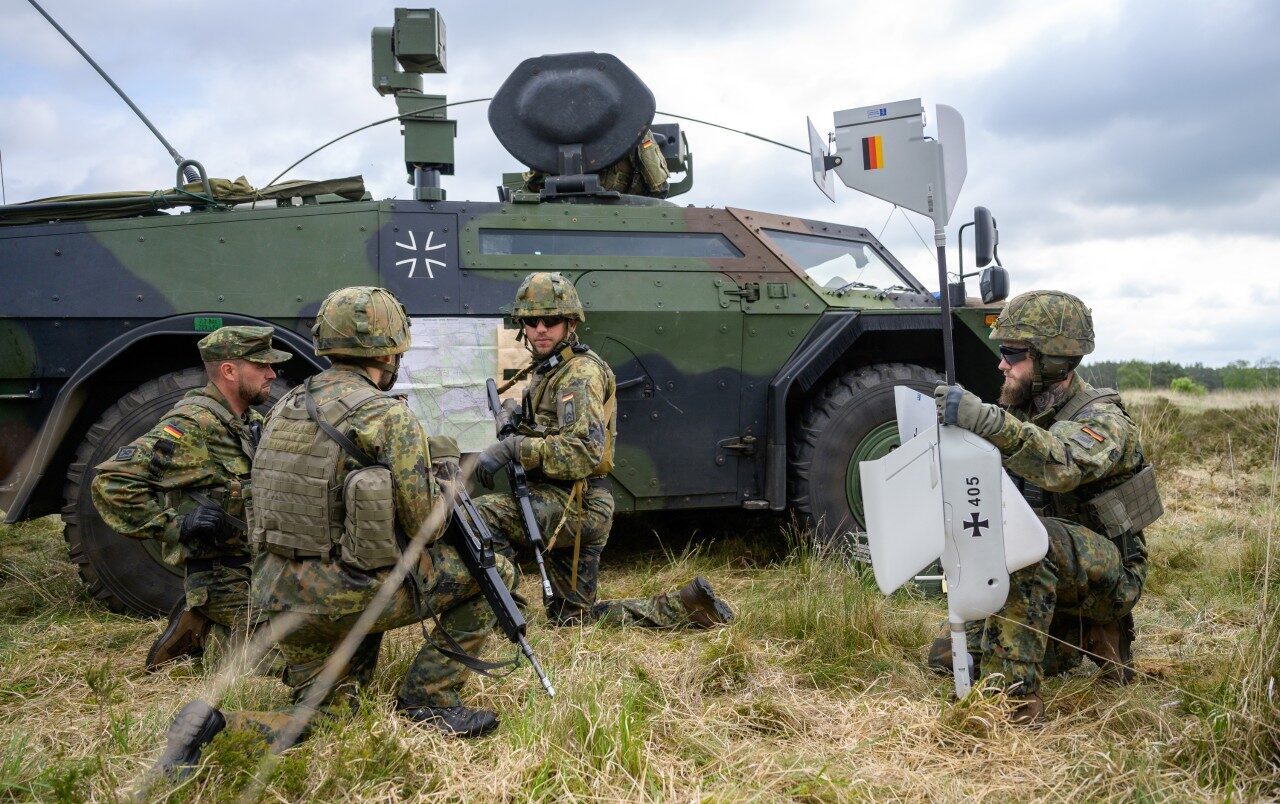
© Philipp Schulze / dpa via GettyFILE PHOTO. Soldiers of the German Armed Forces.
Germany's plan to invest a whopping 100 billion euro ($107.35 billion) into its military will allow Berlin to significantly expand its fighting force, Chancellor Olaf Scholz told local media on Monday. This will make the German army the biggest in Europe among NATO members, he said.

The pledge, which the Chancellor made in an interview with several domestic newspapers, came after the country's major parliamentary factions agreed, on Sunday night, to a special exemption required to borrow the money and invest it in the military.

The ruling coalition needed the support of opposition lawmakers to secure two thirds of the votes to adopt the decision, which requires an amendment of Germany's Basic Law. The actual vote is expected to take place before the summer recess of the parliament.

Oil Well

The US hasn't built a major oil refinery in nearly 50 years. Here's why

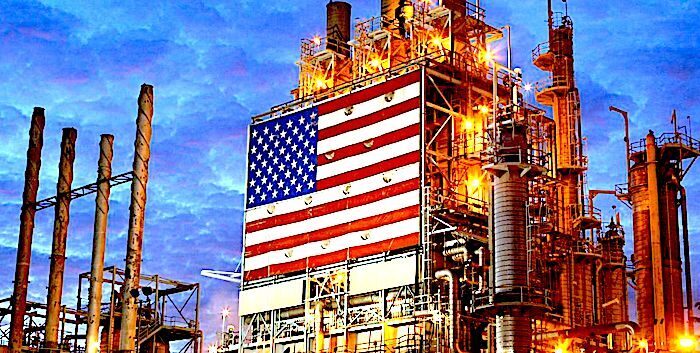
Oil refinery
© David McNew/Getty Images
The U.S. hasn't constructed a major petroleum refinery since 1977 even as fuel demand and domestic oil production have surged in recent decades.

Major refinery operators have largely opted to upgrade facilities rather than construct new greenfield plants because of the projected fuel demand decline in coming years and lengthy regulatory process required for such projects, according to industry experts. There have been 14 small refineries, each processing 4,100-46,250 barrels of oil a day, constructed since Marathon Oil opened its 200,000-barrel-per-day facility in Garyville, Louisiana, in 1977.

Geoff Moody, the vice president of government relations at the American Fuel & Petrochemical Manufacturers (AFPM), told The Daily Caller News Foundation in an interview:
"The COVID pandemic really drove down gasoline and diesel demand which accelerated some things that were already happening. There was already some contraction happening in the industry as a result of projected declines in U.S. gasoline demand into the future and companies just deciding that the assets were better used as other projects or shut down completely. Some of its been very policy-driven and companies decided that it wasn't worth it to keep operating those assets."
The U.S. and other western nations have accelerated plans for a global green transition away from fossil fuels even as prices have skyrocketed to record levels this year. AFPM and other industry groups have urged the Biden administration to focus on long-term solutions, like boosting domestic oil production and shoring up refining capacity, amid the current energy crisis.


Comment: Biden's long term solution is to not have one.


Comment: Oil refining: a calculated victim of 'COVID' and the Greenies. The entire fuel industry: a calculated victim of Joe Biden.


Windsock

WH supply chain advisor is a WEF climate change activist who worked at Hunter Biden's think tank

Cremens
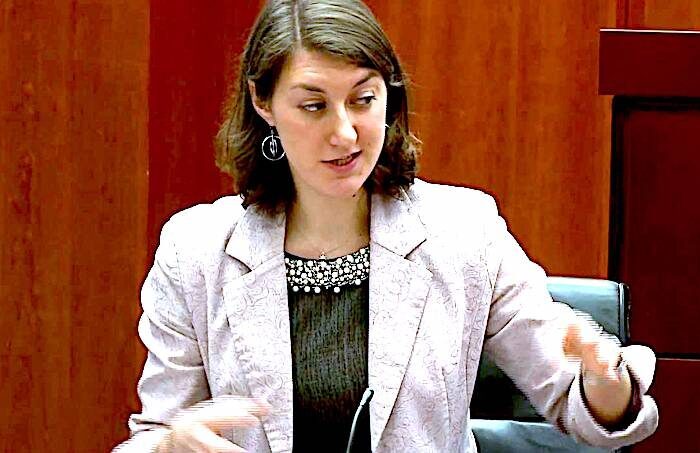
© YouTube/ScreenshotBetty Cremens
A leading advisor to President Joe Biden on supply chains is an alum of several World Economic Forum climate change initiatives, who additionally served as a former fellow at a think tank chaired by Hunter Biden.

Betty Cremmins, whose LinkedIn profile reveals she's held the position of Director for Sustainable Supply Chains at the White House, since February 2022, has overseen the U.S. government's ongoing supply chain issues, exacerbated by policies that mandated vaccines for many American workers and truckers.

Prior to taking over the White House's supply chain initiative, Cremmins was a National Security Fellow and Climate Affiliate Group Co-Lead at the Truman National Security Project. The Washington, D.C.-based, left-leaning foreign policy network has featured Biden's son Hunter Biden on its board since 2011.

Archived versions of the organization's website reveal that Biden ascended to the role of vice-chairman of the board, serving there until at least March 2019 and, therefore, overlapping with Cremmins's fellowship.

Arrow Up

Hungary's Orban wins exemption in EU Russian oil embargo

Orban
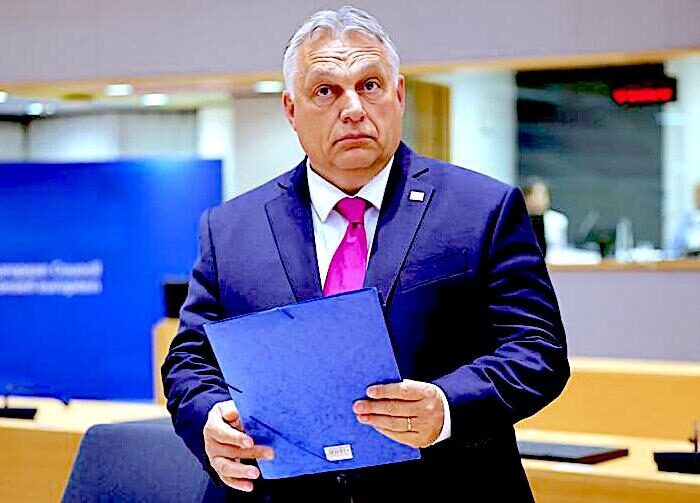
© AP NewsPrime Minister of Hungary Viktor Orban
Hungary's divisive leader has once again got his own way with the European Union — this time in tough negotiations on Russian oil at a summit in Brussels.

And nationalist Prime Minister Viktor Orban wasn't shy about trumpeting his success in leveraging the bloc to win significant concessions, allowing his country to continue purchasing Russian crude even as war rages on in neighboring Ukraine.

The European Commission's "proposal to ban the use of Russian oil in Hungary was defeated," Orban said in a video statement on Facebook. "Families can sleep well tonight as the most outrageous idea has been averted."

EU leaders concluded four weeks of negotiations on Monday to impose a partial embargo on Russian oil imports.

The package of sanctions, the sixth imposed by the EU since the start of the war in February, had been delayed by vigorous opposition from Orban — widely seen as the Kremlin's closest EU ally — who threatened to derail the block's efforts to punish Moscow for its war if they affected energy imports to Hungary.