Puppet MastersS


Russian Flag

Fyodor Lukyanov: Russia's role in the global economic order has turned out to be more significant than the West believed

Rigs at sea
© Sputnik/Vitally Ankov
Western sanctions against Russia are speeding up the end of globalization as we've known it. A new economic order awaits.

After weeks of intensive negotiations, the European Union has agreed on a sixth package of sanctions against Moscow. Its main element is the cessation, by the end of this year, of oil imports from Russia delivered to the bloc's market by sea.

According to President of the European Commission Ursula von der Leyen, this will reduce Russian supplies to the EU by 90%, with the remaining 10% lined up for the chop in the future.

The percentage share is a debatable issue, but the assessment of the head of the European Council, Charles Michel, who announced the ban on two-thirds of Russian raw materials, looks more realistic. For Russia, the main thing so far is not quantity, but quality. Pipeline routes, unlike maritime routes, cannot be redirected elsewhere; a ban would have meant decommissioning the Druzhba pipeline and losing this delivery method. This did not happen due to the persistence of Hungary, which was secretly supported by several other countries.

As for tankers, the global oil market is unified, and until a global trade embargo is imposed against Russia (which is almost impossible), goods will be sent to other consumers, mainly those in Asia.

Briefcase

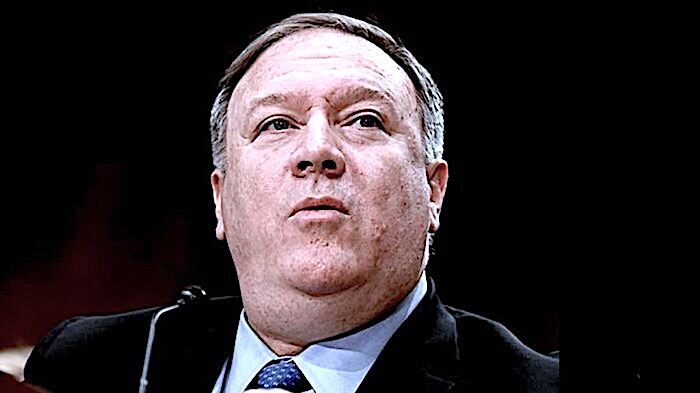
Ex-CIA director called to testify on US plot to kill Assange

Pompeo
© Erin Scott/ReutersFormer CIA Director and former US Secretary of State Mike Pompeo
A Spanish court has summoned former CIA Director Mike Pompeo as a witness to testify about whether the US government planned to abduct or even assassinate WikiLeaks founder Julian Assange, ABC has reported on Friday citing its sources.
The report read:
"The judge of the National Court Santiago Pedraz has agreed to summon as a witness Mike Pompeo, former US Secretary of State and former CIA director, to explain whether the intelligence agency and the US government with Donald Trump at its helm drew up a plan in 2017 to kidnap and assassinate the founder of WikiLeaks."
According to the outlet's sources, Pompeo has been summoned to appear as a witness this June, although he may give testimony via video link. Pedraz made the decision after prosecutor Carlos Bautista supported the request made by Assange's lawyer Aitor Martinez.

In September 2021, Yahoo News broke a story alleging that the CIA plotted to kidnap the WikiLeaks founder, a plan that sparked fierce debates within the Trump administration over the legality and practicality of such an operation. Moreover, senior US officials reportedly went so far as to request "sketches" or "options" on how to assassinate Assange.

Comment: See also:


Arrow Up

French inflation hits another record, feeding rate debate

shoppers
© UknownComparing prices as food costs rise
French inflation accelerated to another all-time high, heaping pressure on the European Central Bank to lift interest rates more aggressively after strong readings in Germany and Spain.

Consumer prices in the euro area's second-largest economy jumped 5.8% from a year ago in May -- matching the median estimate of economists surveyed by Bloomberg -- as surging energy and food costs continued to filter through to other goods and services.

With data this week from Germany and Spain already exceeding expectations, the French figures suggest an overshoot when the the euro zone reports inflation numbers later Tuesday. Meanwhile, fears of stagflation will be fueled by a separate report out of Paris showing the French economy contracted 0.2% in the first quarter from the previous three months. That's a downward revision from an initial reading of no growth.

The slew of economic statistics comes just over a week before ECB officials meet to decide on when to conclude crisis-era measures including unprecedented asset purchases and eight years of negative interest rates.

Comment: Pay more for less? Such a plan!
Inflation in France has peaked, but is expected to stay at a high level for several more months before progressively decreasing, according to the country's Finance Minister Bruno Le Maire. The rate reached 5.2% in May.

"By end-2023, we should see a progressive decline of inflation. We could have an inflation around 2% towards end-2023," Le Maire told France Inter radio on Wednesday, adding that he did not foresee a recession.

The current forecast suggests the economy will grow by 4% in 2022, he said, adding that the French government will present revised economic growth forecasts by early July.

The country's economy saw an unexpected decline in the first quarter of the current year as consumers struggled to cope with soaring inflation that reached a record-high of 5.2% over 12 months in May, data released this week showed.

"If the monetary policy does not change, we will not bring down inflation to a more reasonable level of around 2%," Le Maire said, stressing that it was the responsibility of the European Central Bank to take progressive action to bring down inflation.

Inflation in the eurozone in May is projected to hit 8.1% versus 7.4% recorded in April.


Colosseum

Failure of Russia sanctions expose fractures in the US and EU

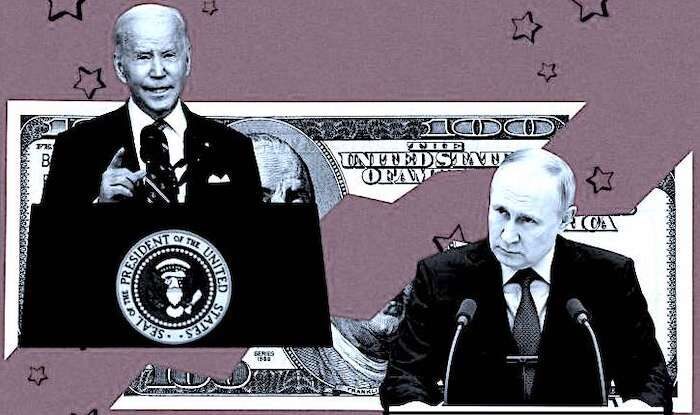
BidenPutin
© Money/Getty Images/KJNRussian Sanctions...US Inflation
Biden administration officials are divided over how much further the US can push sanctions against Russia without sparking global economic instability and fracturing transatlantic unity.

While President Joe Biden's team rallied behind behind a sanctions plan it rolled out just after Russia's invasion of Ukraine, the debate is more heated now that President Vladimir Putin has shrugged off the early economic penalties and is forging ahead with his war, according to officials familiar with the discussions.


Comment: Putin enjoys an approval rating that Western leaders could only dream of, and the West's blatant designs on destroying have only served to strengthen their support. It's because of Putin's handling of the country, despite the relentless attacks he has suffered over the last two decades, that Russia is able to withstand the current all out assault.


Pirates

A new generation of US-trained extremists is fighting Russia. Are we prepared for the blowback?

Militants
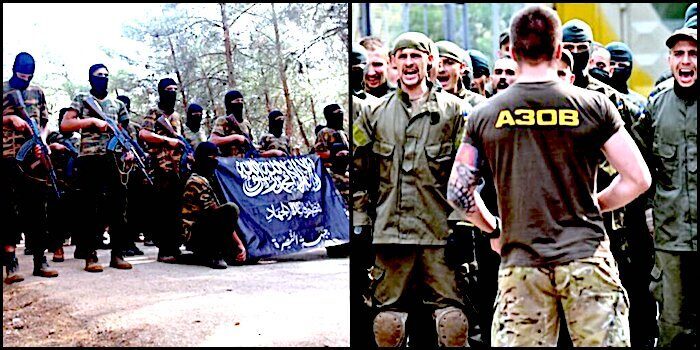
© Collage Maker/UnknownJihadis and the Nazis
US agencies have directly and indirectly trained and empowered Nazis and ultra-nationalists at home and abroad to fight Russians in Ukraine. This program follows the blueprint established by Western intelligence agencies in Afghanistan and Syria.

From 1978 (not '79 as many believe), the administration of Jimmy Carter decided to "draw the Russians into the Afghan trap," in the words of the President's National Security Advisor, Zbigniew Brzezinski. US intelligence called on its British counterparts to activate networks of Afghan fighters. New generations of extremists joined the fight. Aid, arms, and training poured into Afghanistan. Support increased following the Soviet invasion in December 1979.

Throughout the 1980s, tens of thousands of jihadis from dozens of Muslim-majority countries were flown into the US, Britain, and Pakistan to receive training from the CIA, Green Berets, US Marines, and British SAS and MI6. The foreign extremists later rebranded themselves "al-Qaeda" and launched a series of spectacularly bloody attacks on strategically significant targets that provided justification for a global "war on terror" that continues to serve as ideological cover for contemporary US hegemony.

Comment: The exposure of multiple and various rotating extremist networks - connected, supported and layered by US government and intel agencies cast a dark shadow on the future. They are programmed tools - and alarmingly good at what they do.


Gold Coins

Seizing Russian assets to help Ukraine sets off White House debate

Sloviansk
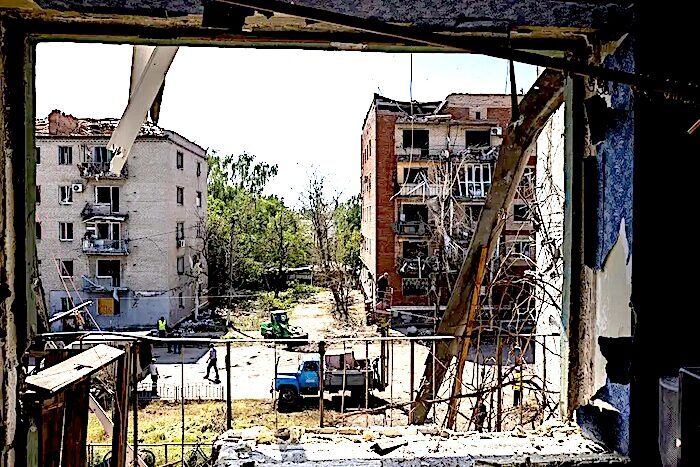
© Ivor Prickett/New York TimesResidential area in Slobiansk, Ukraine
The devastation in Ukraine brought on by Russia's war has leaders around the world calling for seizing more than $300 billion of Russian central bank assets and handing the funds to Ukraine to help rebuild the country.

But the movement, which has gained momentum in parts of Europe, has run into resistance in the United States. Top Biden administration officials warned that diverting those funds could be illegal and discourage other countries from relying on the United States as a haven for investment.

The cost to rebuild Ukraine is expected to be significant. Its president, Volodymyr Zelensky, estimated this month that it could be $600 billion after months of artillery, missile and tank attacks — meaning that even if all of Russia's central bank assets abroad were seized, they would cover only half the costs.

In a joint statement last week, finance ministers from Estonia, Latvia, Lithuania and Slovakia urged the European Union to create a way to fund the rebuilding of cities and towns in Ukraine with frozen Russian central bank assets, so that Russia can be "held accountable for its actions and pay for the damage caused."

Comment: Why should Russia rebuild Ukraine? How many other countries have contributed to this scenario - and continue to do so with no responsibility for their collective actions. The cost is directly applicable to Ukraine and secondarily the responsibility of NATO. Without the continual influx of Western armaments, funding, war equipment and jihadis, the accumulated destruction could have been minimal in comparison. The West thinks it can direct from the sidelines and have no repercussions nor accountability while going for the Russian jugular.


Target

Turkey says Syria military operation to target Tal Rifat, Manbij

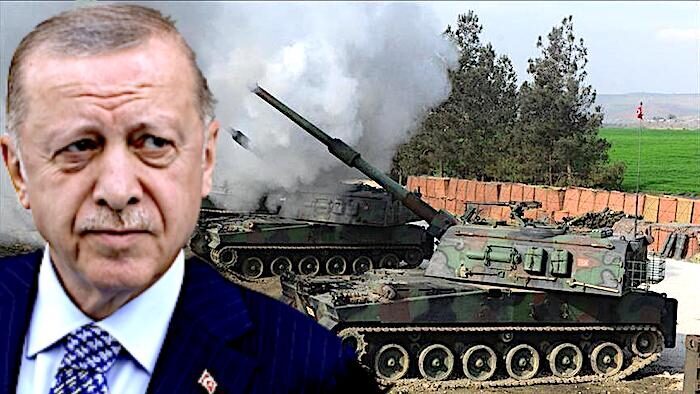
erdogan/artillery
© Burhan Ozbilici/AP/KJNTurkish President Recep Tayyip Erdogan • Turkish army hits YPG/PKK targets in Tal Rifat
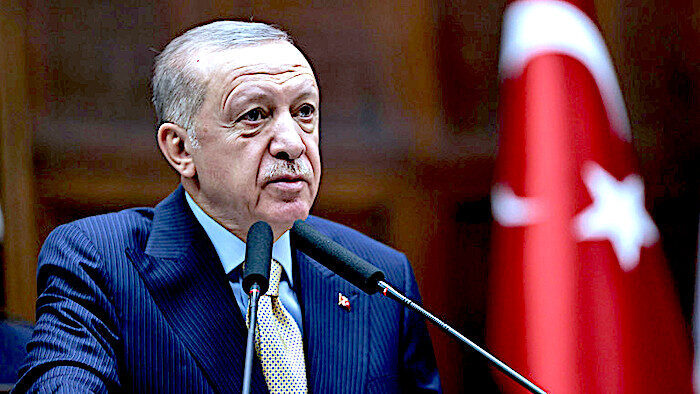
President Recep Tayyip Erdogan has said Turkey will target Kurdish armed groups in two northern Syrian cities in an upcoming military operation.

"We are taking another step in establishing a 30-kilometre security zone along our southern border. We will clean up Tal Rifat and Manbij of terrorists", he told a meeting of his ruling party in parliament. Erdogan said Turkish forces would then proceed, "step by step, into other regions".

The two cities, lying west of the Euphrates River, are controlled by the Syrian Kurdish armed group, the People's Protection Units (YPG). Ankara considers the YPG a "terrorist" group and says it is linked to domestic armed fighters belonging to the Kurdistan Workers' Party (PKK), which Turkey has also designated as a "terrorist" organisation. The PKK has waged an armed uprising against Turkey since 1984, and tens of thousands of people have died in the conflict.

The Turkish government has accused the YPG of attacking Turkish security forces in Syria. "We will see who supports the legitimate security operations carried out by Turkey and who tries to oppose them," said Erdogan.

X

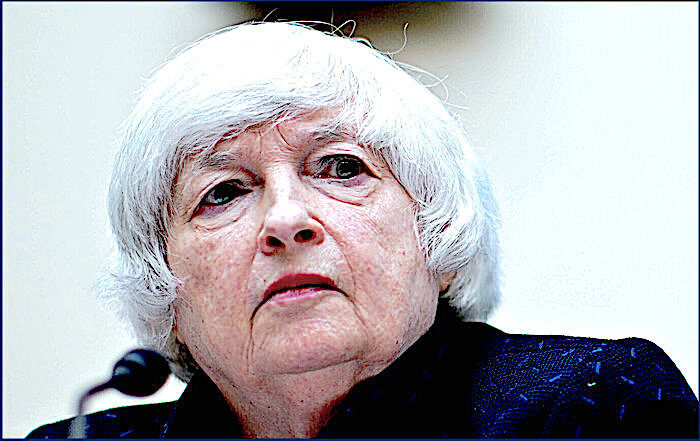
US Treasury Secretary Yellen admits being wrong about inflation in March 2021

Yellen
© Al DragoTreasury Secretary Janet L. Yellen
The Republicans strongly opposed a new COVID relief bill proposed in March 2021, criticising it for excessive spending and risks of exacerbating inflation following several rounds of relief distribution conducted in 2020. Already in November, the Treasury registered decades-high levels of inflation in the country. US Treasury Secretary Janet Yellen has admitted to being wrong in her assessments of inflation trends in March 2021, when she predicted that the spike in the inflation was short-term and prompted by the economic recovery after the pandemic and lockdowns.

In an interview with CNN, Yellen said:
"I was wrong about the path inflation would take. There have been unanticipated and large shocks to the economy that have boosted energy and food prices and supply bottlenecks that have affected our economy badly that at the time I didn't fully understand. But we recognise that now."
The Treasury spokesperson later clarified that the shocks that Yellen referred to and could not anticipate were the emergence of new COVID variants, coronavirus lockdowns in China and Russia's special military operation in Ukraine. Yellen herself said that dealing with inflation is currently the priority rather than anything else. The spokesperson also noted economic growth (which often accompanies inflation, unless it's "stagflation") and high rates of job creation witnessed in the US recently as positive signs. The goal for the Treasury right now is to achieve steady growth and slow down the inflation.

Comment: Wrong once, could be again. Inflation doesn't occur overnight, nor does it quickly leave. Consequences are the aim. Excuses buy time.


Pirates

Turkey accuses NATO members of supporting terrorism

Erdogan
© Emin Sansar/Anadolu Agency/Getty ImagesFILE PHOTO: Turkish President Recep Tayyip Erdogan
Finland and Sweden aren't the only countries in Europe that support terrorists, Turkish President Recep Tayyip Erdogan has claimed during an address to parliament on Wednesday.

The Turkish leader accused France, Germany and the Netherlands of aiding organizations that are deemed by Ankara to be terrorists, such as the Kurdistan Worker's Party (PKK) and FETO, which is suspected of attempting a coup in Turkey in 2016.

Commenting on the possibility of Finland and Sweden joining NATO, Erdogan stated that the bloc is "a security organization, not a support for terrorist organizations," adding that there are other NATO members guilty of aiding extremists.

"They protect these terrorist organizations together with the police of Sweden, Finland, Germany, France and the Netherlands," said Erdogan, apparently referring to the recent PKK 'Long March' demonstrations that have been taking place in those countries.

Comment: Myopically, Erdogan overlooks the obvious...the West's long history of creating, fostering and funding terrorism. That said, his opposition to Norway and Sweden NATO admittance might be their salvation.

See also:


Arrow Up

Ukraine more than doubles interest rates as it fights economic crisis

Shevchenko
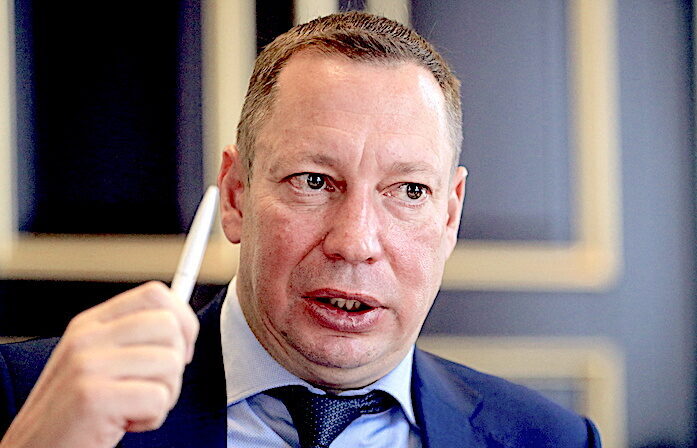
© Valentyn Ogirenko/ReutersUkraine's central bank governor Kyrylo Shevchenko
Central bank moves to stem double-digit inflation and protect currency, taking borrowing to highest level since 2015

Ukraine more than doubled interest rates to 25% on Thursday in a move to try to stem double-digit inflation and protect its currency, which has collapsed since Russia's invasion.

In the first interest rates intervention since Vladimir Putin's troops attacked on 24 February, the Ukrainian central bank's governor, Kyrylo Shevchenko, increased the benchmark interest rate from 10% to 25%. It takes borrowing costs to their highest level since September 2015 - when Ukraine's economy was reeling from Russia's annexation of Crimea - and the highest in Europe.

The Russian invasion has devastated Ukraine's economy, which the World Bank has forecast could shrink by at least a third this year. The war has forced businesses to close, destroyed infrastructure, blocked shipping routes and reduced whole towns to rubble.


Comment: This was a choice made by Ukraine that didn't have to happen.