Puppet MastersS


Fire

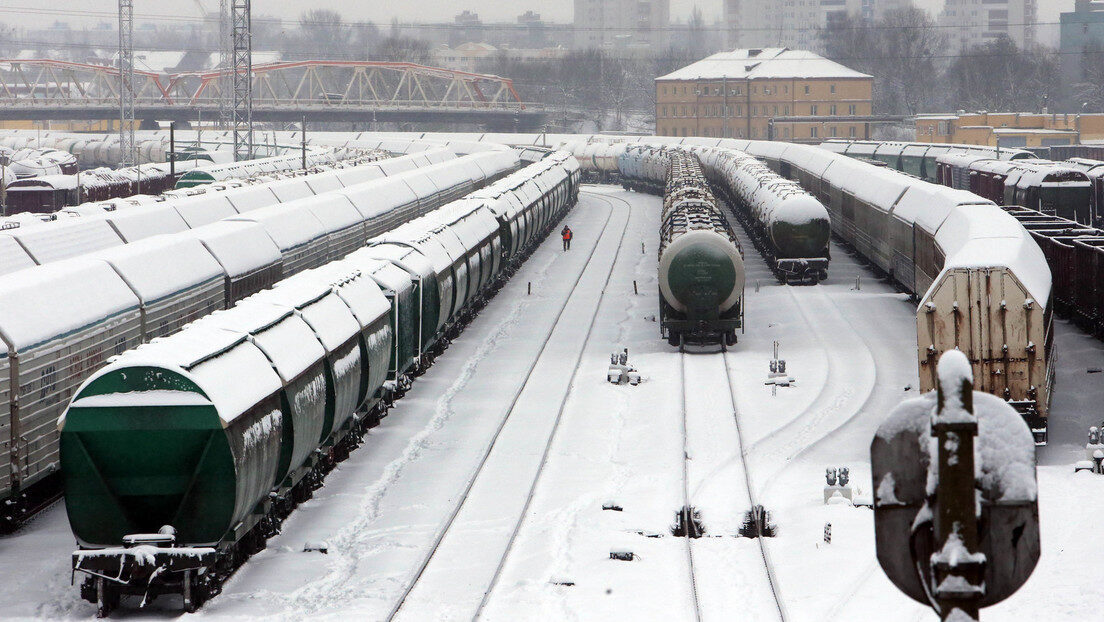
Fire at Russian oil refinery after Ukrainian attack

oil refinery blzaze
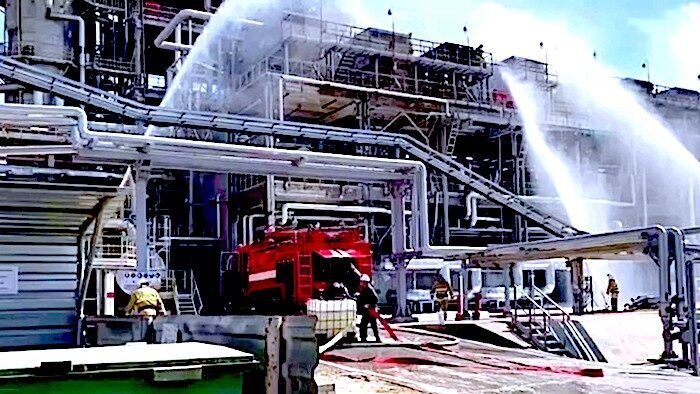
© RIA-NovostiFirefighters tackling the blaze at the Novoshakhtinsky oil refinery in Russia’s Rostov region.
A fire broke out at an oil refinery in southern Russia's Rostov Region on Wednesday after it was hit by a Ukrainian drone.

The blaze occurred at the Novoshakhtinsky oil refinery, affecting an area of around 50 square meters, and was quickly put out, the emergency services said. There were no injuries or fatalities, they added. The Novoshakhtinsk oil refinery has issued a statement, saying it had been the subject of "terrorist activities from the western side of the border of Rostov Region" where Ukraine is located.

"A strike by two unmanned aerial vehicles has been carried out against the technological installations" of the oil refinery, the company said. The first drone attack took place at 8:40am local time, with the aircraft striking the technological equipment of an oil refining unit. It caused the release of hydrocarbon gas, with a subsequent explosion and fire.

The second strike followed around 40 minutes later. However, the drone missed the oil tanks that had been targeted. There was no explosion as it hit the ground, but some equipment was still damaged by debris from the UAV, according to the company.

Unconfirmed footage uploaded on social media captured a UAV approaching the oil facility and smashing into it at full speed. The impact led to a large explosion, with the blaze starting immediately.

Comment: War has no limit on revenge. To the indiscriminate, all targets are fair play.
Ukraine used a Turkish-made Bayraktar TB2 strike drone and anti-ship missiles to attack Russian offshore gas rigs in the Black Sea on Monday, Moscow has claimed.

The attacks against non-military infrastructure, which left three people injured and seven missing, were done out of spite over a failed assault on Snake Island earlier in the day, the defense ministry insisted.

According to the Russian report, Ukrainian forces launched a "new crazy attempt" to recapture the island from Russia early on Monday morning. Kiev deployed over 15 UAVs, Tochka-U tactical ballistic missiles, Uragan rocket artillery, and US-provided M777 howitzers to set the stage for an amphibious assault. Ukrainian S-300 anti-aircraft systems provided additional support for the operation.
Russian air defenses protecting Snake Island thwarted Ukrainian plans by destroying 13 drones, four missiles, and 21 rocket artillery projectiles, the defense ministry said. Ukraine canceled the amphibious assault as a result, it claimed.
"After confirming that the attempt to capture the island failed, the Kiev regime launched another gamble by targeting the objects of the Russian gas extraction infrastructure in the northwestern part of the Black Sea."
Two offshore gas rigs were attacked by anti ship missiles and a Bayraktar TB-2 drone. A fire broke out on one of them.

On Monday, Russian officials reported evacuating dozens of civilian workers from offshore rigs operated by Crimea-based state-owned firm Chernomorneftegaz. It was done in response to what they called a Ukrainian attack, which left three people injured and seven missing.

The Russian military said on Tuesday that it had retaliated against Ukrainian forces involved in Monday's operation. The reported targets included "hangars with Ukrainian Bayraktar TB-2 UAVs" and M777 guns stationed on Kubansky Island, which constitutes part of a natural resort in the delta of the Danube River on the border with Romania.


Light Sabers

Russia's global GDP growth gamble versus the West

Russia unfriendly countries
'Unfriendly' countries may have 30% more GDP, but their projected 5 year performance is far worse than Russia's allies

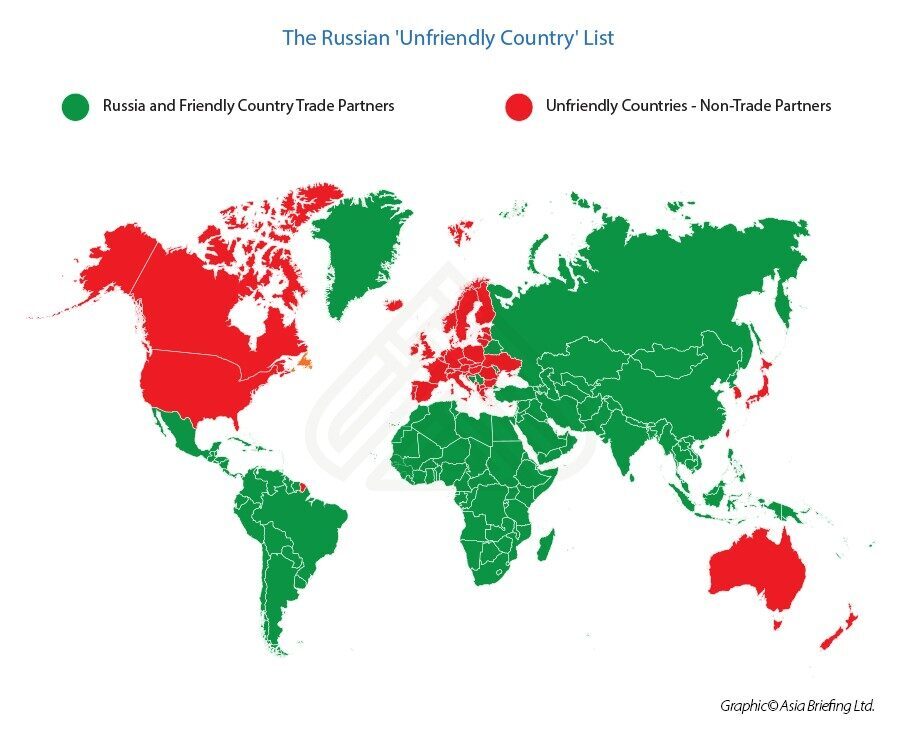
Russia began publishing a list of 'unfriendly countries' from May 2021, which was significantly expanded in March 2022. In the map attached, we can see that most of what is collectively known as 'the West" is included in the shape of the United States, Canada, the European Union and United Kingdom, in addition to Asian nations such as Australia and New Zealand, Japan, South Korea and Singapore. A few other countries also make the list. These are all marked in red.

Russia, and the Rest of the World, or what Moscow considers to be 'friendly' countries, is marked in green.

To get a sense of perspective about the potential for the 'Friendly vs UnFriendly' Countries, and their respective GDP growth, I have taken basic data from the IMF, as stated in their most recent forecast for global growth in 2023. This data was extracted in May this year and includes adjustments for the impact of the Ukraine conflict. The basic data read as follows and is based on nominal figures:

Comment: As noted in the article, the numbers above are predicated on the continuation of a relatively stable global situation, however numerous world leaders have already warned of a looming global famine which, to some extent, appears to be largely unavoidable, and if European nations continue to pursue their belligerent agenda then it's likely that they'll have to contend with significant fuel shortages as well.

Even so, recent developments have shown that the rising economies see their future in cooperation with Russia and China, and the West's escalation against the two nations have only served to catalyze much of the world's pivot to the east:


Broom

EU member Bulgaria ousts pro-NATO government in no-confidence vote

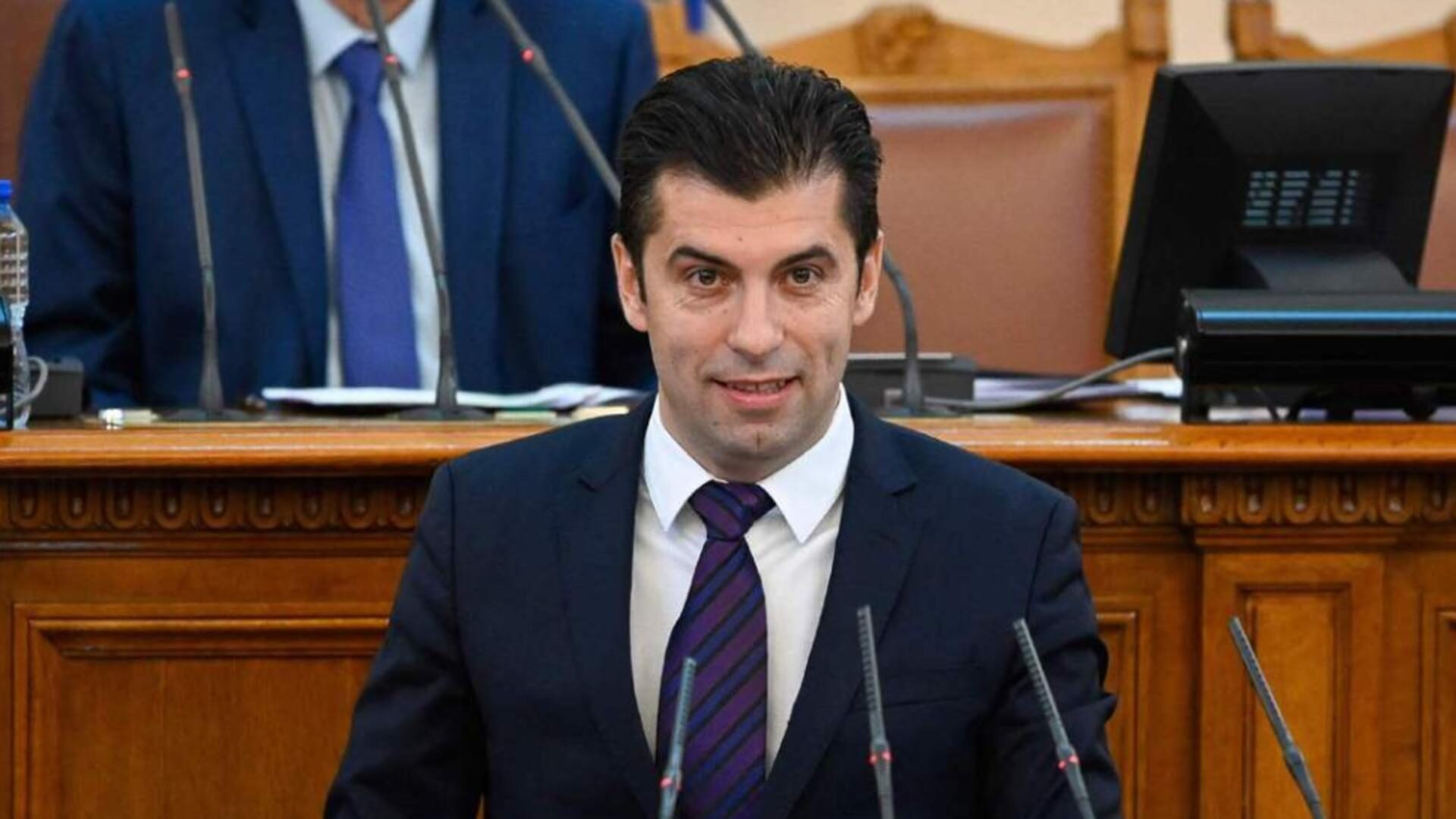
Kiril Petkov
Prime Minister Kiril Petkov (C) reacts after a no-confidence vote in the Bulgarian Parliament in Sofia, June 22, 2022.
Bulgarian Prime Minister Kiril Petkov lost a no-confidence vote in the parliament on Wednesday, after a junior partner in his tenuous ruling coalition joined the opposition. The Harvard graduate and former Canadian citizen denounced his critics as Russian agents beholden to organized crime and vowed to continue fighting to make Bulgaria, what he called, a "normal European country."

Of the 239 members in the parliament in Sofia, 123 voted for Petkov's ouster in what Bulgarian state media described as the first successful no-confidence vote in the country's modern history. Only 116 backed the PM, with no abstentions.

After the vote, Petkov accused the main opposition party, Revival, of being a conduit for "Russian interests" and said it had been his honor to lead a government that sought to root out corruption and organized crime.

Comment: The loss of yet another vassal government is also likely to result in the EU hastening its reform of its 'unanimous' voting procedure: European Parliament drafts 'veto overhaul' following Hungary's possible dissent to not sanction Russia

Notably, possibly as a sign of just how some of the world's supposed leading democracies are doing, the UK's PM barely survived a no-confidence motion, and Israel just dissolved its parliament following the collapse of its ruling coalition.


Pistol

Senate advances bipartisan gun safety bill

mitch mcconnell
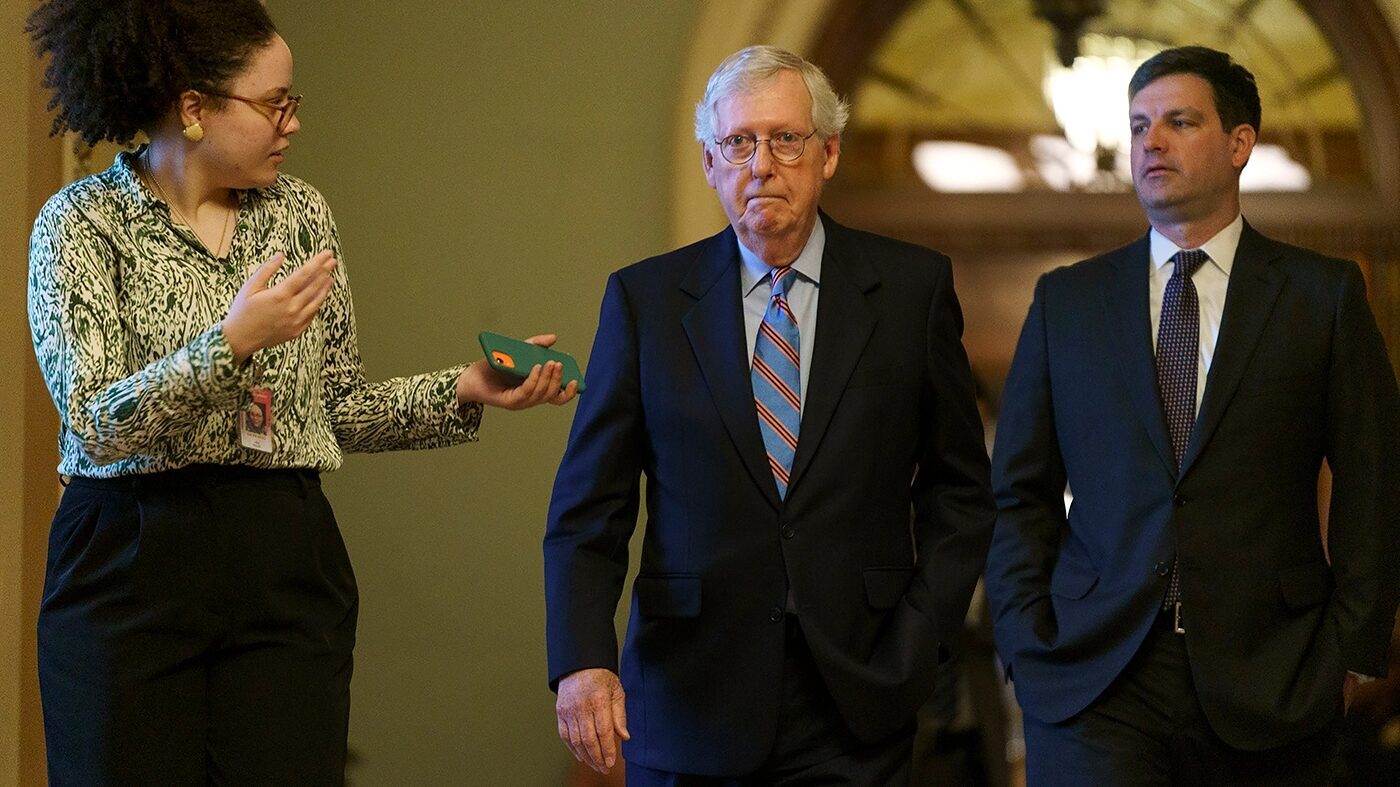
© Greg NashMinority Leader Mitch McConnell (R-Ky.) returns to his office after speaking on the Senate Floor on Tuesday, June 14, 2022.
The Senate voted 64 to 34 Tuesday evening to advance an 80-page gun safety bill to strengthen background check requirements for gun buyers under 21, provide funding to states to administer red flag laws and provide billions of dollars in new federal funding for mental health services.

Fourteen Republicans voted to proceed to the bill, including Senate Minority Leader Mitch McConnell (R-Ky.), who announced his support for the legislation moments before the vote.

"Our colleagues have put together a commonsense package of popular steps that will help make these horrifying incidents less likely while fully upholding the Second Amendment rights of law-abiding citizens," McConnell said, referring to the recent mass shootings in Buffalo, N.Y., and Uvalde, Texas.

Comment: What's most often missed in gun control bills (possibly deliberately) is any impediments put in place for legal gun owners do absolutely nothing to curb illegal gun purchases. Criminals will get their guns via criminal means, regardless of how many hoops law abiding citizens have to jump through.

See also:


Info

Mexican President Andres Manuel Lopez Obrador says his country would 'open its doors to Julian Assange'

julian assange
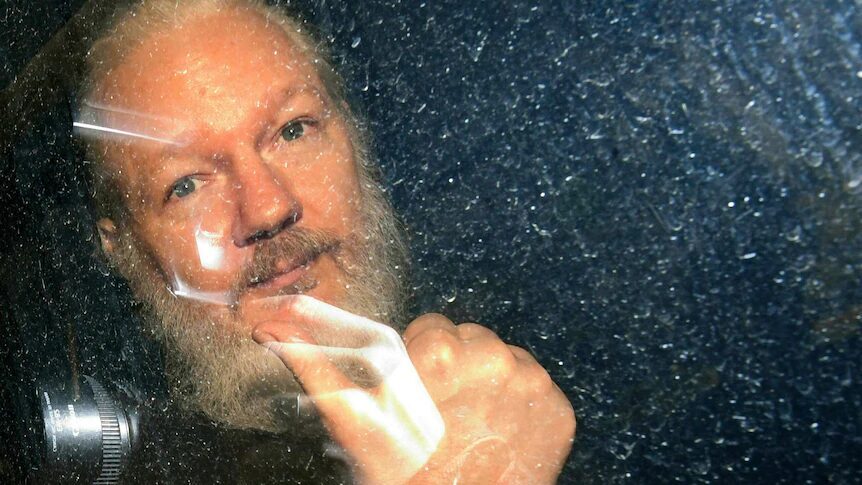
© Victoria Jones via APJulian Assange is "the best journalist of our time", according to Mexico's President.
Mexico's President says he will ask US President Joe Biden to address WikiLeaks founder Julian Assange's case when the two men meet in July.

Andres Manuel Lopez Obrador raised Mr Assange's case at a regular news conference on Tuesday, saying his country would open its doors to the Australian if he was released.

On Friday British Home Secretary Priti Patel approved the WikiLeaks founder's extradition to the United States to face criminal charges.

Comment: See also:


Gold Coins

BRICS developing global reserve currency - Putin

Coins
© Getty Images / Jorg Greuel
It will be based on a currency basket of the five-nation bloc, according to the Russian president.

President Vladimir Putin said on Wednesday that the BRICS countries - Brazil, Russia, India, China, and South Africa - are currently working on setting up a new global reserve currency.
"The issue of creating an international reserve currency based on a basket of currencies of our countries is being worked out," he said at the BRICS business forum.

Comment: See also:


Pirates

Lithuania ready to expand Kaliningrad blockade says president

Kaliningrad
© Sputnik Igor SaremboFILE PHOTO: Kaliningrad. The country is prepared to face retaliatory steps by Russia, Gitanas Nauseda has said.
Vilnius is ready to expand the list of goods banned from transit to Russia's exclave of Kaliningrad should the European Union introduce new sanctions against Moscow, Lithuanian President Gitanas Nauseda said on Wednesday. The country is also ready to face any potential retaliatory measures Russia might introduce, he told Reuters in an interview.

"We are ready and we are prepared for unfriendly actions from Russia, such as disconnection from the BRELL [power grid] system, or others," Nauseda said.

The president stressed that the transit restrictions were not a sovereign move by Lithuania, but merely the implementation of the EU sanctions against Moscow introduced over the ongoing conflict in Ukraine.

"We feel the support of the European Union, because this is a decision made by the European Union," he said, adding that the country was ready to expand the list of banned goods should the bloc introduce new restrictions against Russia.

Comment: It seems the EU in league with the US are resorting to ever more desperate measures as they lose their war on Russia in Ukraine; are they hoping they can cause the war to spillover into neighbouring countries?


Eye 1

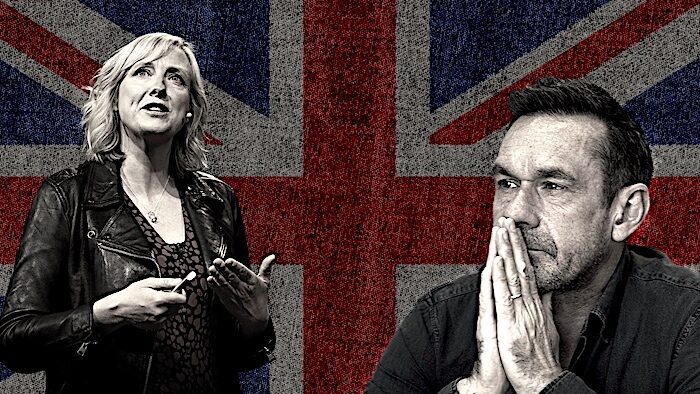
British 'watchdog' journalists unmask as lap dogs for the security state

Brit flag
© MintPress News
Events of the past few days suggest British journalism - the so-called Fourth Estate - is not what it purports to be: a watchdog monitoring the centers of state power. It is quite the opposite.

The pretensions of the establishment media took a severe battering this month as the defamation trial of Guardian columnist Carole Cadwalladr reached its conclusion and the hacked emails of Paul Mason, a long-time stalwart of the BBC, Channel 4 and the Guardian, were published online.

Both of these celebrated journalists have found themselves outed as recruits - in their differing ways - to a covert information war being waged by Western intelligence agencies.

Had they been honest about it, that collusion might not matter so much. After all, few journalists are as neutral or as dispassionate as the profession likes to pretend. But as have many of their colleagues, Cadwalladr and Mason have broken what should be a core principle of journalism: transparency.

Eiffel Tower

France just had a major political shake-up

Macron
© AFP/Benoit TessierFrench President Emmanuel Macron
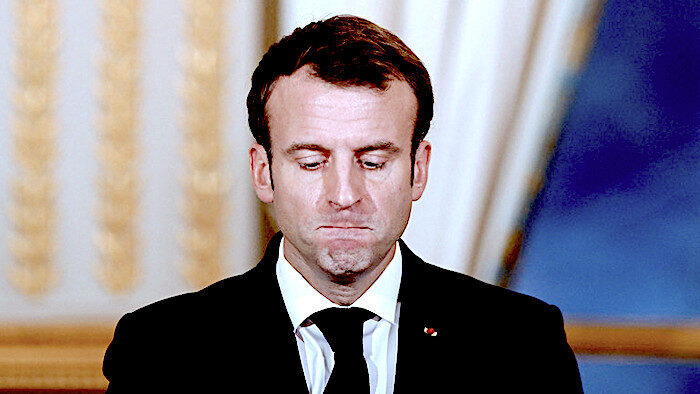
If French President Emmanuel Macron thought that his re-election this past May against right-wing populist challenger Marine Le Pen was a license to keep forging ahead with a globalist agenda, it turns out that he badly miscalculated. While French voters may have been reluctant to hand executive control over to Le Pen, they seized the opportunity to recalibrate the balance of power away from Macron's globalist establishment status quo with last weekend's parliamentary elections.

Although Macron's centrist Together coalition retained the most seats among the parties elected to the National Assembly on Sunday, the president lost the absolute majority which had allowed him to freely ram through his agenda into law. Until now, whatever Macron wanted or telegraphed - whether it was Covid jab mandates and digital passes or censorship under the guise of 'national security' - his party simply converted into law. And there was nothing that opponents could do about it other than complain hopelessly.

Until now.

Comment: The political shake-up was inevitable.


Clipboard

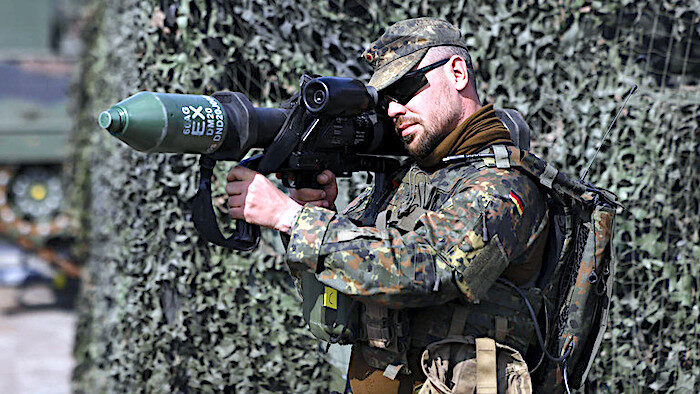
Germany gives full breakdown of military aid for Ukraine

soldier weapon
© Global Look Press/Christoph Hardt
Germany has for the first time made public the exact numbers and types of weapons, ammunition, and other military aid it has already delivered or is preparing to deliver to Ukraine.

Released on Tuesday on the German government's official website, the data is prefaced by a short clarification. The note states that the list includes both "contributions from the stockpiles of the German military," as well as the weapons purchased directly from German manufacturers and paid for by Berlin.

The statement also details that in 2022, a total of €2 billion will be earmarked from Germany's budget for these shipments, and to fund the country's contributions to the European Peace Facility (EPF), which is the EU's "off-budget instrument aimed at enhancing the Union's ability to prevent conflicts, build peace and strengthen international security."

According to the document, the EPF can be used to refund EU members states for the support they provide to Ukraine.

Comment: Scholz takes umbrage with Ukraine's complaints:
Germany is providing the kind of weapon systems to Ukraine that it actually needs to fight Russia, so claims to the contrary should not be believed, Chancellor Olaf Scholz said in an interview with the newspaper Munchner Merkur, published in full on Tuesday.

When asked about the complaints of Ukrainian officials that Germany has not delivered on its promises of weapon shipments to Kiev, Scholz said:
"A lot of what is being said here at home [about the issue] is simply not true. Those who think that weapons of war are available like cars at a car dealer's shop, are mistaken. I am aware that I have to bear criticism. But I don't let myself be knocked off a prudent course."
Scholz insisted that his country has been sending Ukraine the kinds of weapons it actually needs, like air defense systems and howitzers. He said the policy is based on what he hears directly from the Ukrainian government.

If German weapons are not fielded in Ukraine as fast as some people want, it's because Ukrainian troops need to be trained to use them effectively, he insisted. They also need proper ammunition, which needs to be supplied too, Scholz said.

In order to arm Ukraine at all, the Scholz government broke with Germany's tradition of not sending weapons into war zones, which "had been in place for decades," he pointed out, noting that Germany and other NATO members were clear from the start that they would not allow themselves to be dragged into open hostilities with Russia, as it could lead to a global disaster.

"That is why we all rejected in March Ukraine's calls to impose a no-fly zone," he said.