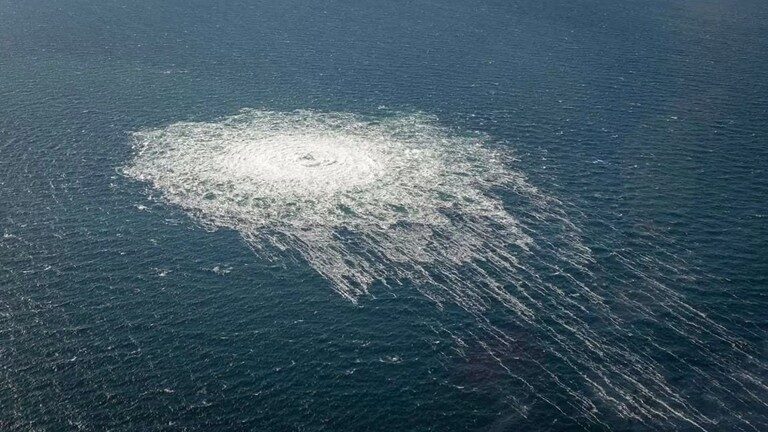
© Danish Defence/Anadolu Agency via Getty ImagesDanish Defense shows the gas leaking at Nord Stream 2 seen from the Danish F-16 interceptor on Bornholm, Denmark on September 27, 2022.
After explosions in late September severely damaged undersea pipelines built to carry natural gas from Russia to Europe,
world leaders quickly blamed Moscow for a brazen and dangerous act of sabotage. With winter approaching, it appeared the Kremlin intended to strangle the flow of energy to millions across the continent, an act of "blackmail," some leaders said, designed to threaten countries into withdrawing their financial and military support for Ukraine.
But now, after months of investigation, numerous officials
privately say that Russia
may not be to blame after all for the attack on the Nord Stream pipelines.
"There is no evidence at this point that Russia was behind the sabotage," said one European official, echoing the assessment of 23 diplomatic and intelligence officials in nine countries interviewed in recent weeks.
Some went so far as to say they didn't think Russia was responsible. Others who still consider Russia a prime suspect said positively attributing the attack — to any country — may be impossible.In the months after the explosions, which resulted in what was probably one of the largest-ever single releases of methane gas, investigators have combed through debris and analyzed
explosives residue recovered from the bed of the Baltic Sea. Seismologists have pinpointed the timing of three explosions on Sept. 26, which caused four leaks on the Nord Stream 1 and 2 pipelines.
No one doubts that the damage was deliberate. An official with the German government, which is conducting its own investigation, said explosives appear to have been placed on the outside of the structures.



















Comment: See also: