Science & TechnologyS


Info

NASA to form artificial night-time clouds over Marshall Islands to study atmosphere

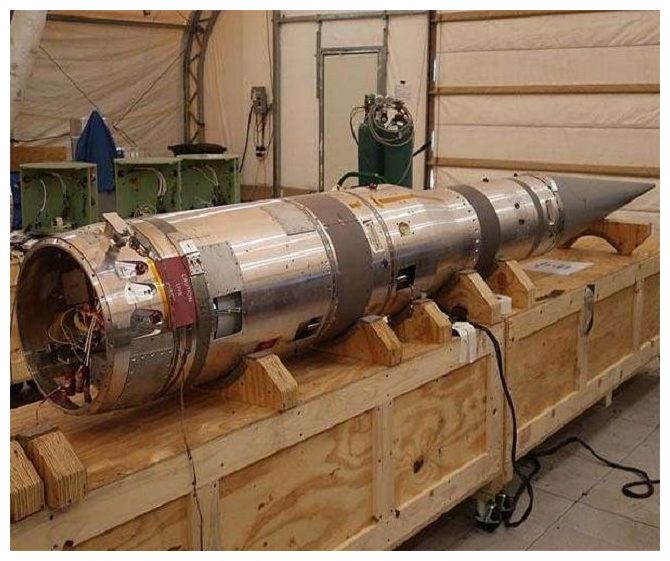
WINDY Launcher
© Space DailyFile image of a WINDY payload launcher.
A NASA rocket mission to study disturbances in the upper atmosphere, which interfere with communication and technology systems, will form night-time white artificial clouds visible by residents of the Republic of the Marshall Islands during two rocket flights to occur between June 9 - 21, 2019.

This the second flight of the Waves and Instabilities from a Neutral Dynamo, or WINDY, mission. The mission this time is referred to as Too-WINDY - it's catchier than WINDY 2.

Too-WINDY will study a phenomenon that occurs in the ionosphere - a layer of charged particles in the upper atmosphere. Known as equatorial spread F, or ESF, these disturbances occur after sunset at latitudes near the equator in part of the ionosphere known as the F region. The disturbances can interfere with radio communication, navigation and imaging systems and pose a hazard to technology and society that depends on it.

The Too-WINDY mission consists of two NASA suborbital sounding rockets that will be launched five minutes apart in a window between 8 p.m. and 3.a.m. local time (4 a.m. and 1 p.m. EDT) June 9 - 21 from Roi-Namur. The Kwajalein Atoll in the Marshall Islands is near the magnetic equator, where post-sunset ionosphere storms are more intense, making the site an ideal location for these studies.

Microscope 2

New "dual" immune cell discovered in type 1 diabetes research

lymphocytes
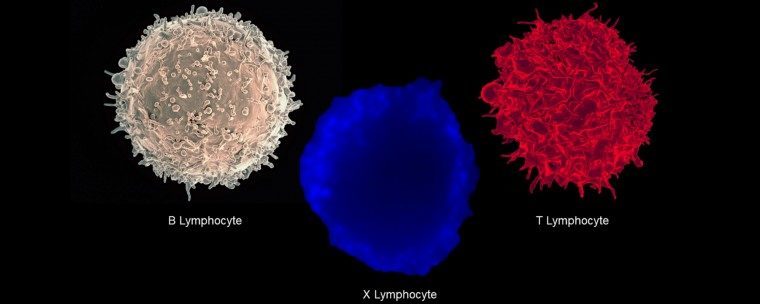
© B AND T CELL IMAGES FROM THE NATIONAL INSTITUTE OF ALLERGY AND INFECTIOUS DISEASES; X CELL IMAGE FROM JOHNS HOPKINS UNIVERSITY SCHOOL OF MEDICINEABOVE: Colorized scanning electron micrographs of B and T lymphocytes (left, right) shown with a fluorescent microscopy image of the newly discovered DE cell, also called the X cell to denote its crossover nature between B cells and T cells (center).

According to textbooks, cells of the adaptive immune system must be either B cells or T cells-they can't be both, or anything in between. But proving once again that nature is full of surprises, scientists have now discovered a novel type of lymphocyte in type 1 diabetes patients that combines characteristics of B cells and T cells.
The researchers suggest that these hybrids could play an important role in the disease by encouraging the immune system to attack the body's own insulin-producing cells, they report today (May 30) in Cell.

"The presence of a cell that expresses both B-cell receptors and T-cell receptors in and of itself is very novel," remarks Jane Buckner, an immunologist and president of the Benaroya Research Institute, a Seattle-based nonprofit that conducts research on diseases of the immune system. However, more research is needed to establish its role in type 1 diabetes, adds Buckner, who wasn't involved in the study.

The research team came across the rogue cells while they were looking for a specific type of B cell they had previously studied in the blood of type 1 diabetes patients. Using flow cytometry, they observed cells that present both B-cell and T-cell receptors on their cell surface, and upon further investigation, they revealed that the cells also express genes specific to both B and T cell lineages. These "dual expresser" (DE) cells were significantly more abundant in type 1 diabetes patients than in controls, explains Abdel Hamad, an immunologist at Johns Hopkins University School of Medicine and the senior author of the study.

Comment: See also: And check out SOTT radio's:


Bizarro Earth

Scientists detect an ancient rock structure hidden beneath Antartica, shifting the ice

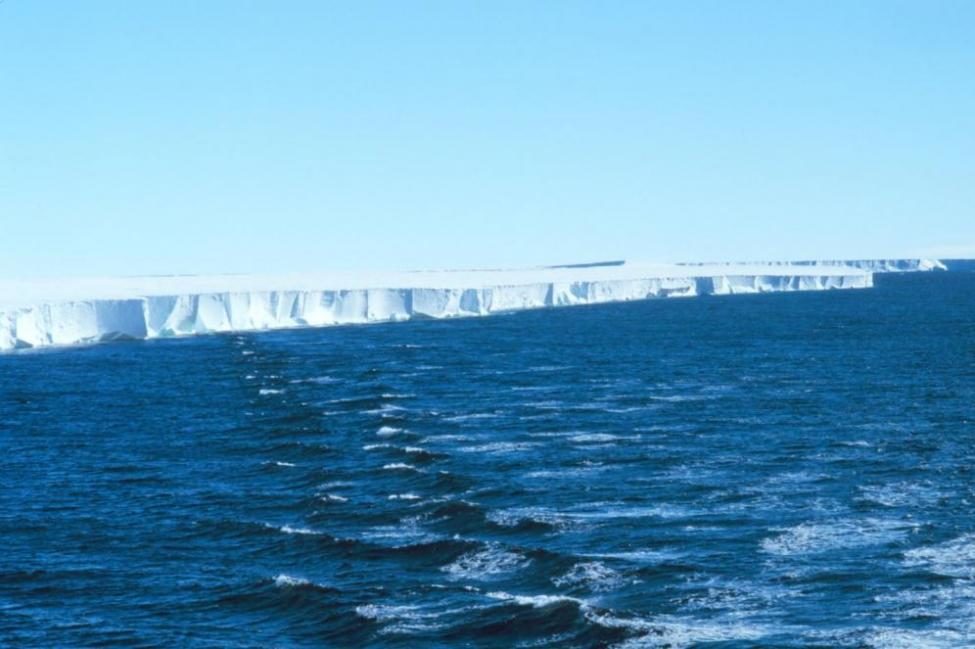
Ross Ice Shelf
© Michael Van Woert/NOAA/NESDIS/ORANew research suggests the front line of the Ross Ice Shelf is uniquely susceptible to melting caused by warm summertime water.
Deep below the frozen wastelands of Antarctica, scientists have discovered ancient tectonic plate structures that are having a huge impact on melting patterns around the continent's largest ice shelf.

The hidden rock, in place for hundreds of millions of years, is controlling water flow around the gigantic Ross Ice Shelf. This shelf currently acts as a crucial buffer preventing more of Antarctica's ice floating out into the wider ocean.

Researchers detected said rock thanks to observations carried out by the IcePod, a dedicated scanning system which measures ice shelf height, thickness and internal structure, and the magnetic and gravity signals of the underlying rock.

Essentially, the IcePod can peer through hundreds of metres (thousands of feet) of ice to detect underlying rock structures that satellites can't spot.

As researchers report in their newly published study, a geological boundary between East and West Antarctica has created a division underneath the continent, which is protecting the Ross Ice Shelf from warmer waters and further melting.

"We could see that the geological boundary was making the seafloor on the East Antarctic side much deeper than the West, and that affects the way the ocean water circulates under the ice shelf," says marine geologist Kirsty Tinto from Columbia University.

Beaker

Pocket of ancient seawater discovered in core samples drilled off Maldives: Over 20,000 years old, untouched since the last Ice Age

glacial sea water
© nightman1965 via iStock/Getty Images PlusGlacial sea water
Twenty thousand years ago, life on Earth was a lot cooler. It was the tail end of a 100,000-year ice age - also called the Last Glacial Maximum - and massive sheets of ice covered much of North America, Northern Europe and Asia. (If they had been around at the time, New York City, Berlin and Beijing would all have been entombed in ice.)

Scientists are used to studying this chilly spell in Earth's history by looking at things like coral fossils and seafloor sediments, but now a team of seafaring researchers may have found a piece of the past that blows all the others out of the water: an actual sample of 20,000-year-old seawater, squeezed out of an ancient rock formation from the Indian Ocean.

Comment: More from the Daily Mail:
A virtually undisturbed sample of 20,000-year-old seawater that represents the first direct remnant from Earth's last Ice Age has been found in the Indian Ocean. Researchers found the ice while drilling sediment core samples out of the underwater limestone deposits in the Maldives archipelago in South Asia. Their work revealed distinct water properties only seen in glacial seawater from the last Ice Age, or the Last Glacial Maximum (LGM). The team, from the University of Chicago, say that their work could lead a better understanding of out changing world and improved climate models.

During an expedition of the Indian Ocean on research vessel JOIDES Resolution, the researchers drilled deep below the Indian Ocean and extracted rock cores. It was inside these cores that they found the traces of the ancient ocean, absorbed into porous rock formations and preserved there ever since. The small sample was squeezed out of an ancient rock formation from the Indian Ocean and sliced into pieces before being put into a hydraulic press which squeezes the moisture remnant out of its pores.

The team tested the samples aboard their ship and found that the water was far saltier than that found in the Indian Ocean today. Back in the lab, they did more specific testing to examine the elements and isotopes, or variants of a particular element.

The team found that all of their results seemed out of place in the modern ocean, according to the New Scientist.

They said that the samples indicated that they came from a time when the ocean was significantly saltier, colder and more chlorinated.

These are conditions that scientists think sea water would have been during the Last Glacial Maximum, when sea levels dropped to hundreds of feet below current levels. At the time of the last Ice Age, massive sheets of ice covered much of North America, Northern Europe and Asia. Researchers found the ice while drilling sediment core samples out of the underwater limestone deposits in the Maldives in South Asia

If all of the results are valid, the new samples could provide scientists with clues on how the ocean reacted to the geophysical swings of the last ice age.


Robot

Scary - Animated Mona Lisa created by AI

Mona Lisa
© Wikimedia Commons
The enigmatic, painted smile of the "Mona Lisa" is known around the world, but that famous face recently displayed a startling new range of expressions, courtesy of artificial intelligence (AI).

In a video shared to YouTube on May 21, three video clips show disconcerting examples of the Mona Lisa as she moves her lips and turns her head. She was created by a convolutional neural network - a type of AI that processes information much as a human brain does, to analyze and process images.


Researchers trained the algorithm to understand facial features' general shapes and how they behave relative to each other, and then to apply that information to still images. The result was a realistic video sequence of new facial expressions from a single frame.

For the Mona Lisa videos, the AI "learned" facial movement from datasets of three human subjects, producing three very different animations. While each of the three clips was still recognizable as the Mona Lisa, variations in the training models' looks and beh avior lent distinct "personalities" to the "living portraits," Egor Zakharov, an engineer with the Skolkovo Institute of Science and Technology, and the Samsung AI Center (both located in Moscow), explained in the video.

Cell Phone

Russian new 'quantum phone' promises 'unmatched' security using photon shared key

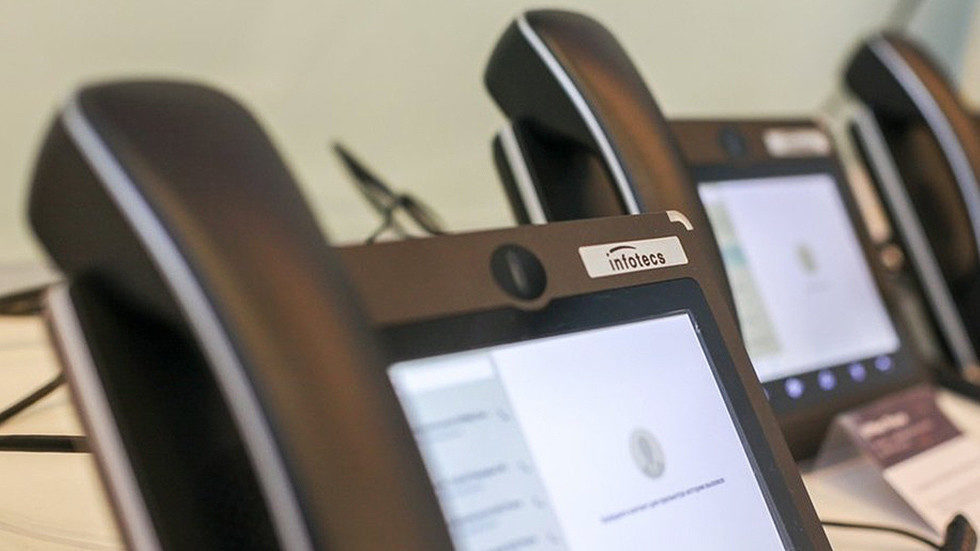
Russian Quantum Phone
© АГН Москва / Сергей Ведяшкин
Russian scientists have taken secure communication to the next level after presenting Russia's first phone with quantum protection of connection. The price per set bites but the innovative gadget promises perfect security.

The IP phone demonstrated at the presentation on Tuesday looked like an ordinary landline machine, but it employs quantum encryption protocols which make the phone impossible to bug.

The quantum encryption uses photons to generate a shared key between two collocutors. A potential eavesdropper would need to measure photons to hear the conversation. However, the nature of photons doesn't allow somebody to measure them without changing their state, thus the collocutors will always know if a call is bugged. This provides an "unmatched level of confidentiality," the developers said.

Microscope 2

Could 'soil-free farms' be the solution to the planet's soil crisis?

soil-free farming


Soil-free farms could help take some of the pressure off traditional agricultural systems while we instigate a much needed step-change in farming policy.


By the time you've finished reading this paragraph, the world will have lost another football pitch of soil. At current rates of erosion, 90 percent of our planet's soil could be gone by 2050, according to the UN's Food and Agriculture Organisation.

Natural soil erosion is being accelerated by deforestation, mining, urban sprawl and - ironically - the intensive agriculture that simply couldn't function without it.

The increasingly extreme heatwaves, droughts, floods and storms that come with climate breakdown only make matters worse - damaging crops, ruining livelihoods and sending food prices soaring around the world.

Comment: Soil degradation is very big problem, but one that is rarely spoken about. With veganism now firmly entrenched as the solution to all our environmental issues, no one is pointing out that mass mono-crop farming, on which veganism depends, is only accelerating our downward trajectory. We need real solutions, not ideological suppositions.

See also:


Control Panel

China unveils high speed maglev train prototype, roll out planned for 2021

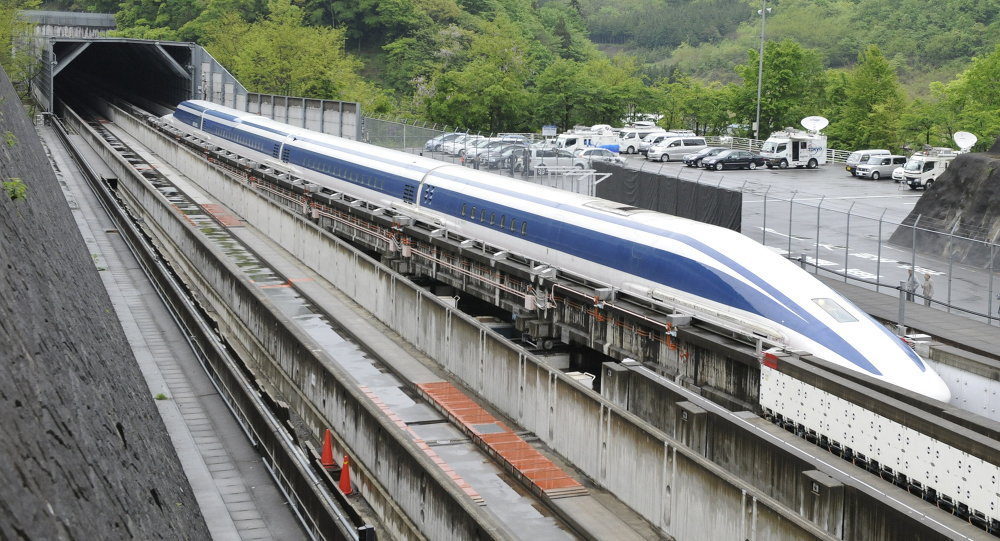
maglev train
© AFP 2019 / Toru YAMANAKA
China's state train maker recently unveiled the first prototype of a new maglev train Beijing boasts will top 600 kilometers per hour.

On Thursday, China Railway Rolling Stock Corporation (CRRC) unveiled the first prototype of a new maglev train it hopes will dramatically cut travel times between Shanghai and Beijing. The train can achieve incredible speeds of 600 kilometers per hour (372 mph) because it uses magnets to hover above the tracks, resulting in an essentially frictionless - and very smooth - trip.

The train was built by CRRC subsidiary Qingdao Sifang in the city of Qingdao, about halfway between Beijing and Shanghai. Ding Sansan, chief of the maglev team's research and development team and the company's deputy chief engineer, told China Daily on Thursday, "The prototype has already achieved static levitation and is in ideal condition," noting that engineers hope that after successful trials, they can put the five-car test train into operation in 2021.

Comment: Integrated into China's One Belt Road Initiative and this could be a game changer:


Galaxy

Exoplanet found in the 'Neptunian Desert'

planet
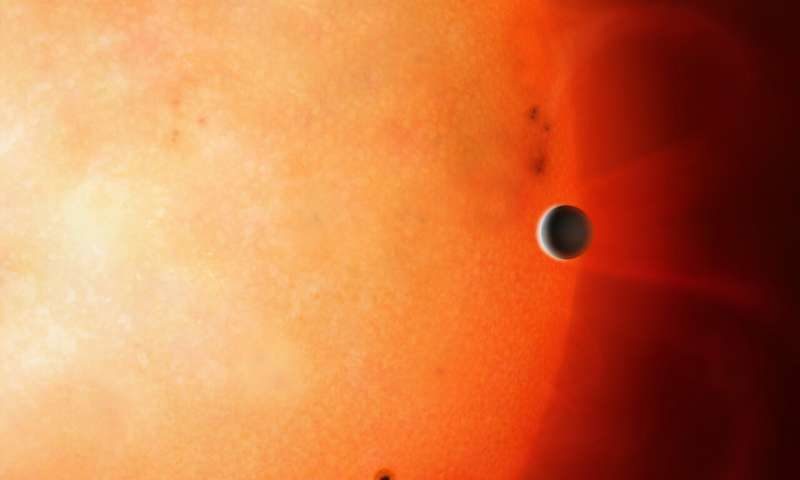
© University of Warwick/Mark GarlickExoplanet NGTS-4b -- also known as 'The Forbidden Planet'
An exoplanet smaller than Neptune with its own atmosphere has been discovered in the Neptunian Desert, by an international collaboration of astronomers, with the University of Warwick taking a leading role.

New research, led by Dr. Richard West including Professor Peter Wheatley, Dr. Daniel Bayliss and Dr. James McCormac from the Astronomy and Astrophysics Group at the University of Warwick, has identified a rogue planet.

NGTS is situated at the European Southern Observatory's Paranal Observatory in the heart of the Atacama Desert, Chile. It is a collaboration between UK Universities Warwick, Leicester, Cambridge, and Queen's University Belfast, together with Observatoire de Genève, DLR Berlin and Universidad de Chile.

NGTS-4b, also nick-named 'The Forbidden Planet' by researchers, is a planet smaller than Neptune but three times the size of Earth.

Comment: See also:


Satellite

SpaceX satellites could blight the night sky, warn astronomers

An astronomer in the Netherlands captured the Starlink train
© Vimeo/SatTrackCam LeidenAn astronomer in the Netherlands captured the Starlink train zooming across the sky shortly after its launch.

Elon Musk's Starlink internet satellites 'have no public consensus and may impair view of the cosmos'


Mega constellations of human-made satellites could soon blight the view of the night sky, astronomers warned following the launch of Elon Musk's Starlink probes last week.

The first 60 of an intended 12,000 satellites were successfully blasted into orbit on Thursday by Musk's company, SpaceX, which plans to use them to beam internet communication from space down to Earth.

Sightings of the procession of satellites trailing across the heavens, such as that posted online by the amateur astronomer Marco Langbroek, initially prompted excitement and astonishment.

The spectacle was so bizarre that a Dutch UFO website was inundated with more than 150 reports from people suspecting an alien encounter was close at hand.

But for astronomers the initial excitement quickly gave way to dismay as they began to calculate the potentially drastic impact on people's views of the cosmos.

"I saw that train and it was certainly very spectacular," said Cees Bassa, an astronomer at the Netherlands Institute for Radio Astronomy. "With that comes the realisation that if several thousands of these are launched it will change what the night sky looks like."