Science & TechnologyS


Chalkboard

The Present Phase of Stagnation in the Foundations of Physics Is Not Normal

physics
© Inga Nielsen / Shutterstock
Nothing is moving in the foundations of physics. One experiment after the other is returning null results: No new particles, no new dimensions, no new symmetries. Sure, there are some anomalies in the data here and there, and maybe one of them will turn out to be real news. But experimentalists are just poking in the dark. They have no clue where new physics may be to find. And their colleagues in theory development are of no help.

Some have called it a crisis. But I don't think "crisis" describes the current situation well: Crisis is so optimistic. It raises the impression that theorists realized the error of their ways, that change is on the way, that they are waking up now and will abandon their flawed methodology. But I see no awakening. The self-reflection in the community is zero, zilch, nada, nichts, null. They just keep doing what they've been doing for 40 years, blathering about naturalness and multiverses and shifting their "predictions," once again, to the next larger particle collider.

I think stagnation describes it better. And let me be clear that the problem with this stagnation is not with the experiments. The problem is loads of wrong predictions from theoretical physicists.

The problem is also not that we lack data. We have data in abundance. But all the data are well explained by the existing theories - the standard model of particle physics and the cosmological concordance model. Still, we know that's not it. The current theories are incomplete.
Chalkboard

The geometry of an artificial atom's electron determined for the first time

geometry of wave function
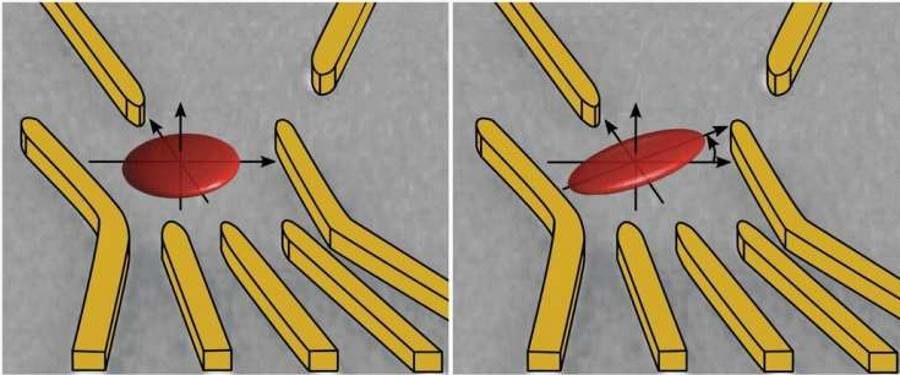
© University of Basel, Departement of PhysicsAn electron is trapped in a quantum dot, which is formed in a two-dimensional gas in a semiconductor wafer. However, the electron moves within the space and, with different probabilities corresponding to a wave function, remains in certain locations within its confinement (red ellipses). Using the gold gates applied electric fields, the geometry of this wave function can be changed.
Physicists at the University of Basel have shown for the first time how a single electron looks in an artificial atom. A newly developed method enables them to show the probability of an electron being present in a space. This allows improved control of electron spins, which could serve as the smallest information unit in a future quantum computer. The experiments were published in Physical Review Letters and the related theory in Physical Review B.

The spin of an electron is a promising candidate for use as the smallest information unit (qubit) of a quantum computer. Controlling and switching this spin or coupling it with other spins is a challenge on which numerous research groups worldwide are working. The stability of a single spin and the entanglement of various spins depends, among other things, on the geometry of the electrons-which previously had been impossible to determine experimentally.

Marijuana

Cannabis may have originated in the Tibetan Plateau 28 million years ago

cannabis
© CC0 Public Domain
A trio of researchers with the University of Vermont, Middlebury College and the University of Nottingham, Ningbo, China, has found evidence that suggests cannabis originated in the Tibetan Plateau. In their paper published in the journal Vegetation History and Archaeobotany, John McPartland, William Hegman and Tengwen Long describe their analysis of prior studies of the plant and how they narrowed down the likely place where it first developed.

Cannabis is likely one of the most well-known plants on Earth because it produces cannabinoids-chemicals that have a pronounced impact on the human brain. Prior studies have suggested the plant likely originated somewhere in central Asia approximately 28 million years ago-the point where it diverged from an ancestor, the common hop. In this new effort, the researchers sought to more precisely pin down the most likely place where the plant got its start.

Comment: See also:


Binoculars

Chimpanzees seen smashing and eating tortoises for the first time

chimpanzee tortoise
© Erwan ThelestePandi, an adult male chimpanzee, was observed smashing and eating 20 tortoises, the most of any chimp in the group.
Tortoises' thick shells protect them from most predators. But our closest relatives have found a way to circumvent this defense: vigorously bashing them against trees.

In a paper published today in the journal Scientific Reports, scientists report seven chimpanzees breaking open forest hinge-back tortoises in Gabon's Loango National Park. The behavior occurred on multiple occasions over 5,000 hours of observation, and the primates often shared the meat with others in their group.

This is the first time than any chimpanzee has been documented eating any kind of reptile. It's also unique because the way in which the primates eat these tortoises-slamming them against tree branches and trunks-is a type of "percussive" technology that is akin to tool use, says study coauthor Simone Pika, who studies chimpanzees at Germany's University of Osnabrück.

Comment: See also: And check out SOTT radio's:


Info

Oldest meteorite collection on Earth found in the Atacama Desert

Meteorite recovery campaign
© Photo by Katherine Joy (University of Manchester)Meteorite recovery campaign in the Atacama Desert (Nov. 2017).
Boulder, Colo., USA: Earth is bombarded every year by rocky debris, but the rate of incoming meteorites can change over time. Finding enough meteorites scattered on the planet's surface can be challenging, especially if you are interested in reconstructing how frequently they land. Now, researchers have uncovered a wealth of well-preserved meteorites that allowed them to reconstruct the rate of falling meteorites over the past two million years.

"Our purpose in this work was to see how the meteorite flux to Earth changed over large timescales-millions of years, consistent with astronomical phenomena," says Alexis Drouard, Aix-Marseille Université, lead author of the new paper in Geology.

To recover a meteorite record for millions of years, the researchers headed to the Atacama Desert. Drouard says they needed a study site that would preserve a wide range of terrestrial ages where the meteorites could persist over long time scales.
Meteorite in Atacama Desert
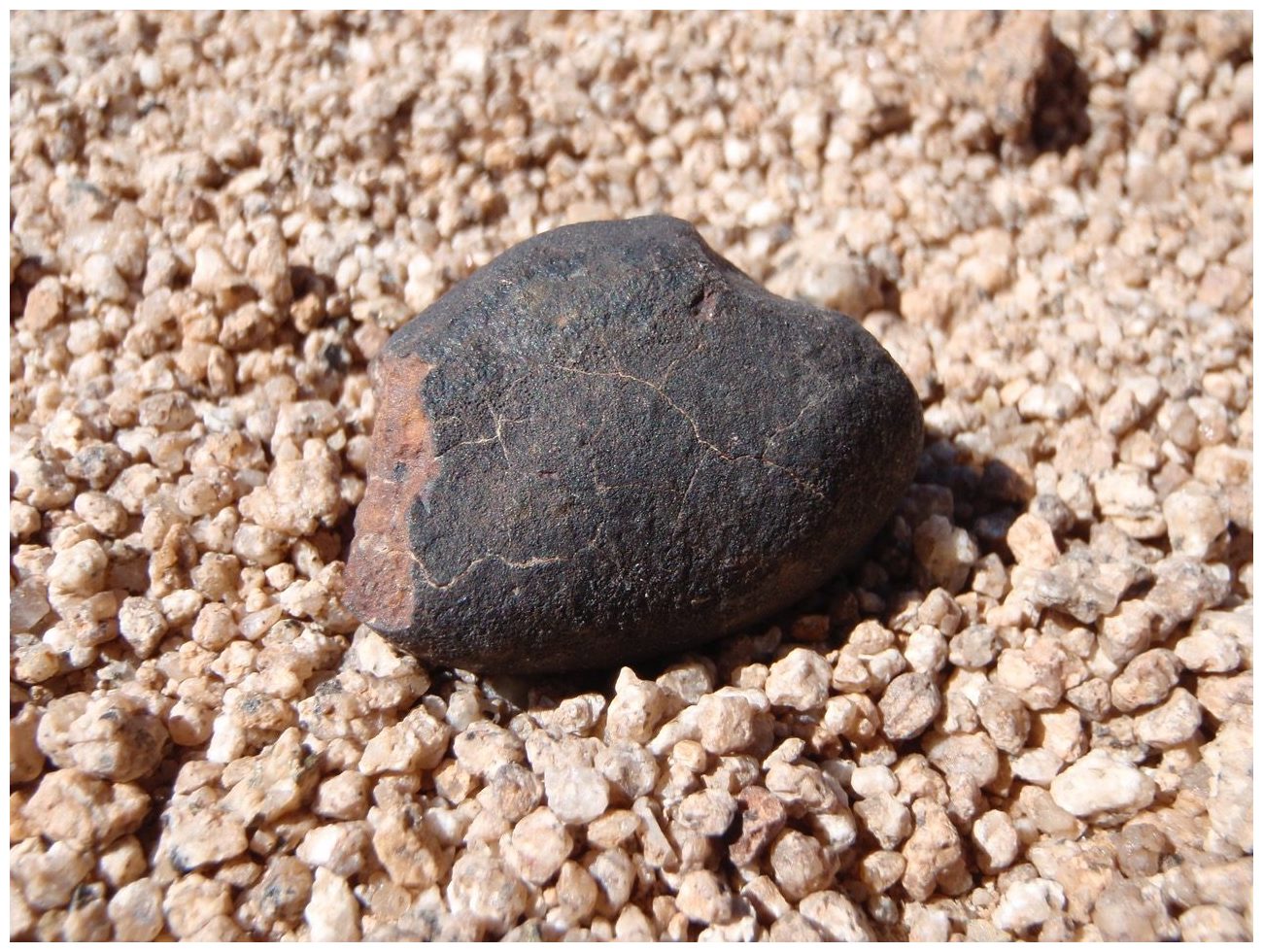
© Photo by Jérôme Gattacceca (CEREGE)Meteorite with thin, dark, fusion crust in the Atacama Desert.
While Antarctica and hot deserts both host a large percentage of meteorites on Earth (about 64% and 30%, respectively), Drouard says, "Meteorites found in hot deserts or Antarctica are rarely older than half a million years." He adds that meteorites naturally disappear because of weathering processes (e.g., erosion by wind), but because these locations themselves are young, the meteorites found on the surface are also young.

"The Atacama Desert in Chile, is very old ([over] 10 million years)," says Drouard. "It also hosts the densest collection of meteorites in the world."

Fireball

Asteroid set for close pass this weekend - 1999 KW4 is so large it has its own moon

asteroid with moon 1999 KW4
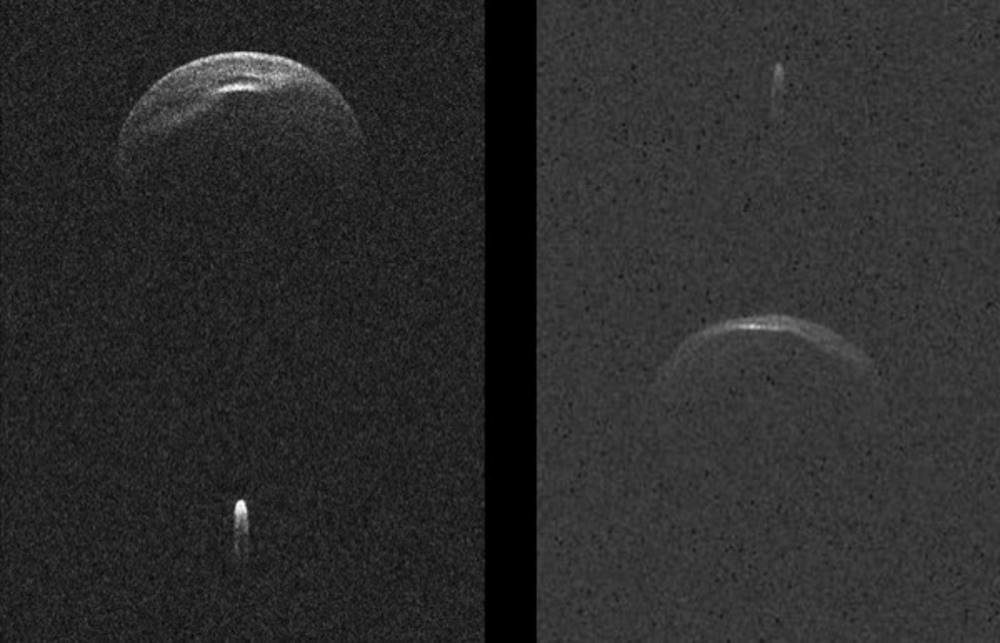
© Arecibo Observatory in Puerto Rico/NASA/NSF/STwo radar images of double asteroid 1999 KW4. It’s a large space rock just under a mile wide (about 1.5 km), with a smaller companion moon (the bright speck). The little moon can be seen to move from one side of the asteroid to the other, as it orbits
A 'potentially hazardous' asteroid, so large it has its own moon, is hurtling towards Earth at some 48,000 kilometers per hour. The good news is that it's expected to pass safely, at about 5 million kilometers of us.

Asteroid 1999 KW4 was first discovered two decades ago. It orbits the Sun once every 188 days, passing between the orbits of Venus and Earth as it goes, and is due to make its closest approach to Earth at 23:05 UTC on Saturday.

Classified as a Near Earth Object, the 1.5-kilometer wide asteroid is expected to zip by Earth without causing any harm, though the Minor Planet Center has labelled it 'potentially hazardous.' Its companion moon is about half a kilometer wide.

Beaker

Intelligent Design: Body cells are wired like computer chips and function like microprocessors

wired cell
© The University of Edinburgh
Cells in the body are wired like computer chips to direct signals that instruct how they function, research suggests.

Unlike a fixed circuit board, however, cells can rapidly rewire their communication networks to change their behaviour.

The discovery of this cell-wide web turns our understanding of how instructions spread around a cell on its head.

It was thought that the various organs and structures inside a cell float around in an open sea called the cytoplasm.

Signals that tell the cell what to do were thought to be transmitted in waves and the frequency of the waves was the crucial part of the message.

Researchers at the University of Edinburgh found information is carried across a web of guide wires that transmit signals across tiny, nanoscale distances.

Comment: See also:


Comet

Taurid comet debris may raise chances of impacts on Earth in June

Tunguska Event
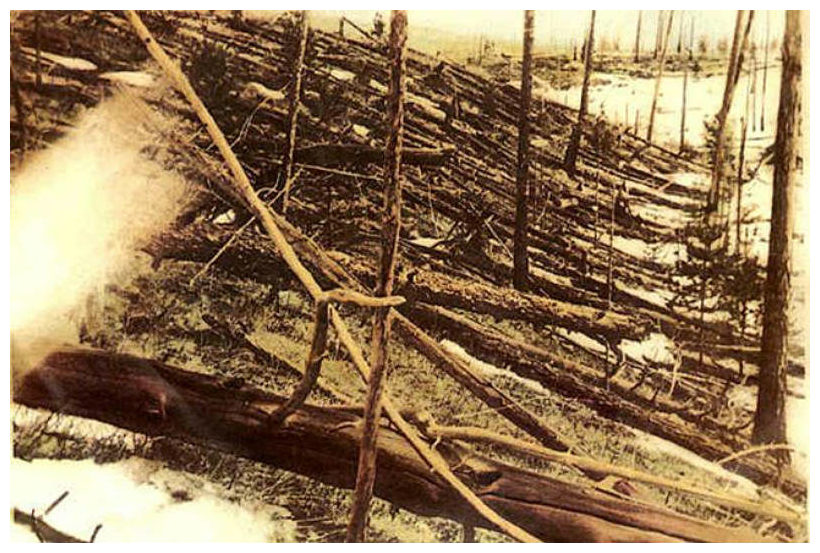
© Western UniversityAn expedition in 1929 discovered the extent of the damage caused by the Tunguska Event in 1908.
A new study from Western University posits proof to the possibility that an oncoming swarm of meteors - likened to the Loch Ness Monster and Bigfoot by some extraterrestrial experts - may indeed pose an existential risk for Earth and its inhabitants. (That's us.)

When considering catalysts for catastrophic collision, there are two main sources Near Earth Objects (NEOs) like asteroids and meteoroids and interlopers from the outer solar system, which are typically comets. Over the past few decades, a great deal of effort has been expended in cataloguing more than 90 per cent of the potentially hazardous NEOs, and work is ongoing to detect, catalogue and track greater numbers and smaller sizes of these objects. Interlopers from the outer solar system are much harder to chart but again, much work is underway.

The Taurid swarm is a third potential source of risk that changes the probabilities of possible catastrophic impacts. The Tunguska (Russia) explosion of 1908 is considered a one-in-1000-year event, assuming a random distribution of events over time. But the Taurid swarm, a dense cluster within the Taurid meteoroid stream, and through which the Earth periodically passes, changes the odds significantly and gives a possible reason for the unlikely occurrence that a once per 1000-year event occurred just over a century ago. If the hypothesized might of the Taurid swarm is successfully proven, this also heightens the possibility of a cluster of large impacts over a short period of time.

Seismograph

Do tiny tremblors on the West Coast signal a major earthquake?

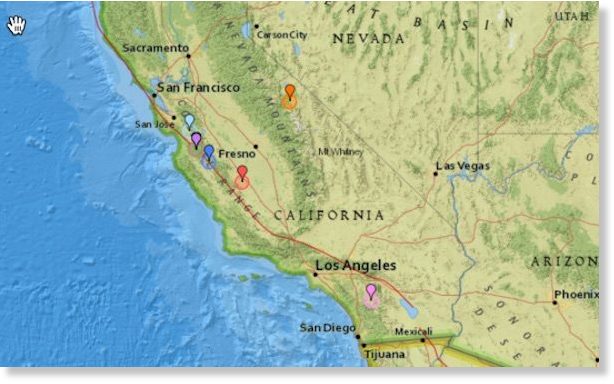
California Hit By 39 Earthquakes
A series of tiny quakes rattling California and the Pacific Northwest may signal an upcoming catastrophic earthquake, seismologists say, KOIN reported.

Or experts say they might just be another reminder that the pressure's always building on fault lines beneath the West Coast, KATU reported.

"Those are just reminders," said Scott Burns, a Portland State University geology professor, according to the station. "We don't know what they mean. They are reminders that we are in earthquake country, and they may be precursors to the 'big one.'"

The tremors are indications of a "slow-slip" event, says Ken Creager, a University of Washington professor, KOMO reported.

In a slow-slip movement, which takes place every 14 months or so, a tectonic plate temporarily moves backward, causing a series of small quakes, KOIN reported.

Comment: San Andreas: A prepper's view of earthquake survival


Eye 1

Amazon reportedly has its eyes on a wearable device that can detect human emotions

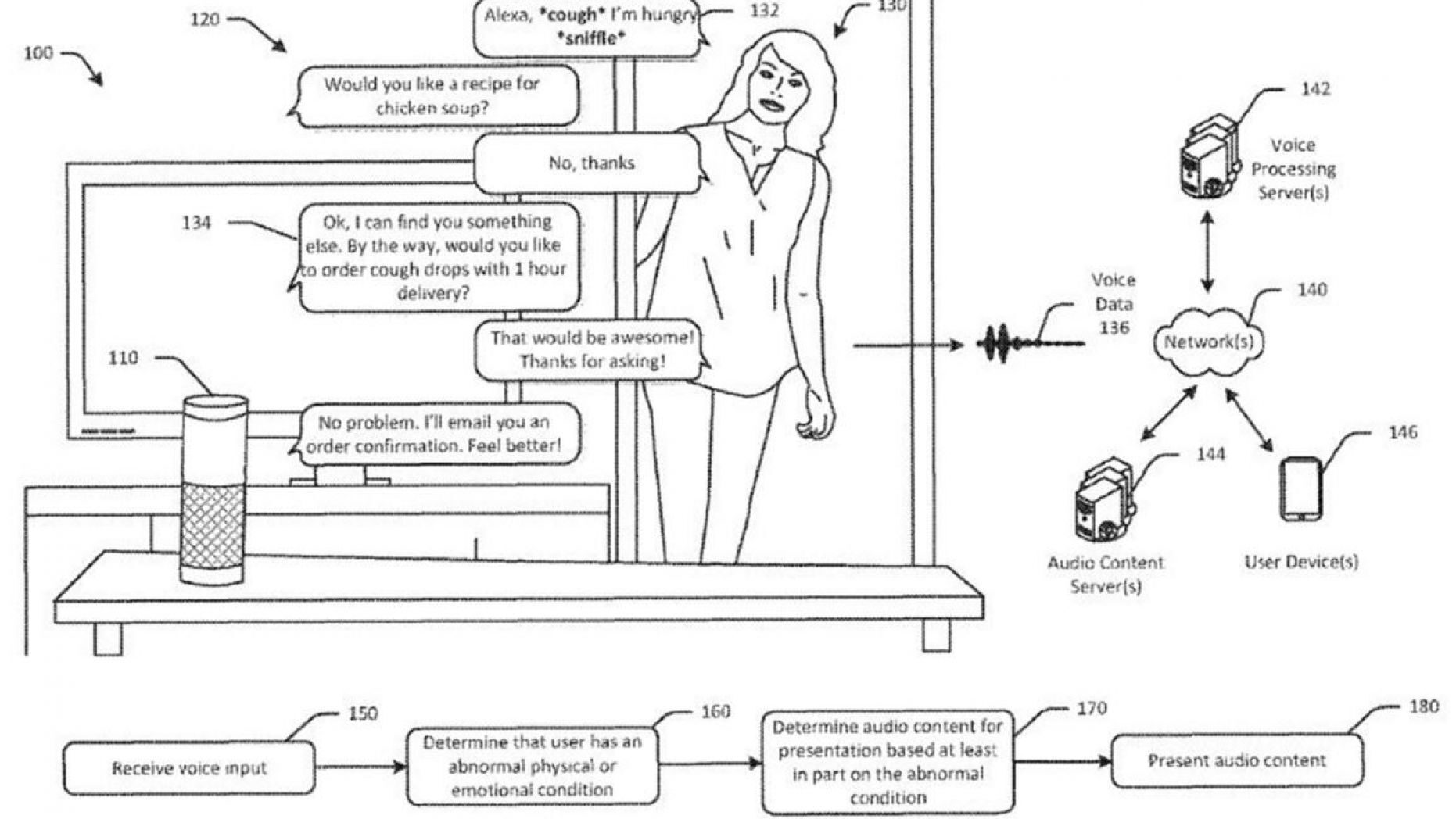
Amazon patent
A U.S. Patent Office diagram from Amazon.
Amazon is reportedly developing a voice-activated wearable device that can recognize human emotions.

The gadget, meant to be worn on a person's wrist, is reportedly a health and wellness product developed via a collaboration between Lab126 - which built Amazon's Echo smart speaker - and the Alexa software team.

According to internal documents obtained by Bloomberg and a person familiar with the matter, the device has microphones that can figure out a person's emotional state from the sound of his or her voice. The documents also apparently show how the technology could eventually assist the wearer in interacting more effectively with others.

A beta testing program is reportedly underway, but it's not clear whether the project, code-named Dylan, will ever become a commercial device or exactly how far along the project is in its development, reported Bloomberg.