Science & TechnologyS


Fireball 5

Beta Taurid meteor shower may pack an unexpected punch

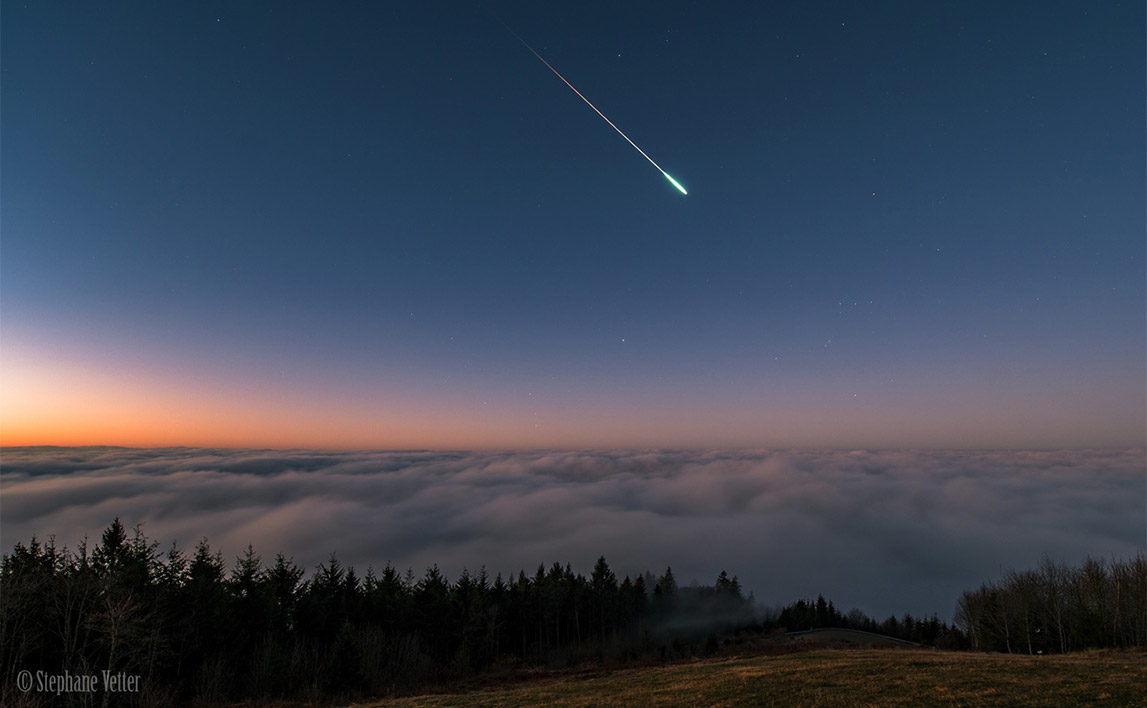
Meteor over Schliengen, Germany (stock)
© Stephanie Vetter (2018)
There is an annual meteor shower in June that hardly anyone has ever seen, but it may be responsible for one of the biggest modern asteroid impacts on record.

Starting on June 5 and running until July 18 of each year, Earth passes through a stream of meteoroids in space - bits of rock and ice left behind by a comet known as 2P/Encke as it travels around the Sun. As these bits of comet debris are swept up by the planet's atmosphere, they produce bright flashes of light across the sky. This is the Beta Taurid meteor shower, which reaches peak activity on June 28-29.

While Comet Encke is also responsible for the Southern and Northern Taurid meteor showers, which send streaks of light across the night skies in October and November, respectively, there's a catch to the June Beta Taurids.

Hardly anyone has seen a Beta Taurid meteor. Unlike most meteor showers, this one occurs during the day, because the meteoroids in this part of the stream are coming at Earth from the direction of the Sun.

Comment: See also:


Solar Flares

Giant stellar eruption detected for the first time

Stellar eruption
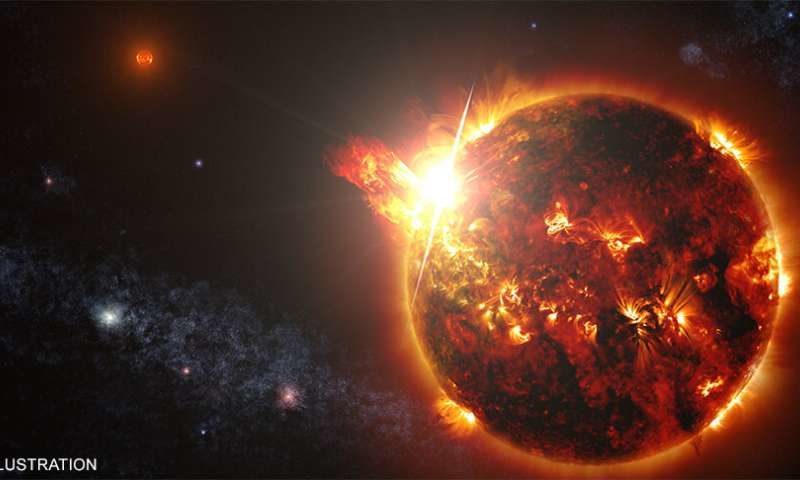
© NASA/GSFC/S. Wiessinger
A group of researchers has identified and characterized for the first time in a complete way a powerful eruption in the atmosphere of the active star HR 9024, marked by an intense flash of X-rays followed by the emission of a giant bubble of plasma, ie hot gas containing charged particles. This is the first time a coronal mass ejection, or CME, has been seen in a star other than our Sun. The corona is the outer atmosphere of a star.

The work, appearing in an article in the latest issue of the journal Nature Astronomy, used data collected by NASA's Chandra X-ray Observatory. The results confirm that CMEs are produced in magnetically active stars and are relevant to stellar physics, and they also open the opportunity to systematically study such dramatic events in stars other than the Sun.

"The technique we used is based on monitoring the velocity of plasmas during a stellar flare," said Costanza Argiroffi (University of Palermo in Italy and associate researcher at the National Institute for Astrophysics in Italy) who led the study. "This is because, in analogy with the solar environment, it is expected that, during a flare, the plasma confined in the coronal loop where the flare takes place moves first upward, and then downwards reaching the lower layers of the stellar atmosphere. Moreover, there is also expected to be an additional motion, always directed upwards, due to the CME associated with the flare."

Telescope

International Astronomical Union concerned about satellite 'constellations' interfering with ground-based observations

satellite interference space observations
© IAU
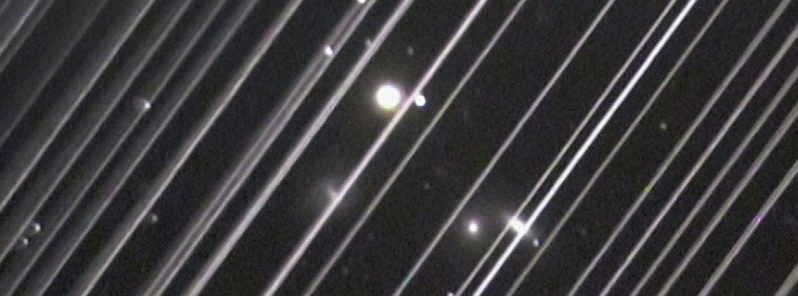
The International Astronomical Union (IAU) has expressed its concern about light pollution posed by an increasing number of satellite constellations in low-Earth orbits (LEO), manly SpaceX's Starlink constellation launched May 23, 2019 - next-generation satellite network capable of connecting the globe with reliable and affordable broadband internet services. The number of low Earth orbit satellites planned to launch in the next half-decade has the potential to fundamentally shift the nature of our experience of the night sky, IAU said.

"The International Astronomical Union, in general, embraces the principle of a dark and radio-quiet sky as not only essential to advancing our understanding of the Universe of which we are a part, but also as a resource for all humanity and for the protection of nocturnal wildlife," IAU said in a statement.

"We do not yet understand the impact of thousands of these visible satellites scattered across the night sky and despite their good intentions, these satellite constellations may threaten both."

Comment: SpaceX satellites could blight the night sky, warn astronomers


Fireball

1 in 7000 Chance: Football field-sized asteroid could hit Earth this year

Asteroid earth
© iStockphoto
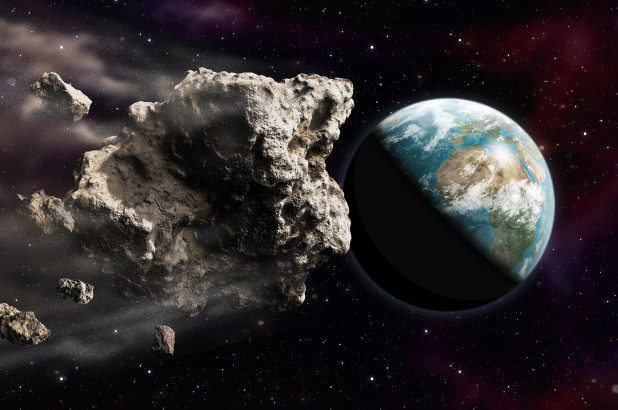
An enormous asteroid with a diameter wider than a football field has a roughly one in 7,000 chance of hitting the Earth later this year. However, it's nothing to lose sleep over.

Known as asteroid 2006 QV89, the space rock, which has a diameter of 164 feet, could potentially hit the planet on Sept. 9, 2019, according to a list of the most concerning space objects compiled by the European Space Agency. The ESA has 2006 QV89 ranked fourth on its top ten list.

According to current modeling, it's likely that 2006 QV89, which is on the risk list but not the priority list, will pass Earth at a distance of more than 4.2 million miles. The ESA does note that the likelihood of its model being off is less than one-hundredth of one percent.

Comment: See also:


Archaeology

Prehistoric relative of beech and oak trees is first of its kind found below the Equator

patagonia fossil site
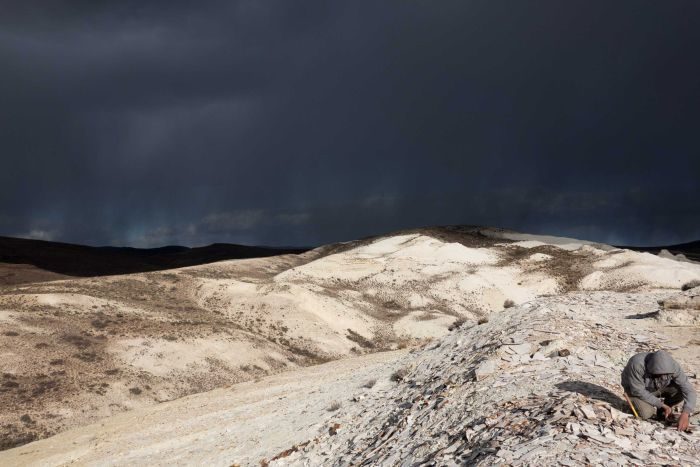
© Peter Wilf, Penn State UniversityRainforest once covered the plains of Patagonia where the fossils were found.
New fossils suggest the chinquapin, found today in parts of Asia, first took root in the Southern Hemisphere.

Millions of years ago, a volcano erupted in what's now the Patagonia region of southern Argentina, leaving behind a huge caldera. Water accumulated in the crater, and eventually it became a lake teeming with countless plants, insects, and other life-forms. Over time, these creatures fossilized deep within the lake's layers of mud and ash, creating a kind of geological jackpot for today's paleontologists.

Now, the ancient lake has yielded a particularly exciting treasure: fossils of a 52-million-year-old tree that is the first of its kind found in the Southern Hemisphere, suggesting the plant evolved there.

Cloud Grey

Pollution from Roman-era stored in ice of Mont Blanc

Roman era pollution
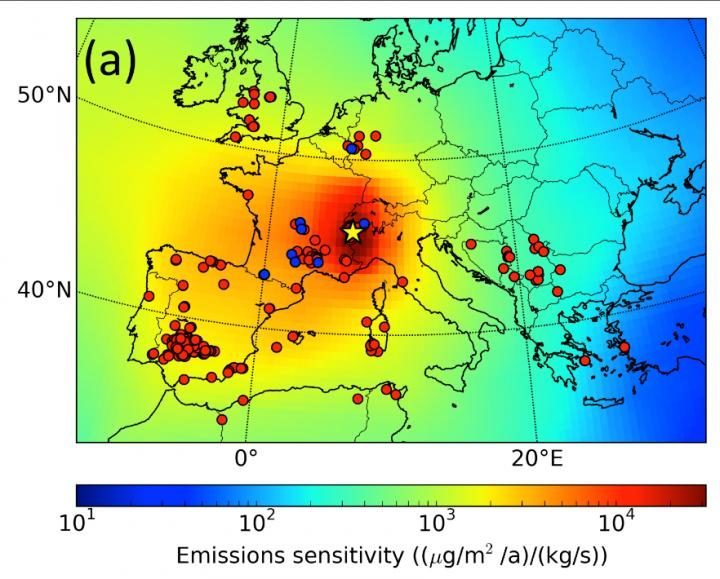
© Preunkert et al./CNRSSimulations to assess the sensitivity of lead deposits in the Col du Dôme (yellow) to the geographical location of the emission. This map also indicates the location of major mines known to have existed in Roman antiquity. In the approximately 500-km region around the Alps, in blue, mines believed to have been active in the Republican period, and in red, those active later. Outside this radius, all other mines are indicated in red (all eras combined). Alpine ice is therefore representative of the high altitude atmosphere which receives emissions from France, Spain, Italy, islands in the Mediterranean Basin, and, to a lesser degree, Germany and England.
The deepest layers of carbon-14 dated ice found in the Col du Dôme of the Mont Blanc glacier in the French Alps provide a record of atmospheric conditions in the ancient Roman era. Published in Geophysical Research Letters, the study, led by an international team and coordinated by a CNRS scientist at the Institute for Geosciences and Environmental Research (IGE)(CNRS/IRD/UGA/Grenoble INP)*, reveals significant atmospheric pollution from heavy metals: the presence of lead and antimony (detected in ancient alpine ice for the first time here) is linked to mining activity and lead and silver production by the ancient Romans, well before the industrial age, in fact.

Comment: See also:


Brain

DARPA developing tech that 'taps into human brain' with mind-controlling drones

brain technology
© AFP 2019 / JEAN-PIERRE CLATOT
Technology that will allow direct communication with the human brain is already causing numerous concerns regarding possible misuse, especially in terms of thought privacy and forced brainwashing.

The US military's Defence Advanced Research Projects Agency (DARPA) has initiated research aimed at creating a so-called brain-computer interface (BCI) that will allow two-way communication between a human soldier and, for example a swarm of drones or computer cyber defences.

In an interview with Express, Professor Jacob Robinson of Rice University, head of one of the six research teams funded by DARPA for that purpose, has revealed the technology will essentially allow people to "tap into the brain" without performing an invasive surgery to install an implant into it. Such an approach will permit a drastic reduction in the gap between making a decision and sending a corresponding command to a machine.

Attention

Scientists warn Russian volcano could cause destruction on scale of Pompeii

Bolshaya Udina volcano
© kuhnmi / Flickr (CC BY 2.0)
A slumbering titan in Russia's Far East could soon awaken. Scientists warn that a long-dormant volcano is showing new signs of activity, and an eruption could spell disaster in Russia and beyond.

Deemed inactive for decades, the Bolshaya Udina volcano has come back to life, according to recent research, prompting concern about a potentially cataclysmic natural disaster.

"When a volcano is silent for a long time, its first explosion can be catastrophic," said Ivan Kulakov, the head of the seismic tomography lab at the Russian Institute of Petroleum Geology and Geophysics, in an article for the Russian Academy of Sciences' Siberian branch. "A large amount of ash is thrown into the air, it is carried far away, and not only the surrounding settlements, but also large territories all over the planet, can suffer."

"Recall Pompeii," the researcher added ominously: the ancient Roman settlement was wiped off the map by the eruption of Mount Vesuvius, which laid dormant for thousands of years prior. The city was buried in over 10 feet of ash and most of its inhabitants are thought to have been killed in the disaster.

Microscope 2

Ancient Siberia was home to previously unknown humans - Theory of Native American ancestors rewritten

Siberia unknown humans
© Elena Pavlova/NatureThe archaeological site near the Yana River in Siberia where two 31,000-year-old milk teeth were found.
It was cold, remote and involved picking fights with woolly mammoths - but it seems ancient Siberia 30,000 years ago was home to a hardy and previously unknown group of humans. Scientists say the discovery could help solve longstanding mysteries about the ancestors of native North Americans.

While it is commonly believed the ancestors of native North Americans arrived from Eurasia via a now submerged land bridge called Beringia, exactly which groups crossed and gave rise to native North American populations has been difficult to unpick.

Now scientists say they might have found some answers to the conundrums.

Comment: Recent revelations suggest Siberia appears to have played a rather prominent role in the story of man:


Airplane

KLM funding development of new 'Flying-V' plane: Potential to revolutionise air travel

flyingV new passenger air jet design
© Studio OSOResearchers hope to fly a scale model of the airplane in September and say it could be ready to enter service between 2040 and 2050.
A new aeroplane design known as the Flying-V is being developed, potentially changing air travel as we know it forever. The development of the V-shaped, fuel-efficient aeroplane is being funded by Dutch airline KLM and is named after the iconic Gibson Flying-V electric guitar used by a number of legendary musicians such as Jimi Hendrix.

The design has the same wingspan as existing planes and is able to carry up to 314 passengers, while the aircraft itself widens diagonally backwards from its nose to create the V-shape.

As reported by CNN, the Flying-V design was conceived by Justus Benad, a student at the Technical University of Berlin at the time, and was developed by researchers at the Delft University of Technology in the Netherlands, aka TU Delft. Its futuristic design ensures that passengers will be seated within the wings, along with the fuel tanks and cargo. Not only that, but the airline claims the plane will use 20 per cent less fuel than the Airbus A350-900, despite carrying a similar number of passengers. Pieter Elbers, CEO and president of KLM, said in a statement: