Science & TechnologyS


Microscope 1

Jonathan Wells was right: Non-coding 'junk' DNA continues to show function

junk dna
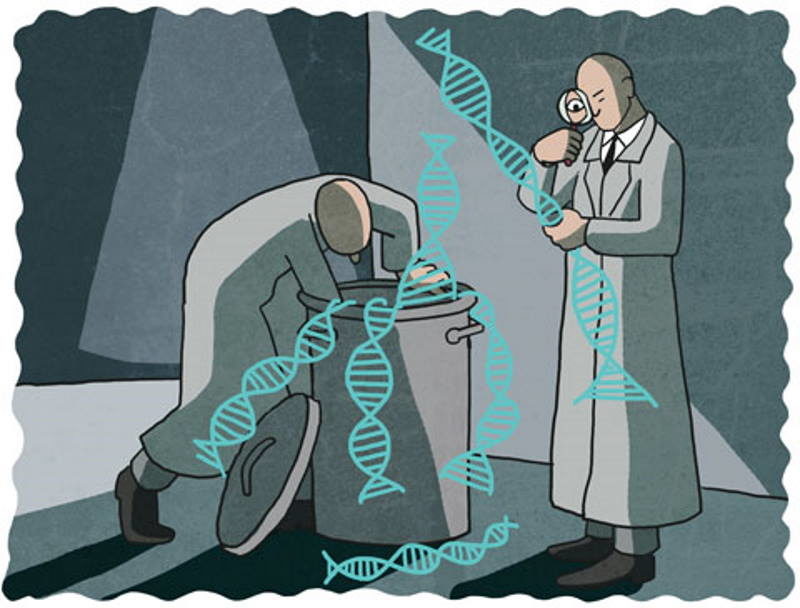
In his 2011 book The Myth of Junk DNA, Jonathan Wells called the notion of junk DNA a science-stopper. Noting discoveries already made by 2011, he said these are "exciting times," predicting that ongoing research would continue to discover functions that were not yet imagined. As the following papers show, he was right.

Cistromes

In PNAS, Dongyin Guan and Mitchell A. Lazar commented on work by Fei et al., concluding that "noncoding mutations in enhancers and other, less well-characterized, TF [transcription factor] binding regions also have large effects on cell survival and proliferation." Their review, "Shining light on dark matter in the genome," begins,
The complexity of multicellular organisms requires the genome to be transcribed in a cell-type-dependent manner that is responsive to signals, such as hormones, from the internal environment. This is mediated by the epigenome, which decorates and organizes the genome in a web of modified histone proteins functioning in nucleosomes and chemical modifications to genomic DNA arranged 3-dimensionally in the cell nucleus. Functional features of the epigenome such as acetylation of histone lysine residues are "read" by specialized proteins such as those containing bromodomains. Likewise, the genome itself is read by proteins known as sequence-specific transcription factors (TFs), which recognize and bind to specific motifs in genomic DNA. The totality of these sites for a given transcription factor in a given cell is known as its "cistrome". Most of these binding sites occur in the ∼99% of the genome that does not encode for proteins. [Emphasis added.]


Comment: It is a shame that most conventional microbiology seems to start with the unspoken assumption that Nature is wasteful and arbitrary whenever it comes up against something it doesn't immediately comprehend. Hence the terms 'junk' and 'parasite' for misunderstood DNA structures. How much quicker would the science progress if they took the stance as Paul Nelson has: "If it works, it's not happening by accident."


People 2

Fooling ourselves: Even with accurate info, humans 'self-generate their own misinformation'

communication social media graphic
© iStockphoto
Although social media giants such as Facebook and Twitter have taken heat for spreading misinformation, it turns out that we — all of us — may be our own worst enemies in the battle against the scourge of fake news.

A new study found that people given accurate statistics on controversial topics tend to misremember those numbers in order to fit their own commonly held beliefs.

In the study, when people were shown that the number of Mexican immigrants in the United States declined recently — which is true but has gone against most people's beliefs — they tended to recall the opposite.

Comment: More from the Ohio State researchers:
The researchers found that people usually got the numerical relationship right on the issues for which the stats were consistent with how many people viewed the world. For example, participants typically wrote down a larger number for the percentage of people who supported same-sex marriage than for those who opposed it - which is the true relationship.

But when it came to the issues where the numbers went against many people's beliefs - such as whether the number of Mexican immigrants had gone up or down - participants were much more likely to remember the numbers in a way that agreed with their probable biases rather than the truth.

"We had instances where participants got the numbers exactly correct - 11.7 and 12.8 - but they would flip them around," Coronel said.

"They weren't guessing - they got the numbers right. But their biases were leading them to misremember the direction they were going."

By using eye-tracking technology on participants while they read the descriptions of the issues, the researchers had additional evidence that people really were paying attention when they viewed the statistics.

"We could tell when participants got to numbers that didn't fit their expectations. Their eyes went back and forth between the numbers, as if they were asking 'what's going on.' They generally didn't do that when the numbers confirmed their expectations," Coronel said.

"You would think that if they were paying more attention to the numbers that went against their expectations, they would have a better memory for them. But that's not what we found."

In the second study, the researchers investigated how these memory distortions could spread and grow more distorted in everyday life. They designed a study similar to the childhood game of "telephone."

For example, the first person in the "telephone chain" in this study saw the accurate statistics about the trend in Mexican immigrants living in the United States (that it went down from 12.8 million to 11.7 million). They had to write those numbers down from memory, which were then passed along to the second person in the chain, who had to remember them and write them down. The second person's estimates were then sent to a third participant.

Results showed that, on average, the first person flipped the numbers, saying that the number of Mexican immigrants increased by 900,000 from 2007 to 2014 instead of the truth, which was that it decreased by about 1.1 million.

By the end of the chain, the average participant had said the number of Mexican immigrants had increased in those 7 years by about 4.6 million.

"These memory errors tended to get bigger and bigger as they were transmitted between people," Sweitzer said.

Coronel said the study did have limitations. For example, it is possible that the participants would have been less likely to misremember if they were given explanations as to why the numbers didn't fit expectations. And the researchers didn't measure each person's biases going in - they used the biases that had been identified by pre-tests they conducted.

Finally, the telephone game study did not capture important features of real-life conversations that may have limited the spread of misinformation.

But the results did suggest that we shouldn't worry only about the misinformation that we run into in the outside world, Poulsen said.

"We need to realize that internal sources of misinformation can possibly be as significant as or more significant than external sources," she said.

"We live with our biases all day, but we only come into contact with false information occasionally."


Info

C-section would increase risk of obesity in a child debunked by Swedish study

C-Section Study
© Karolinska Institutet
Women who have C-sections are no more likely to have children who develop obesity than women who give birth naturally, according to a large study by researchers at Karolinska Institutet in Sweden published in the journal PLOS Medicine. The findings contradict several smaller studies that did find an association between C-section deliveries and offspring obesity but did not consider the numerous maternal and prenatal factors that the researchers did in this study.

Cesarean or C-section deliveries have soared in recent years, from 6.7 percent globally in 1990 to around 19.1 percent in 2014, according to earlier reports. The jump has sparked intense research into the long-term consequences of C-section on offspring health, and several studies have linked cesarean deliveries with increased risks for asthma, various allergies and obesity. The association with obesity has, however, mainly been confirmed in smaller studies that were unable to account for a wide array of possible confounders or differentiate between types of C-sections.

The researchers in this study set out to investigate if indeed increased C-section births could explain part of the rise in obesity also seen in the last decades, and whether this potential association held true once they accounted for maternal and prenatal factors known to impact offspring weight. They compared the body-mass index (BMI) of nearly 100,000 male 18-year-olds and divided them into categories depending on whether they were born through vaginal delivery, elective C-section or non-elective C-section.

Blue Planet

Whales, bees, and viruses: Intelligent design all the way down and all the way up

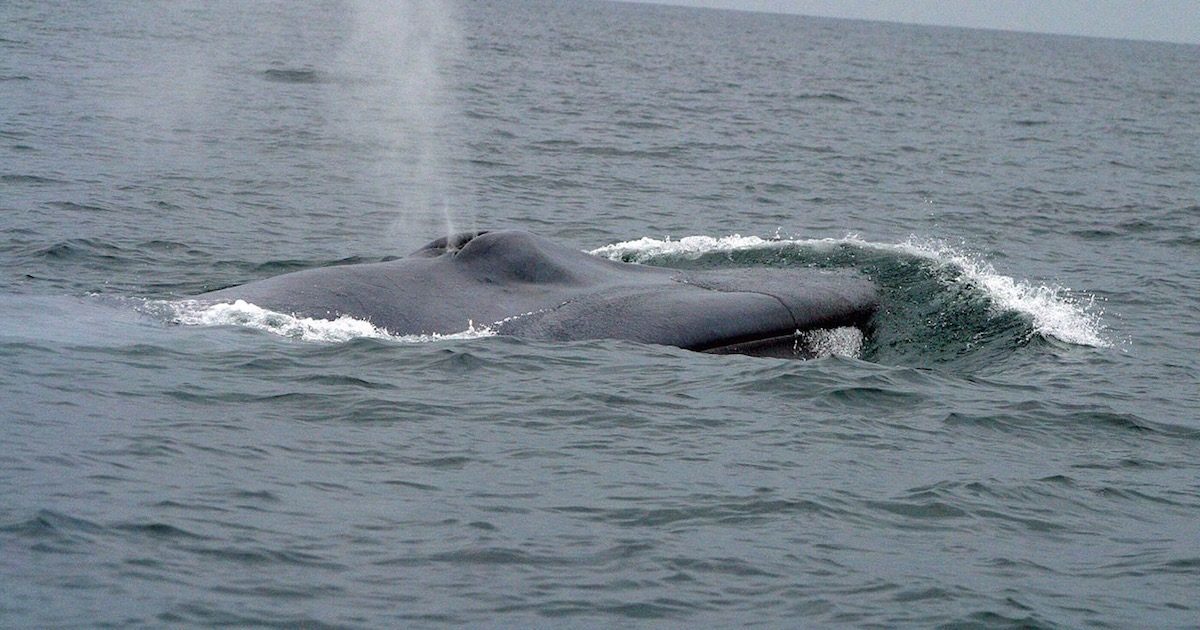
Blue Whale
© NOAAThe largest animal on earth is a blue whale. The smallest organism (or component of life) is a virus. At both extremes, design is on display.


Blue Whale Diving Design


The heart of a blue whale, largest animal on earth, weighs as much as a cow (about 1,000 pounds, says NOAA), and pumps 60 gallons per beat. How does one measure the heartbeat of a blue whale? Ask the marine biologists at Stanford, who were so glad their method worked, they ran victory laps around their lab. First, they had to find the elusive blue whale. Then, they had to attach suction cups to the underside, equipped with electronic sensors to record the heart rate during the whale's deep dives. Finally, they had to find the suction cups after the experiment. A floating package with GPS transmitter led them to the spot for retrieving the data loggers. When they got their data, no wonder they were excited.

The team had tried their method on smaller, captive whales before attempting the grand prize on a blue whale in the wild. According to their paper in PNAS, "Extreme bradycardia and tachycardia in the world's largest animal," the blue whale is at the extremes of what is possible for a heart. The heart rate, normally 25 to 37 beats per minute at the surface, slowed down to only 2 beats per minute in the deepest part of the dive. That's much slower than they expected.

Comment: More on Intelligent Design: Also check out:


Frog

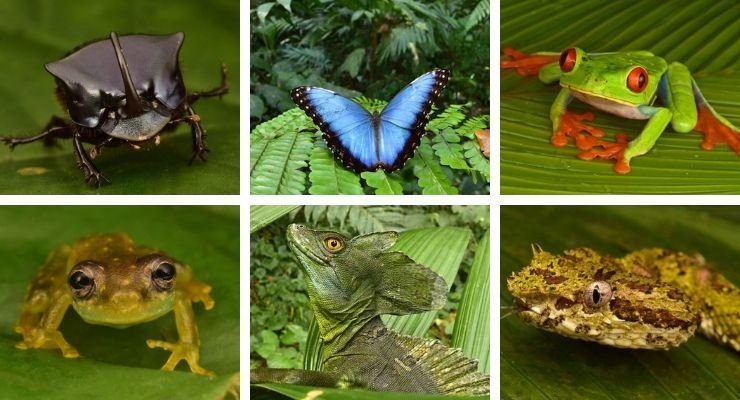
Flashback Dozens of 'extinct' creatures found living in 'Lost City' deep within the Honduran rainforest

extinct creatures found honduras rainforest
© rond Larsen / Conservation InternationalScientists documented 198 species of birds, 94 butterfly species, 40 of small mammals, 56 amphibian and reptile species, and 30 species of large mammals—including jaguars, ocelots and pumas—not to mention a huge variety of plants, fish, rodents and insects.
A specialized team of conservation scientists has found what appears to be a hidden oasis deep in the rainforest of Honduras that's teeming with dozens of rare and endangered creatures.

The remote settlement, known as the "Lost City of the Monkey God" or "White City" and located in the Mosquitia rainforest, is a stunning example of the biodiversity that was once common across the tropics and rainforests in the region. The rainforest is home to hundreds of species of bats, butterflies and reptiles, the Independent reports.

The "ecological SWAT team" from Conservation International's Rapid Assessment Program (RAP) conducted their three-week expedition in 2017 after ancient ruins were discovered in the rainforest, which remains one of the least-explored areas of the region. Their full report on the expedition and its dizzying array of findings was only published this week.

Comment: See also:


Comet

TESS observes huge outburst from comet 46P/Wirtanen

NASA's exoplanet-hunting satellite captured the most complete and detailed observation of a comet's spontaneous outburst in history
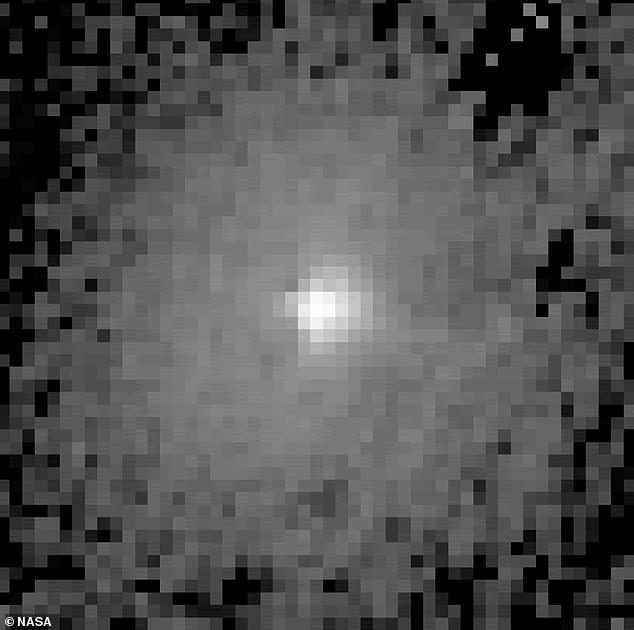
© NASANASA's exoplanet-hunting satellite captured the most complete and detailed observation of a comet's spontaneous outburst in history. The Transiting Exoplanet Survey Satellite (TESS) recorded the moment ice and dust exploded from the comet 46P/Wirtanen in 2018 as it made its closest pass to Earth
On September 26, 2018, NASA's Transiting Exoplanet Survey Satellite (TESS) observed an outburst of gas, ice and dust from the nucleus of comet 46P/Wirtanen. This is the most detailed observation to date of the formation and dissipation of a natural comet outburst.

Normal comet activity is driven by sunlight vaporizing the ices near the surface of the nucleus, and the outflowing gases drag dust off the nucleus to form the coma. However, many comets are known to experience occasional spontaneous outbursts that can significantly, but temporarily increase the comet's activity.

It is not currently known what causes these outbursts, but they are related to the conditions on the comet's surface.

A number of potential trigger mechanisms have been proposed, including a thermal event, in which a heat wave penetrates into a pocket of highly volatile ices, causing the ice to rapidly vaporize and produce an explosion of activity, and a mechanical event, where a cliff collapses, exposing fresh ice to direct sunlight.

Studies of the outburst behavior can help scientists understand the physical and thermal properties of a comet.


Comment: What about the 'electrical' nature of a comet? See also: 'Oumuamua reclassified from 'asteroid' to 'comet' (because they're essentially the same thing)

An important note on comets as detailed by Pierre Lescaudron in Earth Changes and The Human cosmic Connection:
Comets or Asteroids

The fundamental difference between asteroids and comets is not their chemical composition, i.e. dirty, fluffy icy comets vs. rocky asteroids. Rather, as has long been put forward by plasma theorists, what differentiates 'comets' from 'asteroids' is their electric activity.

When the electric potential difference between an asteroid and the surrounding plasma is not too high, the asteroid exhibits a dark discharge mode or no discharge at all. But when the potential difference is high enough, the asteroid switches to a glowing discharge mode. At this point the asteroid is a comet. From this perspective, a comet is simply a glowing asteroid and an asteroid is a non-glowing comet. Thus the very same body can, successively, be a comet, then an asteroid, then a comet, etc., depending on variations in the ambient electric field it is subjected to.

Comment: Comet 67P surprises scientists with 'bright outbursts', collapsing cliffs and rolling boulders during Rosetta mission


Brain

Scientists discover a prolonged stay in Antarctica has a chilling effect on the brain

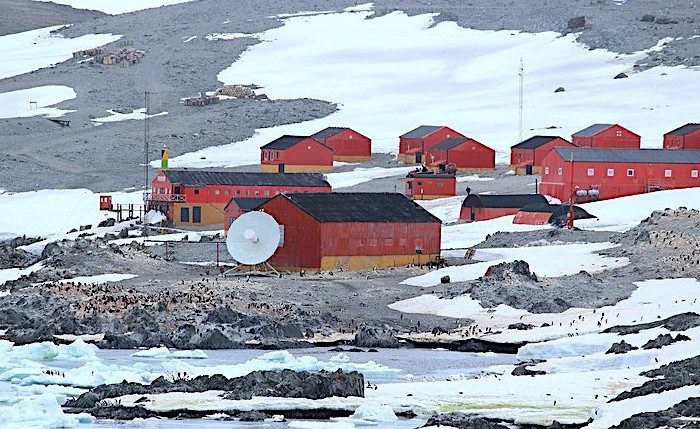
Antarctica research station
© Pixabay/Michelle MariaAntarctica research station
While the prospect of a polar research expedition in the Antarctic might seem like a dream come true for many, the reality of prolonged darkness in isolation is so severe that it actually shrinks parts of the human brain.

Researchers from Charité - Universitätsmedizin Berlin and the Max Planck Institute for Human Development studied the effects of social isolation and extreme environmental conditions on the brains of five men and four women who spent a total of 14 months in the Antarctic, nine of which saw them cut off from the outside world.

The plucky participants ventured to the Neumayer-Station III, which experiences temperatures as low as -50 degrees Celsius (-58 degrees Fahrenheit) and almost complete darkness during the winter months.

To make matters worse, because of the harsh and unforgiving environment, there was no real chance to opt out of the mission during the winter months; emergency evacuation and food and equipment deliveries only take place during the summer months, so that is one long winter to spend with little privacy or personal space.

Life Preserver

Fungi Perfecti: Mushroom extracts are saving millions of bees from Colony Collapse Disorder

bees
A recent study published in Nature Scientific Reports, a specific type of mushroom extract can help honey bees fight off a devastating virus that is suspected of contributing to massive bee die-offs in recent years.

Bees are dying, in massive numbers. Termed colony collapse disorder, a significant cause of the die-offs is a parasite named Varroa destructor. A tiny 2mm eight legged mite that invades honeybee hives around the world, latching onto the bees and feeding on their bodies, a process which transmits a devastating RNA virus.

This new study was conducted by researchers at Washington State University, with help from the USDA and a Washington based business called Fungi Perfecti.

Comment: Paul Stamets' epiphany that mushrooms could help save the world's bees


Info

Men lose Y chromosomes as they age says study

Human Chromosomes
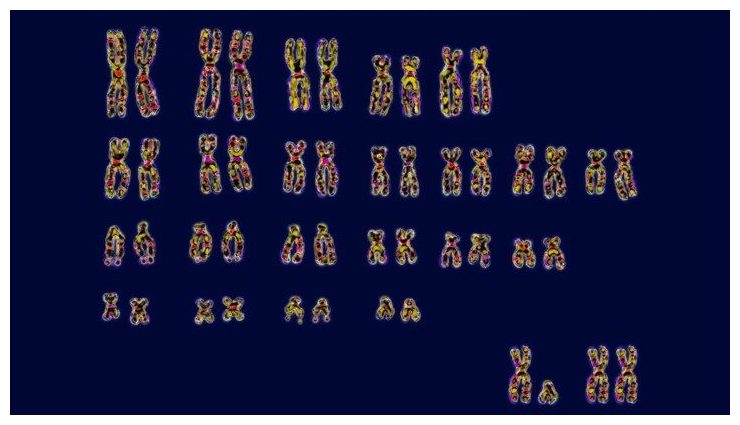
© BSIP/UNIVERSAL IMAGES GROUP VIA GETTY IMAGESA set of human chromosomes, with a pair of XY and XX chromosomes in the bottom right.
In the 1960s, doctors counting the number of chromosomes in human white blood cells noticed a strange phenomenon. Frequently — and more frequently with age — the cells would be missing the Y chromosome. Over time, it became clear this came with consequences. Studies have linked loss of the Y chromosome in blood to cancer, heart disease, and other disorders.

Now a new study — the largest yet of this phenomenon — estimates that 20 percent of 205,011 men in a large genetic database called the UK Biobank have lost Y chromosomes from some detectable proportion of their blood. By age 70, 43.6 percent of men had the same issue. It's unclear exactly why, but the authors think these losses might be the most glaring sign of something else going wrong inside the bodies of these men: They are allowing mutations of all kinds to accumulate, and these other mutations could be the underlying links to cancer and heart disease.

Mutations are, after all, spontaneously popping up in the human body all the time. Every cell division produces errors as small as miscopying one letter or as large as losing an entire chromosome. So over a lifetime, this can lead to what scientists call "clonal mosaicism" — in which a person's body is a mosaic of distinct populations of cells, each with their accumulated mutations. This is true of everyone to some extent, but it becomes more relevant as you get older. "The more you age, the more errors have taken place in cell division," says John R. B. Perry, a biologist at the University of Cambridge who led the recent study.

Handcuffs

'Short window' to stop AI taking control of society, warns ex-Google employee

google employee walkout
© Nick BradshawGoogle employees in Dublin take part in an organised walkout in November 2018: some 20,000 employees in 50 cities across the globe were involved in the walkout.
Meredith Whittaker warns we are becoming lab animals in a giant tech experiment.

The big news in tech this week is the announcement that Google co-founders Larry Page and Sergey Brin are stepping down as executives of parent company Alphabet, founded in 2015 with the goal of making it "cleaner and more accountable".

Page and Brin said it was time to "assume the role of proud parents - offering advice and love, but not daily nagging" while handing the reins to Sundar Pichai.

A group of Google employees feel differently: "Some had seriously hoped Sergey and Larry would step in and fix Google. Instead of righting the sinking ship, they jumped ship," tweeted Google Walkout for Real Change, a worker's organisation protesting, various unfair practices and policies within the tech company.

Comment: For as much debasing of the Chinese social credit system you see in the western press, this system is basically already here, only in a more covert form. The future of the western world is a society run by these technocratic institutions, where the fate of the individual is determined by a set of algorithms.

See also: