Science & TechnologyS


Cassiopaea

Space super-storms occur every 25 years, new research shows

stratosphere
© CC0 Public Domain
A 'great' space weather super-storm large enough to cause significant disruption to our electronic and networked systems occurred on average once in every 25 years, according to a new joint study by the University of Warwick and the British Antarctic Survey.

By analysing magnetic field records at opposite ends of the Earth (UK and Australia), scientists have been able to detect super-storms going back over the last 150 years.

This result was made possible by a new way of analysing historical data, pioneered by the University of Warwick, from the last 14 solar cycles, way before the space age began in 1957, instead of the last five solar cycles currently used.

The analysis shows that 'severe' magnetic storms occurred in 42 out of the last 150 years, and 'great' super-storms occurred in 6 years out of 150. Typically, a storm may only last a few days but can be hugely disruptive to modern technology. Super-storms can cause power blackouts, take out satellites, disrupt aviation and cause temporary loss of GPS signals and radio communications.

Comment: As Earth's geomagnetic field wanes in tandem with what has been called a 'grand' solar minimum, the impact these super storms can have could become amplified many times over - our planet is already witnessing the probable effects caused by our weakening magnetic field: Also check out SOTT radio's:


Question

Researchers in ocean food chain study puzzled by what devoured alligator corpse 1.5 miles beneath the sea

mystery predator ocean alligator
© Lumcon via Pen NewsAll that was left after one of the three alligators was snatched whole
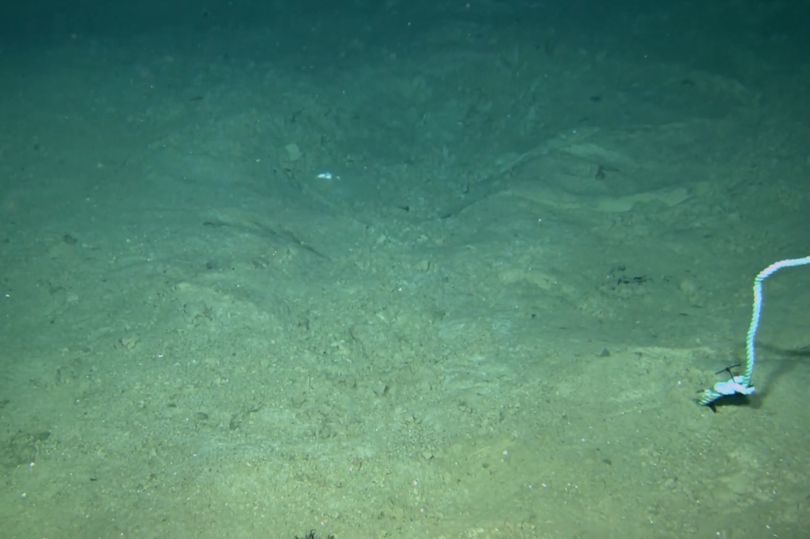
A mystery predator devoured an alligator corpse after researchers left it underwater for an ocean study.

Scientists had lowered the three dead reptiles at a depth of one and a half miles in the Gulf of Mexico to understand how carbon-hungry creatures of the deep would react.

Despite one alligator and its harness having a combined weight of 38.9kg (85.8lbs), a mystery predator managed to pull it 30ft through the sand, drag marks suggested. The rope was bitten completely through, allowing the predator to carry away its meal.

Brain

Glutamate in the brain has unexpected qualities, researchers show with new analysis method

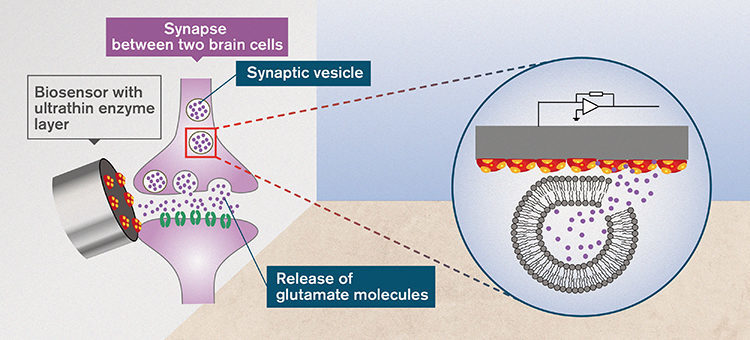
Glutamate analysis
Researchers at Chalmers University of Technology and Gothenburg University in Sweden have achieved something long thought almost impossible -- counting the molecules of the neurotransmitter glutamate released when a signal is transferred between two brain cells. With a new analysis method, they showed that the brain regulates its signals using glutamate in more ways than previously realised.

The ability to measure the activity and quantity of glutamate in brain cells has been long sought-after among researchers. Glutamate is the major excitatory neurotransmitter in the brain. Despite its abundance, and its influence on many important functions, we know a lot less about it than other neurotransmitters such as serotonin and dopamine, because so far glutamate has been difficult to measure quickly enough.

The new findings around glutamate are therefore very significant and could help improve our understanding of the pathologies underlying neurological and psychiatric diseases and conditions. The relationship between glutamate and these disorders, as well as our memory, our appetite and more, are just some of the questions which the researchers' newly discovered technology could help answer.

"When we started, everybody said 'this will never work'. But we didn't give in. Now we have a beautiful example of how multi-disciplinary basic science can yield major breakthroughs, and deliver real benefit," says Ann-Sofie Cans, Associate Professor in Chemistry at Chalmers and leader of the research group.

Galaxy

Astronomers spot two-star system spinning so fast it's bending space & time

Astronomers spot two-star system spinning so fast it’s bending space & time
© Mark Myers, OzGrav ARC Centre of Excellence/Swinburne University of Technology
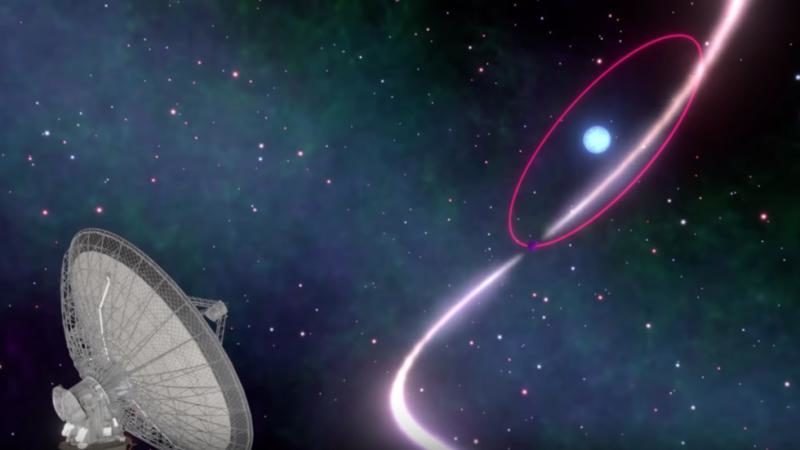
Astrophysicists spend their time working on some truly mind-bending stuff but after two decades of observations, scientists have witnessed a pair of stars spinning so fast they literally bend both space and time.

The team has been tracking the orbit of the extraordinary binary star for about 20 years, using the CSIRO Parkes Observatory's 64-metre radio telescope.

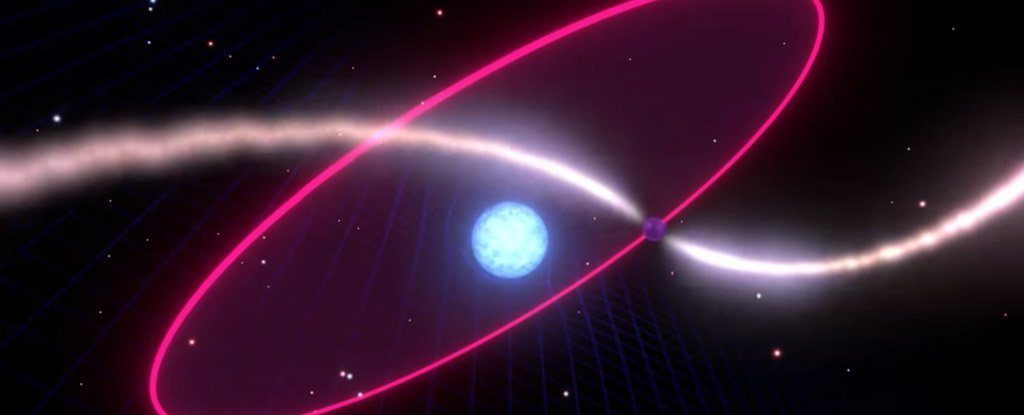
The researchers, from the ARC Centre of Excellence of Gravitational Wave Discovery, caught the spinning celestial bodies "frame-dragging" or, in other words, twisting both space and time with their immense gravity.

The research, published Friday in the journal Science, is yet more evidence for Einstein's theory of general relativity.

The binary star is made up of two stars. One is a white dwarf, a star whose nuclear fuel has run out, which is roughly the size of the Earth but has 300,000 times its density. The other is a neutron star which is somehow about 100 billion times the density of the Earth while only measuring approximately 20 kilometers (12.5 miles) in diameter.

All that matter is compressed into a star system with the catchy name "PSR J1141-6545."


Comment: See also:


Bulb

Scientists turn bee guts into medicine factories to FIGHT OFF deadly pathogens

Bees
© Pexels.com
In a development that could save the US economy tens of billions of dollars, researchers have developed a technique to immunize honey bees against two major pathogens using bioengineered bacteria.

Last winter, US beekeepers lost 40 percent of their honey bees; it was the highest mortality rate since national surveying began 13 years ago. Honey bees contribute approximately $20 billion-worth of value to US crop production, so safeguarding them is huge from both an economic and conservation standpoint.

Like many of the best solutions, the method discovered by the scientists from the University of Texas at Austin is actually rather simple. The team developed a bioengineered strain of bacteria which is fatal to two major pathogens responsible for colony collapse in bees.

They then simply added the bacteria to a sugar water solution and waited for the bees to ingest it while grooming each other.

Comment: See also: Mycologist Paul Stamets discovers all natural pest-fighting fungi


Galaxy

Warp factor: Spinning star observed dragging the very fabric of space and time

warp time space
© Mark Myers/OzGrav ARC Centre of Excellence/Swinburne University of Technology
One of the predictions of Einstein's general theory of relativity is that any spinning body drags the very fabric of space-time in its vicinity around with it. This is known as "frame-dragging".

In everyday life, frame-dragging is both undetectable and inconsequential, as the effect is so ridiculously tiny. Detecting the frame-dragging caused by the entire Earth's spin requires satellites such as the US$750 million Gravity Probe B, and the detection of angular changes in gyroscopes equivalent to just one degree every 100,000 years or so.

Luckily for us, the Universe contains many naturally occurring gravitational laboratories where physicists can observe Einstein's predictions at work in exquisite detail. Our team's research, published today in Science, reveals evidence of frame-dragging on a much more noticeable scale, using a radio telescope and a unique pair of compact stars whizzing around each other at dizzying speeds.

Comment: See also: Light from Betelgeuse faintest ever recorded, temperature way down in just 4 months, yet star has 'swollen' by 9%


Gold Bar

Modern day alchemy: Scientists create a type of 'plastic gold'

plastic gold alchemy
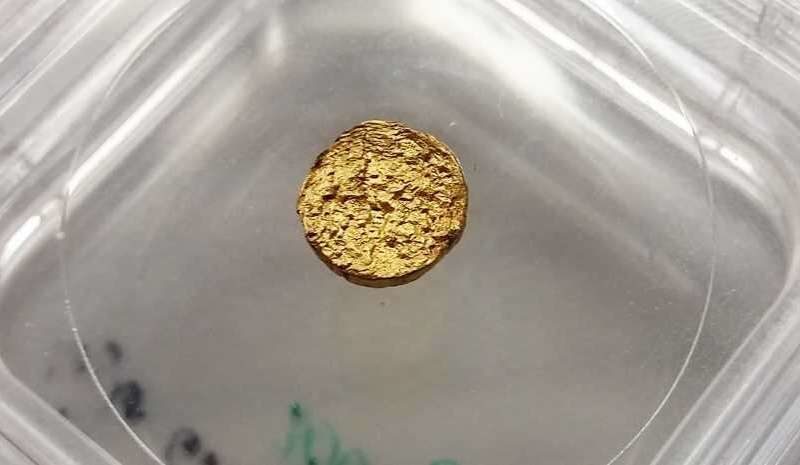
© ETH Zurich / Peter RüeggLooks amazingly similar to a real nugget: 18-carat gold with latex as the base material.
ETH researchers have created an incredibly lightweight 18-carat gold, using a matrix of plastic in place of metallic alloy elements.

Lovers of gold watches and heavy jewellery will be thrilled. The objects of their desire may someday become much lighter, but without losing any of their glitter. Especially with watches, a small amount of weight can make all the difference. No one wants to wear a heavy watch on their wrist, even if it's made of real gold. After a time, it becomes uncomfortable and annoying.

Formerly a postdoc in the ETH lab headed by Raffaele Mezzenga, Professor of Food and Soft Materials, Leonie van 't Hag set to create a new form of gold that weighs about five to ten times less than traditional 18-carat gold. The conventional mixture is usually three-quarters gold and one-quarter copper, with a density of about 15 g/cm3.

Info

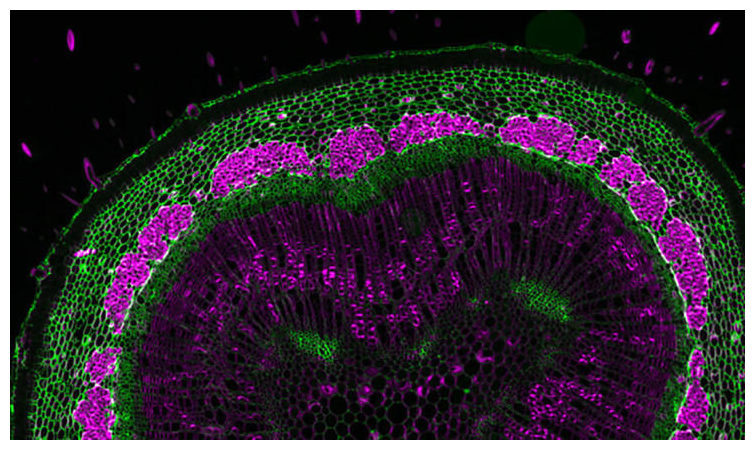
Trees can sense their own weight says new study

Stem of Birch Tree
© MATTHIEU BOURDON, JUAN ALONSO-SERRASecondary growth inside a stem of birch showing cellulose in magenta and pectin rich tissues in green.
Trees are known for their great, but not unlimited, trunk height and diameter. They have evolved to develop a heavy above-ground biomass, but this integral feature poses a challenge to the trunk's stability. Despite its evident importance, the principle by which plant stems respond to their increasing weight remains unknown. To address this question, a theory of "vertical proprioception", a mechanism that balances the radial growth of the stem with the weight increase, has been developed.

To study the theory, researchers at the University of Helsinki, University of Cambridge and Natural Resources Institute Finland manipulated the aerial weight of downy birch (Betula pubescens). The authors observed that the tree was indeed able to adjust its stem radial growth in response to the added weight, and the strength of this response varied along the length of the stem. Furthermore, a degree of lateral stem movement was required for this response: static trees did not grow as thick as free-moving ones.

"Even though the idea of plants sensing their own weight and thickening their stem accordingly sounds intuitive, our study is the first one to address this question in trees", says Juan Alonso-Serra from the Faculty of Biological and Environmental Sciences.

Cloud Precipitation

Climate change: Worst emissions scenario 'exceedingly unlikely'

wind farm windmills
© Getty ImagesThe falling cost of renewable energy is making the most extreme emissions scenario much less likely.
The worst-case scenario for emissions of CO2 this century is no longer plausible, say researchers.

Referred to as "business as usual", the scenario assumes a 500% increase in the use of coal, which is now considered unlikely.

Climate models suggest that this level of carbon could see warming of up to 6°C by 2100, with severe impacts.

Researchers say that on current trends, a rise in temperatures of around 3°C is far more likely.

Comment: Again, what we're seeing in the above piece is that even what the AGW scientists are saying does not line up with what the activists are using to push their agenda. Instead of treating the 'worst-case-scenario' as just that, the eco-terrorists have taken it as the inevitable unless radical change is implemented immediately. It would be nice if Greta was speaking to these guys instead of the Hollywood stars and radical activists she's been hanging around (to hope for more would probably be too much to ask). At least that might take a bit of the fundie wind out of her sails.

See also:


Arrow Up

Bubbling carbon dioxide vent discovered on the seafloor off the Philippines

A scientist collects gas samples at the newly discovered Soda Springs in the Philippines
© University of Texas Jackson School of GeosciencesA scientist collects gas samples at the newly discovered Soda Springs in the Philippines.
Diving hundreds of feet below the surface of the ocean off the coast of the Philippines, scientists came across a bubbling hotspot of carbon dioxide. And this newly discovered vent might help us predict how coral reefs will deal with climate change, according to a new study.

Bayani Cardenas, a professor in the Department of Geological Sciences at The University of Texas at Austin, accidentally discovered this carbon dioxide fountain while researching the effect of groundwater runoff into the ocean environment in the Philippines's Verde Island Passage.

This strait that runs between the Luzon and Mindoro islands, connecting the South China Sea with the Tayabas Bay, is busy on its surface, serving as a prominent shipping route. It's also busy below the surface, where it harbors one of the most diverse marine ecosystems in the world. And the reefs in this passage, unlike bleached reefs elsewhere, are thriving, according to a statement from The University of Texas.

The researchers named the new hotspot Soda Springs and said that it could have been releasing these bubbles for decades or even millennia.

Soda Springs is a result of an underwater volcano, which vents gas and acidic water through cracks in the ocean floor. The researchers found carbon dioxide concentrations as high as 95,000 parts per million (ppm) near the springs, which is over 200 times the concentration present in the atmosphere, according to the statement.

Comment: Mysterious 'pocket' of underwater gas could contain millions of tons of natural gas or CO2