Science & TechnologyS


Airplane

Scientists create 'air plasma' jet engine powered by only electricity

jet engine
© RgStudio/Getty Images
A prototype design of a plasma jet thruster can generate thrusting pressures on the same magnitude a commercial jet engine can, using only air and electricity

Humans depend on fossil fuels as their primary energy source, especially in transportation. However, fossil fuels are both unsustainable and unsafe, serving as the largest source of greenhouse gas emissions and leading to adverse respiratory effects and devastation due to global warming.

A team of researchers at the Institute of Technological Sciences at Wuhan University has demonstrated a prototype device that uses microwave air plasmas for jet propulsion. They describe the engine in the journal AIP Advances, from AIP Publishing.

Microscope 1

German scientists find antibodies that block coronvirus from entering cells

Coronavirus antibodies
© Pixaba/enriquelopezgarre
Scientists have detected an antibody that blocks the coronavirus from entering cells, providing a much-needed shield for severely ill patients. While not a cure or vaccine, it is still a significant development.

"This is clearly a breakthrough that shows that we are on the right track for the development of a drug against Covid-19," said virologist Professor Luka Cicin-Sain.

"In repeated experiments, we were able to show that this result is sustainable."

Cicin-Sain and his team analyzed 6,000 different human antibodies and found more than 750 that dock with the coronavirus and prevent it from spreading further in already infected patients. The antibodies are currently undergoing additional testing on cell cultures to whittle their number down to find the most effective at blocking the infection.

Fish

Magnetic pulses alter salmon's orientation, suggesting they navigate via magnetite in their tissue

salmon
Salmon
Researchers in Oregon State University's College of Agricultural Sciences have taken a step closer to solving one of nature's most remarkable mysteries: How do salmon, when it's time to spawn, find their way back from distant ocean locations to the stream where they hatched?

A new study into the life cycle of salmon, involving magnetic pulses, reinforces one hypothesis: The fish use microscopic crystals of magnetite in their tissue as both a map and compass and navigate via the Earth's magnetic field.

Findings were published in the Journal of Experimental Biology.

Researchers including David Noakes, professor of fisheries and wildlife at OSU and the director of the Oregon Hatchery Research Center, subjected juvenile chinook salmon to a type of brief but strong magnetic pulse known to reverse the polarity of magnetic particles and affect magnetic orientation behavior in other animals.

Comment: See also: And check out SOTT radio's: The Truth Perspective: Are Cells the Intelligent Designers? Why Creationists and Darwinists Are Both Wrong


Solar Flares

Astronomer spots plasma leaking from sun's surface

solar prominence An erupting solar prominence observed by the Solar Dynamics Observatory satellite on March 30, 2010.
© NASA/GSFC/SDO/AIA
A massive prominence is jutting out over the sun's southeastern limb today--and it's leaking plasma. Sylvain Chapeland filmed the gigantic structure from his backyard observatory in Gex, France:


Health

Researchers say COVID-19 mutation appears more contagious than original strain, may explain difference in severity in different areas

Una ilustración del coronavirus 2019-nCoV.
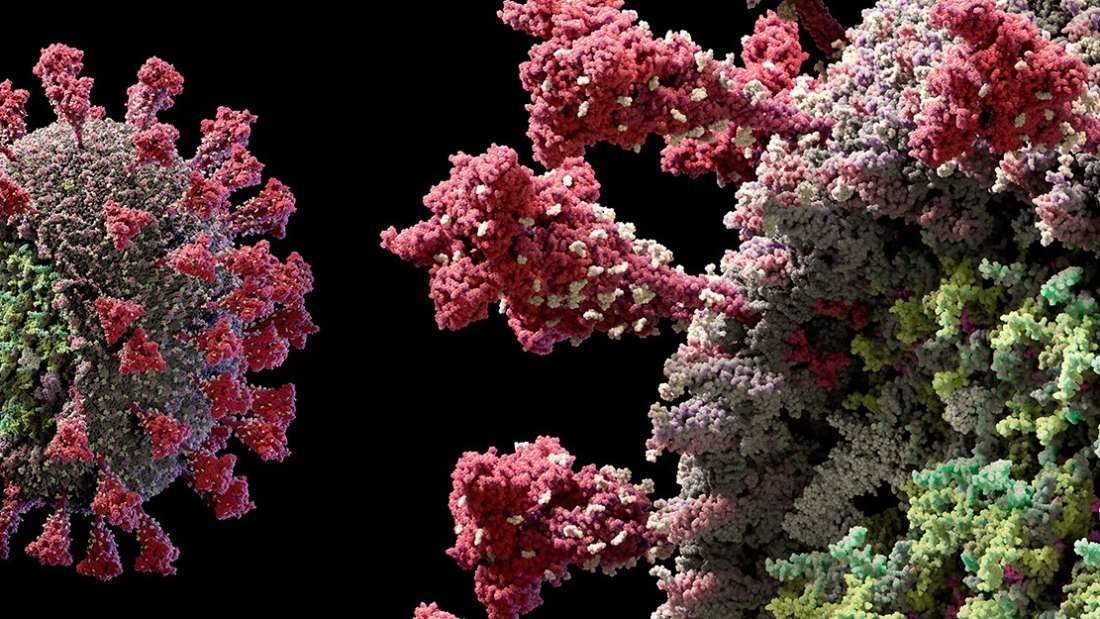
© Alissa Eckert, MS; Dan Higgins, MAM/CDC / ReutersThe ultrastructural morphology exhibited by coronaviruses, including the novel coronavirus identified as the cause of an outbreak of respiratory illness first detected in Wuhan, China in 2019, 2020.
Similarities, differences between 1918 and 2020 pandemics

In many ways, 2020 is looking like 1918, the year the great influenza pandemic raged. Like then, science is unable to crush an insidious yet avoidable infectious disease before hundreds of thousands die from it.

Researchers at Los Alamos National Laboratory say they have identified 14 new mutations of the novel coronavirus that first originated in Wuhan, China in hopes of creating an early warning system to reveal new strains that may render future vaccines ineffective.

One mutation that is of urgent concern to researchers is called "mutation spike D614G" which scientists say first appeared in February in Europe and became dominant strain across the world by mid-March.

Comment: RT has more on the newly-identified mutation:
Fears that the coronavirus would mutate into a more dangerous strain appear to have been borne out, as research has identified that a new, more contagious strain of SARS-CoV-2 has become the dominant form worldwide.

The new strain, which has been dubbed 'Spike D614G' has been proliferating in Europe since at least mid-February, and spread to become the dominant form during the month of March. It is far more contagious than the original strain which emerged from Wuhan, for reasons as yet unknown.

Wherever it emerged it became dominant very quickly, and in some countries it became the only common strain within weeks. The paper notes that the rapid global spread of the coronavirus has provided it with "ample opportunity for natural selection to act upon rare but favorable mutations.'' Furthermore, if the virus does not wane away as the weather warms in summer there will be nothing to stop it mutating into more and more strains.

[...]

Wasted efforts

Although there is not really any good news here, this may not be as bad as it sounds. There is at present no suggestion that Spike D614G is any more deadly than the original. The British team calculated that people were no more likely to be hospitalized by it, although they did seem to have higher viral loads (more of the virus in their body).

But even if Spike D614G is not meaningfully different from the old strain, it does not mean that nothing has changed. The problems introduced by multiple forms of a virus have everything to do with immunity and vaccination. If a person had contracted and been ill with one strain, that would still be no guarantee of immunity to another. Epidemiologists could be left every winter having to guess what the commonest strain of coronavirus will be, as they do with the flu.

Furthermore, the development of a vaccine relies on designing the antibodies to match perfectly to the specific 'Spikes' on the outside of the virus. If these are mutated, any potential vaccine might not be specific enough to target that strain. Receiving the vaccine would provide no guarantee of immunity. This possibility is especially worrying to the study's authors.


Bingo.


The authors have also been led to speculate that the wildly different outbreaks experienced in different regions could be down to different strains. Spike D614G hit Italy in early February, probably around the same time as the older strain hit there. Italy has been one of Europe's worst affected countries.

And in America, just a few days after the first cases were reported in New York, Spike D614G was the dominant form there. Contrasting New York City with the relatively mild outbreak on America's West Coast suggests that different strains could be at play. No matter what details transpire, it's clear that in a world with multiple strains of coronavirus, developing vaccines or treatments is only going to get harder.
Thus the logic of naturally developed herd immunity, which the Swedish government applied, still holds. Each population will develop antibodies matched to the virus strain circulating in their area. Nature is always way ahead of the vaccine witchdoctors.


Rose

Nature leads the way: 'Artificial leaf' concept inspires research into solar-powered fuel production

artificial leaf water splitting fuel source
© Jia Liang/Rice UniversityA schematic and electron microscope cross-section show the structure of an integrated, solar-powered catalyst to split water into hydrogen fuel and oxygen. The module developed at Rice University can be immersed into water directly to produce fuel when exposed to sunlight.
Rice University researchers have created an efficient, low-cost device that splits water to produce hydrogen fuel.

The platform developed by the Brown School of Engineering lab of Rice materials scientist Jun Lou integrates catalytic electrodes and perovskite solar cells that, when triggered by sunlight, produce electricity. The current flows to the catalysts that turn water into hydrogen and oxygen, with a sunlight-to-hydrogen efficiency as high as 6.7%.

This sort of catalysis isn't new, but the lab packaged a perovskite layer and the electrodes into a single module that, when dropped into water and placed in sunlight, produces hydrogen with no further input.

Comet 2

New Comet C/2020 H6 (ATLAS)

CBET 4768 & MPEC 2020-J23, issued on 2020, May 03, announce the discovery of a comet (magnitude ~18.5) on individual images from taken on Apr. 22 UT with a 0.5-m f/2 Schmidt reflector at Haleakala, Hawaii, in the course of the "Asteroid Terrestrial-Impact Last Alert System" (ATLAS) search program. The new comet has been designated C/2020 H6 (ATLAS).

We performed follow-up measurements of this object while it was still on the PCCP webpage.

Stacking of 10 unfiltered exposures, 120 seconds each, obtained remotely on 2020, April 28.4 from Q62 (iTelescope network) through a 0.50-m f/6.8 astrograph + CCD + focal reducer, shows that this object is a comet with a compact coma about 10" in diameter slightly elongated toward PA 330.

Our confirmation image (click on it for a bigger version)
C/2020 H6 ATLAS
© Remanzacco Blogspot

Robot

Flashback 'Remote control' contraceptive microchip that alters hormones in body to be available 'by 2018'

MICHROCHIP
© MICHROCHIPSThe chip would need replacing every 16 years (chip pictured is not the one described in the article)
A contraceptive computer chip that can be controlled by remote control has been developed in Massachusetts.

The chip is implanted under a woman's skin, releasing a small dose of levonorgestrel, a hormone.

This will happen every day for 16 years, but can be stopped at any time by using a wireless remote control.

The project has been backed by Bill Gates, and will be submitted for pre-clinical testing in the US next year - and possibly go on sale by 2018.

The device measures 20mm x 20mm x 7mm and will be "competitively priced", its creators said.

Comment: Thankfully, there isn't any sign that this device ever got off the ground. That said, we can see the direction these mad scientists wish to go in with the control of human physiology using the mask of convenience. The acceptance of altering bodies with microchips for convenience forges the path for such devices to be demanded by the popular mind when a bit of manufactured fear is introduced.


Cell Phone

Government's 'wobbly' contact tracing app 'failed' NHS clinical safety and cyber security tests

information security
The government's coronavirus contact tracing app has so far failed the tests needed to be included in the NHS app library, HSJ understands.

The app is being trialled on the Isle of Wight this week, ahead of a national rollout later this month. Senior NHS sources told HSJ it had thus far failed all of the tests required for inclusion in the app library, including cyber security, performance and clinical safety.

There are also concerns at high levels about how users' privacy will be protected once they log that they have coronavirus symptoms, and become "traceable", and how this information will be used.

Comment: See also:


Syringe

Cuban biotech: Potential anti-COVID-19 drug announced by one of its creators

Tech lab
© AFP 2020/ADALBERTO ROQUEScientists work at the Genetic Engineering and Biotechnological Centre in Havana, Cuba.
The Cuban biotech industry has offered its own tool to fight the coronavirus disease. Dr. Manuel Limonta, one of the founding fathers of Cuba's biotechnology initiative, has explained how the island nation has mastered itself in producing interferon, a drug chosen by a number of countries to treat COVID-19.

Amid the media buzz about hydroxychloroquine, an anti-malaria drug lauded by Donald Trump as a potential cure against COVID-19, recombinant interferon remains neglected despite being one of medicines which have proven effective in curbing China's coronavirus epidemic.

Interferons (IFN) are the group of signaling proteins produced by cells to trigger defences of a human immune system in the event of viral attacks. Discovered in 1957 they were named for their ability to "interfere" with the infection process by protecting cells from pathogens. Since then, biotechnologists found the way to artificially produce the substance it has been used as a part of complex treatment against such severe illnesses as HIV, cancer, hepatitis B, hepatitis C, pneumococcal invasive diseases, and considered instrumental against SARS-Cov and MERS-Cov.

The specific drug that came in handy during China's fight with COVID-19 was recombinant Interferon Alpha 2b, developed by Cuba's Centres for Genetic Engineering and Biotechnology (CIGB) and manufactured by a joint Chinese-Cuban enterprise.