
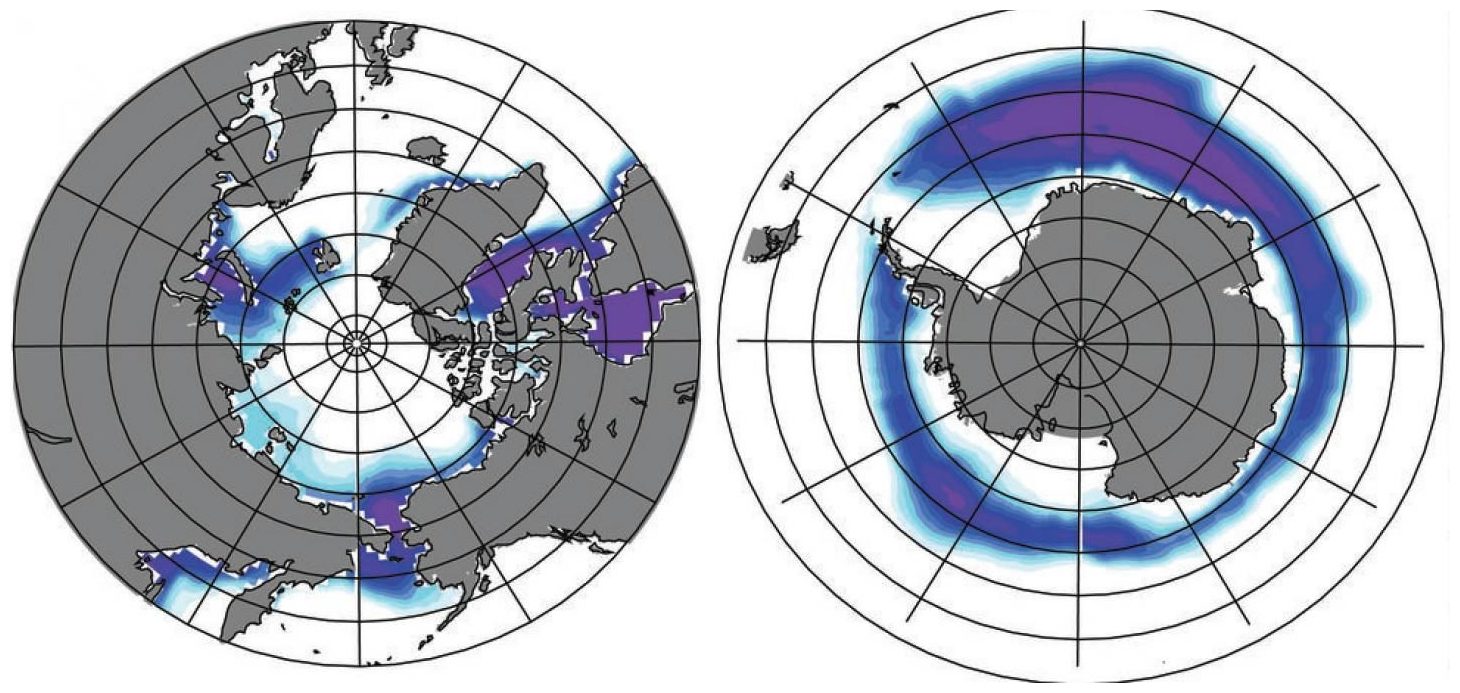
© Jung-Eun Lee/Brown UniversityThe Southern Hemisphere has a higher capacity to grow sea ice than the Northern Hemisphere, where continents block growth. New research shows that the expansion of Southern Hemisphere sea ice during certain periods in Earth’s orbital cycles can control the pace of the planet’s ice ages.
Using a set of computer simulations, the researchers show that two periodic variations in Earth's orbit combine on a 100,000-year cycle to cause an expansion of sea ice in the Southern Hemisphere. Compared to open ocean waters, that ice reflects more of the sun's rays back into space, substantially reducing the amount of solar energy the planet absorbs. As a result, global temperature cools.
"The 100,000-year pace of glacial-interglacial periods has been difficult to explain," said Jung-Eun Lee, an assistant professor in Brown's Department of Earth, Environmental and Planetary Studies and the study's lead author. "What we were able to show is the importance of sea ice in the Southern Hemisphere along with orbital forcings in setting the pace for the glacial-interglacial cycle."
The research is published in the journal Geophysical Research Letters.


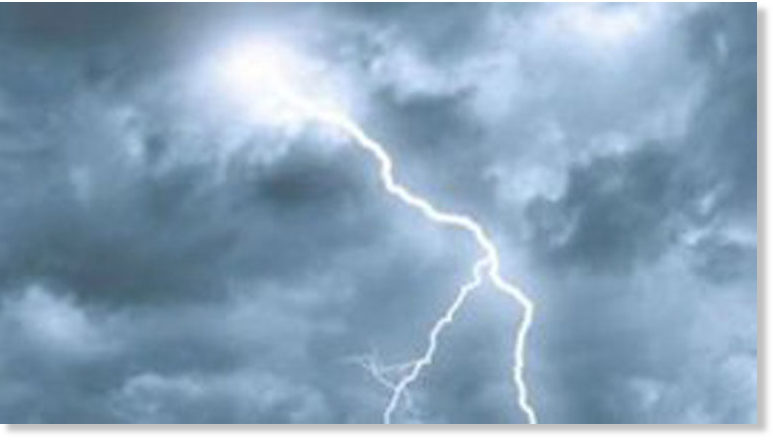




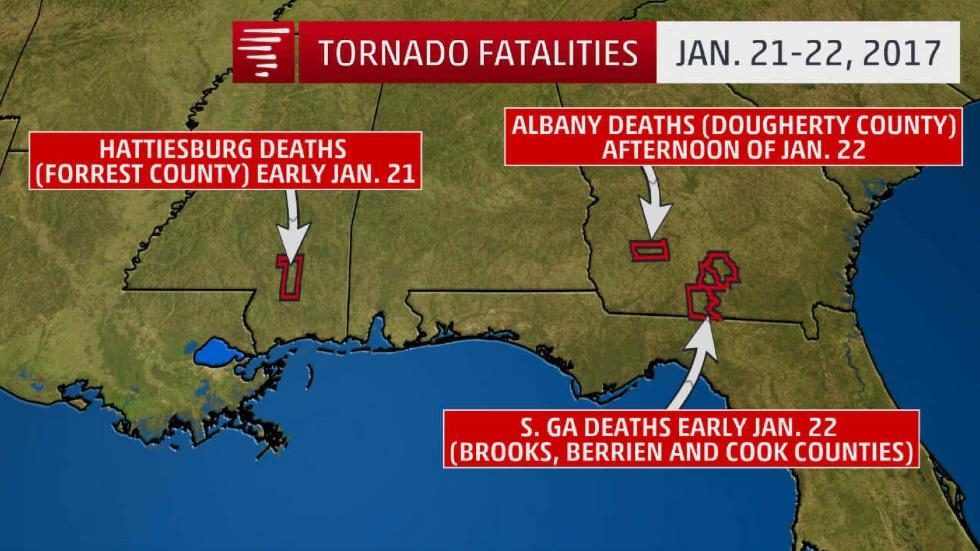



Comment: Study: Tornado outbreaks are increasing - but scientists don't understand why. A coauthor of this paper states "What's pushing this rise in extreme outbreaks is far from obvious in the present state of climate science."
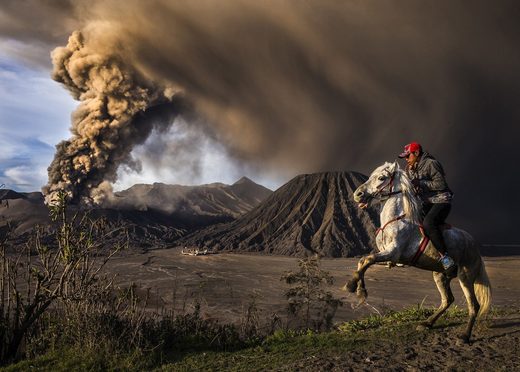
The climate scientists have not considered the importance of atmospheric dust loading and the winning Electric Universe model in their research. Such information and much more, are explained in the book Earth Changes and the Human Cosmic Connection by Pierre Lescaudron and Laura Knight-Jadczyk. Increasing cometary and volcanic dust loading of the atmosphere (one indicator is the intensification of noctilucent clouds we are witnessing) is accentuating electric charge build-up, whereby we can expect to observe more extreme weather and planetary upheaval as well as awesome light shows and other related mysterious phenomena.