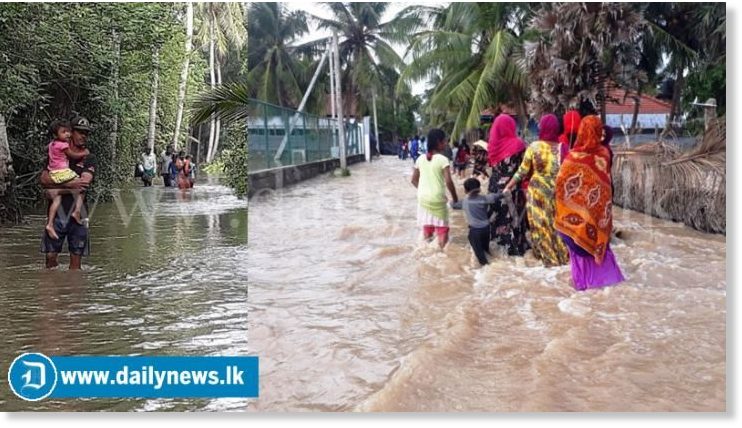
Two people were killed and over 65,000 affected by days of heavy rains and strong winds across Sri Lanka, the Disaster Management Centre said in a statement on Monday.
Over 17,000 people were evacuated to safer shelters while over 1,500 houses were partially or fully damaged in over 13 districts, Xinhua news agency reported.
President Gotabaya Rajapaksa on Monday visited Polonnaruwa and Anuradhapura in North Central Province which was one of the worst affected by floods and landslides.
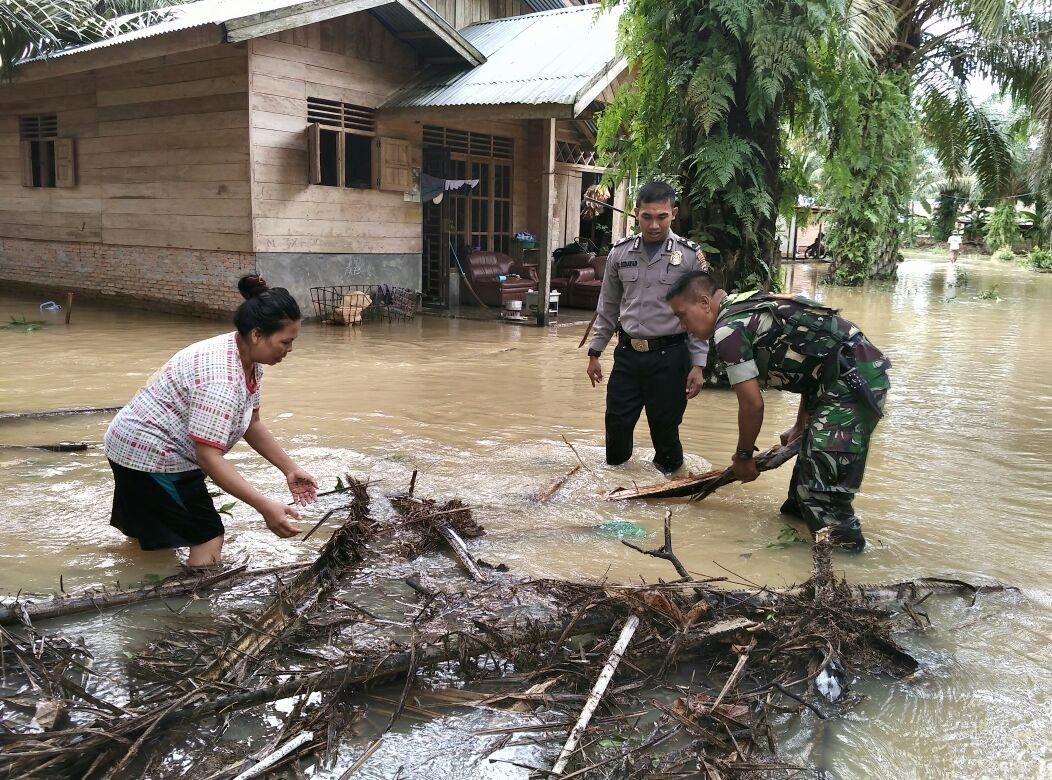
The Riau administration declared a state of emergency on Friday after water inundated hundreds of villages in six of the province's regencies, affecting more than 62,000 residents in the latest among recent disasters that have killed at least six people.
Riau Secretary Yan Prana Jaya Indra Rasyid said the status was enforced to prepare for a possible worst-case scenario due to the disaster, which occurred after waters overflowed from four of the province's large rivers.
The emergency status applies for 11 days from Dec. 20 until 30.
"With the state of emergency, the regional administration could no longer cite financial difficulties in disaster-handling measures because the central government will provide support through the National Mitigation Agency [BNPB]," Yan said.
As of Friday, the overflowing waters from Riau's Kampak, Siak, Rokan and Indragiri rivers inundated at least 216 villages in 43 districts in the regencies of Rokan Hulu, Kampar, Rokan Hilir, Pelalawan, Kuantan Singingi and Indragiri Hulu.
As many as 25,133 households comprising 62,630 people in the six regencies were affected by floods, which inundated 8,798 houses, 11 kindergartens, 47 elementary schools, 19 junior high schools and 17 senior high schools, according to Riau administration data.
The Riau Disaster Mitigation Agency recorded six casualties to date in floods and landslides that had occurred over several weeks.
Danyal Hussain Daily Mail Fri, 20 Dec 2019 12:03 UTC
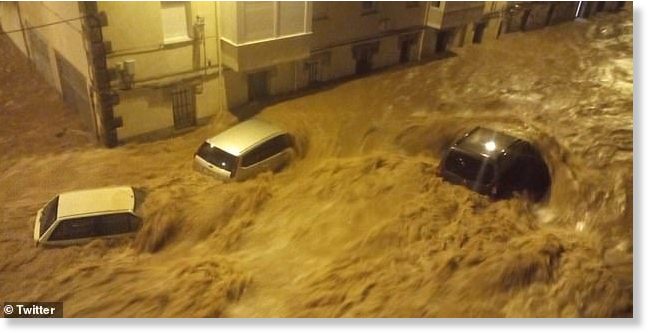
The flooding hit the town of Reinosa in Cantabria and has been described by residents as the worst in history
This is the shocking moments cars were washed away by torrential flooding in northern Spain.
The flooding hit the town of Reinosa in Cantabria and has been described by residents as the worst in history, with reports saying water levels rose because of heavy winds and rain.
Reinosa has 9,000 inhabitants and there are reports of blackouts.
Residents have been evacuated with powerful waves flowing through doors and garages.
Unusual vortex winds across our planet continue to increase as the Suns out decreases. Highest ever recorded tornado in Bolivia, water spouts in Indonesia, tornado out breaks in December USA, 2x Medicanes in a month North Africa dumping record snowfall in November. A month of rain in hours 4x in the last 30 days and record crop yields in Norther Africa from all the additional rainfall for the 3rd year in a row.
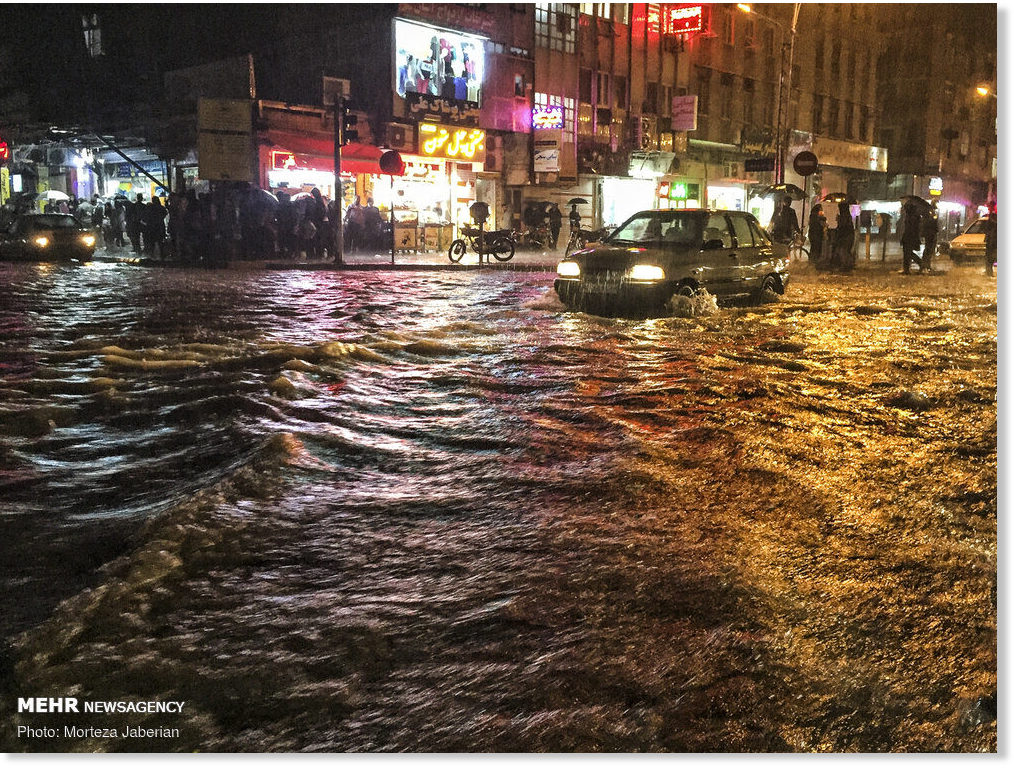
Heavy torrential rainfalls hit across the southern city of Ahvaz, Khuzestan province on Monday, flooding the streets.
A blackout caused by lightning and the failure of the hospital's emergency power system claimed the lives of four elderly women in the intensive care unit of Khomeini hospital of Ahwaz, the capital of the oil-rich Khuzestan Province.
The women had been hospitalized for respiratory problems caused by air pollution, another problem the province has been plagued with. The emergency power system failed to work when a fuse was struck by lightning.
After hours of heavy rain buildings and houses started flooding in several cities including Ahwaz, Abadan, and Karun on Monday evening. According to the Director General of the Weather Forecast Organization of Khuzestan Province Abadan has experienced 104mm of precipitation in a few hours today.
As food prices rise, some nations are scrambling to secure food for their people. Meanwhile, calls for more "global governance" to mitigate risk of food shock are accompanied by media pieces that outright blame nationalism, Putin, and Trump for global food shortages -- VIEWER DISCRETION ADVISED, they deal in deliberately crafted, devious propaganda, but it needs to be analyzed. Start growing your own food today.
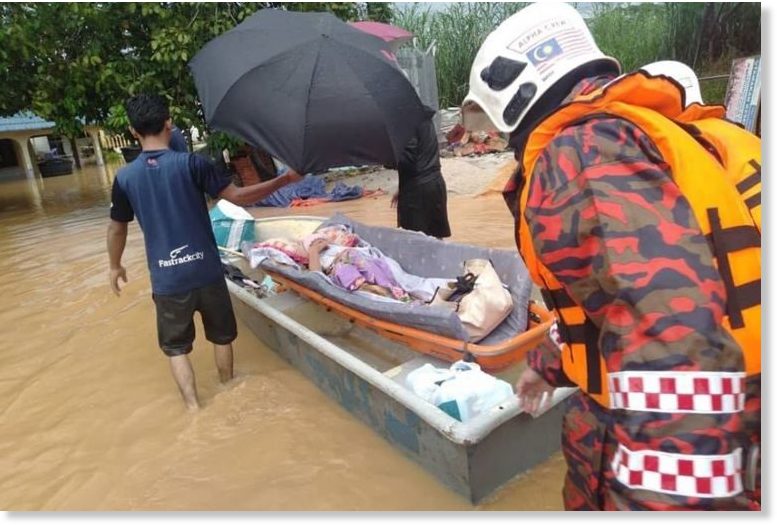
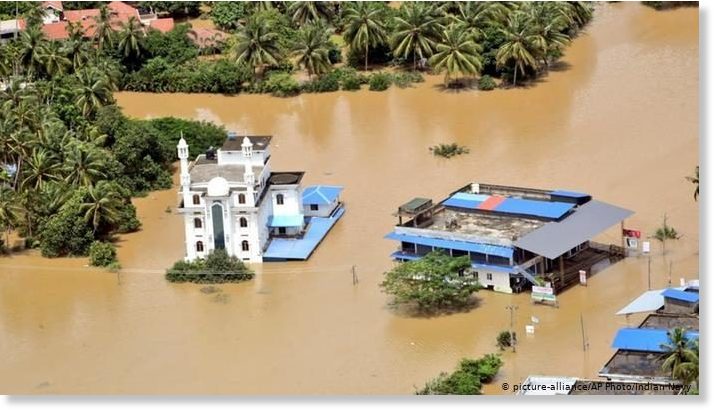
Malaysia's annual monsoon season continues unabated and Johor is facing the brunt of it, with some areas struggling with flood waters up to 2.5m deep.
As of yesterday afternoon, the number of people evacuated in Johor state had more than doubled to 9,348, from 3,934 on Sunday.
Over two-thirds of the state's victims are from Kluang, Segamat and Kota Tinggi, the three most severely hit areas.
Engineer Lor Wei Keong, 43, was stranded atop his four-wheel drive along Jalan Kota Tinggi-Mersing for two hours before he was rescued by an amphibious boat.
"The water level was only halfway up my vehicle tyres, and I thought I could go," he told the New Straits Times daily. "Unfortunately, the vehicle was trapped in the rising flood water, which was gaining speed as well."
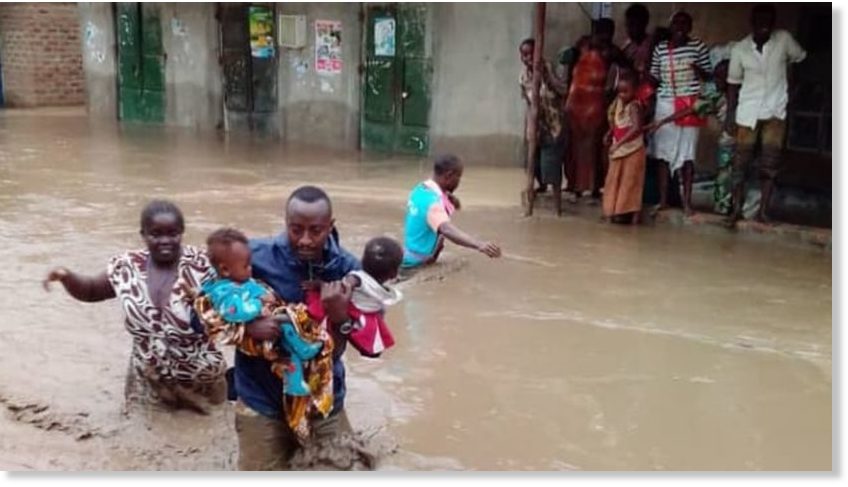
Five people were killed by floods in Kampala, Uganda over the weekend, among them a marine officer on a rescue mission. Kampala Metropolitan Deputy Police spokesperson Luke Owoyesigyire said that the body of the marine police officer, Sgt Godfrey Mwondha an officer with Uganda Police Force, was found in Mbuuya Katoongo swamp which is often used as a washing bay.
Police said that Mwondha was trying to save a person named Ssekitoleko of Biwologoma, Kira Division who was drowning. The bodies of the two were retrieved on Sunday morning in Nakawa Division in Kampala. The third person was a woman identified as Joweria Tumusiime, a resident of Zana Lufuka, who was also washed away by the raging flood waters. She worked with Nippon cleaning services. The bodies of the three were taken to city mortuary awaiting post mortem.
Jhimli Mukherjee Pandey Times of India Mon, 16 Dec 2019 14:52 UTC
Two major floods caused by monsoon pattern anomalies, which inundated large parts of the subcontinent approximately 800 and 700 years ago, might have wiped out powerful dynasties across what is now known as India.
Startling evidence of this has been unearthed by a group of geology experts from IIT Kharagpur.
The group's findings, published in Elsevier, a reputable Dutch journal specialising in scientific, technical and medical content, has stunned historians and archaeologists.
The findings are based on years of study of oxygen isotopes on ancient stalagmites of Meghalaya's Wah Shikar caves. Oxygen isotopes are pointers to the traces that are left behind by precipitation or rainfall over a time-period, called time slide by scientists.
What is truth anyway? The truth is the essence of something, its natural state, something as it really is. It is really a quest for love, because to truly love something we must know it for what it really is. Perhaps we can sense in an unconscious way that there is a deeper truth to everything and everyone, and we are led to search for the truth about it, so that we can truly love it for what it really is.
- Joe Quinn
”
Recent Comments
Almost all of the sex crimes against children and adults in recent history has involved politicians, tycoons, police officials, orphanages and...







Comment: For more information on extreme weather events from around the world, check out our monthly Earth Changes Summaries. The latest video: SOTT Earth Changes Summary - November 2019: Extreme Weather, Planetary Upheaval, Meteor Fireballs