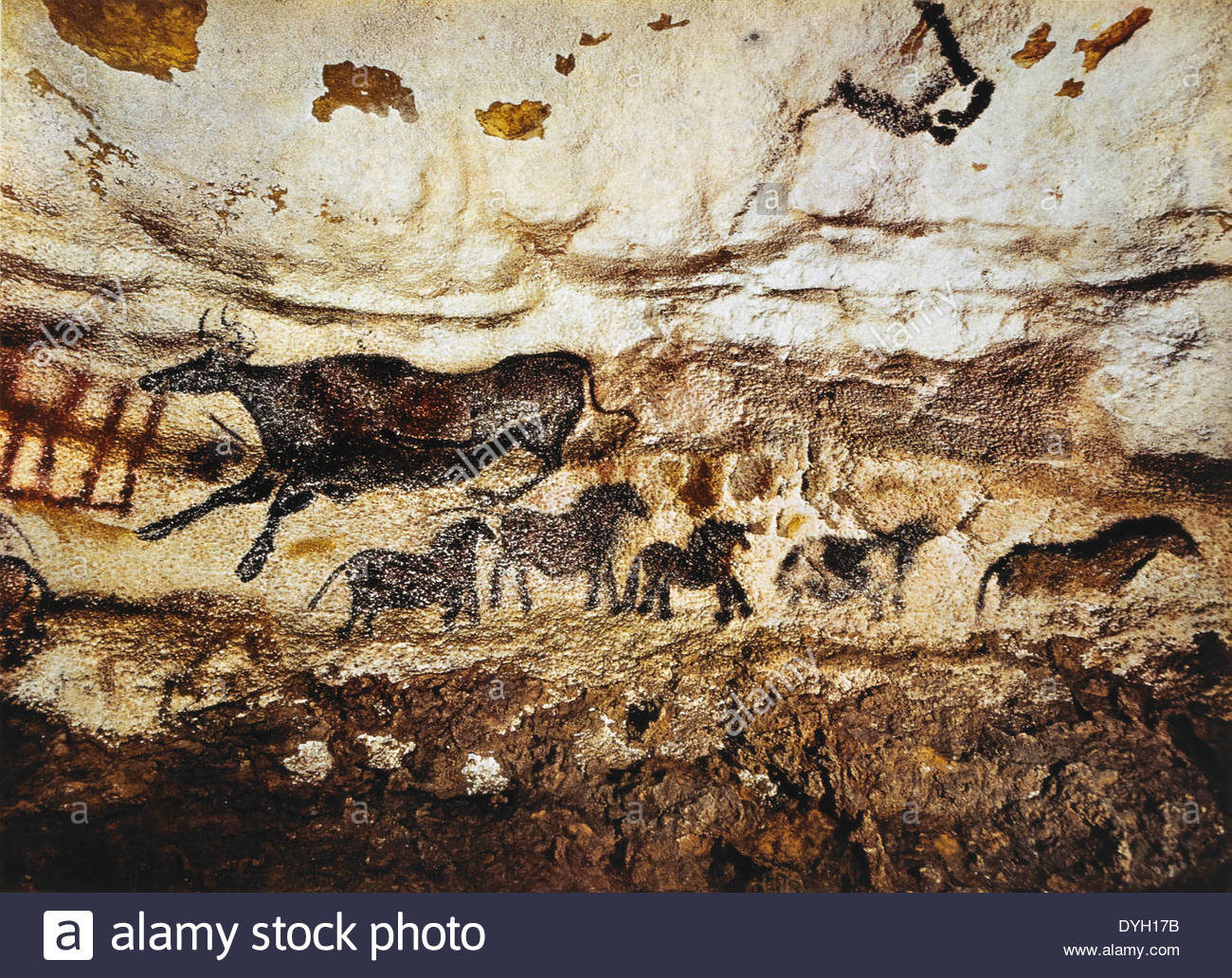
© AlamyCave painting of cow & horses, Lascaux, France.
Humankind first started farming in Mesopotamia about 11,500 years ago. Subsequently, the practices of cultivating crops and raising livestock emerged independently at perhaps a dozen other places around the world, in what archaeologists call the Neolithic Agricultural Revolution. It's one of the most thoroughly-studied episodes in prehistory — but a new
paper in the
Journal of Political Economy shows that most explanations for it don't agree with the evidence, and offers a new interpretation.
With farming came a vast expansion of the realm over which private property governed access to valued goods, replacing the forager social norms around sharing food upon acquisition. A common explanation is that farming increased labor productivity, which then encouraged the adoption of private property by providing incentives for the long-term investments required in a farming economy.
"But it's not what the data are telling us", says Santa Fe Institute economist Samuel Bowles, a co-author of the paper.
"It is very unlikely that the number of calories acquired from a day's work at the advent of farming made it a better option than hunting and gathering and it could well have been quite a bit worse."






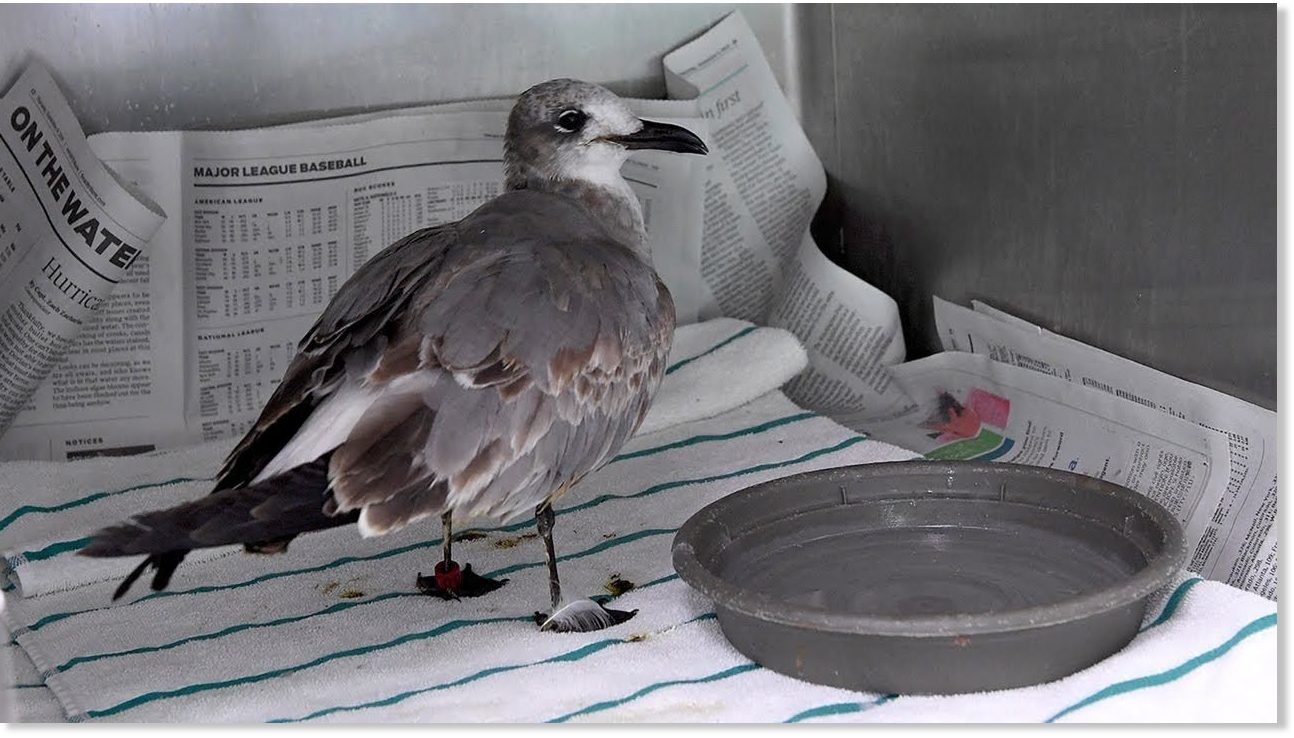








Comment: Evidently this wasn't a wrong turn that these birds took, they were slamming into the building for "about an hour". Although the reason behind this mass mortality is yet to be discerned, a clue may lie in similar incidents, such as in June this year in Canada, birds were found to be found behaving equally strangely, with investigators concluding it was related to exhaustion and starvation due to the unusually cold weather: High bird deaths likely due to cold weather and starvation in Campbellton, Canada See also: