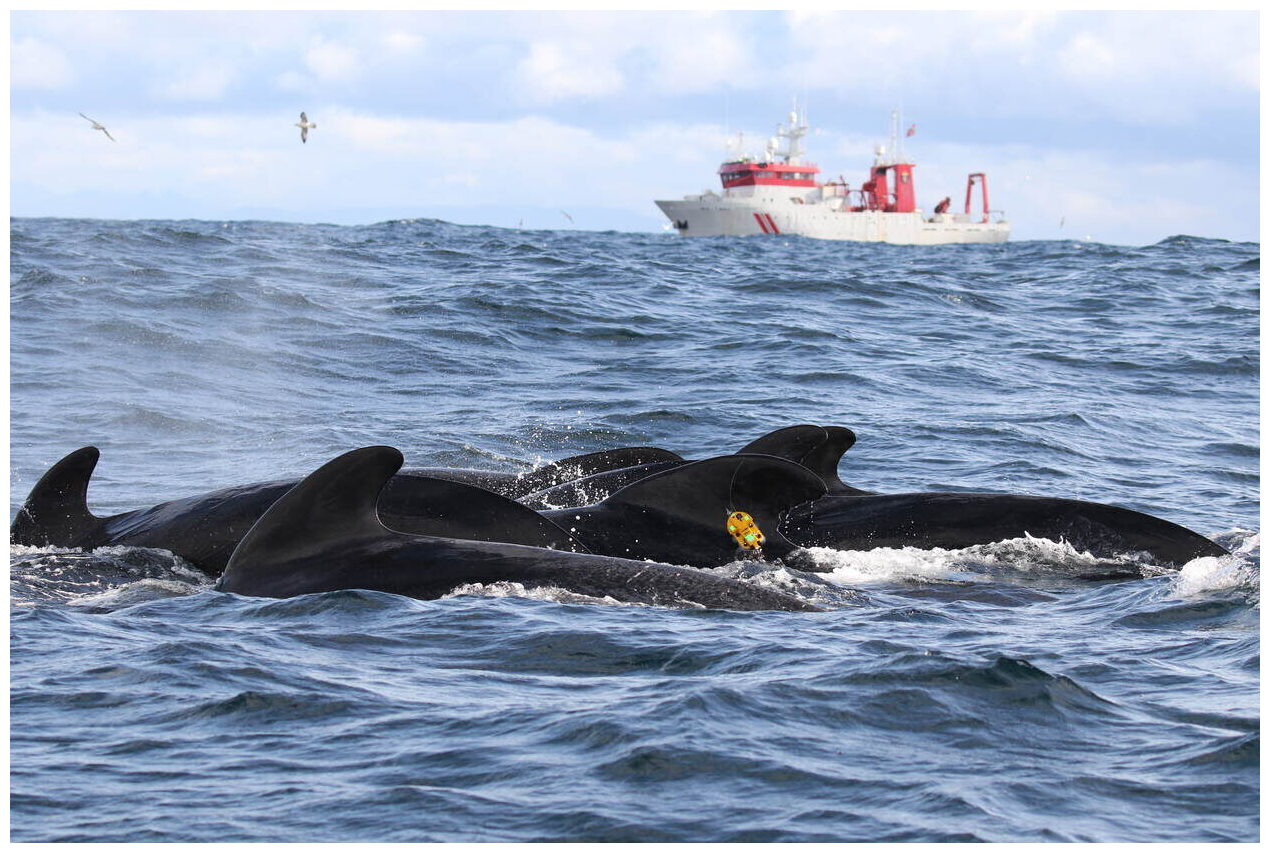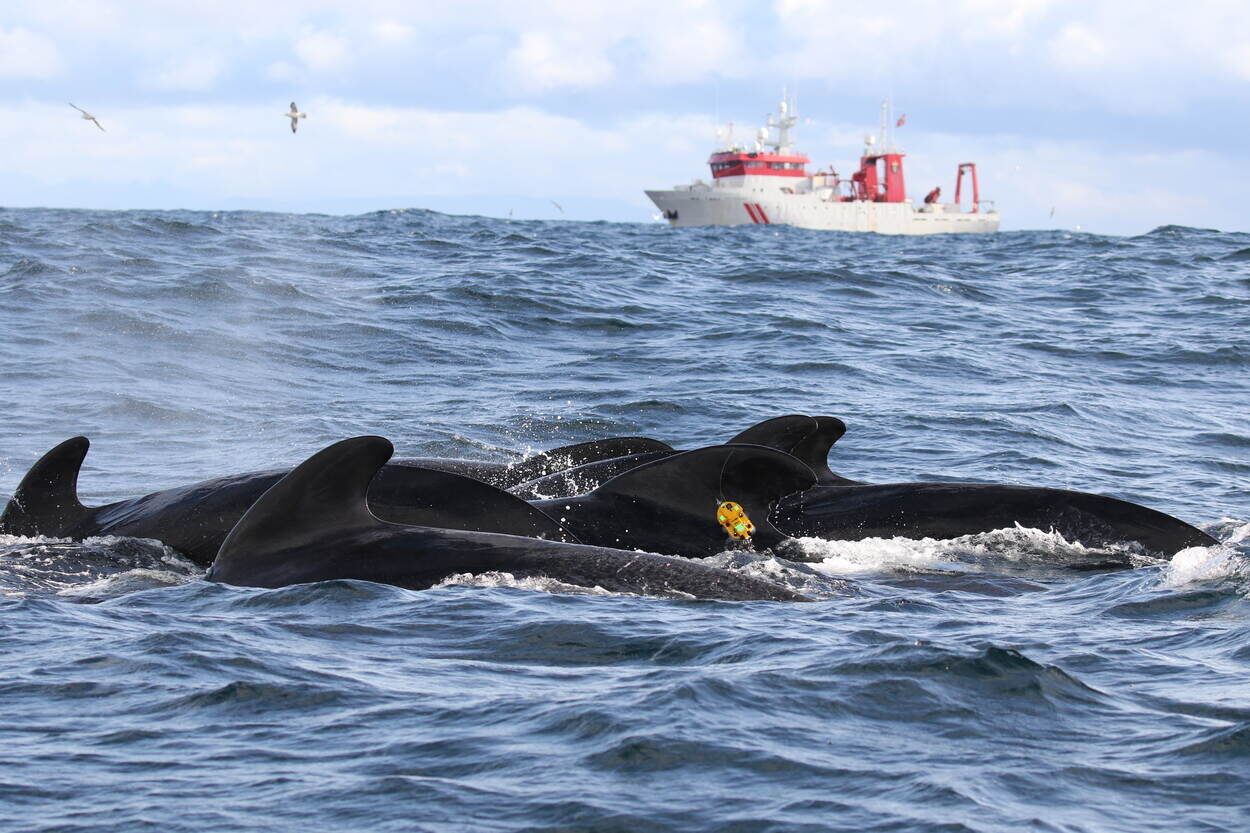
© Saana Isojunno,Tagged pilot whales.
In September 2002, a number of beaked whales were stranded and killed in the Canary Islands during a NATO naval exercise. It was the first time we started to get a real understanding of the negative effects of sonar sounds on cetaceans, which includes whales, dolphins and porpoises.
But why did the noise of sonar seem to affect beaked whales in particular, rather than other species of cetacean?
In our new research,
we've discovered that the response of each species to predators could explain why some whales and dolphins are more sensitive to this human-made noise.It was back in the early 2000s that we (along with other researchers around the world) began to study the impact of sonar on free-ranging whales. These new "behavioral responses studies" exposed different cetacean species to gradually increasing levels of sonar - with careful monitoring to keep the animals from harm. We were then able to identify the level of sonar noise at which behavioral changes began to occur.
From that early research we knew that
feeding is commonly affected when marine mammals are disturbed by sonar, and some species are markedly more sensitive to this exposure than others. For example, Cuvier's beaked whales showed dramatically more severe changes in their feeding habits (swimming rapidly and silently away while extending their length of dive and non-feeding period) than blue whales.
But until now the reasons for this differing response between species were unclear. So, we decided to investigate whether they were responding to human-made sound in a similar way to their response to predators, as some theories suggested.