Wildfires
S


Fire

Fort McMurray wildfire update: 7,000 people airlifted as 'apocalyptic' Alberta wildfire rages through 101,000 hectares; officials warn blaze could double in size

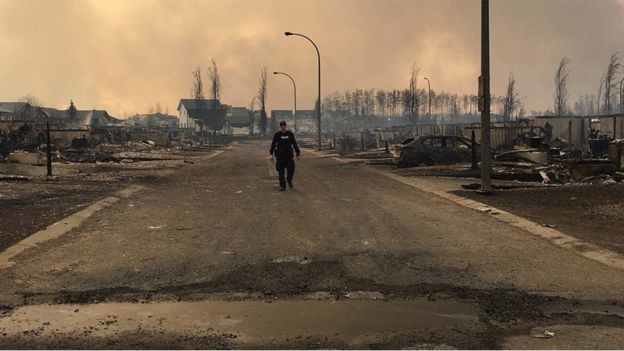
Devastation in Fort McMurray
© RCMP AlbertaDevastation in Fort McMurray, Alberta, Canada
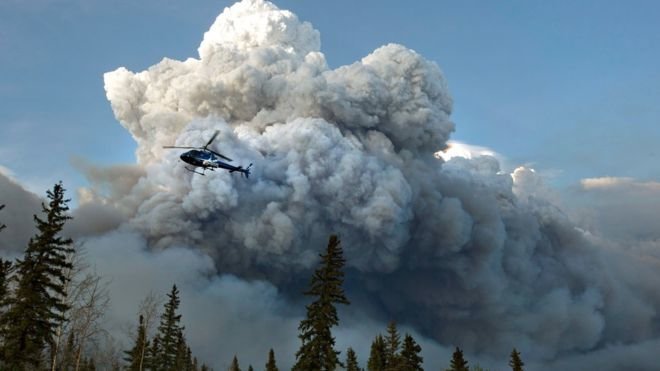
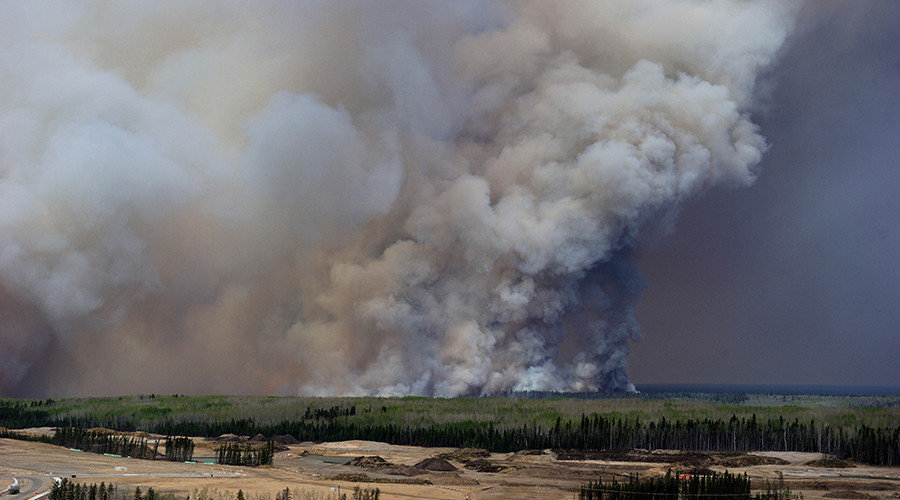
Some 25,000 Canadians that fled north from Fort McMurray are reliving the horror of hastily evacuating through blazing forests, as thousands are now being forced to drive south or take rescue aircraft out. Meanwhile, the fire may double in size in a day.

The gargantuan fire is currently raging through 101,000 hectares of land, senior wildfire manager Chad Morrison told reporters on Friday. Temperatures are expected to reach 27° Celsius on Saturday, which could double the size of the fire by the end of the day, Morrison added.

There are still thousands of evacuees hiding out in oil sands work camps north of the city that need to be moved as soon as possible, officials warn. Luckily, many of these camps have runways for small aircraft, which have been used to evacuate some 7,000 people already. At least 5,500 more will be airlifted out later on Friday.

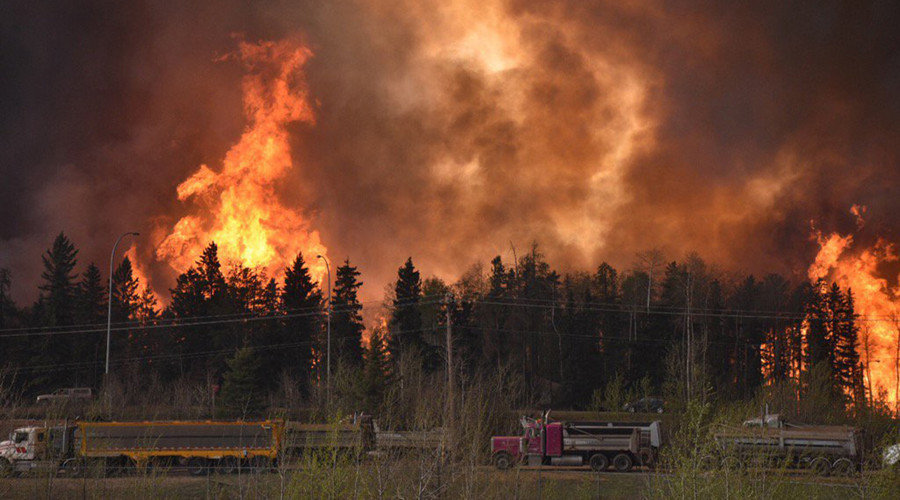
A convoy of as many as 1,500 cars has also been trying to escape south to Edmonton via the highway passing through Fort McMurray. The first attempt failed, according to mounted police escorting the vehicles, as the drivers were faced with 60-meter-high (200ft) walls of flame raging on the sides of the road.
Comment: See also:


Fire

Wild animals and birds hit hard by wildfires in Nepal

A wildfire
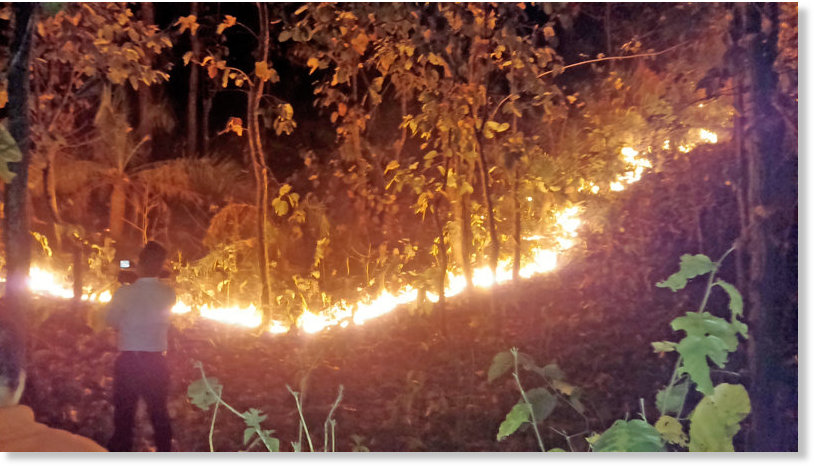
© THTA wildfire in Phuljore Jungle of Mahabharat Community Forest
Wildfires, which have spread with the prolonged drought in different community forests, have badly affected wild animals and birds in different national and community forests of the far-west region.

A source in the regional Forest Directorate, Dhangadi, said many wild animals along with different bird species were burnt to death in the forests due to wildfire.

Many animals and birds have scattered and have migrated to safer areas after their habitats were destroyed by wildfires.

It is said wild animals that managed to flee are astray.

Sources in the directorate further added that monkeys, snakes, rabbits, porcupines, deer, wild boars and pheasants were among the wildlife killed due to the inferno.

Fire

Fort McMurray wildfire update: Massive Canadian blaze spreads to 85,000 hectares; potential cost of disaster around C$9 billion ($7 billion)

Fort McMurray wildfire aerial view
© CF Operations / ReutersA Canadian Joint Operations Command aerial photo shows wildfires near neighborhoods in Fort McMurray, Alberta, Canada in this May 4, 2016
Canadian fire officials battling wildfires in Alberta warned the only thing that could stop the blaze was a lot of rain. The latest damage estimates indicate that the Fort McMurray fire could cost insurance companies around C$9 billion ($7 billion).

On Thursday, the enormous fire that had already destroyed hundreds of homes and encircled a city and several communities was picked up by 70 kilometer-per-hour (44mph) winds and spread to 85,000 hectares.

The most severe part of the roaring front moved south of Fort McMurray, with no signs of stopping.

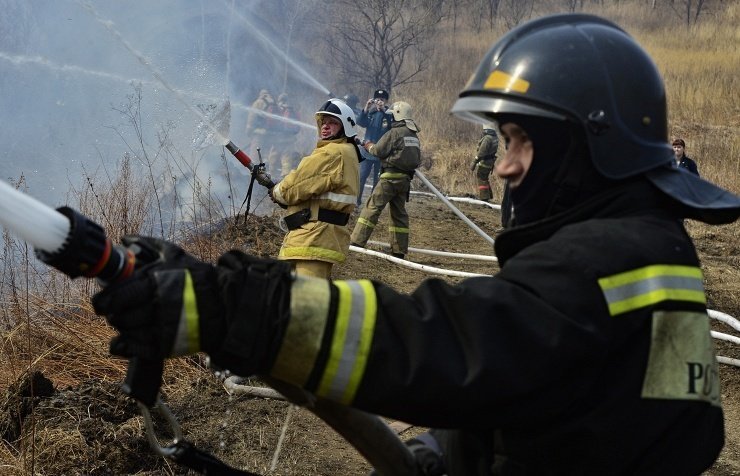
Over 1,110 firefighters, 145 helicopters, 138 pieces of heavy equipment, and 22 air tankers are fighting a total of 49 wildfires across Alberta, seven of which are currently considered to be out of control, according to the provincial government.

Despite all the firefighting efforts, the blaze around Fort McMurray is expected to grow stronger.

"Let me be clear, air tankers are not going to stop this fire," Chad Morrison, manager of Alberta's wildfire prevention, said at a briefing on Thursday. "This is an extreme fire event. It's going to continue to push through these dry conditions until we actually get some significant rain to help us."


Comment: See also:


Fire

45 wildfires raging across 77 regions of Russia; covering 5,900 hectares

Russia wildfires
© Yuri Smityuk/TASS

The biggest wildfires are reported in the Far Eastern Amur regions (3,900 hectares) and in the Siberian republic of Buryatia (1,400 hectares)


As many as 45 wildfires on an overall area of 5,900 hectares are reported across Russia, with the wildfire season starting in 77 Russian regions, the press service of the Federal Forest Protection Service said on Thursday.

The biggest wildfires are reported in the Far Eastern Amur regions (3,900 hectares) and in the Siberian republic of Buryatia (1,400 hectares).

Wildfires are also reported in the Transbaikal and Krasnoyarsk Territories, in the republic of Tuva, in the Tomsk, Sverdlovsk, and Vologda regions.

Comment: A study last year showed that wildfire seasons are more destructive and lasting longer almost everywhere on Earth.


Fire

Fort McMurray wildfire update: State of emergency declared after 88,000 residents flee; 1,600 homes destroyed, airport threatened by raging blaze

Fort McMurray wildfire
© APSome 1,600 structures have been destroyed
Canada's western Alberta province declared a state of emergency as a massive fire in Fort McMurray forced 88,000 residents to flee, with two deaths reported due to an accident during evacuation. Hundreds of homes have already been consumed by the blaze.

The latest update from Municipal Affairs Minister Danielle Larivee revealed that the fire is raging in residential areas, while crews face very challenging and volatile conditions.

The blaze has now spread to 10,000 hectares.

Alberta Premier Rachel Notley said that around 1,600 homes have been destroyed in Fort McMurray so far. A boil-water advisory has also been issued for the region due to the possibility of contamination and all flights in and out of Fort McMurray airport have been suspended.

The mass exodus caused by the fire has been described as the largest evacuation in Alberta's history, with one fatal traffic accident reported that killed two people on secondary highway 881, which has been designated for evacuees.


Comment: Out-of-control wildfire rages in Alberta, forcing the largest evacuation in the history of the Canadian province


Fire

Out-of-control wildfire rages in Alberta, forcing the largest evacuation in the history of the Canadian province

Alberta wildfire
© CBC News / ReutersWildfire is worsening along highway 63 Fort McMurray, Alberta Canada May 3, 2016.
The entire population of Fort McMurray in northern Alberta, Canada has been ordered to abandon their homes after a wildfire ravaging a nearby forest moved into the area. The fire has already destroyed homes in several neighborhoods.

Fort McMurray is an urban service area with a population of about 80,000 people.

A mandatory evacuation notice was issued for the whole city on Tuesday after the wildfire began spreading uncontrollably.

Local authorities have advised residents to evacuate to the Noralta Lodge north of the city because outgoing Highway 36 has been partially blocked due to the fire.

The fire first was detected on Sunday to the southwest of the residential area. It is believed to have covered more than 2,656 hectares (6,540 acres) as of late Monday. Although, more than 90 firefighters have been deployed to battle the fire, the situation on Tuesday has worsened due to strong winds. On Tuesday afternoon the fire breached Highway 63, the main road out of the city.

Several homes in Beacon Hill and the Centennial Trailer Park have been destroyed in the fire, CBC reported.


Comment: This is the largest evacuation in the history of the Canadian province of Alberta.

Last year the wildfire season was a record breaker in the United States and Canada. The Amazon jungle was going up in smoke with tens of thousands of wildfires, while in Indonesia wildfires caused a toxic haze which threatened millions in southeast Asia. There have been devastating wildfires in Australia already this year and officials have warned of 'potentially significant wildfires' in some US states.

A study showed that wildfire seasons are more destructive and lasting longer almost everywhere on Earth.

Could a significant factor in the escalation of these events be that they are fueled from outgassing, then possibly 'sparked' by an increase in atmospheric electric discharge events, such as lightning strikes and other 'cosmic' ignition sources?


Fire

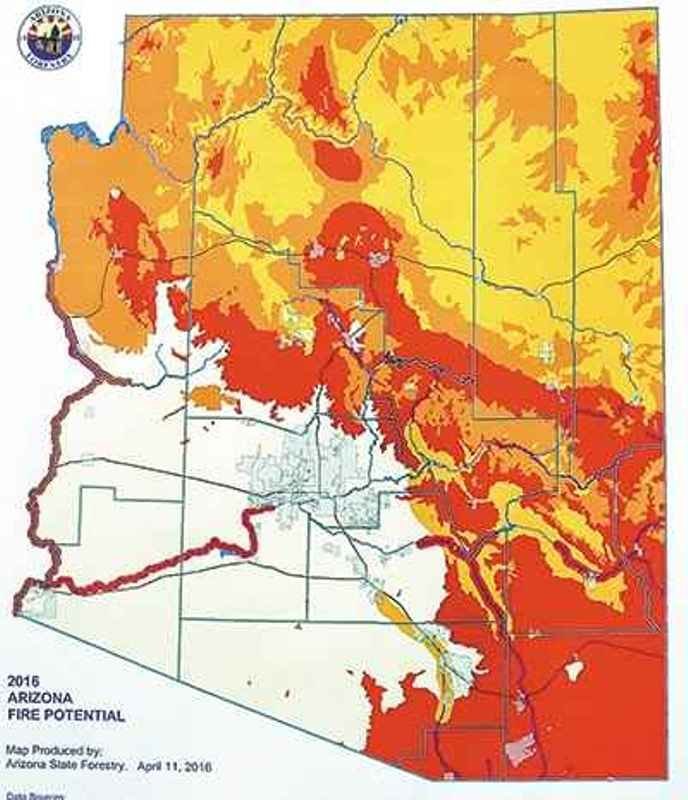
Arizona burning? State officials warn of 'potentially significant wildfire season'

Arizona fire potential map 2016
© Arizona State Forestry
Arizona could face the most dangerous fire season in years, according to Gov. Doug Ducey and the state's chief forester.

And it's already starting.

"Last year, we burned less than 500 acres" by this time, said Jeff Whitney. "So far this year we've burned over 21,000 acres."

And it's not looking promising.

"Arizona faces a potentially significant wildfire season," the governor said after he had been briefed by Whitney and his staff.

It starts with the fact that there have not been major fires in the last two years. Add to that above-average rainfall and the subsequent growth of vegetation - which is now drying out.

Pinion Pine Fire Chief Joe Jackson said the Hualapai Mountains have seen significant moisture this year.

The upside is, the ground remains damp.

The downside is, the grasses that have grown thanks to rain and snowfall will eventually dry out, said Jackson.

The moisture has not been substantial enough to add more fuels than usual, said Jackson.

"We always have concerns with fuels," said Jackson. "The grass is growing from the rains and that will help carry fire."

Fire

'Suspicious' wildfire breaks out at Havasu National Wildlife Refuge

wildfire
© Reuters/San Bernardino Fire Department
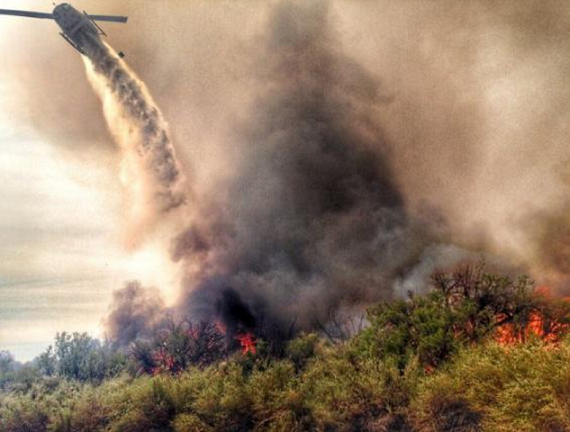
A helicopter makes a drop on a fire which broke out in Arizona and spread into California, sparking the evacuation of two recreational vehicle parks near the Havasu National Wildlife Refuge in California.
A "suspicious" brush fire broke out in Arizona and spread into California on Wednesday, sparking the evacuation of two recreational vehicle parks, as hot and dry weather complicated efforts to contain the blaze.

"It's hot and windy and we're expecting the fire to grow," said Jeff Allen, an engineer and paramedic with the San Bernardino County Fire Department in Southern California. Allen said the fire was 5 percent contained.

The fire broke out as agencies across the western United States gear up for what is expected to be another busy fire season in a region suffering the effects of a prolonged drought, including millions of trees dead from lack of water.

Fire

Oklahoma: TV storm-chasers save man from raging wildfire

tractor in wildfire
© Associated Press / YouTube
US storm-chasing duo Amy and Val Castor dramatically rescued a tractor driver who was almost engulfed by the fiery jaws of death during an Oklahoma inferno.

The pair were tracking the extreme wildfires sweeping the midwest for KWTV News 9, when they came face to face with a wall of flames.

The footage begins with the TV crew sitting in a car recording a large grass fire in Woods County, northwest Oklahoma as a tractor driver in front desperately tries to maneuver his vehicle away from the advancing flames.

Fire

Wildfires burn across thousands of acres from Kansas to Oklahoma

Kansas wildfire
© KWCH channel 12
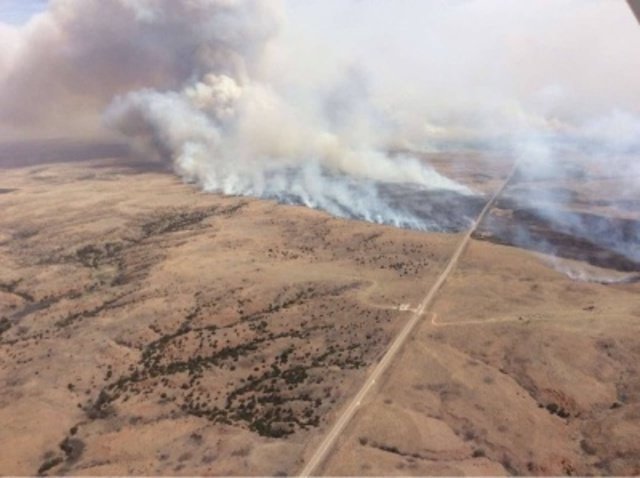
Fire crews were working to contain a wildfire burning across at least 75 square miles in rural Oklahoma and Kansas on Wednesday, while strong wind and dry conditions also increased fire threats in neighboring states, authorities said.

The National Weather Service said the fire started Tuesday night near the Kansas border in Woods County, Oklahoma. Wind gusts of up to 30 mph helped spread the blaze into in western Kansas, where about a dozen homes were evacuated. Dense smoke and fire also prompted highway officials to close a 28-mile stretch of U.S. 160 in Kansas.

No injuries have been reported in either state, and none of the evacuated houses in Kansas' Comanche County has been damaged, county emergency management coordinator John Lehman said. But he noted that wind speeds were increasing and complicating firefighting efforts.

"With this kind of wind, it's going to be kind of bad," Lehman said.